

Opinion
How Wande Abimbola rejected IBB’s ING bait, and other stories (2)
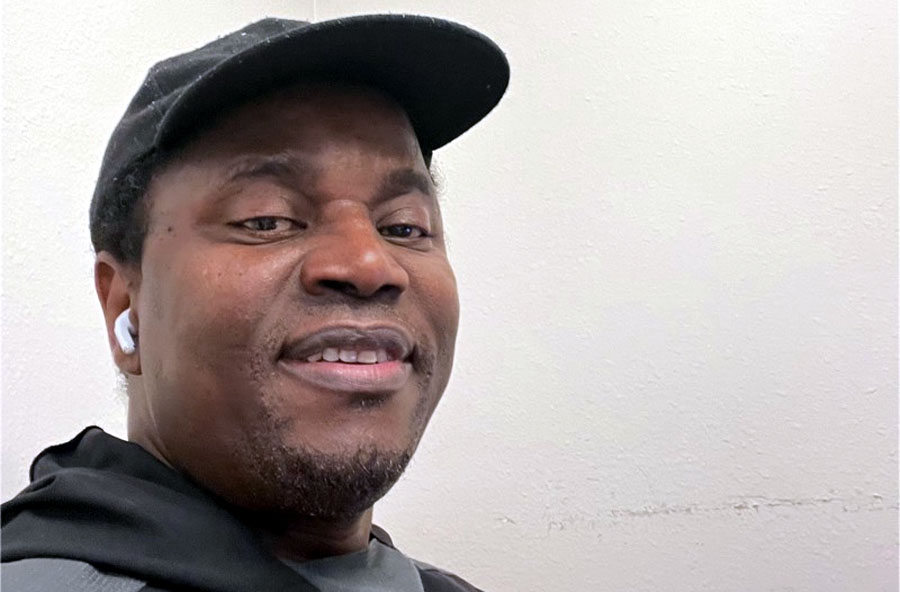
How Wande Abimbola rejected IBB’s ING bait, and other stories (2)
Tunde Odesola
(Published in The PUNCH, on Friday, March 28, 2025)
Once upon a time in the land of Ìwásè, Orunmila, Yoruba god of Wisdom and Divination, thought to showcase Yoruba science, divination, arts and philosophy to mankind; so, he codified the four aforementioned essence of human existence into a body of knowledge called Ifa.
As science, Ifa embodies the study and prescription of herbal medicine for healing, with its practitioners being ‘babalawo’ or ‘iyanifa’ (male or female Ifa priests) and ‘onisegun’ (medicine men or women). Ifa, as science, unravels astronomy, time cycles, and energy balance in understanding cosmology – the science of the origin and development of the universe.
Ifa’s science is also contained in its corpus called Odu Ifa, a humongous collection of 256 voluminous books, passed down orally within Yoruba culture. The 256 books are a cornucopia of Ifa literature containing stories, poems, revelations, findings, assertions, songs, taboos, laws, etc that explain the Yoruba worldview on far-ranging issues of existential proportions. The vast 256 collections of voluminous books are divided into 800 sections, making the totality of the corpus 204,800 compendia of orature.
In the 256 Odu Ifa is the coded knowledge system called the binary coding found in computer science, and derived from mathematical probability, observation and pattern recognition. With this similarity, Ifa shows an amazing connection between ancient wisdom and modern technology. Abimbola says no other religion has more body of books, noting, however, that adherents of foreign religions in Nigeria erroneously throw away the science, arts, divination and philosophy of Ifa for imported religions that are not better. “Something is wrong with us,” he says.
He continues, “I am not a Christian, but I use western medicine when necessary – along with herbs and divination. You might not be an Ifa worshipper, but that shouldn’t stop you from benefiting from its truths, which are so natural and pure. The truths of Ifa are contained in its accurate divination, diagnosis, treatment and healing. The efficacy of Ifa explains why you find people of other religions sneaking to it in secret and benefiting from it while pretending publicly not to have anything to do with it.”
READ ALSO:
- FG declares public holidays for Eid-el-Fitr
- JUST-IN: Ex-Oyo gov Ajimobi’s first child Bisola dies At 42
- Crisis hits LagRide, drivers threaten protest as operators move to withdraw vehicles
The art of Ifa is seen in its rich poetic recitations, panegyrics, historic accounts, music, storytelling and symbolism, just as Yoruba sculpture, smithing, beadwork, weaving and many other art forms are believed to be inspired by the gods.
As philosophy, Ifa teaches moral and ethical wisdom symbolised by Orí (Destiny), Èsù (Choice and Consequence), Ìwà Pèlé (Good Character), Omolúàbí (Virtue), Owú (Jealousy), Ìbínú (Anger), and Ànìkànjopón (Greed), among other behavioral traits.
Through divination, Ifa offers insights into the past, interrogates present possibilities and reveals future prospects while prescribing solutions via sacrifice, rituals, offerings, or behavioral changes. Ifa divination involves an interactive engagement that gives room for guidance and encourages personal responsibility.
According to Abimbola, ‘writing is an enemy of remembrance’. What do you mean, sir? I asked. “The 256 Ifa corpus can be sectionalised into 800 large volumes. This means there are 204,800 volumes of verses, recitations, poems, stories, etc in the corpus. In prehistoric times, the whole of the corpus was crammed by Ifa students, but nowadays that they are in book form, people are forgetting them. That’s why I said writing is an enemy of remembrance. When I was in school, I didn’t jot down notes during lectures; I preferred to listen and understand first, and form my notes later, from my understanding. In writing my notes, I borrowed the notes of my classmates who had jotted down notes. My style gives room for deeper comprehension,” Abimbola explains.
The Araba of Osogbo, Chief Ifayemi Elebuibon, affirms the tenet of loyalty in Ifa corpus, reciting the Ìwòrì Bògbé verse during a telephone chat with me, when I asked for an esè Ifa that teaches loyalty.
Ogunwande exemplifies the loyalty displayed by the partridge in the Ìwòrì Bògbé verse of Ifa, which Elebuibon describes as the story of the partridge, who having wined and dined with the houseowner, will not desert the houseowner in time of trouble, “eyele kii b’onile je, ko b’onile mu, ko di ojo kan ijongbon, ko yeri.”
When MKO, the friend of his youth, came under political oppression after winning the June 12, 1993 presidential election, Abimbola stood by him like Jonathan stood by David in the Holy Bible.
Abimbola said, “Twice, they made me offers to head the Interim National Government. Firstly, I asked those sent by the military authorities if, after being sworn in as Head of State, I could pronounce that the election would be held afresh? Secondly, I dilly-dallied by saying the seven-month lifespan of the ING was too small to do anything. Thirdly, and morally, I couldn’t do that to a friend. Fourthly, and above all, I consulted Ifa, and Ifa told me in unmistakable terms to reject the ING offer.
READ ALSO:
- Rivers administrator Ibas fires Fubara’s political appointees
- Natasha: Murray-Bruce slams Atiku, defends Akpabio
- Tinubu shops for new INEC chairman for 2027 elections
“A few days after the offer was made to me, Abiola called a world press conference. We were all present at the conference where he announced the full results of the election. A day after the press conference, Ernest Shonekan was announced as the Head of the Interim National Government. I was happy I didn’t betray my friend. I would have regretted all the days of my life if I had accepted the offer.”
Named Ogunwande because his forebears were the spiritual heads of Ogun worshippers in Oyo, the Awise Agbaye says all the children of his grandfather and father bear Ogun in their names.
And, Ògún, the Yoruba god of Iron and War, was king over Irè, hence the appellation Ògún Ònírè. But Ògún wasn’t an indigene of Irè, a town in Ekiti; he only stopped by Irè-Ekiti on the way from an expedition with his men. Abimbola reveals Ògún was a native of Sakí, though he lived in Ile-Ife.
According to a myth, Ògún, thirsty and tired, came across some palm wine gourds as he passed through Irè. He stopped and lifted one of the gourds, hoping to quench his thirst. But the gourd was empty. He lifted the second, third and fourth gourds; all were empty. He became incensed and broke the four gourds and more, ordering that henceforth, empty gourds should be laid sideways while empty calabash for drinking should be placed face down. Ogun later rose to become the king of Ire.
The Ogun courage of Ogunwande came to bear when he thwarted the efforts of his fellow senators who attempted to fix their salaries during the Third Republic. He said, “As soon as we were inaugurated, senators began agitating to legislate and fix our salaries. As Majority Leader, I presided over intra- and inter-party caucus meetings. They said I should call a meeting for us to discuss the issue. I delayed by saying we should wait till the President and his ministers were sworn in before we discuss our salary.
“They would have beaten me up if not for the aura (òwò) innate in my personality. They would hear none of my advice. During one of our arguments over the issue, I asked some of them, “Are you here for money or service?” They looked at me in shock and asked, “If you’re not here for money, what are you here for? After some days of stand-off, I called a meeting of the elders of both parties – the Social Democratic Party and the National Republic Convention – and explained why I felt we shouldn’t fix our salaries.
“I said if we fix our salaries now and the President and his cabinet come in and fix their salaries lower than ours, are we not going to look greedy and stupid? When I said this, they saw reason with me. They said, ‘You should have explained it clearly like this. We shall wait’.”
Abimbola’s view on Yoruba bulletproof
All hell broke loose on November 26, 2020, a day the devil himself was appeased to drink water, and cease hostility. That date was an ‘ojo buruku, esu gbomimu’ day, when some suspected kidnappers shot the second-in-command to the gods of the land. It was the day the Olufon of Ifon, Oba Adegoke Adeusi, a first-class Ondo monarch, was felled by the bullets of assailants in Elegbeka community of Ose Local Government Area.
Abomination! No one sacrifices the child of Orè to Orè; ‘ai fi omo Orè b’Orè!’ The igbakeji orisa cannot be killed just like that, I thought. Shocked and sad, I called the Ooni of Ife, Oba Adeyeye Ogunwusi, to ask what happened to the efficacy of Yoruba bulletproof aka ayeta, if a first-class Yoruba oba could be gunned down just like that.
I grabbed my pen, scratched my head and penned the article, “Can African bulletproof stop AK-47 bullets?”, published in The PUNCH, on January 18, 2020.
In the article, the Ooni said the Yoruba had bulletproof ‘ayeta’ aka ‘odeshi’ for bullets. Ogunwusi said, “Everything has a name. If you call ‘ota’ (bullet) by its real name, it’ll deflect bullets from you. Even when the bullet hits its target, it won’t have any effect. This is why it’s called ‘ayeta’. But it has its taboos.”
Yoruba activist, Sunday Adeyemo, aka Sunday Igboho, supported the view of the Ooni, but a former Governor of Osun State, Prince Olagunsoye Oyinlola, who’s a retired Brigadier General, disagreed, saying there was no ‘ayeta’ for AK-47, a view supported by Elebuibon.
To be concluded.
Email: tundeodes2003@yahoo.com
Facebook: @Tunde Odesola
X: @Tunde_Odesola







Opinion
Ortom and His 23 Cars’ ‘Bonus’, by Dele Sobowale
Ortom and His 23 Cars’ ‘Bonus’, by Dele Sobowale
“As I talk to you, after I left office, vehicles that were given to me legitimately by government, this government went and seized them in a manner that was not befitting.” – Former Governor Samuel Ortom of Benue State
Last week, former Governor Donald Duke of Cross River declared that military rule was, in many respects, better than civil rule since 1999.
I cannot agree more.
I had the privilege of visiting about seven former military governors before 1999.
No military governor had up to 23 cars assigned to the Governor’s Office or residence.
By contrast, since 1999, a civilian governor with only 23 cars in the office alone would be regarded as extremely prudent.
Many have 50 or more.
Ortom’s 23 cars have triggered a dispute. Governors, on their way out of office, routinely take what they deem as their entitlements and thus render their states poorer than they met them.
Most commentaries on Ortom’s 23 cars have been superficial.
The impression they have created is that only 23 cars were taken away.
Nothing can be further from the truth.
Ortom was not the only beneficiary of that largesse.
It is quite possible that over 100 cars were taken away as parting gifts – with Ortom’s approval – as I will explain shortly.
Ortom revealed the hidden truth by saying, with a straight face, that the vehicles were allocated to him and other members of his administration through the State Executive Council, SEC, after they had been used for more than four years.
It was the worst defence for an assault on public funds ever uttered by a former official.
It provided a window into the minds of top government officials everywhere – irrespective of political party affiliation.
Every State Executive Council, SEC, comprises the governor, the deputy governor, the Secretary to the State Government and commissioners.
All the others are selected or appointed by the governor and, with the exception of the deputy governor, can be removed from office.
In other words, the SEC is created by the governor and can take no independent decision of its own.
READ ALSO:
- Abuja Demand Rises as Jetour Brings X70 Plus Experience to FCT
- Enough Is Enough: Muslim Supporters Demand New Man United Owners
- Stray Bullet Kills 400-Level IBBU Student During Land Dispute in Niger
It is not an autonomous body.
Stripped of the subterfuge surrounding it, the decision to allocate 23 cars to Ortom amounted to the governor deciding to go home with the cars and getting his echoes in the SEC to endorse it.
Ortom, inadvertently, disclosed that more cars than 23 were driven home by his government officials when he claimed that the SEC allocated the vehicles in dispute to him “and other members of his administration”.
Since “the other members of his administration” start with the SEC, it stands to reason that the deputy governor, the Secretary to the State Government, all the commissioners, the Chief of Staff, several Special Advisers, heads of state agencies, etc., were also allowed to go home with cars declared over four years old – even if by one day.
Nobody has documented the number of cars Ortom and “the other members of his administration” took away. Over 100 vehicles might be involved.
That leads to the next question because it strikes at the heart of why poverty is increasing in Nigeria.
IS A CAR FOUR YEARS OLD READY FOR THE JUNKYARD?
Most Nigerians known to me, including those driving corporate official cars, are driving vehicles more than five years old.
Mine is 12 years old and can still break the speed limit anywhere in the world.
I also own a LAGRIDE taxi, now four years old.
The Chinese-made car was offered four years ago at N4.8 million, with a down payment of N1.82 million and the balance to be paid in instalments. Today, the car costs N25 million new, and offers have been made to buy my used one for N11–N13 million.
Obviously, when any government gives away, at far less than market value, to departing officials, the public loses.
Ortom’s 23 cars, as well as the others allocated to members of his administration, would have fetched almost five times what the officials paid for them.
To put the matter in perspective, Benue State would have to pay nothing less than N6 trillion just to replace the vehicles.
Left untouched is the question: What else was taken away – furniture, generators, air-conditioners, borehole pumps?
Outgoing officials are never satisfied with taking cars with them.
“Laws grind the poor, and rich [as well as powerful] men rule the law.” – Oliver Goldsmith, 1728–1774
The other half of his self-defence concerns the legality of the allocations.
That the law is an ass has been well established; so is the fact that what we often call law might be injustice codified.
Strictly speaking, everything Abacha did was supported by laws passed as decrees. Justice was never considered.
Civilian governments also make laws which are inherently unjust to the masses.
READ ALSO:
- Oyo Police: Student Who Died by Suicide Was Charged With Assault, Not ₦8,000 Debt
- Delta Police Intercept Sienna With Military Uniforms, Suspected Drugs
- Jehovah’s Witnesses Adjust Blood Transfusion Rules, Allow Personal Choice
The regulation allowing some public servants appointed by the governor to take away very useful public properties cannot be regarded as equitable, given the fact that those who served for 30 or 35 years cannot take away a single pin without being prosecuted.
What exactly does an outgoing governor want to do with 23 cars?
MEANWHILE, GOVERNOR ALIA SETS BACK DEMOCRACY IN BENUE
Governor Hyacinth Alia, a Catholic cleric, honourably fought for justice by having the 23 cars taken away by Ortom retrieved.
It is not clear whether other cars allocated by Ortom’s SEC members were also seized.
If not, the measure would appear personal and discriminatory.
It would appear to be partial justice and tainted with vendetta.
Frequently, individuals transiently invested with near-absolute power, like Nigerian governors, cross the thin line between the divine and the ridiculous within a short time.
When Alia, for the second time, blocked Peter Obi from moving freely about in Benue State, he betrayed democracy and the Constitution of Nigeria he swore to uphold.
He failed the democracy test. He even failed the test of advanced education.
His tenure is limited by the Constitution. Obviously, he will become an ex-governor one day – without armed escorts to protect him and clear the way.
He has established a precedent which will make it legitimate for any governor in Nigeria to block his right of passage.
Two examples in Nigerian history should serve as a warning to Alia.
Military Head of State Obasanjo passed the decree under which General Gowon would have been executed in 1976 – if Britain had not granted the deposed leader political asylum.
The same decree, with slight amendment, was used by Abacha to nail his former boss.
He was saved by divine intervention.
Malam El-Rufai, as governor of Kaduna State, had critics living in other states arrested, brought to Kaduna State and detained without bail for days – before media protests got them released on bail.
Today, El-Rufai is in detention by the DSS and ICPC, without bail for almost six months.
The same media, held in contempt by El-Rufai, has now undertaken the campaign to get him released.
As one of our founding fathers, Dr Nnamdi Azikiwe, reminded us before passing to eternal life: “No condition is permanent.”
Governor Alia should climb down from his high horse and apologise to Obi and Nigerians.
Ortom and His 23 Cars’ ‘Bonus’, by Dele Sobowale
Opinion
2027: Competence, Not Zoning, Should Decide Nigeria’s Next President — Imasuagbon
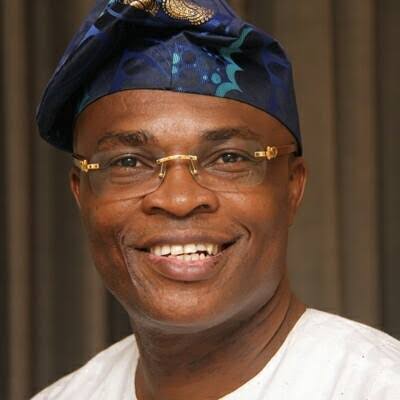
Nigerians should look beyond ethnicity, region and the longstanding debate over rotational presidency when choosing the country’s next leader, according to a chieftain of the African Democratic Congress (ADC), Kenneth Imasuagbon.
The former Edo State governorship aspirant said the priority ahead of the 2027 election should be finding a president with the ability to confront Nigeria’s economic, security and infrastructure challenges.
Speaking to journalists in Benin, Imasuagbon argued that presidential rotation is not a requirement of the Nigerian Constitution and should therefore not outweigh the question of competence.
He said voters should be more concerned about replacing poor schools with better ones, improving healthcare and addressing hardship than debating where the next president comes from.
Imasuagbon specifically appealed to voters in the South to support former Vice President Atiku Abubakar, who is contesting the 2027 presidency on the ADC platform.
According to him, Atiku has demonstrated the experience and determination needed to improve the country, describing the former vice president as someone capable of promoting national unity and fairness.
He also accused the Bola Tinubu administration of worsening economic pressure through policies including the removal of fuel subsidy, while expressing concern about the condition of roads, electricity and other infrastructure.
Imasuagbon argued that the next administration must focus on practical improvements in areas such as power, transportation, employment, security and public services.
The ADC chieftain also dismissed the idea that the ruling All Progressives Congress (APC) would automatically benefit from its incumbency advantage in 2027.
He maintained that the electorate ultimately determines the outcome of an election, arguing that voters could change the political direction of the country if they were determined to do so.
Imasuagbon further criticised what he described as regional and ethnic considerations in the distribution of political appointments and opportunities, insisting that the next president should give Nigerians across different parts of the country a sense of belonging.
His comments come as political parties and their candidates intensify preparations for the 2027 presidential election.
Opinion
Lesson from Dotun Oladipo’s Brave Daughters, by Bamidele Johnson
Lesson from Dotun Oladipo’s Brave Daughters, by Bamidele Johnson
I hope to grow old. I want to see my kids become real adults, find their own feet, make mistakes, recover from them, and perhaps one day complain that their own children are giving them grey hairs. I want that plainly stated before anything else, as everything that follows might read as a man agreeing to an early exit rather than a man simply being honest about the odds.
I want the decades. I want to become the grandfather who repeats the same stories until nobody bothers correcting him anymore. But wanting a thing and being granted are different things. The last year has made that difference harder to ignore than I would like. I have lost many friends recently to keep thinking that optimism is my natural resting state. Some of these men had better blood pressure than mine, better habits, better everything that is supposed to count. It did not save them.
There is no formula I know that reliably separates the men who make it to 70 from those who do not. Anyone who says he knows one is selling something. So, I do not assume that old age is an already booked destination. Even if I once did, which I doubt, the last three years have cured me of such an illusion. As such, I treat it as a hope rather than an expectation, and I have found that a more honest way to live.
It is exactly why I want something placed on record now, while I am still able to place things on record, rather than leave it for people to guess what my wishes were in the fog of a funeral week. If I do not make old bones, my children are not to be asked to read tributes at my funeral. Not one line, however short, however lovingly written.
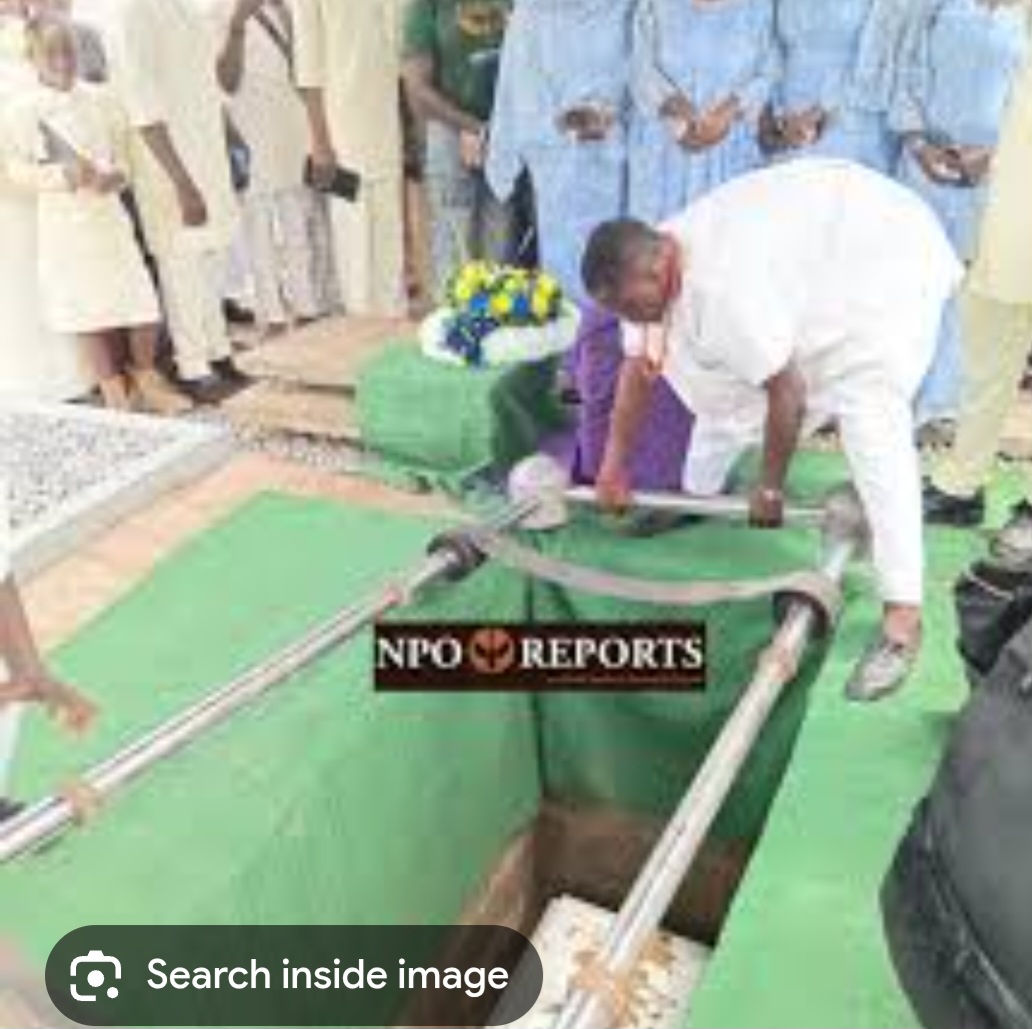
This, for me, was settled today rather than re-opened. At Dotun Oladipo’s funeral service, his three daughters took turns to read their tributes to their dad, and I found myself watching them with awe. There was a kind of strength in them that I do not possess. It is the strength needed to stand in front of a hall brimming with grieving adults and speak about a man they have just lost. Forever. Strength, however, is not the same as ease. I could see plainly what that strength was costing them as they read. Their voices caught. Their composure held and then did not hold and then held again through sheer will.
In front of them, in the pews, men and women considerably older than them came undone in ways the girls themselves were somehow managing to resist. I went mightily close. Some of the sobbing was quiet, the type people try to fold into a handkerchief. Some of it was not quiet at all, the kind that announces itself whether or not you want it.
Those young women honoured their father with a grace that is beyond me. What they did was astonishing. So, what I am attempting is an observation of a custom I have now watched wound people. This was not the first time I had watched this particular ritual extract more than it should from people already running on fumes. I saw an earlier and harder version of it at a friend’s wake back in 2015.
The first son was called forward to read his father’s tribute, and he could not do it. He tried, but the words would not come, and he stood there in front of a crowd of mourners, with his grief simply refusing to organise itself into sentences. The officiating minister, rather than releasing him from the task, urged him to continue. I sat fizzing with sorrow and ire. He could not go on and, eventually, the minister accepted, but not before insisting a while longer than it should have reasonably taken. His younger brother was called up next, presumably on the theory that if one grieving son could not manage it, maybe another one could. He flunked it in the same way. Grief does not distribute itself more conveniently among siblings just because a programme has been printed and needs to be followed.
I have turned that memory over many times since, trying to work out why this part of the rites is treated as mandatory in the first place. I have not found a satisfying answer. Maybe it comes from a belief that a child’s words carry more weight than anyone else’s, which may even be true, but weight is exactly the problem when those carrying it are struggling to hold themselves together with nothing but adrenaline and the fear of dissolving in public.
Maybe it is simply inertia, the reason we still do a hundred things at funerals that nobody can explain the original purpose of. Either way, I have stopped looking for the justification. I no longer think one exists that is good enough to weigh against what I watched happen to that boy in 2015.
So, let this stand as my instruction rather than my preference, the kind of thing I would rather state plainly now than leave for my children to infer later from how uncertain I sound when the subject comes up in passing. If I do not get the old age I am hoping for, my children will not be asked to read a single word over my body. Someone else can speak for me. A friend, a stranger with a steadier voice and a smaller stake in the loss, anyone whose grief will not be quite so total that standing upright becomes almost impossible.
My children, of course, will sit in front and fall apart if that is what the day requires of them, but without the microphone. That, at least, is one small mercy I intend to arrange for them while I am still here to arrange it.
Dotun deserved every bit of the send-off his daughters gave him today, and I suspect he would have been the first to tell them to sit down and let someone else carry the weight for a while. He did not get a say in that, as none of us ever do once we are the ones being spoken of rather than the ones speaking. Rest well, Dotun. You raised three young women whose strength I will not soon forget. That alone says everything worth saying about the man you were.
-

 News2 days ago
ECOWAS Biometric Card Expands as Seven Countries Begin Rollout
-
 metro2 days ago
FG Suspends Niger NSCDC Commandant As 37 Suspected Illegal Miners Die In Custody
-

 Sports2 days ago
Ballon d’Or 2026: Mbappe Responds to Yamal’s Bold Claim
-
 International2 days ago
Ninth Body Discovered in South Africa: Nigeria Issues Urgent Safety Alert to Nationals
-

 Politics2 days ago
Toyin Abraham Rejects Lagos APC Campaign Council Inclusion
-

 Entertainment3 days ago
Adunni Ade Reveals Christian Fans Unfollowed Her After Publicly Identifying as Muslim
-

 Politics2 days ago
2027: Sowore Says He’d Rather Die Than Travel Abroad For Medical Treatment
-
 Politics2 days ago
2027: Tinubu May Mediate Wike-APC Governors Rift In France