

Opinion
How Wande Abimbola rejected IBB’s ING bait, and other stories (1)
How Wande Abimbola rejected IBB’s ING bait, and other stories (1)
Tunde Odesola
(Published in The PUNCH, on Friday, March 21, 2025)
Embarrassment has no truer depiction than the guilt a debtor feels each time the string of his indebtedness twangs at his soul. I am talking about an honest debtor here. A sincere debtor feels sad whenever his inability to mend his broken promises nudges his conscience. He sincerely wishes to pay but cannot, yet.
However, the insincere debtor, hard like the shell of a tortoise, is unperturbed whenever he remembers his empty repayment promises. He blinks like a toad on a full stomach, “My lender knows times are hard. I cannot come and kill myself, jare. I will pay someday,” he says with malicious arrogance.
Despite living in a cutthroat world of credit facilities, I dislike borrowing. However, due to banking bottlenecks, I occasionally need a quick loan. When this arises, my mind will never be at rest until I pay it off. Whenever I’m indebted, the chiefest of my prayer points will be the grace not to die suddenly so I can pay up my debt and not carry someone’s money to the grave.
I always say this to my lender, “Uhmm, if I die today and you start crying, people will think you are crying for me, they won’t know you are crying for your money. You would come to my wake, look at my corpse and say in your mind, ‘Look at his big head! He has carried my money to heaven, idiot!’”
My lender would laugh and say, “Ha, you are not serious. You are not going to die now. Do not talk like that!”
But I talk like that because I know death lurks in the shadow of every mortal. I know each minute is a gift; each breath – a favour.
A jolly good friend of mine, Idowu Bailey, was born on Wednesday, November 14. Last month, Bailey, a giant, danced at a wedding anniversary shindig on a Saturday, visited his mechanic on Tuesday, spoke with a friend on Wednesday, and on Thursday, he died in the parking lot of his workplace, right inside the car with which his wife had taken him to work. Born in 1962, Bailey was 62 when he died. Bailey had a good heart and left a good impression of himself on everyone.
READ ALSO:
- Soldiers arrest 16 suspected oil thieves in Port Harcourt
- Controversial singer Portable apologises to Saheed Osupa over copyright dispute
- Bandits strike again in Benue, gun down 2 soldiers, 3 others
When he noticed our church pastor, Mr Peter Oyediran, had chosen the ‘Gorimapa’ hairstyle, which leaves no strand of hair on the head, Bailey presented a new set of clippers to the cleric, saying, “I observed you keep no hairs on your head nowadays. Here is a good set of clippers, sir.”
Debt. Since January last year, I have looked forward to writing a sequel to the series, “Wande Abimbola @ 91: How an àbíkú decided to live”, which I started in honour of the exemplary life of a former Vice Chancellor, Obafemi Awolowo University, Ile-Ife.
The series was a debt I felt I owed to the integrity, dedication, courage and excellence that define the grass-to-grace story of a village boy, who rose from the relics of the ancient Oyo Empire to peak at the academic mountains of Harvard University, Boston University, Amherst College, University of Louisville, Kentucky; Colgate University, Smith College, Massachusetts; and Great Ife, among others.
But I could not bring myself to do a follow-up on my series on Abimbola because Nigeria is a land of ‘one week, plenty troubles’. And, to remain in touch with readers, a columnist’s commentaries should sync with current affairs and realities.
Here’s a rundown of my articles between November last year and March, this year: the nation woke up to a member of the House of Representatives, Alex Ikwechegh, dehumanising and threatening to make a taxi driver disappear. A few days after this, a violence-encouraging video of the Alapomu of Apomu, Oba Kayode Afolabi, surfaced online, charging some members of the Peoples Democratic Party to take up arms during an election. Days apart, the story of Godwin Emefiele’s alleged 753-duplex estate broke, then Dele Farotimi wrote a book, and the Timi of Ede knelt to the Emir of Ilorin.
Along the way came the king of Orile-Ifo, Oba Abdulsemiu Ogunjobi, who threatened a 73-year-old man, Pa Arinola Abraham, with death. Later, IBB sold the most dishonest autobiography of all time. Then Bola Tinubu’s Lagos State House of Assembully replaced democracy with tyranny just before Senator Natasha Akpoti-Uduaghan dragged Senate President, Godswill Akpabio, to the virtual superhighway, accusing him of tailgating.
Each week I tried to go back to the Wande Abimbola story, a calamitous story broke in Naija. Just this week, a state of emergency was foisted on Rivers State by the Asiwaju of Nigeria.
Since life is but a walking shadow and Baba Abimbola is 92, I pushed the pause button on my editorial desk to celebrate the Awise while he is alive. More so, President Tinubu breathed a six-month lifespan into the nostrils of the emergency rule in Rivers, so I have enough time to come back and paddle my canoe on the Rivers of turbulence.
This series is a further exploration of Abimbola’s phenomenon as a beacon of good leadership, transparency in public office and religious fidelity.
READ ALSO:
- UK announces new passport application fees starting April 2025
- Court lifts order stopping Senate probe on Natasha Akpoti
- Mohbad’s brother, Adura, arrested by police in Lagos
To different people, Abimbola means different things. While many foreign religion worshippers call him a pagan, he is a hero to traditional religion adherents. Wande, the only surviving son of Iroko Abimbola, has spoken at the conclaves of world religious leaders, which included the Pope, upholding the truth of Ifa and radiating the essence of Yoruba culture and tradition.
Abimbola and the late MKO Abiola shared one thing in common. Both are abikus. “I am an abiku, who decided to stay after five comings. Abiola came 23 times before he chose to live.”
Abimbola and MKO met in the late 1960s at the Staff School of the University of Lagos. “I joined UNILAG as a senior research fellow in 1966 and I enrolled my children at the staff school. I took them to and fro the school. Abiola too was doing the same thing for his two children – Kola and his sibling. In the afternoon, we both got there before the school closed. It was while waiting for the school to close that we got talking. Abiola was an accountant with the International Telephone and Telegraph Corp,” the Awise Agbaye began.
He continued, “Abiola was a most jovial friend. He regularly visited me at my UNILAG house on Bode Thomas Street in Surulere, Lagos. When he comes, he would say, “Bàbá Àgbà, óò dè ní yòdí, óò dè ní béèrè énìkankan, óò dè je ka sere lo…,” exhorting me for not asking of him and urging me to let us go and hang out.
“Abiola told me he came from a very poor background and had to play a stringed musical instrument called ‘Osugbo’ to fend for himself. He loved me and I loved him, too. In 1972, I left UNILAG and went to Ife as a senior research fellow, so we lost contact temporarily. It was later, I began to read about him in newspapers and I began to wonder if it was the same Abiola who was my friend. One day, he sent an invite to me for the christening of his child. So, I went, and we reunited.
READ ALSO:
- UN staff member killed in central Gaza blast, five others injured
- Air Peace slashes Nigeria-London fare by N600,000
- Tinubu’s state of emergency prevented Fubara from impeachment – AGF
“I soon became the vice chancellor, and he would visit me for three or four days. His convoy would come late into the night, and I would lodge him in the chancellor’s lodge, which was behind my lodge. Anytime he visited, the domestic staff knew they had hit a jackpot because he would give them a huge sum of money that they all would share. After sharing, each worker would get as much as N5,000 when their salary was less than N200,” Abimbola said.
After the world-acclaimed scholar finished his two-term tenure of seven years as V-C (1982-1989), he tried his hands in politics, emerging a senatorial candidate of the Social Democratic Party in Oyo State after he was rigged out of the governorship race, which he said he won. Abimbola said the late Strong Man of Ibadan politics, Alhaji Lamidi Adedibu, and some other Oyo political leaders appeased him with a senatorial ticket. “They said they knew I won the primary but that they want an Ibadan son, Kolapo Ishola, to be the governor. After consultations with my people in Oyo, I accepted and worked for Ishola in Oyo.”
Abimbola won his senatorial election by a landslide. When the National Assembly convened, he emerged as the Senate Majority Leader, making him a leading Yoruba voice in national politics at the time.
No sooner had the Senate convened than the majority leader attracted enemies to himself when he single-handedly repelled the move by senators to determine and approve their salaries.
It was also in his direction that the Ibrahim Babangida military junta first looked when searching for who would head the Interim National Government – after annulling the June 12, 1993, presidential election won by Chief MKO Abiola.
“I was contacted twice to come and head the Interim National Government. I think they chose me because I was the highest-ranking Yoruba political office holder then. They probably thought if they chose me, that would assuage the feelings of the Yoruba. Four reasons made me reject the offer,” Abimbola said.
To be continued.
Email: tundeodes2003@yahoo.com
Facebook: @Tunde Odesola
X: @Tunde_Odesola
How Wande Abimbola rejected IBB’s ING bait, and other stories (1)







Opinion
2027: Competence, Not Zoning, Should Decide Nigeria’s Next President — Imasuagbon
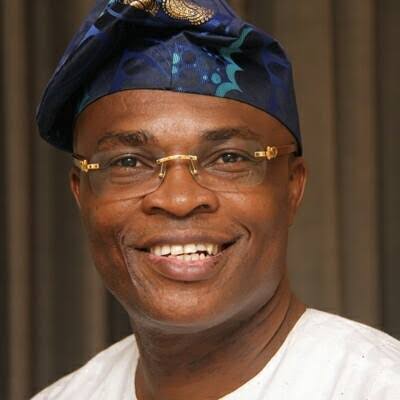
Nigerians should look beyond ethnicity, region and the longstanding debate over rotational presidency when choosing the country’s next leader, according to a chieftain of the African Democratic Congress (ADC), Kenneth Imasuagbon.
The former Edo State governorship aspirant said the priority ahead of the 2027 election should be finding a president with the ability to confront Nigeria’s economic, security and infrastructure challenges.
Speaking to journalists in Benin, Imasuagbon argued that presidential rotation is not a requirement of the Nigerian Constitution and should therefore not outweigh the question of competence.
He said voters should be more concerned about replacing poor schools with better ones, improving healthcare and addressing hardship than debating where the next president comes from.
Imasuagbon specifically appealed to voters in the South to support former Vice President Atiku Abubakar, who is contesting the 2027 presidency on the ADC platform.
According to him, Atiku has demonstrated the experience and determination needed to improve the country, describing the former vice president as someone capable of promoting national unity and fairness.
He also accused the Bola Tinubu administration of worsening economic pressure through policies including the removal of fuel subsidy, while expressing concern about the condition of roads, electricity and other infrastructure.
Imasuagbon argued that the next administration must focus on practical improvements in areas such as power, transportation, employment, security and public services.
The ADC chieftain also dismissed the idea that the ruling All Progressives Congress (APC) would automatically benefit from its incumbency advantage in 2027.
He maintained that the electorate ultimately determines the outcome of an election, arguing that voters could change the political direction of the country if they were determined to do so.
Imasuagbon further criticised what he described as regional and ethnic considerations in the distribution of political appointments and opportunities, insisting that the next president should give Nigerians across different parts of the country a sense of belonging.
His comments come as political parties and their candidates intensify preparations for the 2027 presidential election.
Opinion
Lesson from Dotun Oladipo’s Brave Daughters, by Bamidele Johnson
Lesson from Dotun Oladipo’s Brave Daughters, by Bamidele Johnson
I hope to grow old. I want to see my kids become real adults, find their own feet, make mistakes, recover from them, and perhaps one day complain that their own children are giving them grey hairs. I want that plainly stated before anything else, as everything that follows might read as a man agreeing to an early exit rather than a man simply being honest about the odds.
I want the decades. I want to become the grandfather who repeats the same stories until nobody bothers correcting him anymore. But wanting a thing and being granted are different things. The last year has made that difference harder to ignore than I would like. I have lost many friends recently to keep thinking that optimism is my natural resting state. Some of these men had better blood pressure than mine, better habits, better everything that is supposed to count. It did not save them.
There is no formula I know that reliably separates the men who make it to 70 from those who do not. Anyone who says he knows one is selling something. So, I do not assume that old age is an already booked destination. Even if I once did, which I doubt, the last three years have cured me of such an illusion. As such, I treat it as a hope rather than an expectation, and I have found that a more honest way to live.
It is exactly why I want something placed on record now, while I am still able to place things on record, rather than leave it for people to guess what my wishes were in the fog of a funeral week. If I do not make old bones, my children are not to be asked to read tributes at my funeral. Not one line, however short, however lovingly written.
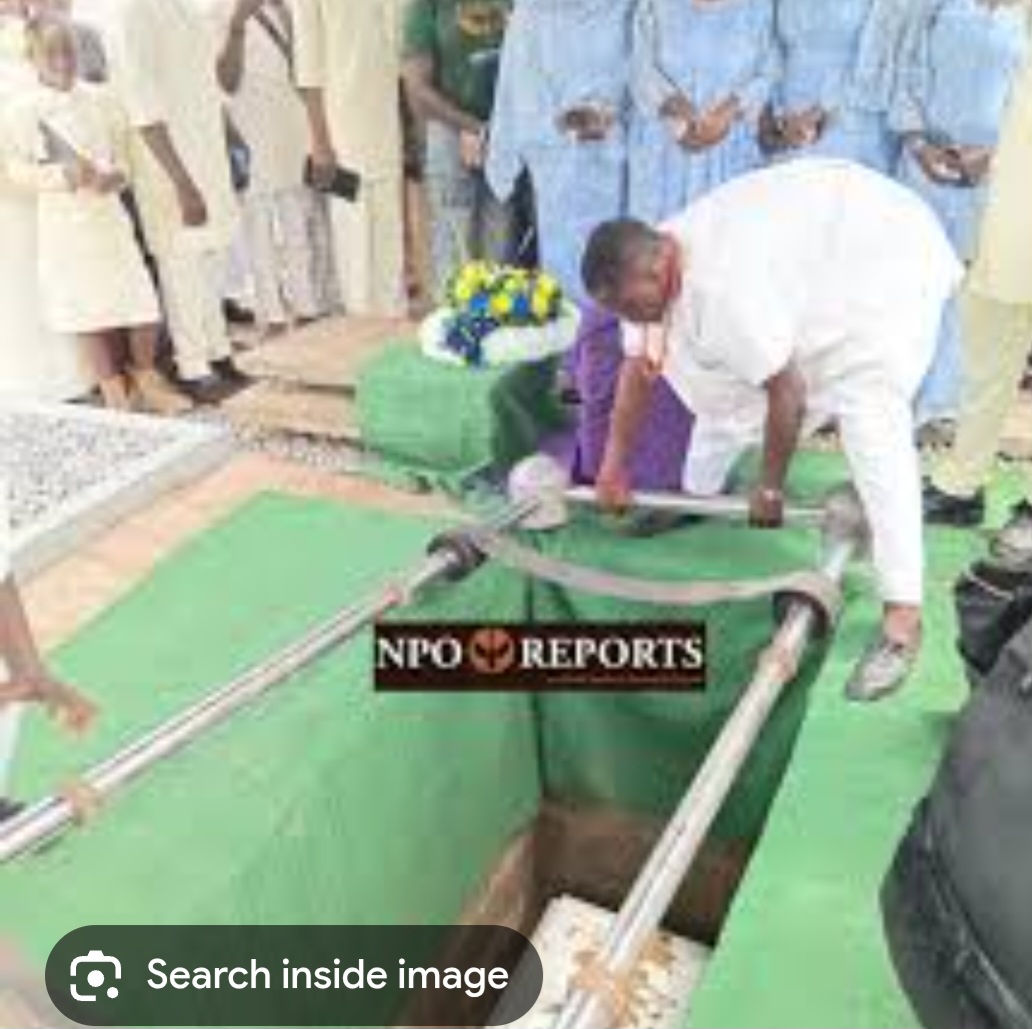
This, for me, was settled today rather than re-opened. At Dotun Oladipo’s funeral service, his three daughters took turns to read their tributes to their dad, and I found myself watching them with awe. There was a kind of strength in them that I do not possess. It is the strength needed to stand in front of a hall brimming with grieving adults and speak about a man they have just lost. Forever. Strength, however, is not the same as ease. I could see plainly what that strength was costing them as they read. Their voices caught. Their composure held and then did not hold and then held again through sheer will.
In front of them, in the pews, men and women considerably older than them came undone in ways the girls themselves were somehow managing to resist. I went mightily close. Some of the sobbing was quiet, the type people try to fold into a handkerchief. Some of it was not quiet at all, the kind that announces itself whether or not you want it.
Those young women honoured their father with a grace that is beyond me. What they did was astonishing. So, what I am attempting is an observation of a custom I have now watched wound people. This was not the first time I had watched this particular ritual extract more than it should from people already running on fumes. I saw an earlier and harder version of it at a friend’s wake back in 2015.
The first son was called forward to read his father’s tribute, and he could not do it. He tried, but the words would not come, and he stood there in front of a crowd of mourners, with his grief simply refusing to organise itself into sentences. The officiating minister, rather than releasing him from the task, urged him to continue. I sat fizzing with sorrow and ire. He could not go on and, eventually, the minister accepted, but not before insisting a while longer than it should have reasonably taken. His younger brother was called up next, presumably on the theory that if one grieving son could not manage it, maybe another one could. He flunked it in the same way. Grief does not distribute itself more conveniently among siblings just because a programme has been printed and needs to be followed.
I have turned that memory over many times since, trying to work out why this part of the rites is treated as mandatory in the first place. I have not found a satisfying answer. Maybe it comes from a belief that a child’s words carry more weight than anyone else’s, which may even be true, but weight is exactly the problem when those carrying it are struggling to hold themselves together with nothing but adrenaline and the fear of dissolving in public.
Maybe it is simply inertia, the reason we still do a hundred things at funerals that nobody can explain the original purpose of. Either way, I have stopped looking for the justification. I no longer think one exists that is good enough to weigh against what I watched happen to that boy in 2015.
So, let this stand as my instruction rather than my preference, the kind of thing I would rather state plainly now than leave for my children to infer later from how uncertain I sound when the subject comes up in passing. If I do not get the old age I am hoping for, my children will not be asked to read a single word over my body. Someone else can speak for me. A friend, a stranger with a steadier voice and a smaller stake in the loss, anyone whose grief will not be quite so total that standing upright becomes almost impossible.
My children, of course, will sit in front and fall apart if that is what the day requires of them, but without the microphone. That, at least, is one small mercy I intend to arrange for them while I am still here to arrange it.
Dotun deserved every bit of the send-off his daughters gave him today, and I suspect he would have been the first to tell them to sit down and let someone else carry the weight for a while. He did not get a say in that, as none of us ever do once we are the ones being spoken of rather than the ones speaking. Rest well, Dotun. You raised three young women whose strength I will not soon forget. That alone says everything worth saying about the man you were.
Opinion
‘Tinubu Will Win Again in 2027’ — Charismatic Bishops’ Secretary
‘Tinubu Will Win Again in 2027’ — Charismatic Bishops’ Secretary
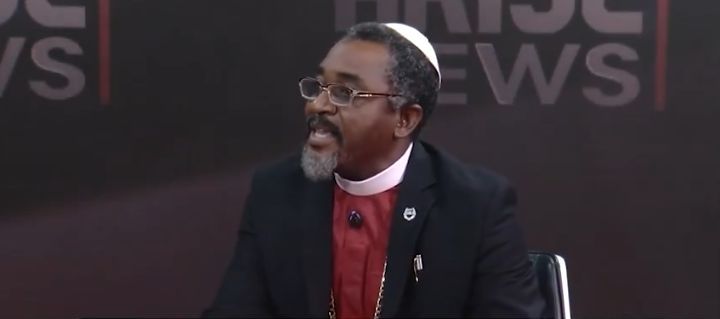
A senior Nigerian cleric, Archbishop Chivir Chianson, has declared that President Bola Tinubu will retain the presidency after the 2027 general election, attributing the prediction to a message he said came from God.
Chianson, who serves as Secretary General of the Charismatic Bishops’ Conference of Nigeria, made the statement while appearing on Arise Television on Saturday.
Rather than basing his prediction on political calculations, the archbishop said his confidence came from what he described as the prophetic role of bishops.
He maintained that the conference had previously spoken about Tinubu’s political future based on what he said was divine revelation and that the President would return for another term.
Chianson also predicted that Tinubu’s performance would improve if he wins the 2027 election.
READ ALSO:
- DSS warns Osun churches, mosques, markets over alleged terrorist attack plot ahead of 2027
- ‘Tinubu Will Win Again in 2027’ — Charismatic Bishops’ Secretary
- Fake miracles, bogus grants: How clerics allegedly fleece Nigerians of millions
Addressing the political opposition, the cleric said the bishops could not be blamed if rival parties failed to unite or organise themselves effectively ahead of the election.
He also sought to clarify the position of the bishops when dealing with government, saying their role in speaking truth to power did not mean they should approach political leaders with hostility or disrespect.
According to him, the Constitution, alongside their religious convictions, should guide how they engage the President and the country.
Chianson said he was sufficiently confident in his prediction to promise that he would return to the Arise TV studio after the 2027 election, when he expects the result to demonstrate that the bishops’ prophecy was correct.
His comments add a religious dimension to the increasingly active political conversation surrounding the 2027 presidential race.
‘Tinubu Will Win Again in 2027’ — Charismatic Bishops’ Secretary
-
 Business3 days ago
Dangote: ₦525 Refinery Shares Could Rise to ₦10,000
-
 News2 days ago
SERAP Threatens Legal Action Over ₦126bn INEC Electoral Funds
-

 metro3 days ago
MURIC fires back at Peter Obi: Forget Sallah ceremony, free Nigerian Muslims
-
 metro3 days ago
Abia Police Arrest Father, Three Others Over Alleged Attempt to Sell 16-Month-Old Daughter
-
 International3 days ago
Trump Tells Supporters to ‘Cheat Like Hell’ Ahead of US Election
-

 metro3 days ago
How I Conspired with My Son’s Teacher to Stage His Kidnap for N15m Ransom
-
 Politics2 days ago
Five Islamic Clerics Abducted After Tinubu Re-Election Prayer At Yari’s Zamfara Residence
-
 metro3 days ago
FG Targets 2 Million Creative Jobs by 2030