

International
Bangkok bar fire kills at least 27, leaves 25 critically injured
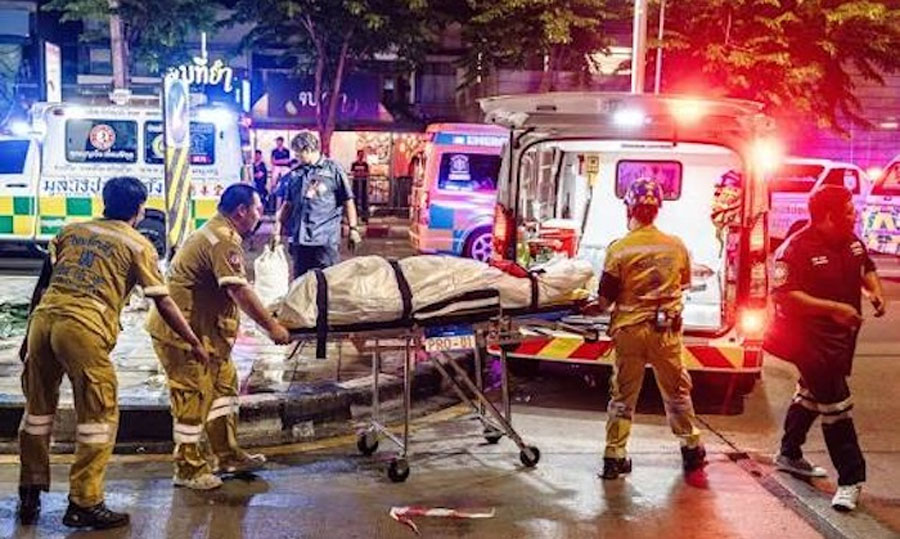
Bangkok bar fire kills at least 27, leaves 25 critically injured
At least 27 people have been killed and 25 others remain in critical condition after a devastating fire engulfed Rong Beer Na Lat Phrao bar in Bangkok, Thailand, triggering one of the country’s deadliest nightlife disasters in recent years.
The tragic incident occurred late on Sunday in Bangkok’s Chatuchak district, where the blaze reportedly started near the stage of the crowded entertainment venue before spreading rapidly through the building, cutting off electricity and filling the premises with thick smoke.
Eyewitnesses said panic erupted as customers and staff scrambled for safety, with many forced to flee through the building’s main entrance while flames spread across the venue.
Videos shared on social media captured horrifying scenes of terrified patrons screaming for help, while some escaped with their clothes on fire.
Emergency responders were alerted by a passing motorist shortly after midnight, prompting firefighters to rush to the scene. The fire was brought under control within about 30 minutes, but not before causing extensive destruction.
Rescue teams later discovered the bodies of many victims inside one of the bar’s bathrooms, where they had reportedly taken shelter in a desperate attempt to escape the smoke and flames.
According to Thai authorities, nine men and 18 women were among those killed, while 73 people sustained injuries, including 25 victims who remain in critical condition in hospitals across Bangkok.
Officials from Bangkok’s Department of Disaster Prevention and Mitigation said preliminary findings indicate that most of the victims died from smoke inhalation, while others suffered severe burns during the fire.
READ ALSO:
- UK reaffirms visa requirement for Nigerians, citizens of 32 other African countries
- Publisher arraigned over alleged false reports claiming Gov Soludo disowned son
- Dalung visits family of lynched Kaduna Islamic teacher, demands justice beyond sympathy
One survivor, Kaew-udon Poungppany, a 24-year-old citizen of Laos, recounted his unsuccessful attempt to rescue his younger brother, Phonepaseut Poungppany, who died in the tragedy.
“I grabbed a fire extinguisher and sprayed it at the door, but I couldn’t go any further. I heard people screaming,” he told reporters.
Another eyewitness, Surin Jaiharn, said he helped several people escape by using pieces of clothing to extinguish flames on their bodies before emergency services arrived.
Authorities have launched a full-scale investigation into the cause of the fire.
Preliminary investigations suggest the blaze may have been triggered by an electrical short circuit in an air-conditioning unit, although officials stressed that forensic experts are still examining the scene and no official cause has been confirmed.
Bangkok Governor Chatchart Sittipunt said investigators are also examining whether highly flammable decorative materials installed on the ceiling contributed to the rapid spread of the fire.
He disclosed that some victims were found unconscious close to the emergency exit, raising concerns that the escape route may have been blocked or difficult to access during the evacuation.
Thailand’s Deputy Prime Minister and Interior Minister, Anutin Charnvirakul, visited the scene and said a musician who was performing when the fire broke out reported hearing what sounded like explosions before smoke and flames engulfed the building.
According to the minister, many customers ran toward the rear of the building and hid inside the toilets, where a large number of victims were later found.
Authorities have since sealed off the entertainment venue, while the Chatuchak District Office ordered the building closed for 30 days pending the outcome of investigations.
The Thai government also announced financial assistance for victims’ families. Relatives of those who died will receive 29,300 Thai baht in compensation, while injured survivors undergoing treatment will receive 4,000 baht in emergency assistance.
The latest tragedy has once again raised concerns over fire safety standards in Thailand’s entertainment industry.
In 2022, a nightclub fire in Chon Buri Province killed 22 people and injured dozens after flames rapidly engulfed the venue.
Earlier, the Santika Club fire in Bangkok on January 1, 2009, claimed 66 lives and left more than 200 people injured, prompting calls for stricter enforcement of fire safety regulations.
In 2024, another electrical fire at Bangkok’s famous Chatuchak Weekend Market killed more than 1,000 animals, further highlighting ongoing concerns over electrical safety in public facilities.
Authorities have pledged a thorough investigation into the latest disaster, with investigators expected to determine whether negligence, electrical faults or violations of building safety regulations contributed to the deadly fire.
Bangkok bar fire kills at least 27, leaves 25 critically injured


International
Second Houthi Strike in Two Days Kills One at Riyadh Airport
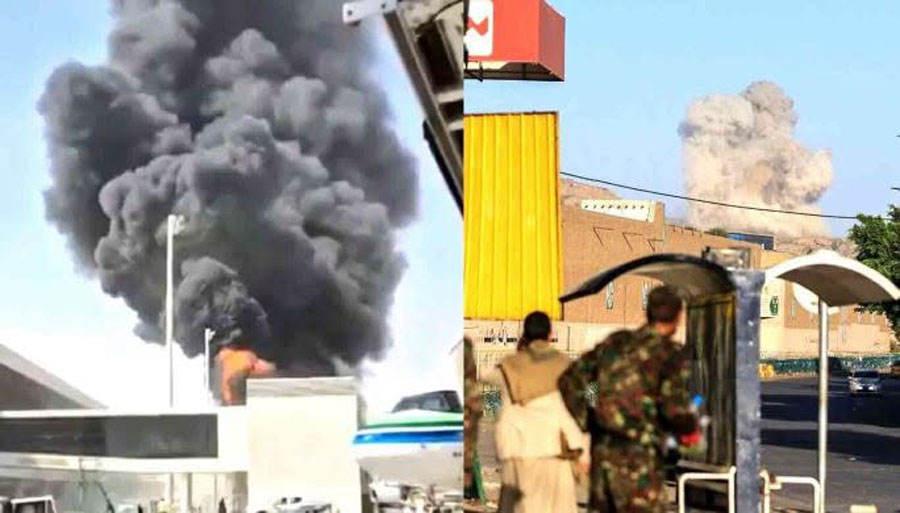
Saudi Arabia is facing mounting security concerns after a second consecutive day of attacks on Riyadh’s King Khalid International Airport left one person dead and 11 others injured, following an earlier strike that killed at least 13 people and wounded more than 300.
The latest attack occurred on Sunday, October 11, 2026, when a projectile struck Terminal 4 at the airport in the Saudi capital. The country’s General Authority of Civil Aviation confirmed that the person killed was a Pakistani resident, while the 11 injured people were taken to hospitals for treatment.
The incident came less than 24 hours after another deadly attack on the airport, prompting renewed fears about the safety of passengers, airport workers and other civilians as tensions involving Saudi Arabia and Yemen’s Houthi movement intensified.
Saudi authorities began assessing the damage and inspecting airport facilities after the latest strike. Airport operations had already been disrupted following Saturday’s attack, with reports indicating that the closure was extended while officials reviewed security conditions and determined when flights could safely resume.
The attacks have raised serious concerns about the vulnerability of Saudi Arabia’s aviation infrastructure, particularly as the Houthis have threatened further strikes against airports and other strategic facilities in the kingdom.
The death toll from Saturday’s attack was initially reported at 12, with more than 300 people injured. India’s embassy in Saudi Arabia later confirmed that an Indian citizen had died from injuries sustained in the incident, bringing the reported toll to at least 13 deaths from that attack alone. The additional fatality reported on Sunday brings the combined reported death toll from the two incidents to at least 14.
READ ALSO:
- 2027 Elections: Atiku Demands Names of INEC Ballot Printers, Questions Secret Contracts
- ₦8.7bn Erosion-Control Budget Gap Raises Questions as Anambra Gullies Expand
- Fuel Subsidy May Ease Hardship Today, But Could Cripple Nigeria’s Economy Tomorrow — FG
The figures relate to separate attacks and should not be confused with the 11 people injured in Sunday’s incident.
The Houthi movement, which is aligned with Iran and controls large parts of northern Yemen, claimed responsibility for attacks on Saudi targets. Its military spokesperson, Yahya Saree, said the group had carried out operations involving missiles and drones against airports and facilities belonging to Saudi energy giant Aramco.
The Houthis identified King Khalid International Airport in Riyadh and King Fahd International Airport near Dammam among their targets. The group also warned airlines and passengers against using Saudi airports and airspace, threatening further operations as the confrontation escalated.
Saudi authorities reported additional security incidents during the same period. The Saudi-led coalition said air defences intercepted a cruise missile near King Khalid International Airport. A drone was also intercepted in the Eastern Province, while a ballistic missile reportedly launched towards Khamis Mushait was intercepted.
Emergency alerts were issued in Abha, southern Saudi Arabia, although civil defence authorities later said the immediate danger had passed.
Reports also indicated that King Fahd International Airport in Dammam came under attack on Sunday evening. Officials said damage assessments and safety inspections were under way, although the full extent of the damage was not immediately clear.
The incidents have heightened concerns that the attacks could extend beyond Riyadh to other parts of Saudi Arabia, threatening civilian infrastructure and complicating efforts to maintain normal aviation operations.
The repeated strikes are particularly alarming because Riyadh’s airport was reportedly targeted several times within a five-day period. The pattern has intensified pressure on Saudi authorities to strengthen air defences and protect critical infrastructure against further missile and drone attacks.
Saudi Arabia has long supported Yemen’s internationally recognised government in its conflict with the Houthis. The latest attacks have increased the risk of renewed confrontation between Riyadh and the armed group, potentially undermining efforts to contain the wider regional crisis.
Pakistan’s Prime Minister, Shehbaz Sharif, condemned the attack on Riyadh airport and expressed solidarity with Saudi Arabia. He called for an end to attacks on civilians and critical infrastructure, warning of the wider implications for regional security and stability.
The attacks have also raised concerns about international air travel, given Saudi Arabia’s importance as a regional aviation hub and a destination for millions of travellers, including religious pilgrims. Any prolonged closure of major airports could disrupt passenger movements, airline schedules and international connections.
Beyond aviation, the escalation could have implications for global energy markets and maritime trade. Saudi Arabia is a major oil producer, while the wider conflict has raised concerns about security along important shipping routes, including the Red Sea and Bab el-Mandeb Strait, which connects the Red Sea with the Gulf of Aden.
Sustained attacks on transport and energy infrastructure could increase shipping risks, insurance costs and pressure on supply chains, although the extent of any economic impact would depend on the duration and scale of the escalation.
Saudi authorities now face the immediate challenge of assessing damage, restoring airport operations safely and protecting passengers and aviation facilities against further attacks. The Houthis’ warning of additional strikes has added uncertainty over when normal air travel can resume and whether other strategic locations could become targets.
The latest incidents underscore the growing threat to civilian infrastructure as regional tensions intensify, with potential consequences for Saudi Arabia’s security, international aviation, maritime trade and the wider Middle East.
Second Houthi Strike in Two Days Kills One at Riyadh Airport
International
Russia-Ukraine Truce in Doubt as Zelenskyy Questions Trump’s Ceasefire Announcement
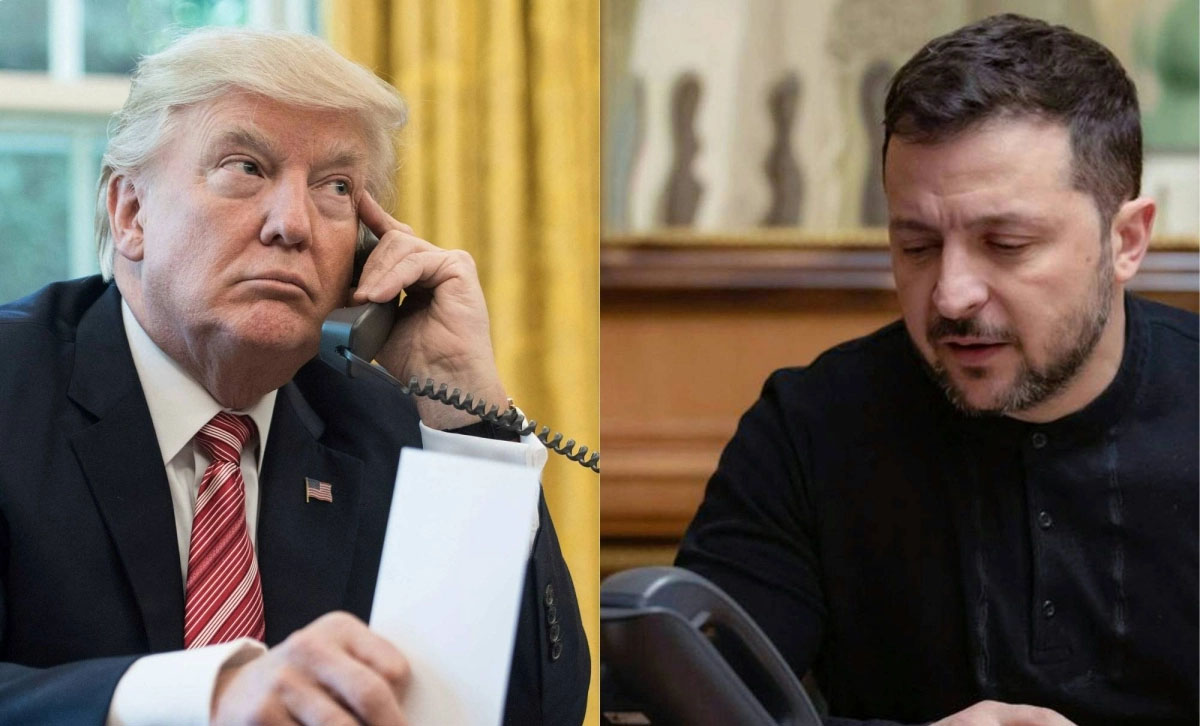
Russia-Ukraine Truce in Doubt as Zelenskyy Questions Trump’s Ceasefire Announcement
United States President Donald Trump has announced an immediate energy ceasefire between Russia and Ukraine, claiming both countries have agreed to stop attacks on each other’s energy infrastructure, but Ukrainian President Volodymyr Zelenskyy says he was not aware of any such agreement.
Trump made the announcement on Sunday, October 11, 2026, in a post on his Truth Social platform, declaring that the ceasefire would take effect immediately.
“Effective immediately, there is an ENERGY CEASEFIRE in the War between Russia and Ukraine. Both parties have agreed. Do not break it!” Trump wrote.
However, the announcement was not immediately confirmed by either Moscow or Kyiv, raising questions about whether a formal agreement had been reached and how it would be implemented.
Zelenskyy told Axios that Trump’s announcement was the first he had heard of the purported agreement. He nevertheless indicated that Ukraine was prepared to accept a ceasefire if Russia agreed to stop its attacks on Ukrainian energy facilities.
“If President Trump negotiated it with Putin, please tell us when the ceasefire begins. We are ready and we will accept it,” Zelenskyy said.
Earlier on Sunday, the Ukrainian president reiterated Kyiv’s position that it would halt attacks on Russian oil refineries if Moscow stopped targeting Ukraine’s power infrastructure.
READ ALSO:
- Djibouti Boat Disaster: 139 Migrants Dead, Dozens Missing
- US Names 24 More Nigerians in Fresh Fraud, Money Laundering Crackdown
- How Bauchi Court Jailed Three 21 Years Each for Abducting Seven Children
Zelenskyy stressed that any agreement must be reciprocal and backed by credible guarantees, arguing that Ukraine could stop strikes on energy infrastructure if Russia demonstrated a genuine willingness to do the same.
The disagreement highlights the diplomatic challenges facing efforts to secure a halt to attacks on critical infrastructure amid the continuing war.
Russia has repeatedly targeted Ukraine’s electricity network and other energy facilities, damaging infrastructure and disrupting essential services. Ukraine, in turn, has launched drone attacks on Russian oil refineries and other strategic facilities, seeking to weaken Moscow’s ability to finance its military campaign.
Trump has criticised Ukraine’s attacks on Russian refineries, arguing that they contribute to disruptions in fuel supplies and higher energy prices. The issue has become increasingly significant amid pressure over rising diesel prices in the United States.
The announcement also followed a contentious diplomatic exchange between Trump and Zelenskyy. On Saturday, the US president urged Ukraine to stop attacking Russian oil refineries and suggested that Ukrainians should elect a different leader who could reach an agreement with Moscow.
Zelenskyy rejected the suggestion that Washington should determine Ukraine’s leadership, insisting that the choice belonged to the Ukrainian people. He also maintained that elections could not be held under the country’s current martial-law restrictions without the necessary changes to the security situation and legal framework.
The Ukrainian leader said he would be willing to organise elections if Russia agreed to a comprehensive 60-day ceasefire, which he argued would provide the conditions needed for a vote.
The latest dispute comes amid broader diplomatic efforts to end the war and disagreements over how much pressure should be placed on Moscow and Kyiv to make concessions.
Trump had announced a similar energy ceasefire in September, but the earlier declaration was not followed by a clearly confirmed, sustained agreement between the two countries.
The latest announcement therefore leaves key questions unresolved, including whether Russia has formally accepted the proposal, when any halt to attacks would begin, and what mechanisms would be used to monitor compliance.
For Ukraine, the immediate priority remains securing an end to Russian attacks on its energy infrastructure while retaining assurances that Moscow would not use a pause to its military advantage.
For now, Trump’s declaration represents a claimed diplomatic breakthrough rather than a fully verified agreement. Whether it leads to a genuine reduction in attacks will depend on confirmation from both sides and their willingness to honour reciprocal commitments.
Russia-Ukraine Truce in Doubt as Zelenskyy Questions Trump’s Ceasefire Announcement
International
US Names 24 More Nigerians in Fresh Fraud, Money Laundering Crackdown
The United States has named 24 more Nigerian nationals arrested by immigration authorities over alleged offences ranging from fraud and money laundering to identity theft, drug-related crimes, assault and forgery.
The names and photographs were published by the US Department of Homeland Security (DHS) as the administration of President Donald Trump continues its immigration enforcement campaign against non-US citizens accused of criminal offences.
The Nigerians were reportedly arrested in different parts of the country, with the allegations and offences listed against them varying from one individual to another.
Among those named are Emmanuel Omowaiye, listed in connection with mail fraud in Richmond, Texas; Laurene Onwuka, associated with fraud and impersonation in Chantilly, Virginia; and Olusegun Shonekan, listed for wire fraud in Newark, New Jersey.
Others include Olusegun Olaseni, associated with the sale of amphetamine in Greencastle, Indiana; Peter Ude, listed for wire fraud in Atlanta, Georgia; and Newton Jemide, whose listed offences include wire fraud, conspiracy and mail fraud in Fort Dix, New Jersey.
The list also names Shedrack Umukoro and Teslim Kiriji in connection with money laundering cases in Yazoo City, Mississippi. Olasoji Akinbode was listed for fraud and impersonation in Kearny, New Jersey, while Oluwatosin Afolabi was associated with fraud in Conroe, Texas.
READ ALSO:
- Fresh Oil Discovery Sparks Tension in Delta Community as Family Rejects Land Lease Deal
- Riyadh Airport Attack: 12 Killed, 309 Injured as Saudi Arabia Faces Escalating Strikes
- NDC Blames Computer Glitch as INEC Omits Kano Governorship Candidate From Final List
Alameen Adetunji Tokosi was listed in connection with drug possession in Chicago, Illinois, while Joshua Ipoade was named over wire fraud in Atlanta.
Michael Orji was associated with several alleged or recorded offences, including weapons-related violations, fraud, identity theft, wire fraud, false citizenship and money laundering. His location was listed as Oxford, Wisconsin.
The other Nigerians named include Ahmadu Apooyin, associated with a drug-related offence in Baltimore, Maryland; Onomen Uduebor, listed for identity theft in Seattle, Washington; and Charles Ochi and Daniel Eta, associated with money laundering and wire fraud respectively in White Deer, Pennsylvania.
Ifeanyi Ibennah was listed in connection with child cruelty in Tampa, Florida, while Kazeem Runsewe was associated with wire fraud in Thomson, Illinois.
Fatiu Lawal and Bright Eigbedion were listed in connection with money laundering-related cases in Lompoc, California, while Justin Akubueze was associated with money laundering in Orem, Utah.
Moyinoluwaseun Okeowo was named in connection with larceny, forgery and concealing stolen property in Orlando, Florida. Babajide Oluwaseun Faseyi was listed in connection with assault in Alden, New York.
The 24 Nigerians identified in the report are Emmanuel Omowaiye, Laurene Onwuka, Olusegun Shonekan, Olusegun Olaseni, Peter Ude, Newton Jemide, Shedrack Umukoro, Olasoji Akinbode, Oluwatosin Afolabi, Alameen Adetunji Tokosi, Joshua Ipoade, Michael Orji, Ahmadu Apooyin, Teslim Kiriji, Onomen Uduebor, Charles Ochi, Daniel Eta, Ifeanyi Ibennah, Kazeem Runsewe, Fatiu Lawal, Justin Akubueze, Moyinoluwaseun Okeowo, Babajide Oluwaseun Faseyi and Bright Eigbedion.
The announcement comes amid intensified US immigration enforcement, with authorities publicising arrests involving foreign nationals and pursuing immigration proceedings against individuals they consider subject to removal.
However, the information released does not provide the complete legal history or final court outcome of every case. The offences listed should therefore be understood in the context of the available records, rather than as proof that every person has been convicted of every offence mentioned.
Similarly, being named in an immigration enforcement announcement does not automatically mean that an individual has been deported. The final status of each person’s criminal and immigration proceedings would need to be confirmed separately.
The development is likely to renew attention on the position of Nigerians living in the United States, particularly those facing criminal proceedings or immigration-related action, as the Trump administration maintains its tougher approach to enforcement.
US Names 24 More Nigerians in Fresh Fraud, Money Laundering Crackdown
-
 Health2 days ago
NAFDAC Raises Alarm Over Toxic Pesticides in Beans, Seizes ₦800m Banned Chemicals
-

 metro1 day ago
Tension in Kano as Phone Traders Confront Chinese Sellers Over Cheaper Phones
-

 metro3 days ago
2027: Ekiti Driver Takes ₦3.5m Loan to Back Tinubu’s Re-election Bid
-

 Business3 days ago
NNPCL: We Introduced ₦66 Fuel Discount Before FG’s Announcement
-

 metro2 days ago
Police Launch Manhunt After Fresh Attacks, Kidnappings Rock Four Nigerian States
-

 metro2 days ago
EFCC Wins ₦132m Money Laundering Case as Court Orders Forfeiture of Lagos Properties
-

 Auto3 days ago
Electric Mobility: Spiro Unveils Expansion Plan, Names Nigeria New MD
-

 Business2 days ago
NNPC Petrol Discount: Motorists Must Download App to Save ₦66 Per Litre