
International
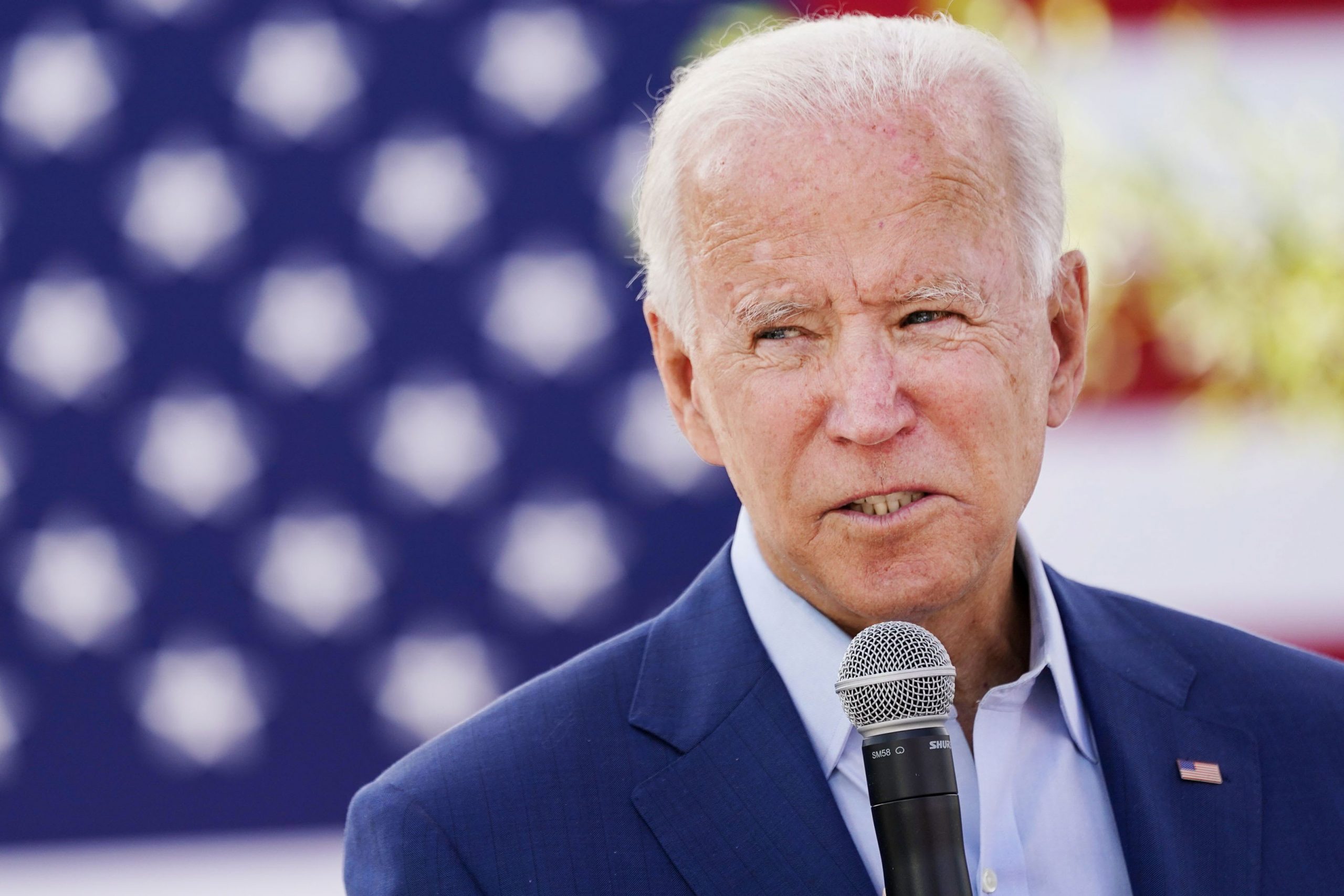
Biden closes US embassy in Kyiv, agrees to give Ukraine anti-personnel mines
Biden closes US embassy in Kyiv, agrees to give Ukraine anti-personnel mines
US President Joe Biden has agreed to provide Ukraine with anti-personnel land mines, according to a US army official.
The move is seen as an attempt to impede Russian forces, who have been slowly pushing in Ukraine’s east for months.
The official, who spoke on the condition of anonymity, said the mines would be shipped soon and that Washington expected them to be used on Ukrainian territory.
The official further stated that Ukraine has agreed to not employing the mines in densely populated regions.
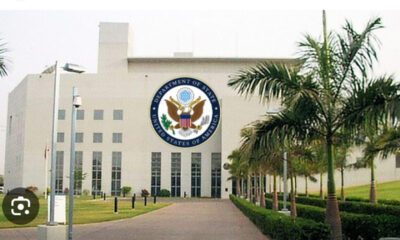
Separately, the US State Department said it would close its embassy in Kyiv after it “received specific information of a potential significant air attack on 20 November.”
“Out of an abundance of caution, the embassy will be closed, and embassy employees are being instructed to shelter in place,” it said in a statement.
“The US Embassy recommends US citizens be prepared to immediately shelter in the event an air alert is announced.”
The embassy has previously issued similar warnings about possible air attacks at New Year’s and around Ukraine’s Independence Day in August.
Following the US threat, the Italian and Greek embassies announced that they would likewise be temporarily closed.
Overnight, both Ukraine and Russia reported large drone assaults on their lands. It was not immediately clear whether there were any casualties.
The shipment of anti-personnel land mines is the latest measure by the leaving US administration to support Ukraine’s military effort before Donald Trump arrives to the White House on January 20.
READ ALSO:
- 7 officers missing as NSCDC neutralises 50 Boko Haram elements
- VIRAL VIDEO: Couple ‘assaulted’ by Army General in Abuja demands N150m
- Boko haram attacks military camp in Borno, kills soldiers
Mines are critical for Ukraine’s military as they strive to impede Russian advances up and down the lengthy eastern front line.
Russia’s current tactics involve deploying small groups of soldiers, often as little as three or five men, to stroll or ride motorcycles behind Ukrainian defences. These men are frequently slain or caught.
However, Ukrainian analysts report that in besieged towns such as Chasiv Yar and Kurakhove, squads are often dispatched every 20 minutes for hours at a time, causing challenges for Ukrainian troops.
“It’s very difficult to deal with,” Serhiy Kuzan from the Ukrainian Security and Cooperation Centre told the BBC. “We need more anti-personnel mines.”
Much of the fighting is taking place in rural Donbas, with wooded areas sandwiched between vast expanses of farmland.
With the majority of the civilian population already evacuated, Ukraine claims that the tactical use of “non-persistent” mines offers little risk to people and is critical to stopping Russia’s advance.
Russia has liberally employed landmines since the start of its full-scale invasion of Ukraine in February 2022, but international objections to the deployment of such weapons on the basis that they endanger people stopped the Biden administration from authorising them.
The US defence official acknowledged to the BBC that Ukraine had promised to employ only mines that would be active for a limited time.
The US “non-persistent” mines differ from Russia’s in that they become inert after a predetermined amount of time, which can range from four hours to two weeks.
They are electronically fused and need battery power to detonate. When the battery dies, they will not detonate.
Washington has already provided anti-tank mines to Ukraine, but the anti-personnel land mines, which can be deployed quickly, are intended to slow ground forces’ advances.
Russia and the United States are not signatories to the Ottawa Convention, which prohibits the use and export of anti-personnel landmines, but Ukraine is.
However, since Russia’s full-scale invasion, more than 20% of Ukrainian territory is thought to have been poisoned by mines.
Previously, it was verified that US-made longer-range Army Tactical Missile System (Atacms) missiles had struck targets in Russia just days after allegations surfaced that the White House had authorised clearance for their use.
On Tuesday morning, Russia’s defence ministry said the strike targeted the Bryansk region, which borders Ukraine to the north.
It stated that five missiles had been shot down and one had caused damage, with pieces causing a fire at a military base.
However, two US sources said initial assessments suggested Russia intercepted only two of Ukraine’s eight missiles.
The BBC has been unable to independently verify the contradictory data. Russian Foreign Minister Sergei Lavrov accused Washington of seeking to aggravate the crisis. The Kremlin has promised to react.
On Tuesday, Russian President Vladimir Putin authorised amendments to Russia’s nuclear strategy, outlining additional criteria under which the country would consider utilising its arsenal.
It now states that an attack from a non-nuclear state backed by a nuclear power will be considered a joint assault on Russia.
Biden closes US embassy in Kyiv, agrees to give Ukraine anti-personnel mines










International
Eight Killed as Helicopter Crashes in Remote Indonesian Forest
Eight Killed as Helicopter Crashes in Remote Indonesian Forest
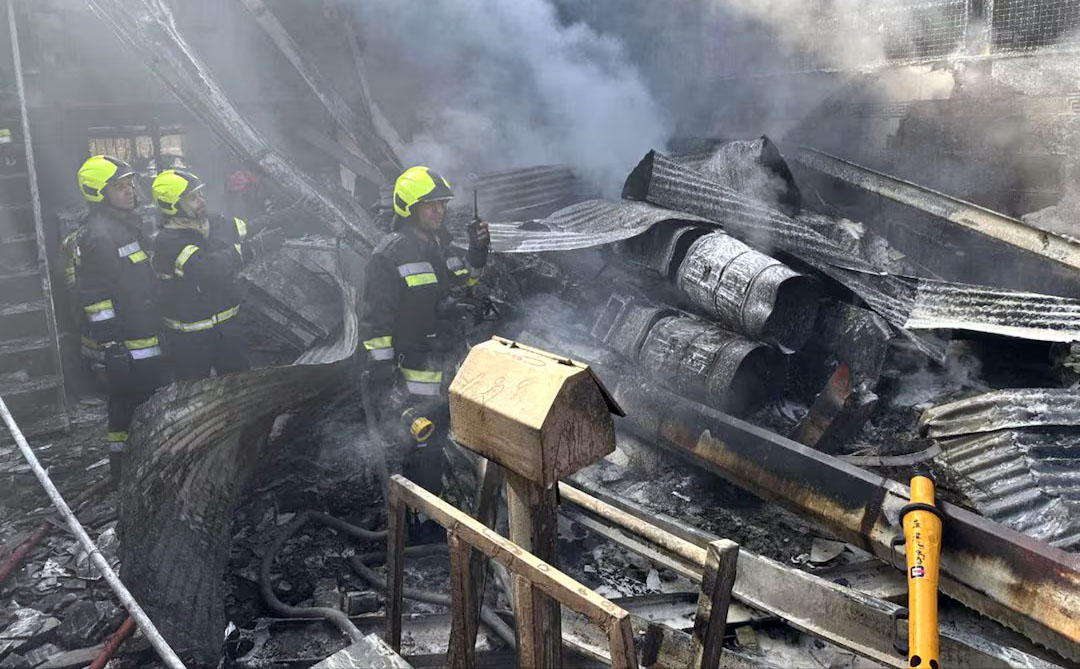
At least eight people have been confirmed dead after a helicopter operated by Matthew Air Nusantara crashed in a remote forested area of West Kalimantan, Indonesian authorities have said.
The ill-fated aircraft, identified as an Airbus H130, lost contact shortly after takeoff on Thursday morning, triggering an intensive search and rescue operation in one of the country’s most difficult terrains.
According to Indonesia’s national search and rescue agency, the helicopter departed from a plantation site in Melawi but disappeared from radar approximately five minutes into the flight. Officials said all six passengers and two crew members on board perished in the crash.
Head of the rescue agency, Mohammad Syafii, confirmed that the aircraft went down in a densely forested region marked by steep, hilly terrain, significantly hampering rescue efforts.
“The location of the crash is in a densely forested area with steep hills, making access extremely challenging,” Syafii said.
Search teams comprising military personnel, police, and emergency responders had to rely on overland routes to reach the site, slowing down recovery operations. Early findings revealed debris believed to be part of the helicopter’s tail located about three kilometres from the aircraft’s last known position.
Authorities have yet to release the identities of the victims, pending formal identification and notification of next of kin.
The helicopter had reportedly taken off from a plantation owned by Citra Mahkota, though officials have not disclosed the purpose of the flight.
Investigators are expected to begin a full probe into the cause of the crash once the wreckage is fully accessed. No immediate indication has been given as to whether weather, technical failure, or human error may have played a role.
The tragedy adds to growing concerns over aviation safety in Indonesia, where air transport remains vital for connecting remote and isolated regions spread across thousands of islands.
In recent years, the country has recorded several fatal aviation incidents. In January, a turboprop aircraft chartered by the fisheries ministry crashed into a mountain in Sulawesi, killing all 10 people onboard. Similarly, a helicopter crash in South Kalimantan last September claimed eight lives, while another crash in Ilaga shortly afterward left four people dead.
Authorities say efforts are ongoing to recover all bodies and secure the crash site, as the nation once again grapples with the human toll of air travel accidents in its challenging geography.
Eight Killed as Helicopter Crashes in Remote Indonesian Forest
International
Trump Says Iran Agrees to Hand Over Enriched Uranium in Nuclear Deal Talks

Trump Says Iran Agrees to Hand Over Enriched Uranium in Nuclear Deal Talks
United States President Donald Trump has claimed that Iran has agreed to surrender its remaining stockpile of enriched uranium and abandon any ambition of developing nuclear weapons, saying negotiations between both countries are “very close” to a breakthrough.
Speaking to reporters at the White House before departing for Las Vegas, Trump said ongoing diplomatic talks had reached an advanced stage, insisting Iran had agreed “to almost everything” in the proposed framework.
“We’re very close to making a deal with Iran. They’ve totally agreed that they will not have a nuclear weapon,” Trump said.
He further claimed that Iran had agreed to return what he repeatedly referred to as “nuclear dust,” a term he used to describe enriched uranium stockpiles believed to be stored in heavily fortified underground facilities.
“They’ve agreed to give us back the nuclear dust,” he added.
Trump also suggested that a fresh round of negotiations could take place over the weekend, while acknowledging uncertainty over the durability of the current ceasefire arrangement linked to wider tensions in the Middle East.
READ ALSO:
- OPM Founder Suspends Marriage Plan for Autistic Daughter After 1,000 Applications
- MTN Nigeria Suspends Airtime Loan Service
- Money Laundering: Court Orders Arrest of Ex-Minister Sadiya Umar Farouq
The comments come amid heightened diplomatic and military tensions in the region, following weeks of conflict that have disrupted global energy markets and raised concerns over the security of the Strait of Hormuz, a critical oil shipping route.
However, Iranian authorities have not confirmed Trump’s claims. Officials in Tehran have previously rejected similar statements, insisting that no final agreement has been reached on key issues, including uranium enrichment levels and sanctions relief.
Recent diplomatic engagements involving intermediaries have reportedly focused on narrowing differences over Iran’s nuclear programme, but major sticking points remain unresolved. These include verification mechanisms for uranium stockpiles and the scope of any restrictions on enrichment activities.
Analysts say any potential agreement would require strict international monitoring to ensure compliance, particularly given the complexity of tracking enriched material stored in secure facilities.
The situation also carries broader geopolitical implications, with energy markets reacting sharply to tensions in the region. A sustained de-escalation could ease pressure on global oil prices and improve stability across major supply routes.
While the White House has signalled optimism about progress, no formal agreement has been announced, and diplomatic channels remain active as both sides continue discussions.
Trump Says Iran Agrees to Hand Over Enriched Uranium in Nuclear Deal Talks
International
UK Court Jails Nigerian Couple Over £433,000 TfL Tax Fraud

UK Court Jails Nigerian Couple Over £433,000 TfL Tax Fraud
A United Kingdom court has sentenced a Nigerian couple, Luciana and Femi Akanbi, to prison after uncovering a sophisticated tax rebate fraud scheme that cost authorities more than £433,000.
The couple were convicted at Woolwich Crown Court for orchestrating the fraud using stolen personal data belonging to employees of Transport for London, in a case described as one of the most serious internal data breaches linked to the agency.
Court proceedings revealed that the fraudulent activities took place between September 2021 and January 2022, during which confidential information belonging to at least 40 staff members—including passport details, National Insurance numbers, and banking records—was used to submit 139 false tax rebate claims to HM Revenue and Customs.
Prosecutors told the court that Luciana Akanbi, 38, who worked in the human resources department of Transport for London, had access to sensitive personal records of about 107 employees. This access enabled the couple to create multiple self-assessment accounts and process fraudulent claims.
While the total value of claims submitted approached £650,000, authorities confirmed that the actual financial loss stood at over £433,000, with the funds quickly moved through a complex money-laundering network.
READ ALSO:
- World Athletics Blocks Favour Ofili’s Switch from Nigeria to Turkey
- Gunmen Kidnap 14 JAMB Candidates in Benue Highway Attack
- Atiku, Obi, Kwankwaso Camps Clash as ADC Grapples with Leadership Dispute
Delivering judgment, Judge David Miller described the incident as the worst data breach ever experienced by Transport for London, noting that the organisation was forced to overhaul its systems as a result.
He stated that the scheme significantly impacted victims, many of whom had to deal with disrupted finances, damaged credit ratings, and prolonged engagements with tax authorities.
The court also heard that approximately £66,000 was traced to Femi Akanbi’s bank account, while about £16,000 was linked to Luciana, although the total benefit from the fraud was believed to be higher.
Prosecutor Andrew Evans described the operation as highly sophisticated, involving careful planning, multiple digital devices, and numerous victims. Investigations revealed that at least 38 electronic devices were used to execute the fraudulent claims.
Further evidence suggested that financial pressures contributed to the crime, with Femi Akanbi reportedly battling a gambling addiction following health challenges during the COVID-19 period. The court heard that over £50,000 of the stolen funds was channelled into gambling accounts.
Judge Miller rejected attempts by Luciana to shift blame, ruling that both defendants played central roles in the scheme, which was made possible by her position of trust within the organisation.
He also declined to issue a compensation order, citing the couple’s lack of recoverable assets, but indicated they may face deportation proceedings after serving their sentences.
In response, Transport for London said it has strengthened internal systems to prevent future breaches, while HM Revenue and Customs reiterated its commitment to tackling tax fraud and protecting public funds.
The case highlights growing concerns over identity theft, insider data breaches, and financial fraud, particularly within large organisations handling sensitive personal information.
UK Court Jails Nigerian Couple Over £433,000 TfL Tax Fraud

-

 metro3 days ago
Arise News Yet to Confirm Reported Suspension of Rufai Oseni
-

 metro2 days ago
Tension in Osogbo as Protesters Demand Respect for Court Judgments in LG Dispute
-

 metro1 day ago
UNILAG Lecturer Sexual Assault Trial: Student Testifies in Lagos Court
-

 International3 days ago
World Leaders Gather in Paris Over Strait of Hormuz Crisis
-

 Politics2 days ago
Obesere’s Wife Sekinat Adelakun-Akande Declares for 2027 Ibadan Reps Race
-

 metro1 day ago
Grandfather in police net for impregnating granddaughter
-

 News3 days ago
Lafarge Convicted of Terrorism Financing by French Court in Landmark Case
-

 International1 day ago
US Senate Rejects Measure to Limit Trump’s Iran Military Powers