
International
Biden unveils Israeli proposal to end Gaza war
Biden unveils Israeli proposal to end Gaza war
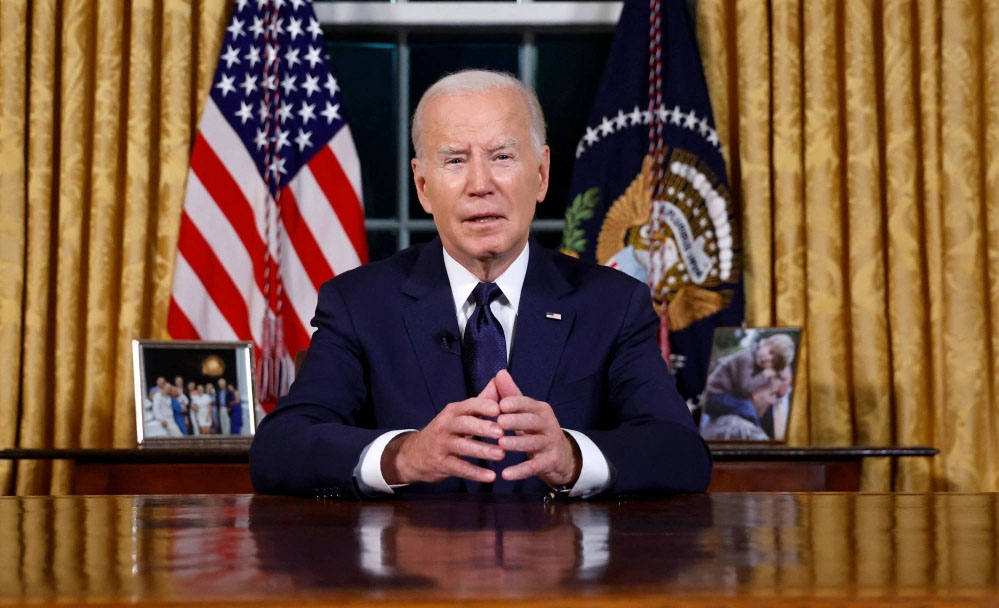
US President Joe Biden has urged Hamas to accept a new Israeli proposal to end the conflict in Gaza, saying that “it’s time for this war to end”.
The three-part proposal would begin with a six-week ceasefire in which the Israel Defense Forces (IDF) would withdraw from populated areas of Gaza.
There would also be a “surge” of humanitarian aid, as well as an exchange of some hostages for Palestinian prisoners.
The deal would eventually lead to a permanent “cessation of hostilities” and a major reconstruction plan for Gaza.
Hamas said it views the proposal “positively”.
Speaking at the White House on Friday, Mr Biden said that the first phase of the proposed plan would include a “full and complete ceasefire”, the withdrawal of IDF forces from populated areas and the exchange of hostages for Palestinian prisoners.
“This is truly a decisive moment,” he said. “Hamas says it wants a ceasefire. This deal is an opportunity to prove whether they really mean it.”
The ceasefire, he added, would allow more humanitarian aid to reach the beleaguered territory, with “600 trucks carrying aid into Gaza every single day”.
READ ALSO:
- Sad, Lagos APC chieftain dies in auto crash + Photos
- Trump reckless, saying hush-money trial was rigged – Biden
- Aisha Yesufu under fire for ignoring new national anthem
The second phase would see all remaining living hostages returned, including male soldiers. The ceasefire would then become “the cessation of hostilities, permanently.”
Among those who have urged Hamas to agree to the proposal was UK Foreign Secretary David Cameron, who said on X that the group “must accept this deal so we can see a stop in the fighting”.
“We’ve long argued a stop in the fighting can be turned into a permanent peace if we are all prepared to take the right steps,” Lord Cameron added. “Let’s seize this moment and bring this conflict to an end.”
UN Secretary General Antonio Guterres also welcomed the development in a post to X, formerly known as Twitter. He said the world had “witnessed too much suffering [and] destruction in Gaza” and said it was “time to stop”.
“I welcome [President] Biden’s initiative [and] encourage all parties to seize this opportunity for a ceasefire, release of all hostages, guaranteed unhindered humanitarian access [and] ultimately a durable peace in the Middle East,” he added.
In his speech, Mr Biden acknowledged that negotiations between phases one and two would be difficult.
As recently as a few days ago, Israeli Prime Minister Benjamin Netanyahu was letting it be known that he was implacably opposed to agreeing to end the war as part of a ceasefire deal – making Mr Biden’s reference to the war’s end particularly significant.
While the plan includes many of the details from previous, ultimately failed rounds of talks, the US calls for a permanent ceasefire appear to be a significant concession designed to try and draw Hamas back to negotiations on terms they have already said they would agree to. A permanent ceasefire has been one of the group’s key demands.
The third phase of the proposal would see the final remains of any deceased Israeli hostages returned, as well as a “major reconstruction plan” with US and international assistance to rebuild homes, schools and hospitals.
READ ALSO:
- Ogun set for oil exploration, receives FG delegation
- Michelle Obama’s mother, Marian Robinson, dies at 86
- BREAKING: Organised Labour declares indefinite strike over minimum wage
- Otti places N25m bounty on killers of soldiers in Aba
In his remarks, Mr Biden acknowledged that some Israelis – including officials within Israel’s government – would likely be opposed to the proposal.
“I’ve urged the leadership in Israel to stand behind this deal,” he said. “Regardless of whatever [political] pressure comes.
The US president also directly addressed the Israeli people, telling them that “we can’t lose this moment”.
Notably, Mr Biden said that Hamas has now been degraded to the extent that it can no longer repeat an attack such as that which its fighters conducted on 7 October – a likely signal to the Israelis that Washington sees the war as done.
In a statement, Prime Minister Netanyahu insisted that the war would not end until its objectives were achieved, including the return of all hostages and the elimination of Hamas’ military and governing capabilities. He said the latest plan would allow Israel to uphold these principles.
Hamas, for its part, said that it views the proposal “positively” because of its call for a permanent ceasefire, the withdrawal of Israeli forces from Gaza, reconstruction and the exchange of prisoners.
The group said it was ready to “deal positively and constructively” to any proposal centred on a permanent ceasefire, provided that Israel “declares its explicit commitment to that”.
Another Palestinian official familiar with the negotiations who has seen the new Israeli proposal said that the document did not include a guarantee that the war will end, nor that IDF troops would withdraw from Gaza completely.
The proposal has been transmitted to Hamas through mediators based in Qatar.
Meanwhile, US Secretary of State Antony Blinken called his counterparts in Jordan, Saudi Arabia and Turkey to try to build a wider support for the proposal.
READ ALSO:
- JUST IN: 40 directors fail permanent secretary qualifying exam
- Police eventually cleared Sanusi to lead the prayer
- BREAKING: Court Grants Chioma Okoli N5m Bail
Mr Blinken “emphasized that Hamas should accept the deal and that every country with a relationship with Hamas should press it to do so without delay,” state department spokesman Matthew Miller said on Friday night.
Faced with mounting civilian casualties in Gaza, President Biden has faced growing domestic criticism over the level of US support for Israel, and calls to do more to encourage the warring sides to negotiate.
Earlier this week, however, the White House said that it does not believe that Israeli operations in Rafah amount to a “major ground operation” that could cross a red line and trigger a possible change in US policy.
The statement came after an Israeli air strike and resulting fire killed at least 45 Palestinians on Sunday.
In a separate announcement on Friday, US lawmakers from both sides of the political spectrum formally invited Mr Netanyahu to address Congress in Washington.
It is unclear when the address would take place.
More than 36,000 have been killed across Gaza since the start of the conflict, according to the Hamas-run health ministry.
The war began in October when Hamas gunmen launched an unprecedented attack on Israel, killing about 1,200 people and taking 252 back to Gaza as hostages.
Biden unveils Israeli proposal to end Gaza war
BBC




International
Trump Halts Minnesota Immigration Crackdown After Fatal Shootings, Protests
Trump Halts Minnesota Immigration Crackdown After Fatal Shootings, Protests
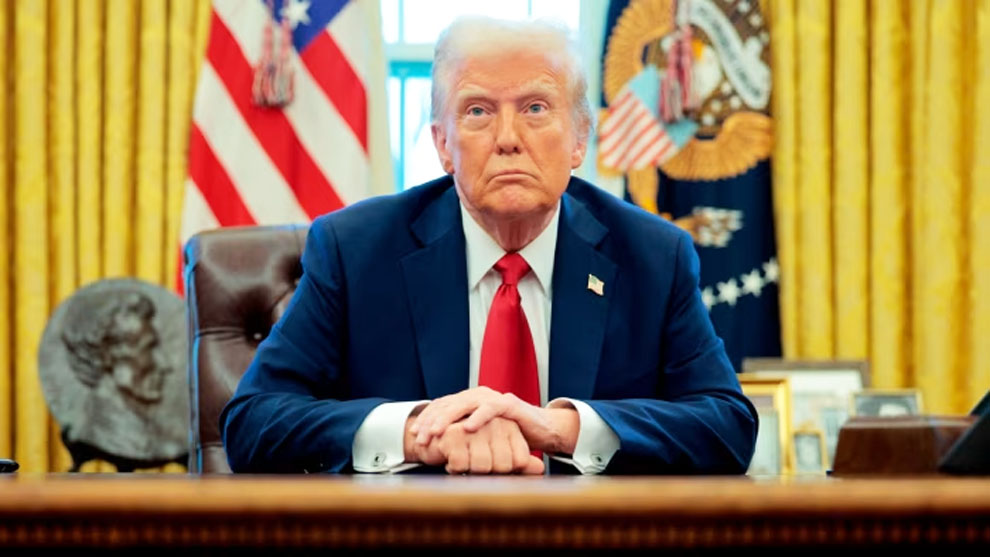
The Trump administration has officially halted Operation Metro Surge, a controversial immigration enforcement operation in Minnesota, following widespread protests, political backlash, and the deaths of two U.S. citizens. The decision was announced by Tom Homan, the U.S. “border czar,” who confirmed that President Donald Trump approved ending the monthslong crackdown.
Operation Metro Surge, launched in December 2025, focused on the Minneapolis–St. Paul metropolitan area, deploying nearly 3,000 federal immigration officers at its peak. The operation aimed to detain undocumented immigrants, which the Department of Homeland Security (DHS) described as targeting “criminal illegal aliens.” However, reports indicate that many detainees had no criminal records, including children and U.S. citizens, raising concerns about the operation’s scope and fairness.
- Army University Professor Dies in Boko Haram Captivity After Nearly One Year
- MURIC Calls Proposed US Sanctions on Nigerian Muslims ‘Lopsided’
- Supreme Court Affirms Muslim Students’ Right to Worship at Rivers State University
The crackdown drew intense public opposition after anti-ICE protesters Renée Good and Alex Pretti were fatally shot during separate incidents in Minneapolis. The shootings intensified calls for accountability and prompted local and national criticism of federal enforcement tactics.
In a statement, Homan said, “I have proposed and President Trump has concurred that this surge operation conclude.” He noted that a drawdown of federal personnel had already begun, with a smaller contingent remaining temporarily to transition operations and coordinate with local authorities.
During the operation, DHS reported over 4,000 arrests, though critics highlighted the disproportionate impact on communities and families, emphasizing the humanitarian and civil liberties concerns arising from the surge.
Minnesota officials, including Governor Tim Walz and Minneapolis Mayor Jacob Frey, welcomed the decision, calling the operation an overreach that harmed communities and strained trust between law enforcement and residents. Civil rights groups also praised the halt but urged comprehensive immigration reforms to prevent future abuses.
The end of Operation Metro Surge marks a significant development in the national debate over immigration enforcement, sanctuary policies, and federal authority, highlighting the challenge of balancing border security with human rights and community safety.
Trump Halts Minnesota Immigration Crackdown After Fatal Shootings, Protests
International
Russia Escalates Digital Control with Attempted WhatsApp Block

Russia Escalates Digital Control with Attempted WhatsApp Block
WhatsApp has accused the Russian government of trying to completely block its messaging service in the country, a move aimed at steering users toward the state-backed app MAX. The Meta-owned platform said the effort, reported on February 12, 2026, threatens over 100 million users and undermines private, encrypted communication in Russia.
In a statement, WhatsApp said: “Today the Russian government attempted to fully block WhatsApp in an effort to drive people to a state-owned surveillance app. Trying to isolate over 100 million users from private and secure communication … can only lead to less safety for people in Russia. We continue to do everything we can to keep users connected.”
READ ALSO:
- Tumbler Ridge Massacre: Canada Investigates Shooter’s Mental Health, Police History
- Ex-Acting AGF Nwabuoku Admits Diverting N868.4 Million to Private Firms
- Kwankwasiyya Urges US Congress to Drop Kwankwaso’s Name from Bill
The attempt is part of a broader crackdown on foreign tech platforms in Russia. Authorities have previously restricted access to Facebook, Instagram, and targeted other services like Telegram. Reports indicate that Roskomnadzor, Russia’s communications regulator, removed WhatsApp from its national internet directory, forcing users to rely on VPNs to access the platform. Critics warn that such measures are designed to expand state surveillance and control over digital communication.
The government is actively promoting MAX, a domestic “super-app” similar to China’s WeChat, which combines messaging with other services. Rights advocates caution that the push toward MAX could compromise privacy protections that platforms like WhatsApp provide. Meanwhile, Kremlin officials have indicated that WhatsApp and other restricted apps could be restored if Meta complies with local data storage and regulatory laws.
WhatsApp’s statement emphasizes that the company will continue to work to keep its service accessible where possible, but the attempted block highlights Russia’s ongoing effort to enforce digital sovereignty and shift users toward state-controlled technology platforms.
Russia Escalates Digital Control with Attempted WhatsApp Block
International
Tumbler Ridge Massacre: Canada Investigates Shooter’s Mental Health, Police History
Tumbler Ridge Massacre: Canada Investigates Shooter’s Mental Health, Police History
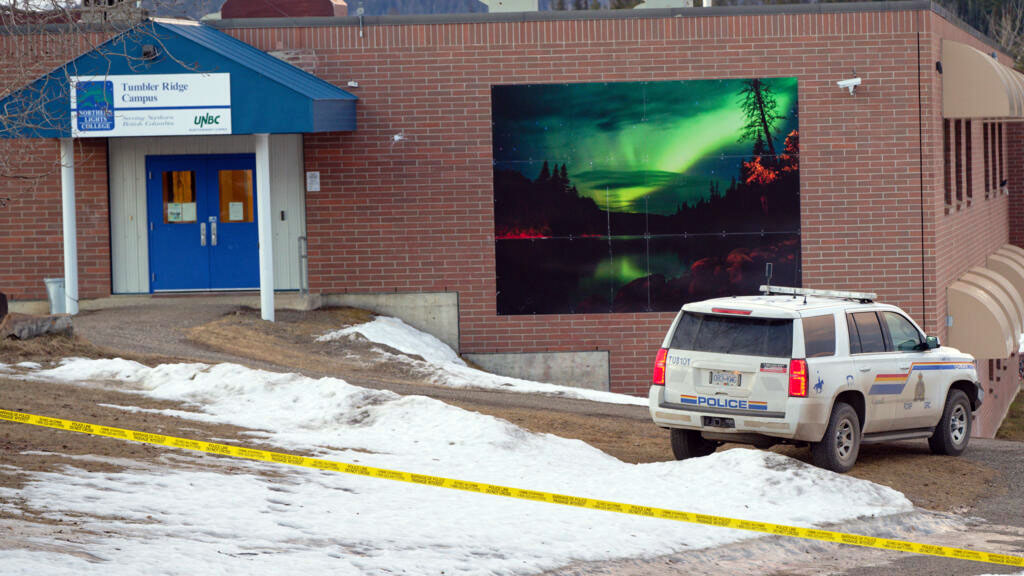
Canadian authorities are intensifying investigations into the mental health history and prior police interactions of Jesse Van Rootselaar, the 18-year-old who carried out a deadly mass shooting in the remote mining town of Tumbler Ridge, British Columbia, on February 10, 2026. The tragedy has left the small community in mourning and raised national questions about gun control, mental health support, and law enforcement interventions.
According to RCMP Deputy Commissioner Dwayne McDonald, authorities are still unclear on the motive behind the attack, which is one of the deadliest school shootings in Canadian history. Van Rootselaar, a transgender woman who had dropped out of Tumbler Ridge Secondary School four years ago, first killed her mother and stepbrother before opening fire at the school, where she shot six more victims. The shooter later took her own life at the scene.
Investigators have confirmed that Van Rootselaar was known to police and had previous interactions with the public health system due to mental health concerns. Authorities are reviewing prior incidents, including earlier firearms seizures and her lapsed gun licence, to understand how warning signs were addressed before the massacre. British Columbia Premier David Eby said officials are working with the health system to determine “what interactions may have taken place” in the past.
READ ALSO:
- Ex-Acting AGF Nwabuoku Admits Diverting N868.4 Million to Private Firms
- Kwankwasiyya Urges US Congress to Drop Kwankwaso’s Name from Bill
- Liverpool Edge Sunderland 1-0 to Halt Impressive Home Streak
The victims include a 39-year-old female teacher and five students aged 12 and 13, with one child, 12-year-old Maya Gebala, in critical condition after trying to lock herself and classmates in a library during the attack. First responders arrived within minutes, but the scale of the violence left the tight-knit community of about 2,700 residents reeling. Hundreds gathered for a candlelight vigil to honour those killed and injured.
Prime Minister Mark Carney addressed parliament, describing Tumbler Ridge as a resilient, compassionate community of miners, teachers, and construction workers, and emphasised the need to learn from the tragedy. Flags across Canada have been lowered to half-staff for seven days in remembrance of the victims. Britain’s King Charles and Queen Camilla also expressed shock and sorrow over the massacre.
Schools in the area will remain closed for the remainder of the week as authorities continue their investigation into Van Rootselaar’s mental health background, police interactions, and access to firearms, seeking to understand how similar tragedies can be prevented in the future.
Tumbler Ridge Massacre: Canada Investigates Shooter’s Mental Health, Police History

-

 Education8 hours ago
Check Your Name: UNILORIN Releases Updated NELFUND Refund List for 2024/2025 Students
-

 News3 days ago
Aso Rock Goes Solar as Tinubu Orders National Grid Disconnection
-

 metro3 days ago
Lagos Police Launch Manhunt for Suspect in Brutal Ajah Murder
-

 Sports3 days ago
Lookman Shines as Atlético Madrid Hammer Barcelona 4-0
-

 metro1 day ago
Boko Haram Terrorists Release Video of 176 Abducted Kwara Residents
-

 metro2 days ago
Court Orders DIA to Produce Cleric Accused of Coup Plot by February 18
-

 metro1 day ago
Woman Arrested Over Murder of Nigerian E-Hailing Driver in South Africa
-

 News3 days ago
MPAC Hails Supreme Court Verdict Affirming Muslim Students’ Right to Worship at RSU