
International
Bitcoin worth $14bn seized in US-UK crackdown on alleged scammers

Bitcoin worth $14bn seized in US-UK crackdown on alleged scammers
The US government has seized more than $14bn (£10.5bn) in bitcoin and charged the founder of a Cambodian business empire, the Prince Group, with allegedly masterminding a massive cryptocurrency scam, which involved forced labour camps.
UK and Cambodian national Chen Zhi was charged on Tuesday in New York for allegedly engaging in a wire-fraud conspiracy and money laundering scheme.
Mr Chen’s businesses were also sanctioned by the US and the UK as part of a joint operation. The UK government says it has frozen assets owned by his network, including 19 properties in London – one of which is worth nearly £100m ($133m).
The BBC has contacted the Prince Group for comment.
US prosecutors said it was one the biggest financial takedowns in history and the largest ever seizure of bitcoin, with approximately 127,271 bitcoin being held by US government.
Mr Chen, who remains at large, is accused of being the mastermind behind a “sprawling cyber-fraud empire” operating under his multi-national company, the Prince Group, said the US Department of Justice (DOJ).
The Cambodia-based group’s website says its businesses include property development, and financial and consumer services. But the DOJ alleges that it runs one of Asia’s largest transnational criminal organisations.
Unwitting victims were contacted online and convinced to transfer cryptocurrency based on false promises that the funds would be invested and generate profits, the DOJ said.
Prosecutors alleged that the company, under Mr Chen’s direction, built and operated at least ten scam compounds throughout Cambodia, according to court documents seen by the BBC.
READ ALSO:
- Bayelsa Governor Douye Diri Dumps PDP, Keeps Next Move Secret
- NASS moves to make PVC optional
- (JUST IN)Admission: FG removes Mathematics as compulsory requirement for Arts students
Mr Chen was accused of managing the compounds that were specially designed to reach as many victims as possible, said prosecutors.
His accomplices allegedly procured millions of mobile phone numbers and set up “phone farms” to conduct call centre scams, according to the court documents, dated 8 October.
Two of these facilities had 1,250 mobile phones that controlled around 76,000 social media accounts for scams, the documents said.
Prosecutors said Prince Group documents included tips on building rapport with victims, advising workers not to use profile photos of women who were “too beautiful” so that the accounts would look more genuine.
Assistant Attorney General for National Security John A Eisenberg described the Prince Group as a “criminal enterprise built on human suffering”.
It also trafficked workers, who were confined in prison-like compounds and forced to carry out scams online, targeting thousands of victims worldwide, he said.
Mr Chen and his accomplices allegedly used the criminal proceeds for luxury travel and entertainment, said the DOJ.
They also made “extravagant” purchases like watches, private jets and rare artwork, including a Picasso painting purchased from a New York City auction house, the department said.
If convicted, Mr Chen faces a maximum penalty of 40 years in jail.
In Britain, Mr Chen and his accomplices allegedly incorporated businesses in the British Virgin Islands and invested in UK property. His network’s assets include a £100m office building on central London, a £12m mansion in North London and seventeen flats in the city, said the UK foreign office on Tuesday.
Being sanctioned, as part of a joint operation with US authorities, means he is now locked out of the UK’s financial system.
READ ALSO:
- Alleged extra-marital affair: Portable reveals babymama’s chat with cleric
- APC secures two-thirds majority in Senate as Senator Kila dumps PDP
- Ex-foreign affairs minister, Joy Ogwu, is dead
The Prince Group has also been sanctioned in the US and labelled as a criminal organisation.
They were “ruining the lives of vulnerable people and buying up London homes to store their money”, UK Foreign Secretary Yvette Cooper said.
Cooper said: “Together with our US allies, we are taking decisive action to combat the growing transnational threat posed by this network – upholding human rights, protecting British nationals and keeping dirty money off our streets.”
The foreign office said Mr Chen and the Prince Group built casinos and compounds used as scam centres and laundered the proceeds.
Four businesses linked to the alleged scams – The Prince Group, Jin Bei Group, Golden Fortune Resorts World and Byex Exchange – have also been sanctioned, said the foreign office.
Two scam centres allegedly run by Jin Bei Group and Golden Fortune Resorts were named earlier this year in an Amnesty International report on the use of forced labour and torture in Cambodian scam centres.
People working in scam centres are often foreign nationals lured by the promise of a legitimate job, and then forced to carry out scams under threat of torture, the foreign office said.
These scammers operate on an “industrial scale”, including in the UK, using tricks like fake romantic relationships to lure victims into being scammed, said the foreign office.
Fraud Minister Lord Hanson said: “Fraudsters prey on the most vulnerable by stealing life savings, ruining trust, and devastating lives. We will not tolerate this.”
Bitcoin worth $14bn seized in US-UK crackdown on alleged scammers
BBC










International
Iran Threatens US-Linked Universities in Middle East Amid Escalating Tensions
Iran Threatens US-Linked Universities in Middle East Amid Escalating Tensions
March 29, 2026
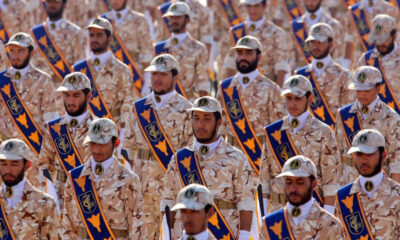
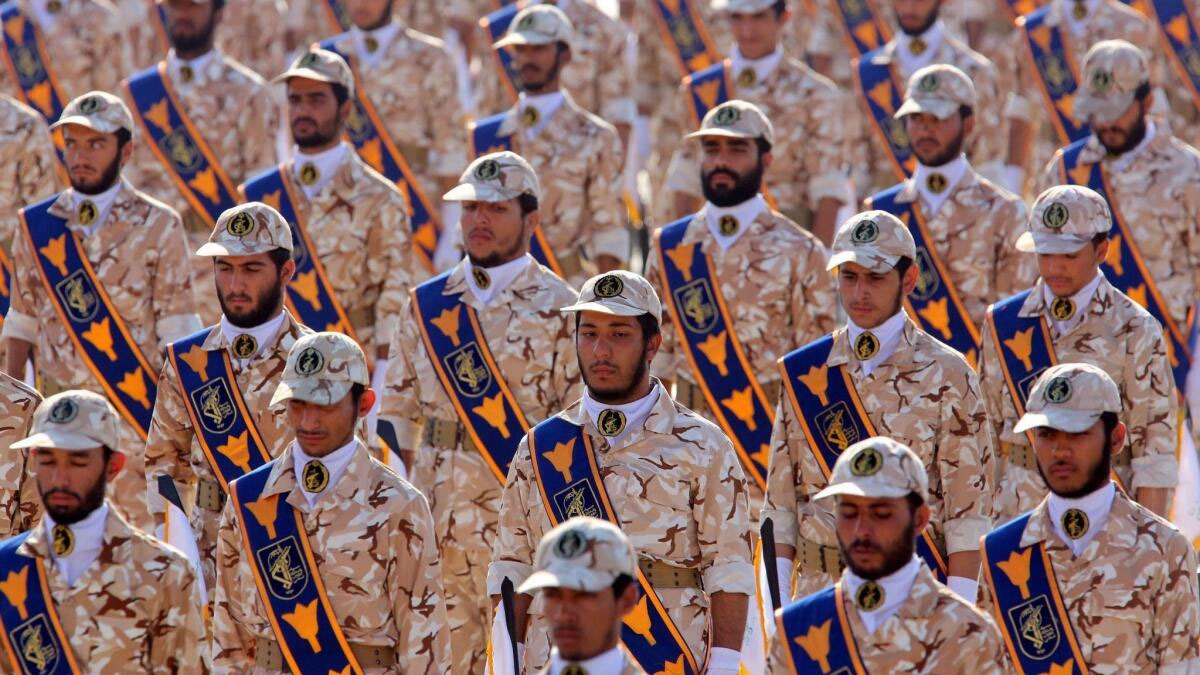
Iran has issued a stark warning that American-affiliated universities operating in the Middle East could become potential targets, as tensions between Iran and the United States continue to rise.
The threat, attributed to Iran’s powerful Islamic Revolutionary Guard Corps (IRGC), follows allegations that Iranian universities were damaged in recent strikes linked to the ongoing conflict. Iranian officials have not publicly provided detailed evidence of the alleged attacks but have condemned what they describe as violations of sovereignty and international norms.
In statements carried by international media, the IRGC warned that institutions with ties to the United States in the region could be considered “legitimate targets” if hostilities persist. Authorities also advised civilians to avoid such facilities, raising concerns about the safety of students, faculty, and staff across several countries in the Middle East.
While the rhetoric signals a dangerous expansion of potential targets beyond military installations, there has been no widely verified confirmation from major global outlets of a specific ultimatum or deadline tied to the warning. Analysts say the language used reflects an escalation in tone but stops short of confirming imminent attacks.
The development comes amid an increasingly volatile regional environment, with both nations exchanging accusations over recent incidents tied to the broader conflict. Diplomatic efforts to de-escalate tensions have so far yielded little progress, as global powers call for restraint.
Security experts warn that any attack on educational institutions would mark a significant shift in the conflict, potentially drawing widespread international condemnation and increasing the risk of further escalation.
Governments in the region are said to be reviewing security arrangements around foreign-linked institutions, while universities are reportedly monitoring the situation closely.
As of press time, officials from the United States had not issued a formal response specifically addressing the threat to universities, though Washington has repeatedly condemned attacks on civilian infrastructure and reiterated its commitment to protecting American interests abroad.
Iran Threatens US-Linked Universities in Middle East Amid Escalating Tensions
International
Trump Claims Iran Sent Oil Shipments Amid Backchannel Talks
Trump Claims Iran Sent Oil Shipments Amid Backchannel Talks
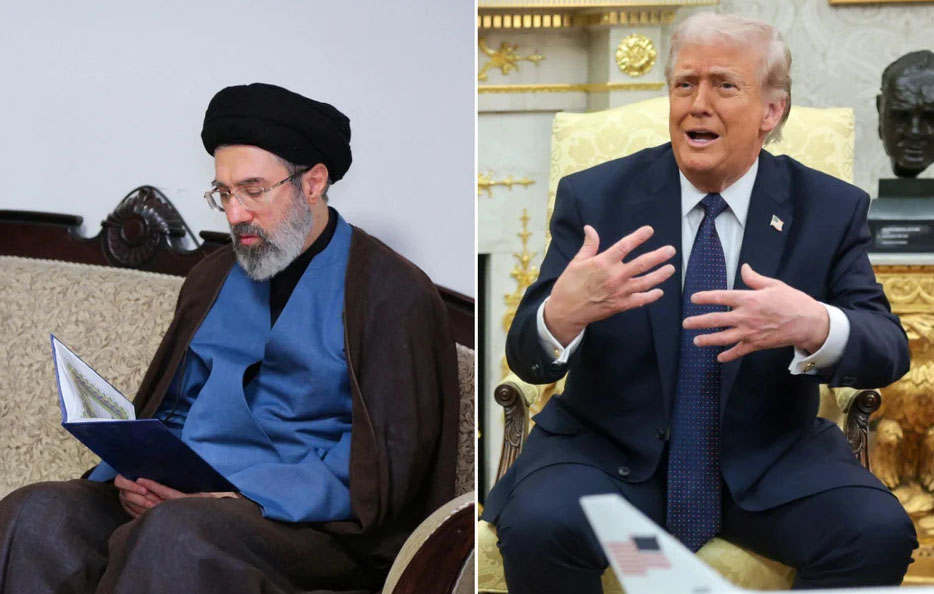
U.S. President Donald Trump has claimed that Iran dispatched ten oil tankers to the United States as part of indirect negotiations aimed at easing ongoing tensions between the two nations.
According to a report by Sky News on Friday, March 27, 2026, Trump made the assertion while speaking at the Future Investment Initiative in Miami. He suggested that the shipments were a gesture of goodwill, possibly intended as an acknowledgment of ongoing diplomatic engagements.
“It turned out I was right,” Trump said, referring to earlier claims that talks were underway between Washington and Tehran—claims initially denied by Iranian authorities. “They were negotiating, which they admitted two days later.”
Providing further details, Trump stated that Iran had first proposed sending eight oil ships before increasing the number to ten. “They said, ‘we’re going to send you eight ships of oil.’ They actually said, ‘we’re going to add an extra two,’ and they added an extra two,” he said. “So we had ten ships, and then people realized we were actually negotiating.”
Trump also struck a confident tone regarding developments in the Middle East, declaring that the region was “closer than ever” to being free from what he described as Iranian “terror, aggression and nuclear blackmail.”
However, Iranian officials have firmly rejected the claims of formal negotiations. Authorities in Iran insist that no direct talks are taking place with the United States, maintaining that any communication occurs strictly through third-party intermediaries, including Pakistan.
Tehran’s continued denial underscores the sensitive nature of any potential engagement with Washington, particularly amid domestic political pressures and broader regional dynamics.
The contrasting narratives highlight the uncertainty surrounding U.S.-Iran relations, with both sides presenting differing accounts of ongoing diplomatic efforts.
Trump Claims Iran Sent Oil Shipments Amid Backchannel Talks
International
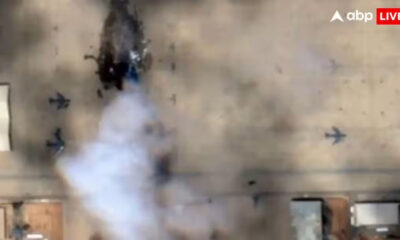
Iranian Strike on Saudi Base Damages US Spy Plane, Injures 12 Troops
Iranian Strike on Saudi Base Damages US Spy Plane, Injures 12 Troops
Tensions in the Middle East have intensified following a major strike by Iranian forces on a United States military installation in Saudi Arabia, leaving several American personnel injured and damaging high-value military assets.
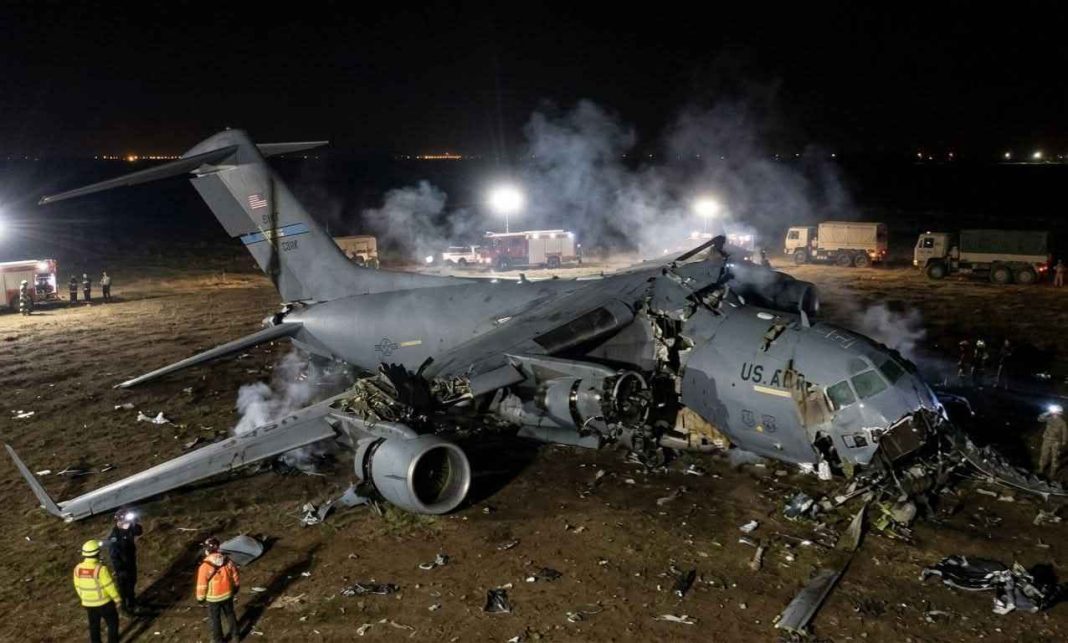
Iran reportedly launched a coordinated attack involving ballistic missiles and drones on the Prince Sultan Air Base on Saturday, targeting U.S. Air Force equipment stationed at the facility.
Initial reports from outlets including Daily Post Nigeria and Fox News indicated that a U.S. E-3 Airborne Warning and Control System (AWACS) aircraft—estimated to be worth about $700 million—was destroyed in the strike. The aircraft serves as a critical airborne radar and command center, capable of detecting threats and coordinating air operations over vast distances.
However, more recent and verified accounts suggest that the aircraft, identified as the Boeing E-3 Sentry, was damaged but not confirmed destroyed, raising questions about the accuracy of early claims surrounding the extent of the losses.
In addition to the AWACS aircraft, at least one KC-135 Stratotanker was reportedly struck during the ആക്രമation and caught fire, further compounding the scale of the incident.
U.S. officials confirmed that 12 American service members were injured in the attack. According to Fox News, two of the wounded personnel were listed in serious condition, while the remaining casualties sustained lighter injuries.
Military analysts note that the strike demonstrates Iran’s growing capability to conduct coordinated long-range attacks using a combination of drones and precision-guided missiles, posing a significant threat to U.S. assets in the region.
The latest escalation comes amid an ongoing conflict between the United States and Iran, which has persisted for approximately one month. The war has already led to significant casualties and heightened geopolitical tensions across the Middle East, particularly following reports of high-profile killings involving senior Iranian figures.
As of press time, there has been no official confirmation from the U.S. Department of Defense regarding the total extent of damage to the aircraft or whether any assets were completely destroyed.
Security experts warn that the attack could trigger further retaliation, raising fears of a broader regional confrontation involving key global powers and strategic allies in the Gulf.
Iranian Strike on Saudi Base Damages US Spy Plane, Injures 12 Troops

-

 metro2 days ago
Tragedy in Aramoko: Trailer Rams Residential Building, Kills 300‑Level Student
-

 News2 days ago
Final Notice: FG Orders Civil Servants to Complete PASGA Verification by March 31
-

 metro3 days ago
El-Rufai’s Mother, Hajiya Umma, Dies Amid Son’s Legal Battle
-

 Entertainment2 days ago
Nollywood Actress Declares Love for Ibrahim Chatta, Offers to Pay Her Own Dowry
-

 metro10 hours ago
Jos Attack: Plateau Govt Declares 48-Hour Curfew After Deadly Assault
-

 metro3 days ago
Report Reveals Late Herbert Wigwe Owned 106 Prime London Properties
-

 Entertainment2 days ago
Streamer Peller Escorted Out of Alake of Egbaland’s Palace in Abeokuta
-
 International2 days ago
Iranian Missiles, Drones Strike US Air Base in Saudi Arabia