
News
Boko Haram Financiers Known but Not Publicly Named, Says Buratai

Boko Haram Financiers Known but Not Publicly Named, Says Buratai
Former Chief of Army Staff, Tukur Buratai, has said he should not be held responsible for the failure of authorities to publicly release the identities of individuals allegedly financing terrorism in Nigeria, insisting that the financiers are known but remain within society.
Buratai made the remarks during an appearance on Channels Television’s Politics Today, where he emphasized that relevant security and intelligence agencies already have information on those behind terrorism financing, but may have operational reasons for not disclosing their identities publicly.
“You cannot say I should be responsible for naming the financiers of terror… those agencies know why the names are not released,” he said, adding that action, rather than disclosure alone, is what matters in addressing the threat.
He stressed that individuals allegedly involved in funding insurgent groups such as Boko Haram are still within the country and are known to authorities, urging that decisive steps be taken to investigate, prosecute, and disrupt their networks.
READ ALSO:
- Eid-el-Fitr: NRC to Operate Three Lagos–Ibadan Train Trips on March 23
- BBL Death: Joe Akatugba Warns Actresses Against Cosmetic Surgery for Fame
- Dangote Petrol Price Hits ₦1,275/Litre After Fifth Hike in March
Buratai also clarified that the policy of rehabilitating repentant Boko Haram members was a government initiative, not solely a military decision. According to him, the military had earlier set a surrender deadline in 2016, offering safe passage to those who laid down arms before handing them over to appropriate agencies for rehabilitation.
“The initial concept was that we gave them a timeline to surrender in 2016… and if they surrendered, we gave them free passage and handed them over to appropriate agencies,” he explained.
The former army chief, who also previously served as Nigeria’s ambassador to the Republic of Benin, expressed concern over the country’s ongoing security challenges, calling for stronger intelligence gathering and improved coordination among security agencies to combat terrorism and related threats.
He further advocated for increased recruitment into the nation’s security forces to enhance capacity and improve safety across affected regions.
Buratai’s comments come against the backdrop of long-standing public calls for the disclosure of alleged terrorism financiers, especially after government officials previously indicated that individuals and entities supporting insurgency had been identified.
The Nigerian Financial Intelligence Unit has in the past reported tracking suspicious financial flows linked to terrorism, while security agencies have continued investigations into funding networks believed to sustain insurgent operations.
In 2021, federal authorities stated that some sponsors of terrorism had been identified, raising expectations that their names would be made public and prosecuted. However, the identities of such individuals have largely remained undisclosed, fueling criticism from civil society groups, legal experts, and security analysts who argue that transparency is essential to dismantling financing networks and ensuring accountability.
Nigeria has battled Boko Haram and its splinter factions for over a decade, particularly in the North-East, where the insurgency has led to thousands of deaths, widespread displacement, and humanitarian crises. Despite ongoing military operations, attacks have persisted in some areas, underscoring the complexity of addressing both the operational and financial dimensions of terrorism.
Buratai’s remarks add to ongoing national conversations about the need for a more comprehensive counterterrorism strategy that combines military action, intelligence sharing, financial tracking, and judicial enforcement to effectively curb insurgency and its enabling networks.
Boko Haram Financiers Known but Not Publicly Named, Says Buratai










News
US Deploys MQ-9 Drones, 200 Troops to Support Nigeria’s Counterinsurgency Efforts

US Deploys MQ-9 Drones, 200 Troops to Support Nigeria’s Counterinsurgency Efforts
The United States has deployed multiple MQ-9 Reaper drones and approximately 200 military personnel to Nigeria to bolster intelligence and training support for the country’s ongoing fight against insurgency in the northern region.
According to official details, the deployment is strictly non-combat in nature, focusing on surveillance, reconnaissance, and advisory roles. U.S. troops are not embedded with Nigerian forces in active combat zones, and there are no drone airstrikes being conducted as part of the mission.
The MQ-9 drones, known for their advanced intelligence, surveillance, and reconnaissance (ISR) capabilities, are expected to provide real-time data to assist Nigerian military operations against insurgent groups. The presence of U.S. personnel will also enhance capacity-building efforts through training and strategic advisory support.
Security analysts say the move is aimed at strengthening Nigeria’s operational effectiveness by improving situational awareness and coordination in counterinsurgency campaigns, particularly in areas affected by extremist violence.
The development highlights deepening military cooperation between Washington and Abuja, as both countries continue to collaborate on addressing security challenges and promoting stability in the West African region.
While the deployment stops short of direct combat involvement, it signals increased international support for Nigeria’s efforts to combat insurgency and restore peace in affected communities.
US Deploys MQ-9 Drones, 200 Troops to Support Nigeria’s Counterinsurgency Efforts
News
Eid-el-Fitr: Tinubu Calls for Patriotism, Unity Among Nigerian Muslims

Eid-el-Fitr: Tinubu Calls for Patriotism, Unity Among Nigerian Muslims
President Bola Ahmed Tinubu has congratulated Muslim faithful in Nigeria on the celebration of Eid-el-Fitr, calling for renewed patriotism, compassion, and commitment to national unity as the holy month of Ramadan comes to an end.
Tinubu’s message was conveyed in a statement issued in Abuja by his Special Adviser on Information and Strategy, Bayo Onanuga, where the President urged Muslims to uphold the core values of Ramadan, including piety, empathy, sacrifice, and selflessness.
According to the statement, the President emphasised that the lessons of Ramadan should extend beyond the fasting period, especially at a time when Nigeria requires collective responsibility and unity to overcome its challenges.
“We have a lot to draw from the noble lessons of Ramadan, especially at a time like this. We must continue to abide by the virtues of piety, selflessness, perseverance, kindness and compassion beyond this period,” Tinubu said.
READ ALSO:
- Nigeria, UK Sign Landmark Deal to Deport Failed Asylum Seekers
- Trump, Israel Clash Over South Pars Strike as Iran Conflict Escalates
- Fani-Kayode, Dele Momodu Trade Fresh Insults in Escalating Social Media Feud
He further encouraged Muslims to extend acts of charity to the less privileged, regardless of faith, as a demonstration of unity and shared humanity. The President also urged Islamic leaders to use the occasion of Eid to offer prayers for peace, stability, and prosperity in the country.
The Ramadan fast in 2026 began on February 18, coinciding with Ash Wednesday observed by Christians, marking a rare overlap of significant religious periods for both faiths.
Authorities in Saudi Arabia, which plays a central role in Islamic calendar announcements, confirmed that the Shawwal crescent moon was not sighted, leading to the declaration that Eid-el-Fitr would be celebrated on Friday, March 20, 2026.
The announcement aligns with decisions by Islamic authorities in Nigeria, including the Sultanate Council Advisory Committee on Religious Affairs, which traditionally determines the start and end of Ramadan based on moon sighting.
Tinubu reiterated his administration’s commitment to good governance, economic recovery, and national development, urging citizens to remain hopeful and supportive of ongoing reforms.
He concluded by calling on all Nigerians to embrace unity across religious and ethnic lines, stressing that peace and cooperation remain essential for national progress.
Eid-el-Fitr: Tinubu Calls for Patriotism, Unity Among Nigerian Muslims
News
Nigeria, UK Sign Landmark Deal to Deport Failed Asylum Seekers
Nigeria, UK Sign Landmark Deal to Deport Failed Asylum Seekers
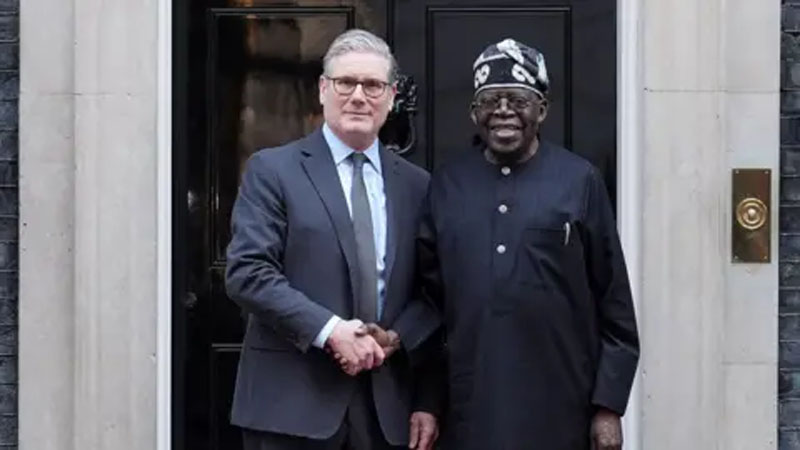
The governments of Nigeria and the United Kingdom have signed a landmark agreement to return failed asylum seekers, visa overstayers, and foreign national offenders, in a move aimed at strengthening migration control, border security, and bilateral cooperation.
The agreement was signed by Nigeria’s Minister of Interior, Olubunmi Tunji-Ojo, and UK Home Secretary, Shabana Mahmood, during the recent visit of President Bola Ahmed Tinubu to London.
Under the deal, Nigerian nationals without legal status in the UK—including failed asylum seekers, convicted offenders, and visa overstayers—will be eligible for return to Nigeria through a more efficient administrative process.
A major highlight of the agreement is Nigeria’s decision to accept “UK letters” as valid travel documents for deportees who lack passports. This provision is expected to significantly remove bureaucratic delays that previously stalled deportation processes.
READ ALSO:
- Trump, Israel Clash Over South Pars Strike as Iran Conflict Escalates
- Fani-Kayode, Dele Momodu Trade Fresh Insults in Escalating Social Media Feud
- Messi Joins Ronaldo in 900-Goal Club as Miami Exit Tournament
Official figures show that about 961 Nigerians have exhausted their asylum appeals, while over 1,100 convicted offenders are awaiting deportation, indicating that the new arrangement could fast-track removals.
The agreement also strengthens law enforcement and intelligence cooperation between both countries. It includes joint operations and intelligence sharing to tackle organised immigration crime, such as visa fraud, forged documents, and sham marriages.
UK Minister for Border Security and Asylum, Alex Norris, described Nigeria as a key partner in addressing illegal migration, noting that the country remains the UK’s largest visa market in Africa.
On his part, Tunji-Ojo said Nigeria’s participation reflects its commitment to responsible migration management and international obligations, emphasising the importance of fairness and cooperation in sustaining bilateral relations.
Beyond deportations, the agreement expands collaboration into combating transnational financial crimes, including romance scams, investment fraud, and cryptocurrency-related offences.
Both countries also plan to deploy a “fusion cell” model, bringing together government agencies, financial institutions, telecom operators, and technology firms to enable real-time intelligence sharing and coordinated enforcement actions.
Analysts say the deal could help the UK reduce its asylum backlog while enhancing Nigeria’s role in global migration governance, though concerns remain about the reintegration of returnees and the socio-economic impact.
While key implementation timelines and financial details have not been disclosed, both governments have pledged to ensure the agreement is executed in a structured, lawful, and humane manner.
Nigeria, UK Sign Landmark Deal to Deport Failed Asylum Seekers

-
 News3 days ago
Eid‑el‑Fitr in Nigeria Confirmed for Friday, March 20, 2026
-

 metro13 hours ago
Festival of Fertility: FG Orders Arrest, Promises Justice for Victims
-

 metro3 days ago
Lagos communities face 4-month blackout, power firm alerts
-

 metro2 days ago
Fani-Kayode, Dele Momodu Trade Fresh Insults in Escalating Social Media Feud
-
 metro2 days ago
Recovered Funds: EFCC Hands Over ₦3.9bn Linked to Oil Sector Fraud
-
 metro2 days ago
Sokoto Cleric Defies Sultan, Holds Eid al-Fitr Prayer Over Moon Sighting Dispute
-

 International24 hours ago
Netanyahu Clarifies Jesus Remarks, Denies Offending Christians Amid Backlash
-
 metro2 days ago
Woman Sparks Debate After Sending ₦500,000 Tithe from ₦5m Cooperative Loan