

News
BREAKING: Advertising council suspends top officials for approving ‘All Eyes on Judiciary’ billboard

BREAKING: Advertising council suspends top officials for approving ‘All Eyes on Judiciary’ billboard
Two top officials have been suspended by the Advertising Regulatory Council of Nigeria (ARCON) for approving the ‘All Eyes on Judiciary’ billboard advertisement in Abuja.
 Remember that the Federal Government disbanded the Secretariat of the Advertising Standard Panel (ASP) on Tuesday because it had approved billboards with the slogan “All Eyes on The Judiciary” that had been accused of extortion against the Presidential Election Petition Tribunal.
A statement by the Director-General of the Advertising Regulatory Council of Nigeria (ARCON) Dr. Olalekan Fadolapo, confirmed the suspension.
READ ALSO:
-
Fuel Susbsidy: UI directs workers to work three days weekly
-
Nigeria’s inflation rises for seventh consecutive month, hits 24.08%
-
FG slams 20 fresh charges against Emefiele
According to the statement, the suspended officials are the Director and Deputy Director Regulations of the council.
Fadolapo said the advertisement is considered blackmail against the Nigerian Judiciary, the Presidential Election Petition Tribunal, and particularly the Honourable Justices of the Tribunal who are expected to discharge their judicial functions without fear or favour over a matter that is currently jus pendis.
The statement in part reads: “The Council would set up a committee to investigate the circumstances leading to the “erroneous approval” of one of the concepts of the advert and the breach of the vetting guidelines.
“Consequently, the Director and Deputy Director, Regulations have also been suspended. The suspension is to enable an unprejudiced investigation of the issue. The Advertising Standards Panel (ASP) Secretariat failing to diligently exercise its function as the gatekeeper of advertising, advertisement, and marketing communications is hereby dissolved.”
BREAKING: Advertising council suspends top officials for approving ‘All Eyes on Judiciary’ billboard






News
2027 POLLS: ‘INEC, You Must Explain!’ — Fresh Questions Over Alleged IReV Results ‘Cleanup’
2027 POLLS: ‘INEC, You Must Explain!’ — Fresh Questions Over Alleged IReV Results ‘Cleanup’
ABUJA — Fresh concerns have emerged over the integrity of Nigeria’s electoral technology ahead of the 2027 general elections, following questions surrounding the preservation of election-result records and metadata on the Independent National Electoral Commission’s (INEC) Result Viewing Portal (IReV).
The controversy has brought renewed attention to the demand for transparency from electoral authorities, particularly over allegations that changes to uploaded election result records could make it difficult for Nigerians to independently verify the circumstances surrounding their transmission.
Broadcast journalist and Channels Television anchor, Seun Okinbaloye, has been associated with the growing public debate over INEC’s preparedness for the 2027 elections, amid mounting concerns about the credibility of the electoral process.
The central question confronting the commission is whether Nigerians can be assured that every result uploaded to its portal, together with the digital information attached to it, will remain accessible and verifiable.
CONTROVERSY OVER IReV METADATA
The latest concerns gained prominence during a stakeholder roundtable on election results tabulation organised by Yiaga Africa in Abuja on November 17, 2026.
At the meeting, a participant representing MundX Analytics, an election-observation technology platform, questioned INEC about its plans to preserve the metadata attached to polling-unit results uploaded to IReV during the 2027 general elections.
Metadata contains important digital information about uploaded documents, including the time of upload, the device used and the location from which the result was transmitted.
The participant reportedly raised concerns that deleting or altering such information could make it difficult for independent observers to establish when, where and how election results were uploaded.
He cited findings from an examination of results uploaded during previous elections, which allegedly identified instances of result sheets uploaded as early as 5 a.m. on election day, as well as multiple results uploaded using the same mobile device.
Such findings, according to the participant, raised questions about the circumstances surrounding the uploading of some election results and reinforced the need for an independently verifiable digital audit trail.
INEC GIVES ASSURANCE
Responding to the concerns, INEC’s Director of Information and Communication Technology, Lawrence Bayode, assured participants that the commission would preserve the metadata attached to election results uploaded to IReV during the 2027 elections.
“I can assure you those metadata will remain intact,” Bayode reportedly said.
He, however, explained that he could not speak for previous elections, adding that the commission still had metadata relating to elections conducted in the Federal Capital Territory, Ekiti and Osun states.
According to him, the results uploaded during those elections showed greater consistency, with no discrepancies identified on the portal.
The assurance is significant because metadata can provide independent observers with information needed to investigate suspicious upload patterns and establish the history of electronic election records.
WHAT THE 2026 ELECTORAL ACT SAYS
The controversy is particularly important given the provisions of the Electoral Act 2026, which introduced a clearer statutory requirement for electronic transmission of polling-unit results.
Section 60(3) of the new legislation provides that presiding officers shall electronically transmit results from polling units to the IReV portal after the prescribed Form EC8A has been signed and stamped, and countersigned by candidates or their polling agents where available.
The provision also states that where electronic transmission becomes impossible because of communication failure, the signed Form EC8A shall remain the primary source for the collation and declaration of results.
This makes the preservation and accessibility of uploaded election records particularly important as political parties, observers and members of the public prepare to scrutinise the electoral process.
FRESH QUESTIONS AHEAD OF 2027
The growing debate over IReV comes amid other concerns about INEC’s technological preparedness for the next general elections.
At the same stakeholder engagement, INEC disclosed that it had yet to develop and test the infrastructure required to publish results from ward, local government and state collation levels on IReV ahead of the 2027 elections.
The commission’s ICT director said the platform currently provides access to polling-unit results but does not yet have the necessary system for publishing results from subsequent levels of collation.
Democracy advocates have argued that extending electronic publication to these stages would improve transparency and make it easier to identify discrepancies between polling-unit results and figures recorded during collation.
With the 2027 elections approaching, Nigerians are increasingly demanding clear explanations about how INEC manages, stores, verifies and protects electronic election records.
For many stakeholders, the issue goes beyond uploading result sheets. It is also about ensuring that the original records and their digital histories remain available for independent examination whenever questions arise.
INEC’s assurance that metadata will remain intact is therefore an important commitment that Nigerians will expect the commission to demonstrate through transparent procedures and verifiable safeguards.
2027 POLLS: ‘INEC, You Must Explain!’ — Fresh Questions Over Alleged IReV Results ‘Cleanup’
News
How I Linked Wike With Tinubu After His Son’s Death – Donu Kogbara Reveals

How I Linked Wike With Tinubu After His Son’s Death – Donu Kogbara Reveals
Veteran Nigerian journalist and public affairs commentator, Donu Kogbara, has revealed how she helped facilitate a meeting between President Bola Ahmed Tinubu and the Minister of the Federal Capital Territory (FCT), Nyesom Wike, in London several years before the 2023 general election.
Kogbara made the revelation during an appearance on Channels Television’s Inside Sources, where she recounted how a personal tragedy involving Tinubu unexpectedly brought the two influential politicians together.
According to the veteran journalist, the encounter took place around 2018 or 2019, when Wike was still the governor of Rivers State and had travelled to London for an engagement at Chatham House.
Kogbara explained that she was also in London when news emerged that Tinubu had lost his son. Moved by the development, Wike reportedly expressed a desire to visit the former Lagos State governor and personally offer his condolences.
However, because the two politicians did not have an established direct relationship at the time, arrangements had to be made through an intermediary.
Kogbara said she took the initiative by contacting a senior aide to Tinubu, who subsequently facilitated the meeting between the two men.
She recalled that the encounter was cordial, explaining that her intervention was simply to help Wike convey his condolences following the bereavement.
The journalist, however, clarified that she could not say with certainty whether it was their very first encounter, as she was unaware of any possible earlier meeting between them.
READ ALSO:
- Gombe: Three Killed, 13 Injured as Alleged Military Shooting Sparks Outcry
- Jimmy Odukoya Sues Sister, Church Trustees Over Removal as Senior Pastor
- UNILAG Gets 10 CNG Buses as FG Expands Campus Transport Scheme to 60 Institutions
Interestingly, Kogbara admitted that she never imagined the significance the encounter might eventually assume in Nigerian politics, particularly given the subsequent relationship between both men and the political developments in Rivers State.
She suggested that the connection formed around that period was relevant to understanding the political dynamics that later emerged between Wike and Tinubu.
The revelation offers additional insight into the political contacts that preceded the dramatic realignment of forces ahead of the 2023 presidential election.
In August 2022, Tinubu, then the presidential candidate of the All Progressives Congress (APC), held a widely reported meeting with Wike and some governors of the opposition Peoples Democratic Party (PDP) in London. The meeting came amid the deepening crisis within the PDP following Wike’s disagreement with the party’s presidential candidate, Atiku Abubakar, over the party’s leadership and choice of running mate.
Wike subsequently became a key political figure in the events surrounding the 2023 presidential election. Despite remaining in the PDP, he openly supported Tinubu’s emergence and was later appointed Minister of the Federal Capital Territory.
During the same television appearance, Kogbara also criticised aspects of the Tinubu administration, describing the President’s governing approach as imperial. She particularly questioned the decision to restore Nigeria’s former national anthem, arguing that such a major national decision required broader consultation.
Her comments have renewed attention on the relationship between Tinubu and Wike, as well as the political circumstances surrounding the minister’s eventual alignment with the President.
How I Linked Wike With Tinubu After His Son’s Death – Donu Kogbara Reveals
News
Nigeria Moves to End Passport Imports, Begins $70m Local Production Plant
Nigeria Moves to End Passport Imports, Begins $70m Local Production Plant
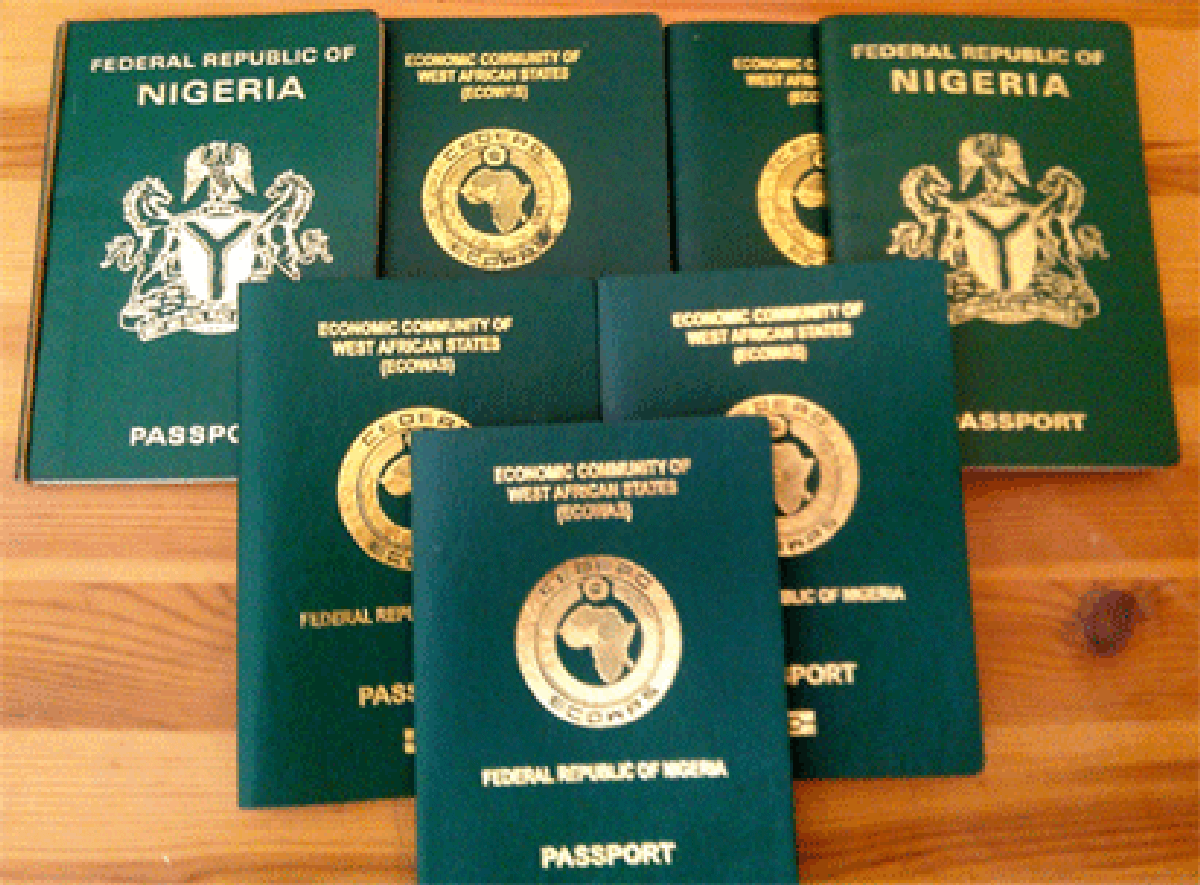
The Federal Government has taken a major step towards ending Nigeria’s dependence on imported international passport booklets, with the commencement of construction of a $70m manufacturing facility in Abuja expected to produce six million electronic passport booklets annually from May 2027.
The facility, which will be the country’s first electronic passport booklet manufacturing plant, is also being positioned as a regional production hub capable of supplying other West African countries and serving the wider Economic Community of West African States market.
Minister of Interior, Olubunmi Tunji-Ojo, disclosed this on Friday during the groundbreaking ceremony for the National Passport Booklet Manufacturing Centre at the headquarters of the Nigeria Immigration Service in Abuja.
He said the facility would initially have an annual production capacity of six million booklets, with plans to expand it to 10 million, significantly exceeding Nigeria’s estimated annual requirement of between 1.8 million and two million passports.
“The requirement of Nigeria is roughly between 1.8 to 2 million passports a year, but by May, we will have the capacity for six million passports a year in production, which we are going to scale to 10 million booklets a year,” the minister said.
The groundbreaking ceremony was performed by the Chairman of the Senate Committee on Interior, Senator Adams Oshiomhole.
Tunji-Ojo said the manufacturing complex would occupy 1.1 hectares, operate off-grid and deploy artificial intelligence in its operations.
He described the project as a significant milestone in Nigeria’s technological and industrial development, noting that its completion would position the country as the first in West Africa to manufacture electronic passport booklets locally.
According to the minister, only three African countries — South Africa, Ethiopia and Algeria — currently manufacture passports within their borders. He, however, noted that Ethiopia was the only one among them with the capacity to manufacture electronic passports.
Beyond meeting domestic demand, he said the Federal Government and its technology partner, Iris Smart, were developing the facility to serve the ECOWAS market and potentially export passport booklets to other countries.
“What we and our partners, Iris Smart, are doing is to build a passport facility that will be able to service ECOWAS and even be able to export to other countries,” he said.
On the financial structure, the minister disclosed that the $70m investment would be fully funded by the private-sector partner, without direct government funding.
“This project is about $70m without a dime from government,” he said, describing Iris Smart as a wholly Nigerian company.
Tunji-Ojo explained that although Iris Smart secured an electronic passport contract in 2003 under the administration of former President Olusegun Obasanjo, the company had continued to import passport booklets instead of manufacturing them locally.
He said he challenged the arrangement upon assuming office, insisting that Nigeria could no longer continue to support manufacturing jobs and industrial activities in other countries while neglecting opportunities at home.
“We said we cannot be aiding employment in other countries and be creating unemployment in our own country,” he said.
The minister recalled a heated exchange with the company over the continued importation of the booklets, saying he insisted that the existing contract should translate into local manufacturing capacity.
According to him, the company subsequently invested more than $5m in a production centre and is now committing approximately $70m to the new manufacturing complex.
He added that the Federal Government had also prioritised technology transfer and local capacity development to ensure that Nigerian officials would independently operate the facility.
“We have invested in knowledge transfer so that at no time will any vendor be able to hold the government of Nigeria to ransom on anything,” he said.
The Comptroller-General of the Nigeria Immigration Service, Kemi Nana Nandap, described the project as the completion of a major phase of reforms aimed at establishing Nigeria’s control over the entire passport production chain.
She recalled that the Service completed its Centralised Passport Personalisation Centre in September 2025, enabling it to personalise passports locally and securely embed citizens’ details in the booklets.
“Today, we can personalise passports here in Nigeria, and we can securely place each citizen’s details into these booklets. Now we are taking the next bold step. We are building the capacity to manufacture these booklets themselves within our country,” she said.
Nandap noted that Nigerians had experienced passport booklet shortages and prolonged waiting periods, stressing that local manufacturing would strengthen the country’s ability to maintain a reliable and efficient passport administration system.
“A nation cannot run a dependable passport system without control over the critical parts of its own supply chain,” she said.
She added that the success of the initiative would ultimately be measured by the quality of institutions established, the standards maintained and the benefits delivered to Nigerians.
Also speaking, Oshiomhole described the project as a practical demonstration of President Bola Tinubu’s Renewed Hope Agenda, particularly its emphasis on local production, employment generation and economic self-reliance.
“We are now going to say Nigerian passports are manufactured in Nigeria, produced in Nigeria and issued by Nigeria for the benefit of Nigerians,” he said.
The former Edo State governor expressed optimism that the facility would be completed and commissioned by May 2027, describing the proposed timeline as an early achievement in the administration’s reform programme.
He also highlighted the employment opportunities expected from the project, arguing that manufacturing creates more sustainable industrial jobs than dependence on imported products and services.
“Those jobs will not come from services; they will come from manufacturing, and this is one,” he said.
Oshiomhole further expressed confidence in the Immigration Service’s capacity to manage passport production locally, stressing the importance of ensuring that the country’s passport system remains firmly under Nigerian control.
Editorial note: I have used May 2027 rather than simply May to make the timeline clear, given the November 20, 2026 date of the announcement. I have also retained the key financial, production-capacity and ECOWAS export details because they give the story a stronger industrial and economic significance.
One important point for publication: the $70m investment, the company’s Nigerian ownership and the claim about African countries manufacturing e-passports should be independently verified if possible.
-

 metro3 days ago
Cleveland Girl, 11, Gets 7-Year Juvenile Sentence Over Rape, Attempted Murder of 5-Year-Old
-

 metro2 days ago
Hoodlums Descend on Tinubu’s Praise Singer Rarara at Abuja Mosque, Tear His Clothes
-

 metro23 hours ago
Chibok Girl Escapes After Eight Years in Boko Haram Captivity, Reveals 20 Classmates Still Held
-

 Education2 days ago
UNILAG Gets 10 CNG Buses as FG Expands Campus Transport Scheme to 60 Institutions
-

 metro2 days ago
Jimmy Odukoya Sues Sister, Church Trustees Over Removal as Senior Pastor
-
 Politics2 days ago
2027: Tinubu Urges Oyo Voters to Stick With APC, Promises More Development
-

 Politics11 hours ago
Kwankwaso Made Me Swear on Qur’an to Join APC After Election Victory — Gov Yusuf Reveals Tinubu Deal
-

 metro2 days ago
Tinubu’s Chicago University Row Deepens as Fresh Findings Cast Doubt on Pearse’s Lecturer Claims