

News
FCC commissioner denies receiving money from job seekers

FCC commissioner denies receiving money from job seekers
Alhaji Manman Alakai, commissioner, representing Nasarawa State in the Federal Character Commission (FCC), on Tuesday denied receiving money to secure employment for in job seekers.
Alakai, who appeared before the House of Representatives ad hoc committee probing job racketeering in Federal Government agencies in Abuja denied collecting money to secure jobs for anyone in any Ministry, Department or Agency (MDA) .
The News Agency of Nigeria (NAN) reports that Mr Musa Ibrahim one of the victims of job racketeering while appearing before the committee on Aug. 14, claimed he alongside nine others paid million into Mr Abdullahi Ibrahim’s account .
He said Ibrahim acted as the linkman to the commissioner, representing Nasarawa State to collect money from job seekers willing to pay.
Meanwhile, Alakai in his defence before the committee said he knew Ibrahim in question, but added that contrary to his claimed that he was his Personal Assistant, Ibrahim’ has never been my PA or work in FCC.”
READ ALSO:
-
Stay away from Ilorin, Islamic council warns Isese traditional worshippers
-
Ministerial slot: How Tinubu betrayed me – El-Rufai
-
BREAKING: Advertising council suspends top officials for approving ‘All Eyes on Judiciary’ billboard
Narrating his experience, Alakai said:” a traditional ruler in Nasarawa called to inform me that one of my aides collected money from him for job slots.
” I asked that the number be tracked by the police and I discovered it was Ibrahim and I wrote a petition to the police and he was traced.
” When they went to his house, the police found a uniform of the Nigerian Correctional Service. He claimed that he worked there. I was told that the people he defrauded have gone to court, ” he said.
Alakai challenged the committee to investigate his account to ascertain the claim, saying ” my account is open for the committee to scrutinise since Ibrahim claimed he paid money to me for job slots.”
Rep. Yusuf Gagdi, the chairman of the committee said about nine people have evidence of a transfer made to Ibrahim.
He said that was why Alakai was invited to appear before the committee to give evidence since he claimed he was working for him.
Angered by the non appearance of Musa Ibrahim who made the allegations, the chairman said, “you can’t come and make public allegations against any public officer without coming to substantiate it.
READ ALSO:
-
Fuel Susbsidy: UI directs workers to work three days weekly
-
Nigeria’s inflation rises for seventh consecutive month, hits 24.08%
-
FG slams 20 fresh charges against Emefiele
“We have nothing to say to you further because the people making allegations are not here, if they are not acting a script, they should be here to give further evidence.
“If you cannot justify that you pay money for any job slots with evidence, we will not allow any citizens to blackmail people without facts, ” he said.
The chairman vowed never to call anyone to appear before it again in FCC, adding that the committee had established two things exist in the commission.
This according to him includes: accusations against chairman and selling of job slots among commissioners.
NAN reports that other agencies that appeared to give accounts of recruitment in their agencies include: Corporate Affairs Commission, National Universities Commission and Nigeria Electricity Regulatory Commission among others. (NAN)








News
FG Targets 95% NIN Coverage by December 2026
FG Targets 95% NIN Coverage by December 2026
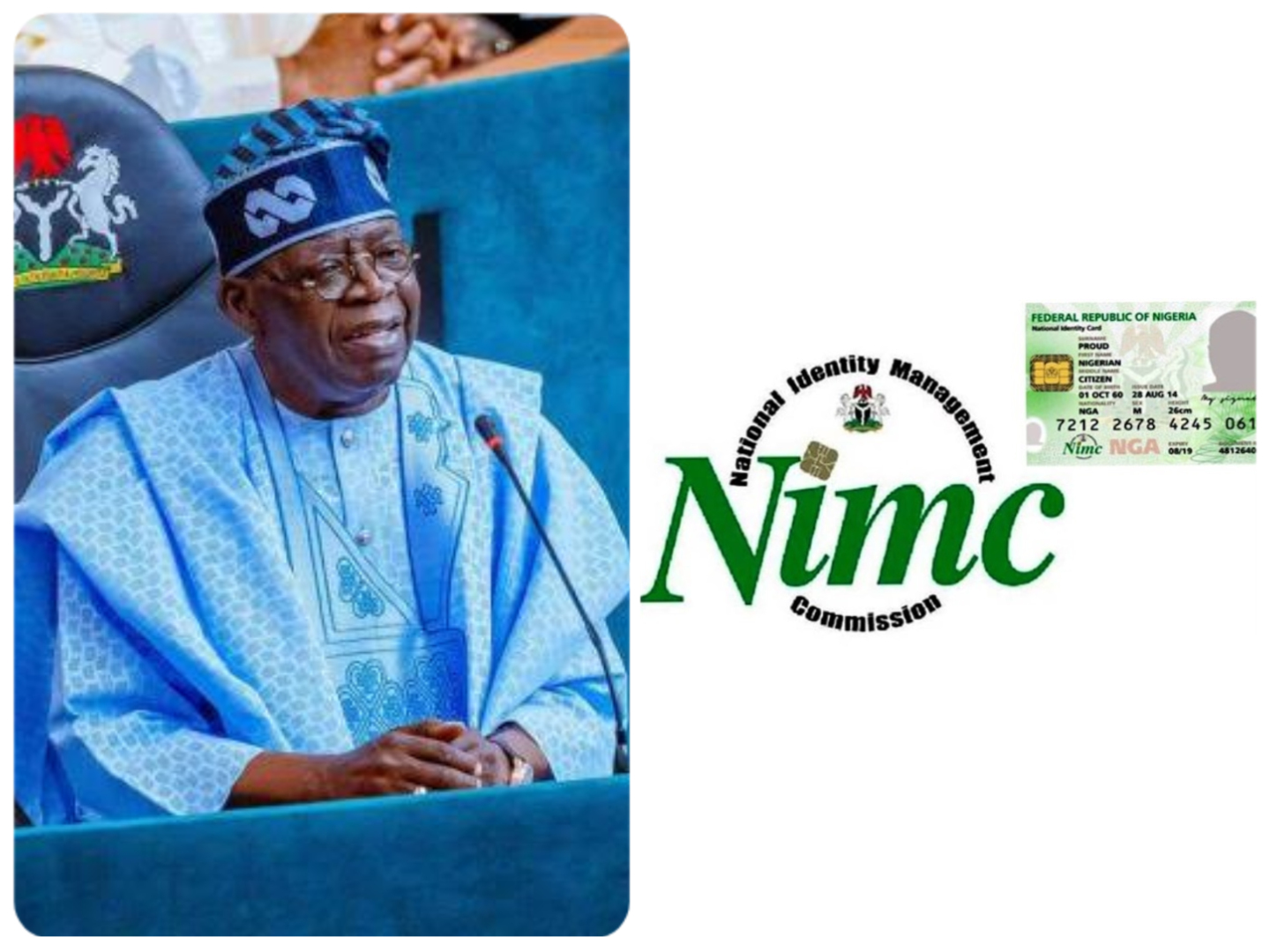
The Federal Government is targeting 95 per cent National Identification Number (NIN) coverage nationwide by December 2026 as it expands Nigeria’s digital identity system.
President Bola Tinubu announced the target during the 2026 National Identity Day celebration in Abuja, where he was represented by Chief of Staff Femi Gbajabiamila.
The President said NIN enrolment had risen to about 142 million, up from more than 80 million recorded when his administration came into office.
To reach the new target, the government plans to expand registration through ward-level enrolment, mobile registration initiatives and licensed agents. Reports from the event said free enrolment is being extended to all 8,809 wards across the country.
Identity System for Digital Economy
Tinubu said the government wants to build an identity infrastructure that can support Nigeria’s growing digital economy.
He said a secure national identity could make it easier to access services while supporting areas such as digital banking, healthcare, transportation and government programmes.
The President also said the expansion must go hand in hand with safeguards for citizens’ privacy and dignity.
Beyond enrolment numbers, he said the government was working towards a more connected digital public system, including electronic health records, e-transport services and a more coordinated national data architecture.
The NIMC’s ongoing expansion therefore aims not only to register more Nigerians and legal residents, but also to make the identity system a key part of how people access digital and public services.
FG Targets 95% NIN Coverage by December 2026
Education
25 Universities, Teaching Hospitals Get Solar Power Under REA Programme

25 Universities, Teaching Hospitals Get Solar Power Under REA Programme
Twenty-five federal tertiary institutions have been connected to solar electricity under the Rural Electrification Agency’s (REA) Energizing Education Programme.
The REA Managing Director, Abba Aliyu, disclosed this during the commissioning of a 3MW captive solar hybrid power project at Yakubu Gowon University, Abuja.
According to Aliyu, the programme covers 22 federal universities and three affiliated teaching hospitals and has deployed more than 100MW of clean energy.
He said the initiative now benefits over 300,000 students and 50,000 academic and administrative staff.
Aliyu added that the new 3MW facility would power key university facilities, including lecture halls, laboratories, ICT systems, administrative buildings and campus lighting.
Meanwhile, Minister of Power Joseph O. Tegbe said reliable electricity was essential to supporting teaching, research, healthcare and digital services in universities.
He stressed that the long-term performance of the solar projects would be more important than their commissioning.
Vice-Chancellor of Yakubu Gowon University, Prof. Hakeem Babatunde Fawehinmi, also said dependable electricity was critical to the institution’s academic and research activities.
25 Universities, Teaching Hospitals Get Solar Power Under REA Programme
News
OAU Investigates Death of Final-Year Student as Police Begin Probe
OAU Investigates Death of Final-Year Student as Police Begin Probe
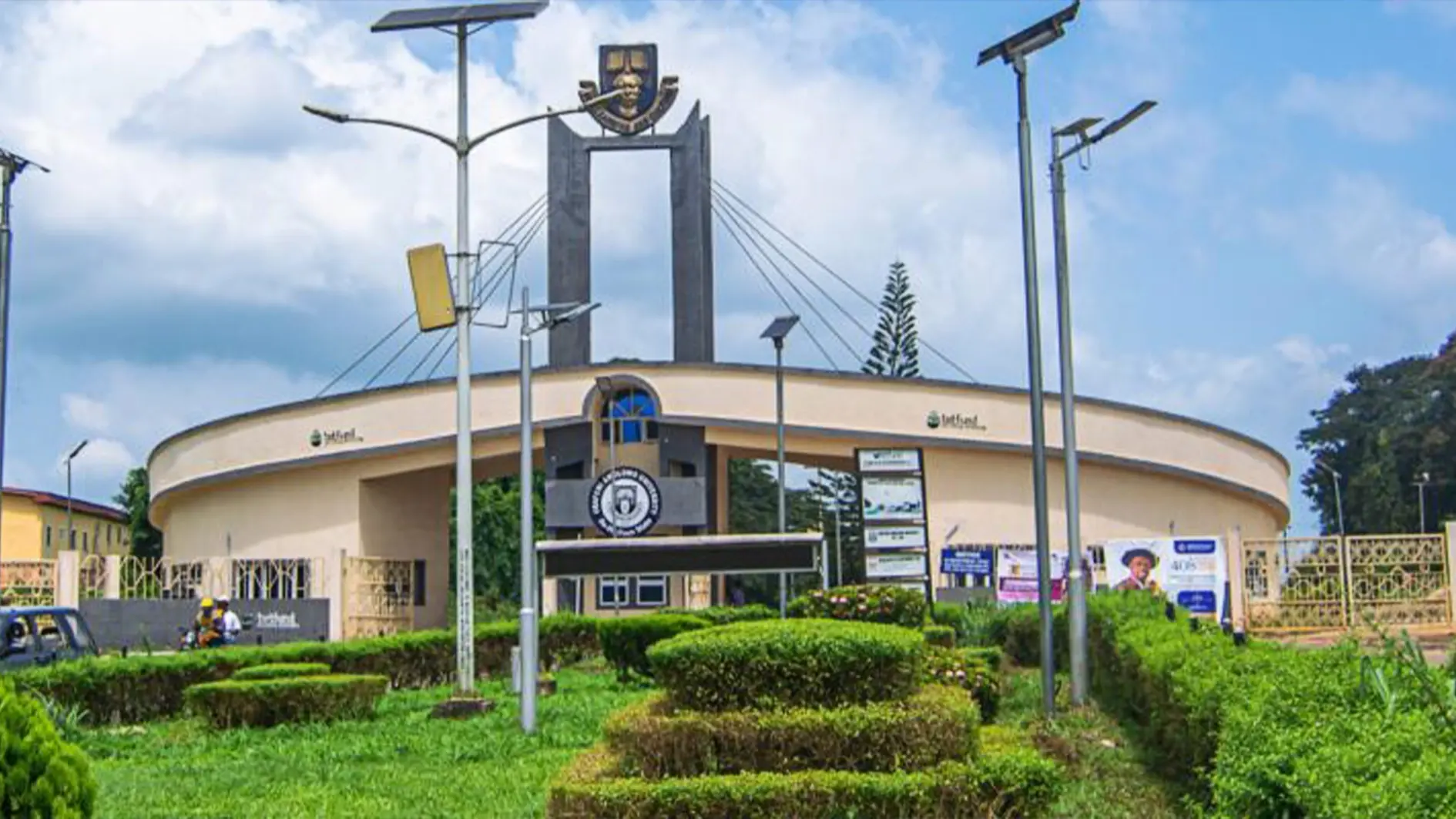
Obafemi Awolowo University (OAU), Ile-Ife, Osun State, is investigating the death of a final-year student of the institution.
The student, Oluwole Oluwosegun, was studying Materials Science and Engineering at the university.
According to the university’s Public Relations Officer, Olarewaju Abiodun, the incident occurred on Tuesday afternoon at the student’s off-campus residence around the Damico area of Ooni Layout, Ile-Ife.
After receiving the report, the university’s Quick Response and Security (QRS) Team went to the location. The team also contacted the Nigeria Police, after which officers from the ‘A’ Division in Moore, Ile-Ife, joined them at the scene.
The university later took the student to its Health Centre, where a medical doctor confirmed his death.
READ ALSO:
- 57-Year-Old Man Arrested Over Sexual Abuse of Stepdaughter in Edo
- US-Based Nigerian Lawyers Disbarred: Full List of Fraud, Theft and Misconduct Cases
- Katsina Police Rescue Two Kidnapped Women, Arrest Suspected Kidnappers
Police Begin Investigation
Following the incident, university authorities handed relevant information and items recovered from the scene to the police to support their investigation.
The police have since begun inquiries into the circumstances surrounding the student’s death.
Meanwhile, the university said it had informed the appropriate student affairs authorities to provide necessary follow-up, particularly regarding the welfare and emotional support of students affected by the incident.
Vice-Chancellor Professor Simeon Bamire also expressed condolences to the student’s family, friends, classmates and colleagues.
The university further encouraged students facing severe emotional distress, relationship difficulties, financial pressure or other personal challenges to seek help from trusted people and available university support services.
Professor Bamire reaffirmed the institution’s commitment to the welfare of its students and staff, stressing that no student should feel they must face overwhelming difficulties alone.
OAU Investigates Death of Final-Year Student as Police Begin Probe
-
 Politics3 days ago
2027: Northern Lecturers Back Tinubu, ASUU Disowns Endorsement
-

 metro3 days ago
Police Arrest Mother Over Alleged Brutal Abuse of 7-Year-Old Girl in Anambra
-

 Sports2 days ago
‘I Was Never the Chosen One’ — Dembele Responds to Mbappe
-

 International1 day ago
Islamic Council Condemns Attempted Attack on Holy City of Mecca
-

 Education2 days ago
JAMB Moves 2027 UTME Time — Here’s What Candidates Need To Know
-

 metro2 days ago
Lagos Power Outage: Ikeja Electric Blames TCN as Businesses, Homes Groan
-
 News1 day ago
Keep Politics Out of My Office — Ogbomoso Grand Chief Imam Warns Politicians, Bloggers
-
 Politics2 days ago
2027: APC Governors Reject Wike’s Rainbow Coalition, Insist on Party Loyalty