

Business
Why Petrol Remains Expensive Despite Dangote Refinery’s Local Production

Why Petrol Remains Expensive Despite Dangote Refinery’s Local Production
Nigeria’s emergence as a major local refining hub has reduced the country’s dependence on imported petroleum products, but it has not insulated consumers from rising petrol prices, with the cost of crude oil, international market conditions, refinery economics and downstream distribution continuing to influence pump prices.
The development has renewed debate over why Nigerians are still paying relatively high prices for Premium Motor Spirit (PMS) despite the operation of the Dangote Petroleum Refinery, Africa’s largest refinery.
The refinery recently increased its petrol gantry price to N1,350 per litre, from N1,265, amid higher crude oil prices and rising replacement costs in the downstream market. The increase has subsequently put pressure on marketers and filling stations to adjust their pump prices.
Dangote Group President Aliko Dangote has explained that domestic refining does not automatically mean petrol will be priced independently of the international oil market because crude remains the principal raw material for refining.
The refinery therefore remains exposed to the cost of crude oil, whether the feedstock is sourced locally or imported.
This is particularly important because Nigerian crude is commercially linked to international benchmarks. As a result, producing petrol domestically removes some import-related costs but does not eliminate the underlying value of the crude used to manufacture the product.
Recent developments also show that the availability and cost of Nigerian crude oil remain central to the economics of the Dangote refinery.
The Nigerian Upstream Petroleum Regulatory Commission (NUPRC) reported that 53.7 million barrels of crude oil and condensate were supplied to local refineries between April and June 2026, representing 97.4 per cent performance under the Domestic Crude Supply Obligation (DCSO).
READ ALSO:
- “Clash of Egos”: Ayo Fayose Downplays Public Feud Between Wike and APC Governors
- ASUU Crisis Deepens: Lagos Universities Join UNIBEN, Taraba on Indefinite Strike
- Lagos Power Outage: Ikeja Electric Blames TCN as Businesses, Homes Groan
At the Dangote refinery, producers offered 68.1 million barrels against the facility’s requirement of 63 million barrels during the second quarter. The refinery eventually accepted 52.6 million barrels, equivalent to about 78 per cent of the volumes offered to it.
The figures indicate that the issue is not simply whether crude is available in Nigeria, but also the commercial terms, grades, logistics and timing involved in supplying it to the refinery.
Dangote has previously raised concerns about the cost and competitiveness of some domestic crude supplies. A portion of the refinery’s crude intake has at times been imported, while the company has continued seeking ways to secure sufficient Nigerian crude at competitive prices.
The refinery’s access to domestic crude has, however, improved considerably.
Dangote secured at least 16 million barrels of Nigerian crude for October delivery, equivalent to about 520,000 barrels per day and representing most of the refinery’s 700,000-barrel-per-day capacity.
The October supply includes allocations from the Nigerian National Petroleum Company Limited (NNPCL) as well as additional crude purchased through tenders.
The refinery received an average of about 565,000 barrels per day of Nigerian crude in August, nearly twice its average intake in 2025.
The increased domestic supply could reduce the refinery’s exposure to imported crude, but it does not necessarily mean petrol prices will fall immediately.
The reason is that the cost of crude is only one component of the final price of petrol.
Other factors include refining costs, financing, storage, transportation, depot charges, distribution and retail margins. Exchange-rate movements can also affect costs linked to dollar-denominated purchases and other imported inputs.
The removal of the petrol subsidy has further changed Nigeria’s fuel-pricing structure. Rather than having the government absorb a large portion of the difference between market costs and the regulated pump price, consumers are now more directly exposed to changes in market conditions.
Consequently, movements in global crude prices can affect locally refined petrol just as they affect imported products.
The recent rise in the Dangote refinery’s petrol price demonstrates this relationship. The refinery’s latest adjustment reflected rising crude prices and increased replacement costs faced by refiners, importers and depot operators.
READ ALSO:
- US Court Blocks Trump Visa Rule Limiting Stay of Foreign Students, Journalists
- Sokoto Shuts Mosque After Cleric Stabbing, Names Ulamas Probe Panel
- Iran Rejects US Talks as Trump’s Mixed Signals Deepen Hormuz Standoff
The relationship between global prices and domestic petrol prices has also worked in the opposite direction when crude prices declined.
Earlier in the year, the Dangote refinery reduced its petrol price as international crude prices eased, illustrating how changes in the global market can be transmitted to locally refined products.
The refinery is also increasingly becoming a participant in the international refined-products market rather than solely a supplier to Nigeria.
The facility generated $1.82 billion in net profit during the first half of 2026, on revenue of more than $13 billion, reversing a $476 million loss recorded in 2025.
The refinery has expanded exports of jet fuel, diesel and gasoil, with the company becoming a significant supplier to international markets during disruptions to global fuel supplies.
The development demonstrates the commercial reality of operating a large refinery: refined products can be sold into domestic or international markets depending on market conditions, prices and demand.
For Nigeria, the refinery nevertheless represents a major structural change in the downstream petroleum sector.
The country previously relied heavily on imported refined petrol despite being a major crude oil producer. Increased domestic refining means more crude can be converted into petroleum products within Nigeria, reducing dependence on imported finished products and potentially improving energy security.
The refinery is also expected to expand its capacity further, with plans to increase refining capacity to 1.4 million barrels per day over the next three years.
The larger capacity could increase domestic availability of refined products and strengthen Nigeria’s position as a regional supplier.
However, greater refining capacity by itself does not guarantee permanently cheaper petrol.
For consumers, the crucial issue is how efficiently the entire petroleum value chain operates—from crude production and supply to refining, transportation, storage and retail distribution.
The Domestic Crude Supply Obligation is intended to improve access to Nigerian crude for local refineries. Increased domestic crude production and stronger commercial arrangements between producers and refiners could further improve the reliability of supply.
There are also efforts to address logistics and supply challenges, including proposals for crude-swap arrangements designed to match domestic refiners with local producers and potentially reduce delivery times and logistical complications.
If such measures improve the reliability and competitiveness of domestic crude supply, they could strengthen the economics of local refining.
For now, however, Nigerians remain exposed to a combination of global crude oil prices, domestic crude supply costs, exchange-rate pressures and downstream distribution expenses.
This means that the biggest benefit of the Dangote refinery may not necessarily be an immediate collapse in petrol prices, but a reduction in Nigeria’s dependence on imported refined fuel, greater domestic refining capacity and the potential to retain more value from the petroleum chain within the country.
The immediate challenge remains translating those structural gains into greater petrol price stability and affordability for households, businesses and transport operators.
As Dangote increases its intake of Nigerian crude and moves towards higher utilisation, the cost and reliability of its feedstock will remain critical to the price of petrol in Nigeria.
The latest developments therefore suggest that local refining has changed Nigeria’s fuel supply landscape, but it has not disconnected petrol prices from the international oil market.
Why Petrol Remains Expensive Despite Dangote Refinery’s Local Production










Auto
Omoda, Jaecoo bet on warranty, after-sales support to win Nigerian car buyers

Omoda, Jaecoo bet on warranty, after-sales support to win Nigerian car buyers
Omoda and Jaecoo are stepping up investment in warranty protection, spare-parts distribution and after-sales services as the emerging automotive brands seek to strengthen customer confidence and establish a lasting presence in increasingly competitive global markets.
The strategy is particularly relevant to Nigeria, where concerns about spare-parts availability, maintenance costs, technical expertise and the reliability of after-sales support often influence decisions when purchasing new vehicles.
Beyond attractive designs, advanced technology and vehicle performance, motorists increasingly want assurances that their investments will remain protected long after driving their cars out of showrooms.
Recognising this changing customer expectation, Omoda and Jaecoo are expanding their international after-sales infrastructure and warranty programmes to improve the ownership experience and address some of the industry’s longstanding concerns.
In the United Kingdom, vehicles from the two brands come with a seven-year or 100,000-mile warranty, while batteries in electrified models enjoy eight-year coverage.
Although warranty conditions differ across markets, the programme underscores the brands’ emphasis on long-term ownership support and customer assurance.
The companies are also advancing their Super Hybrid System, which combines petrol and electric power to deliver improved fuel efficiency while retaining the convenience of conventional refuelling.
The technology is designed to address a major concern among motorists considering electrified vehicles, particularly those who want the benefits of electric mobility without depending entirely on charging infrastructure.
The Jaecoo J7 PHEV has already attracted considerable attention in the UK market, emerging as Britain’s best-selling new SUV in September.
It also secured a Guinness World Record for the lowest fuel consumption recorded by a plug-in hybrid production SUV during the UK Three Peaks Challenge.
Similarly, the flagship Jaecoo J8 combines 428 horsepower with all-wheel-drive capability and an electric-only driving range of more than 130 kilometres.
In Indonesia, a Jaecoo vehicle also secured a Guinness World Record after covering a verified distance of 1,660 kilometres on a single tank of fuel and battery charge, further highlighting the efficiency potential of the brand’s hybrid technology.
Beyond product development and performance achievements, the companies are strengthening the supply chain that supports vehicle ownership.
A major step in this direction was the opening of a 12,000-square-metre spare-parts distribution centre in Dubai’s Jebel Ali Free Zone in December 2024.
The facility stocks more than 20,000 different components to support parts distribution and improve service delivery.
The company has also indicated plans to establish similar facilities across different continents, with expansion already underway in South Africa.
For Nigeria, where the cost and availability of genuine spare parts can significantly affect vehicle ownership expenses, such investments could have important implications.
A dependable distribution network would help reduce the challenges associated with sourcing replacement components, while effective warranty administration and access to trained technicians could improve customer satisfaction and strengthen confidence in the brands.
As competition intensifies in Nigeria’s automotive market, the ability to provide reliable after-sales support could become just as important as introducing technologically advanced vehicles at competitive prices.
For Omoda and Jaecoo, the challenge will be to translate their growing international infrastructure and warranty commitments into accessible, consistent and responsive services for Nigerian customers.
Ultimately, winning the confidence of Nigerian motorists will require more than impressive vehicles and international performance records. It will depend on the brands’ ability to support customers throughout the entire ownership journey, from the first showroom visit to routine servicing and eventual replacement of parts.
Auto
Why Toyota RAV4 Remains Attractive Choice for Nigeria’s SUV Buyers
Why Toyota RAV4 Remains Attractive Choice for Nigeria’s SUV Buyers
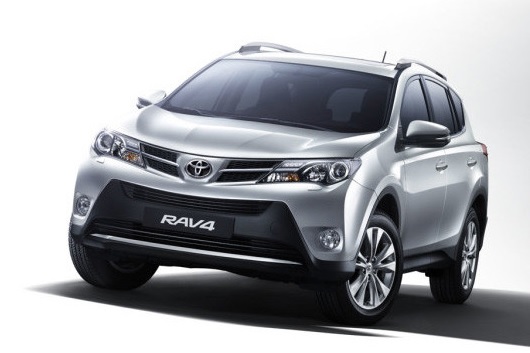
As Nigerian motorists increasingly look for vehicles that deliver comfort, dependable performance, fuel economy and versatility, the Toyota RAV4 continues to offer an appealing proposition in the country’s competitive sport utility vehicle market.
Combining a distinctive exterior design with a thoughtfully crafted interior, practical luggage accommodation and performance engineered for everyday driving, the RAV4 is designed to meet the expectations of individuals and families seeking a vehicle that balances functionality with driving pleasure.
Toyota (Nigeria) Limited (TNL) presents the RAV4 as an SUV that combines refined engineering, comfort and practicality, making it a consideration for motorists navigating the country’s diverse driving conditions.
Comfort and convenience for everyday motoring
One of the RAV4’s major attractions is its emphasis on passenger comfort and convenience.
According to Toyota Nigeria Limited, the vehicle features an automatic air-conditioning system with independent temperature controls for the left and right sides of the cabin. This enables occupants to enjoy a more comfortable interior environment, particularly during Nigeria’s hot weather.
The steering wheel is equipped with conveniently positioned audio control switches, allowing drivers to operate the entertainment system without taking their hands away from the steering wheel.
The interior design also prioritises passenger accommodation, providing generous seating space and flexibility for different transportation needs.
For motorists who regularly travel with family members or require additional luggage capacity, the rear seats can be folded to create more room for carrying larger items.
This practical arrangement makes the RAV4 suitable for everyday commuting, family outings, shopping trips and longer journeys.
Performance that balances acceleration and fuel economy
Performance is another important consideration for Nigerian motorists, particularly those who combine daily urban commuting with occasional interstate journeys.
Toyota Nigeria Limited describes the RAV4’s engine as delivering excellent acceleration from low speeds, while maintaining fuel economy, clean emissions and quiet operation.
This combination is particularly relevant in Nigerian cities, where motorists frequently encounter stop-and-go traffic, congested roads and varying driving conditions.
The emphasis on responsive acceleration and quieter operation also contributes to a more comfortable driving experience.
Fuel economy remains an important consideration for prospective vehicle owners, especially in a market where the cost of running and maintaining a vehicle influences purchasing decisions.
Toyota notes that fuel consumption varies according to fuel quality, environmental conditions and individual driving habits.
## Designed with practicality in mind
Beyond its performance and comfort, the RAV4 offers the versatility expected of a modern SUV.
Its flexible luggage arrangement allows owners to accommodate different cargo requirements by folding the rear seats when additional loading space is needed.
This feature is particularly useful for families, business professionals and motorists who require a vehicle capable of handling both passenger transportation and occasional cargo duties.
The SUV’s interior layout also reflects Toyota’s attention to functional design, with controls positioned to make everyday operation more convenient.
The advantage of buying through Toyota Nigeria Limited
For prospective buyers, the decision to purchase an SUV should go beyond the vehicle’s appearance, performance and convenience features.
The availability of genuine spare parts, professional maintenance services and manufacturer-backed warranty protection is equally important.
Toyota Nigeria operates through seven accredited dealers: Elizade Nigeria Limited, R.T. Briscoe (Nig.) Plc, Omoregie Motors, Germaine Auto Centre, Kojo Motors, Mandilas Motors and Metropolitan Motors Limited.
According to the company, vehicles purchased through its accredited dealers enjoy a three-year or 100,000-kilometre warranty, whichever comes first.
TNL also explains that its vehicles are selected and supplied with specifications approved for the Nigerian operating environment.
An important component of this approach is the Severe User Package, which includes reinforced suspension, heavy-duty shock absorbers and engine under-guards, among other features designed to help vehicles withstand demanding road and terrain conditions.
This consideration is particularly relevant in Nigeria, where road conditions can vary considerably between urban centres, highways and rural communities.
The company’s accredited dealers also provide access to genuine Toyota spare parts and authorised servicing facilities.
Toyota further states that genuine spare parts purchased through its accredited dealers carry a 12-month or 20,000-kilometre warranty, subject to applicable terms and conditions.
A practical option for Nigerian motorists
For Nigerian buyers considering an SUV, the Toyota RAV4 presents a combination of passenger comfort, flexible luggage accommodation, responsive engine performance and practical everyday features.
Its automatic climate control, steering-mounted audio switches and adaptable rear seating arrangement address important aspects of everyday vehicle ownership.
Combined with Toyota Nigeria’s emphasis on specifications suitable for Nigerian conditions, warranty protection and access to genuine spare parts, the RAV4 offers prospective customers additional considerations beyond the initial purchase.
For individuals and families seeking an SUV that combines everyday practicality with the established Toyota ownership proposition, the RAV4 deserves consideration.

Auto
Nigeria’s Auto Dealers Face New Challenge as After-Sales Service Takes Centre Stage
Nigeria’s Auto Dealers Face New Challenge as After-Sales Service Takes Centre Stage
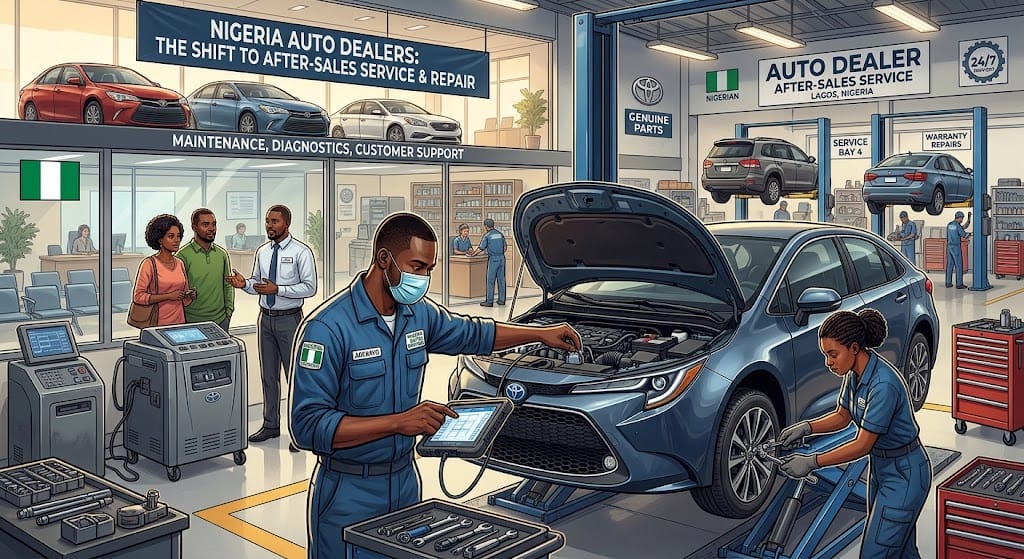
Nigeria’s automotive industry may need to rethink the way it competes for customers, with industry stakeholders urged to place greater emphasis on after-sales service, warranty protection and customer satisfaction rather than focusing largely on vehicle prices, designs and technology.
As competition intensifies and new vehicle brands enter the Nigerian market, the ability of distributors and dealers to provide reliable support long after a vehicle has been purchased could become a major factor in determining customer loyalty and market leadership.
For many vehicle owners, the real test of a brand does not end at the showroom. It begins when the vehicle requires routine servicing, develops a fault, needs replacement parts or requires warranty attention.
The quality of the response at such moments can determine whether a customer remains loyal to a brand or begins looking elsewhere.
Against this background, the industry is being challenged to embrace a new form of competition centred on dependable, transparent and accessible after-sales support.
Traditionally, automotive competition has revolved around pricing, vehicle performance, design, technological innovations, fuel efficiency and the introduction of new models. While these factors remain important, they do not necessarily guarantee a satisfactory ownership experience.
For Nigerian motorists, the availability of genuine spare parts, qualified technicians, affordable maintenance, prompt repairs and effective warranty administration can be just as important as the vehicle’s initial purchase price.
This is particularly significant in Nigeria, where vehicles play critical roles in household mobility and business operations. A private car may be indispensable for commuting, school runs and medical appointments, while commercial vehicles are essential to deliveries, logistics and other economic activities.
Consequently, prolonged vehicle downtime arising from poor maintenance support or delays in obtaining replacement parts can impose significant financial and operational costs on owners.
READ ALSO:
- 2027: ‘Tinubu Must Stay’ Chants Rock Jigawa as NITDA DG Opens Campaign Office
- Trump Steps In as Ghana Demands Justice for 15-Year-Old Boy Shot Dead on Way to School in US
- Adeboye Fires Back at Journalists Over Viral Jonathan Protest Photo, Says It Was Prayer Walk
Beyond selling vehicles
The growing emphasis on after-sales service reflects a broader understanding that selling a vehicle should mark the beginning, rather than the end, of a relationship between an automotive company and its customer.
When customers receive clear information, timely repairs and reliable technical support, they are more likely to develop confidence in the brand and return for future purchases.
Conversely, poorly explained warranty conditions, inadequate service facilities, delays in repairs and difficulties accessing genuine parts can undermine customer confidence, regardless of how attractive or technologically advanced a vehicle may be.
The industry is therefore being encouraged to compete through stronger technical capacity, effective spare parts management, transparent warranty arrangements, efficient communication and credible repair processes.
Some automotive distributors are already introducing structured programmes designed to strengthen their ownership support propositions.
One example is Carloha’s CarlohaCare 6-6-7 programme, which combines a six-year warranty, six years of free servicing and a seven-day repair promise, subject to applicable terms and conditions.
The company has also introduced CarlohaCare Rescue, extending its customer support proposition through roadside assistance under specified service arrangements.
Such initiatives provide examples of how automotive companies can package after-sales services into identifiable commitments that customers can evaluate before making purchasing decisions.
However, the emergence of such programmes should also encourage healthy competition, independent scrutiny and comparisons across the industry.
Other distributors, including established automotive companies and emerging vehicle brands, should equally be encouraged to strengthen their service networks, improve spare parts availability and introduce more effective customer complaint-resolution mechanisms.
Ultimately, customers stand to benefit when companies compete to deliver better ownership experiences rather than relying exclusively on aggressive sales campaigns.
The need for accountability
However, industry observers caution that attractive after-sales promises must be backed by operational capacity and measurable results.
READ ALSO:
- Edo Youths Chase Policemen, Vigilantes From Checkpoint Over Alleged Extortion
- Lami Dawa: CAN Takes 14-Year Jail Sentence to Appeal Court, Borno Govt Reacts
- Hijab Controversy: MURIC Demands Suspension of Law School Exams, Threatens Peaceful Protests
A warranty programme, for instance, is only as valuable as the company’s willingness and ability to honour its obligations when customers encounter problems.
Automotive distributors should therefore provide clear written explanations of warranty coverage, exclusions, servicing schedules and the conditions attached to special customer support programmes.
Their performance should also be assessed using measurable indicators, including repair turnaround time, spare parts availability, technical competence, customer complaint resolution and the effectiveness of warranty administration.
Customers should have accessible channels through which they can report complaints, obtain updates on repairs and seek clarification when service commitments are not met.
The media also has an important role to play in promoting accountability and raising the standard of industry conversations.
The Nigeria Auto Journalists Association (NAJA), for instance, can contribute through independent editorial coverage, industry analysis, interviews and platforms that bring automotive companies and consumers together to examine the quality of vehicle ownership in Nigeria.
Its responsibility should be to encourage informed public debate, investigate industry claims and highlight measurable improvements in customer service, rather than endorse promotional claims that have not been independently established.
Buyers must ask the right questions
Beyond the responsibilities of distributors, consumers also have a role in changing the dynamics of competition in the automotive market.
For too long, vehicle purchase decisions have often been influenced primarily by acquisition costs, appearance, brand reputation and technical specifications.
While these considerations remain legitimate, prospective buyers need to pay greater attention to what happens after they drive their vehicles out of the showroom.
Questions about warranty coverage, servicing costs, the availability of genuine replacement parts, roadside assistance and access to authorised service centres should form part of every serious vehicle purchase decision.
Corporate organisations and fleet operators should go further by incorporating after-sales capacity, maintenance costs and expected vehicle downtime into their procurement decisions.
Such an approach would compel automotive distributors to recognise that customers are not simply purchasing vehicles; they are investing in years of mobility, convenience and operational reliability.
A new measure of industry leadership
As Nigeria’s automotive market evolves, the companies best positioned to earn lasting customer loyalty may not necessarily be those selling the cheapest vehicles or introducing the most models.
Increasingly, the decisive advantage could lie with distributors that demonstrate a consistent ability to support customers throughout the ownership journey.
The industry must therefore move beyond measuring success primarily through sales volumes, market share and showroom performance.
It must also pay attention to customer satisfaction, service delivery, warranty compliance and the ability to minimise vehicle downtime.
The ultimate objective should not simply be to sell more vehicles, but to give buyers confidence that their investments will receive the technical attention, maintenance support and customer care required throughout their useful lives.
For Nigeria’s automotive industry, the next big competition may not be about who sells the most attractive vehicle or offers the lowest price.
It may ultimately be about who takes better care of the customer after the sale.
Nigeria’s Auto Dealers Face New Challenge as After-Sales Service Takes Centre Stage
-

 metro2 days ago
Ogun Murder: Suspect Reveals How He Strangled, Macheted Retired Civil Servant Over N3.45m
-

 metro2 days ago
₦50,000 Monthly Relief: FG Begins Cash Payments to Vulnerable Nigerians
-

 International2 days ago
Romance Scam: FBI Declares Nigerian Woman Wanted, Offers ₦6.7m Reward
-

 metro2 days ago
N100,000 Deposit: FG Opens Homeownership Window for Teachers, Nurses, Police Officers
-

 Politics2 days ago
2027: G100 Coalition Moves to Unite Opposition as Leaders Meet Cardinal Onaiyekan
-

 Politics2 days ago
2027: INEC Rejects Adebutu, Gwarzo, Clears Pantami as Ogun, Kano Opposition Parties Face Setback
-

 metro2 days ago
Ghanaian Teen Chased, Shot Dead on Way to School in New York
-

 Business2 days ago
NCC Deploys Device Checker App to Tackle Fake, Cloned Phones in Nigeria