

Business
Petrol Depot Prices Fall as Dangote, Marketers Cut Rates, Pump Price Reduction Looms

Petrol Depot Prices Fall as Dangote, Marketers Cut Rates, Pump Price Reduction Looms
The price of Premium Motor Spirit (PMS), popularly known as petrol, has fallen across several major Nigerian depots, with the Dangote Petroleum Refinery cutting its wholesale price by N25 per litre, raising expectations that filling stations could begin reducing pump prices as they replenish their stocks.
The latest reductions were recorded in Lagos, Port Harcourt, Calabar and Warri, following a decline in international crude oil prices and renewed competition among petroleum suppliers.
Dangote Refinery reduced its petrol ex-gantry price from N1,350 to N1,325 per litre, just days after raising the price to N1,350.
The latest adjustment means the refinery has reversed part of the N85 increase introduced on September 12, when its petrol gantry price rose from N1,265 to N1,350 per litre.
Other major depot operators also reduced their prices, particularly in Lagos, where several companies cut their rates by between N20 and N24 per litre.
In Lagos, Ascon, Integrated, Pinnacle and Sahara reduced their petrol prices by N24 to between N1,326 and N1,327 per litre.
MRS reduced its price by N20 to N1,332, while Wosbab was listed at N1,330 per litre.
The reductions were also recorded outside Lagos.
In Calabar, Mainland reduced its petrol price by N7 to N1,320 per litre, while Alkanes cut its price by N2 to N1,325. Matrix retained N1,330, while Sobaz marginally increased its price by N1 to N1,328.
In Port Harcourt, Stockgap reduced its petrol price by N7 to N1,323 per litre, while Masters cut its rate by N2 to N1,328. Bulk Strategic and Sigmund were listed at N1,328, while Matrix retained N1,330.
In Warri, Keonamex reduced its price by N3 to N1,327, while Nepal and Prudent cut their rates to N1,329 and N1,328 respectively. Some operators, however, recorded marginal increases, underscoring the continuing volatility in the downstream market.
READ ALSO:
- 2027: Tompolo-Backed Group Deploys 44 Vehicles for Tinubu-Shettima Campaign in Borno
- MTN, Gates Foundation Launch $25m AI Maternal Health Initiative for 500,000 Nigerian Women
- Niger Mosque Attack: Bago Says 63 Abducted, 14 Freed, Three Killed
The latest wholesale adjustments followed a decline in global crude prices, with Brent crude trading below $100 per barrel while West Texas Intermediate (WTI) also declined.
The movement is important to Nigeria’s petrol price market because international crude and refined-product prices influence the cost of locally refined products as well as imported PMS.
Brent had climbed as high as about $109 per barrel the previous week before retreating below the $100 mark, although other crude benchmarks have moved differently.
The latest decline has provided some room for refiners and marketers to review wholesale petrol prices downward, but further reductions will depend on the direction of crude prices, foreign exchange conditions and the cost of refined petroleum products.
The reduction at the depots has not, however, immediately translated into equivalent reductions at filling stations.
Petrol was still selling at between about N1,370 and N1,450 per litre in different locations, according to the latest market checks.
In Abuja, motorists and commuters complained that several filling stations had not reduced their pump prices despite the Dangote price cut.
Some stations were still selling petrol at between N1,395 and N1,450 per litre, creating a significant gap between the new Dangote depot price and some retail prices.
The delay is partly linked to the way the deregulated downstream petroleum market operates.
Retailers that purchased their existing stocks at higher prices may continue selling those products at prevailing rates until the stocks are exhausted and replaced with cheaper supplies.
Transportation, storage, logistics, station operating costs and individual marketers’ margins also influence the final pump price.
Consequently, a reduction in the ex-depot price does not automatically translate into an immediate N25 reduction at every filling station.
The latest wholesale price movement nevertheless places additional competitive pressure on retailers, particularly as more marketers begin lifting cheaper products.
It also comes as domestic refining continues to take a larger share of Nigeria’s petrol supply.
Data attributed to the Nigerian Midstream and Downstream Petroleum Regulatory Authority (NMDPRA) showed that domestic refineries supplied about 76.7 per cent of Nigeria’s petrol requirement in the first quarter of 2026, while petrol imports fell by about 60 per cent year-on-year to approximately 965.5 million litres.
The figures reflect the growing importance of the Dangote Refinery and other domestic refining facilities in Nigeria’s downstream petroleum market.
However, imported petrol has not disappeared from the country’s supply chain.
READ ALSO:
- UNGA 81: Trump Threatens to ‘Annihilate’ Iran if No Deal Is Reached
- Mambilla: Malami Defends $200m Settlement, Rejects ICC Corruption Findings
- Obasanjo Family, Orji Kalu Among Nigerians Linked to $271m US Property Investigation
The Federal Government has approved the importation of 830,000 metric tonnes of petrol for the fourth quarter of 2026, ahead of the Christmas and New Year period when fuel demand traditionally rises.
The permits were reportedly issued to Matrix Energy, AA Rano, AYM Shafa, NIPCO, Pinnacle Oil and Bono Energy.
The latest allocation represents an increase from earlier import approvals this year and means imported PMS will remain part of Nigeria’s supply mix despite the expansion of domestic refining capacity.
The import programme has also become a point of contention between Dangote Refinery and the downstream regulator.
Dangote Refinery is challenging the continued issuance of petrol import licences by the NMDPRA, arguing that domestic refining capacity is sufficient to meet local demand.
The legal dispute is before the Federal High Court, with the matter scheduled for further hearing on October 7, 2026.
The continuing import programme, however, reflects concerns about supply security.
NMDPRA data cited in industry reports showed that domestic petrol supply declined from about 32.5 million litres per day in June to 25.8 million litres per day in July, while imports increased from approximately 18.1 million litres per day to 19.7 million litres per day during the same period.
Total daily petrol supply consequently fell from 50.6 million litres to 45.5 million litres.
The figures indicate that although domestic refineries now provide the larger share of Nigeria’s petrol, imports can still serve as a buffer when local production falls below market requirements.
Another factor affecting the competitiveness of local refining is import parity.
The Major Energies Marketers Association of Nigeria had estimated petrol import parity at between N1,364.02 and N1,365.02 per litre as of September 17.
Dangote’s new N1,325 per litre price is therefore below that earlier import-parity estimate, although actual import costs continue to change with international prices, exchange rates, freight and other charges.
The development could encourage more marketers to source products from domestic refineries if local products remain commercially competitive with imported alternatives.
It also illustrates the changing structure of Nigeria’s fuel market, where international crude prices remain important but domestic refining capacity, competition and supply availability are increasingly influencing prices.
The Federal Government has also been engaging operators in the downstream sector over petrol pricing and supply.
The Nigerian Midstream and Downstream Petroleum Regulatory Authority has convened consultations involving refiners, depot owners, marketers and retailers as the government seeks greater stability in the petroleum market.
For consumers, the immediate issue remains whether the reduction in wholesale prices will translate into cheaper petrol at the pump.
The latest reduction provides room for a downward movement, but the timing and size of any retail price cut will depend on the cost of existing stocks, new depot prices, transportation expenses, market competition and the direction of international crude prices.
The volatility of the market has also been reflected in the diesel segment.
Some depots reduced the price of automotive gas oil, with Lagos recording reductions of up to N15 per litre at some operators, while Port Harcourt and Warri also recorded significant cuts.
The movement in both petrol and diesel prices comes at a time when high energy costs continue to affect transportation, logistics, food distribution and operating expenses for Nigerian households and businesses.
If the lower crude prices persist and wholesale petrol prices remain at the new levels, motorists could see further reductions as cheaper stocks move through the distribution chain.
For now, the latest petrol depot price cuts have created a new opportunity for pump-price reductions, although the immediate impact will vary from one location and retailer to another.
The development also reinforces the increasingly competitive nature of Nigeria’s downstream petroleum sector, with Dangote Refinery, other domestic suppliers and importers competing to meet demand under a deregulated pricing regime.
Petrol Depot Prices Fall as Dangote, Marketers Cut Rates, Pump Price Reduction Looms








Auto
Uwatse Joins Ade-Ojo, Maduka in Exclusive League of Nigeria Auto Legends

Uwatse Joins Ade-Ojo, Maduka in Exclusive League of Nigeria Auto Legends
In a rare recognition of industry leadership and enduring contributions to Nigeria’s automotive sector, the Nigeria Auto Journalists Association (NAJA) has named Chief Benson Uwatse, Chairman of Weststar Associates Limited, recipient of the prestigious Nigeria Auto Legend Award at the 19th Nigeria Auto Industry Awards.
Uwatse’s emergence places him in an exclusive league of automotive icons, making him the third industry heavyweight to receive the distinction after Chief Michael Ade-Ojo, Chairman of Toyota Nigeria Limited, and Dr Cosmas Maduka, President and Chief Executive Officer of Coscharis Group.
The recognition celebrates Uwatse’s more than three decades of involvement in the Nigerian automotive industry, particularly his role in advancing the Mercedes-Benz brand and strengthening its presence in the country’s premium and luxury vehicle market.
The recognition underscores Uwatse’s longstanding involvement in the Nigerian automotive sector and his contributions to the development and representation of the globally renowned Mercedes-Benz brand in the country.
As Chairman of Weststar Associates Limited, the authorised general distributor of Mercedes-Benz in Nigeria, Uwatse occupies a strategic position in the country’s premium and luxury automobile market.
Weststar is responsible for coordinating Mercedes-Benz’s business activities in Nigeria, covering passenger cars, commercial vehicles, trucks and buses, alongside dealer support, marketing, training, genuine spare parts supply, warranties and after-sales services.
The company officially commenced operations in February 2008, assuming responsibility for Mercedes-Benz sales and after-sales operations in Nigeria. Its distribution network and authorised dealerships provide sales and servicing support across different parts of the country.
Uwatse’s association with the Mercedes-Benz brand spans more than three decades, giving him considerable experience in the Nigerian automotive business, particularly in premium vehicle distribution, customer relations and brand development.
His involvement in the business has also included leadership responsibilities in the Mercedes-Benz dealership network, specifically as Managing Director of MB Automobile Services Limited, one of the authorised Mercedes-Benz dealers in Nigeria.
The Nigeria Auto Legend Award is particularly significant because it recognises individuals whose contributions extend beyond routine business operations to the development, growth and advancement of the nation’s automotive industry.
Chief Ade.Ojo, the founder of Elizade Nigeria Limited and Chairman of Toyota Nigeria Limited, was the first recipient of the special industry recognition in 2017, in acknowledgement of his decades of investment, enterprise and contributions to Nigeria’s automobile business.
Dr Maduka, who transformed Coscharis from a modest automobile trading venture into one of Nigeria’s leading indigenous conglomerates, also earned recognition for his remarkable contributions to the automotive sector. Under his leadership, Coscharis Motors secured distribution franchises for several globally recognised automobile brands, including BMW, MINI, Rolls-Royce and Ford.
Uwatse’s emergence as the third recipient further reinforces NAJA’s commitment to celebrating individuals whose leadership, enterprise and industry experience have contributed significantly to the evolution of Nigeria’s automotive landscape.
The 19th edition of the Nigeria Auto Industry Awards, organised by NAJA, is scheduled to hold on Thursday, December 3, 2026, at the Civic Centre, Victoria Island, Lagos.
The annual awards bring together automobile manufacturers, distributors, dealers, policymakers, regulators, industry professionals and other stakeholders to celebrate outstanding achievements and recognise excellence across Nigeria’s automotive and transportation sectors.
Insurance
Continental Reinsurance Strengthens IPO Appeal As Major Shareholder Commits To Five-Year Stake Retention
Continental Reinsurance Strengthens IPO Appeal As Major Shareholder Commits To Five-Year Stake Retention
Continental Reinsurance Holdings Limited has strengthened its investment proposition ahead of its proposed listing on the Botswana Stock Exchange (BSE), following regulatory approval of its Supplementary Prospectus, which introduces significant changes to its shareholding structure and incorporates improved half-year financial results.
The development is expected to boost investor confidence in the planned Initial Public Offering (IPO), particularly following the decision by promoter-controlled existing shareholder vehicle, ACA Cornerstone Limited, to retain its entire stake in the company rather than exit as initially contemplated.
Under the revised offer structure, ACA Cornerstone will retain all 253,951,336 shares it currently holds, representing approximately 11.9 per cent of Continental Reinsurance Holdings’ enlarged issued share capital after completion of the offer, assuming all contemplated new shares are issued.
The shareholder has also provided a formal undertaking, subject to specified conditions, to retain the shares for a minimum of five years following the company’s listing.
The commitment represents a significant shift from the original offer structure and signals continued confidence in the company’s business prospects, while strengthening alignment between existing and prospective shareholders.
Commenting on the development, Group Managing Director of Continental Reinsurance Holdings, Mutsunge Lawrence Nazare, said the revised offer reflected the company’s willingness to engage with investors and address their concerns.
“We have engaged closely with investors and taken on board their feedback. The revised offer reflects that engagement and reinforces our long-term investment proposition,” Nazare said.
He explained that ACA Cornerstone’s decision to remain invested, alongside its five-year share retention undertaking, demonstrated its continued commitment to the business and its future.
READ ALSO:
- Iran Unveils ‘We Will Kill Trump’ Billboard in Tehran Amid Rising Tensions With US
- Tinubu’s Re-election: Osun APC Leaders Reject Oyebamiji-Led Campaign Council
- Tragedy: Spanish Footballer Jesús de Miguel Dies at 30 After On-Field Collision
According to him, the development would strengthen the relationship between existing and incoming shareholders as the company prepares to enter the Botswana Stock Exchange.
Beyond the revised shareholding arrangement, the Supplementary Prospectus incorporates the Group’s audit-reviewed interim financial results for the six months ended June 30, 2026, showing a significant improvement in profitability and underwriting performance.
The company’s profit before tax surged by approximately 352 per cent to P79.2 million, compared with P17.5 million recorded during the corresponding period of 2025.
Similarly, profit after tax increased by approximately 902 per cent, rising to P64.4 million from P6.4 million in the previous year’s comparable period.
Insurance revenue also recorded growth, increasing by 2.4 per cent to P1.213 billion, reflecting continued business activity and revenue generation across the Group’s operations.
The company also reported a notable improvement in its underwriting performance, with its underwriting margin rising to 6.8 per cent from 4.2 per cent in the corresponding period of the previous year.
The improved margin points to stronger underwriting results during the period, complementing the significant growth recorded in the Group’s overall profitability.
As of June 30, 2026, Continental Reinsurance Holdings reported total assets of P3.27 billion and shareholders’ equity of P1.43 billion, providing further insight into its financial position ahead of the proposed public listing.
Despite the changes to the offer structure and the improved financial performance, the company said its offer price would remain unchanged at P1.00 per share.
Continental Reinsurance Holdings is maintaining its target of raising USD30 million in new growth capital through the offer for subscription. The funds are expected to support the Group’s growth ambitions and strengthen its capacity to pursue opportunities within the reinsurance market.
The Public Offer will remain open until 15:30 on Friday, November 20, 2026, while the company’s listing on the Main Board of the Botswana Stock Exchange is scheduled for December 10, 2026, subject to the fulfilment of applicable listing requirements.
The company has also made provisions for investors who submitted applications before the publication of the Supplementary Prospectus to reconsider their investment decisions in light of the revised offer.
Such investors may maintain, amend or withdraw their existing applications. However, the deadline for submitting amendment or withdrawal notices is November 11, 2026.
Applications for which no amendment or withdrawal notice is received by the stipulated deadline will remain valid and unchanged.
The Supplementary Prospectus is expected to be read alongside the original Prospectus dated August 4, 2026. Both documents are available on the company’s website, www.continental-re.com, as well as through its sponsor, Motswedi Securities.
With the retention of a major existing shareholder, a five-year commitment against an early exit, and substantially improved interim financial results, Continental Reinsurance Holdings is seeking to reinforce investor confidence as it moves closer to its planned entry into the Botswana capital market.
Continental Reinsurance Strengthens IPO Appeal As Major Shareholder Commits To Five-Year Stake Retention
Business
EFCC, NMDPRA Raid Chinese-Linked Illegal Refinery in Ogun, Uncover 90,000-Litre Underground Tanks
EFCC, NMDPRA Raid Chinese-Linked Illegal Refinery in Ogun, Uncover 90,000-Litre Underground Tanks
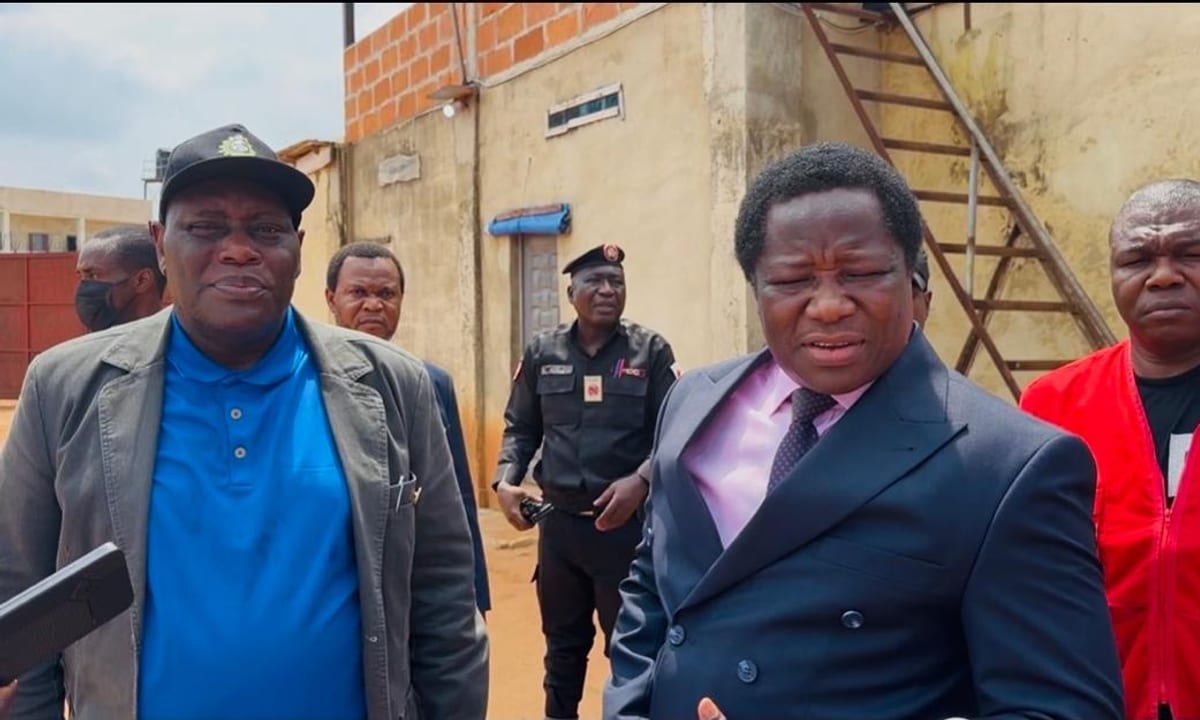
Officials of the Nigerian Midstream and Downstream Petroleum Regulatory Authority (NMDPRA) and the Economic and Financial Crimes Commission (EFCC) have uncovered an illegal refinery allegedly linked to Chinese nationals at Ogere-Remo, Ikenne Local Government Area of Ogun State.
The facility, which occupies more than three hectares of land, was raided on Wednesday following intelligence gathered by the EFCC, revealing what investigators described as a well-fenced but unauthorised crude oil processing operation.
During the operation, the joint team discovered underground tanks suspected to have been used for heating and processing sludge oil, a waste product from refining, as well as substances believed to be Automotive Gas Oil (AGO), commonly known as diesel.
NMDPRA officials subsequently sealed the facility pending further investigation.
Speaking during the inspection, the Ogun State Coordinator of NMDPRA, Dr Atilola Akinyemi, said the facility was operating without approval or a licence from any recognised regulatory authority.
He disclosed that an underground storage installation behind the facility had an estimated capacity of more than 90,000 litres, alongside underground heating systems, water hydrants for cooling, locally fabricated tanks and silos designed for separating processed substances.
Describing the operation as illegal, Akinyemi said the operators appeared to possess technical expertise but had deliberately designed the facility to evade regulatory oversight.
“This facility you see here is very crude and completely illegal. This is not a refinery by any standard. It does not have a permit from any regulatory authority and its operations are unknown to the relevant authorities.
“They appear to be technically skilled people who have deliberately designed this facility to circumvent government regulations. When we examine their final product, it may look like diesel to the average person, but we cannot classify it as diesel until laboratory tests have been conducted,” he said.
The EFCC Zonal Director, Lagos Zonal Directorate 2, Bawa Usman Kaltungo, said the discovery pointed to a well-established illegal refining operation involving several stages of processing sludge into products resembling diesel.
“What we have seen here is an illegal refinery with a complete setup, featuring all the processes through which sludge passes before being converted into what is commonly referred to as diesel. Judging by the nature of this facility, it has been operating for years,” Kaltungo said.
He raised concerns over the growing involvement of foreign nationals in illegal industrial activities around the Ogere axis, recalling that 14 Chinese nationals were arrested in the area a week earlier over alleged illegal lithium processing.
According to him, investigations into the earlier operation revealed immigration irregularities, with some of the suspects allegedly lacking passports, while others were found to have overstayed their visas by about three months.
“Some of them had passports, while others did not. Even among those who had passports, we discovered that some of their visas had expired about three months earlier. Yet, there were still individuals operating there without passports,” he said.
Kaltungo vowed that those behind the illegal refinery would be identified and brought to justice.
Also speaking, the Director of the EFCC’s Department of Proceeds of Crime Management, Mr Gbolahan Latona, condemned the activities, warning that illegal operations of this nature undermine legitimate investments in Nigeria’s petroleum industry.
“Imagine allowing saboteurs like these to operate freely and undermine the efforts of legitimate investors like Dangote Refinery. Ultimately, it is Nigerians who will suffer,” Latona said.
The discovery comes amid renewed efforts by regulatory and law enforcement agencies to clamp down on illegal industrial operations, economic sabotage and activities capable of undermining investments in Nigeria’s oil and gas sector.
-

 metro3 days ago
₦50,000 Relief Fund: FG Reveals Criteria for Selecting Beneficiaries
-

 News3 days ago
BREAKING: Court Sacks David Mark-Led ADC Exco, Nullifies Atiku’s 2027 Presidential Candidacy
-
 metro2 days ago
NNPCL Slashes Petrol Price By Up To ₦80, Sells At ₦1,325 Per Litre In Abuja
-

 Politics3 days ago
Trouble in ADC as Momodu, South-West Leaders Raise Alarm Over Atiku Campaign
-
 News2 days ago
ADC Heads to Appeal, Insists Mark, Aregbesola Remain Party Leaders Despite Court Ruling
-

 News2 days ago
Tinubu’s Visit: One Feared Dead, Several Injured as APC Women’s Bus Collides With Security Vehicle in Uyo
-

 Sports3 days ago
BREAKING: Ronaldo Retires From International Football After 23 Years With Portugal
-

 Sports14 hours ago
BREAKING: Flamingos Make History, Defeat Japan 2–1 to Win First FIFA U-17 Women’s World Cup