
News
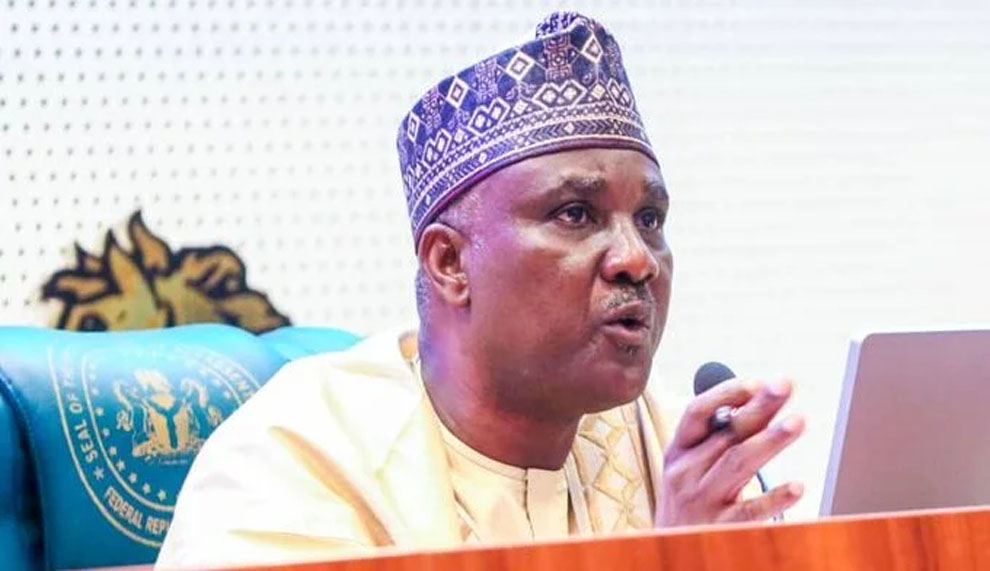
BREAKING: Reps reject bill for single six-year term, zonal rotation for president, govs
BREAKING: Reps reject bill for single six-year term, zonal rotation for president, govs
The House of Representatives at the plenary on Thursday rejected a bill, seeking to amend the 1999 constitution to provide for a single term of six years for the Offices of the President, State Governors and Local Government Areas Chairmen.
The bill which was sponsored by Rep Ikenga Ugochinyere (PDP-Imo) and 33 other lawmakers also seeks zonal rotation of presidential and governorship seats, as well as holding of the elections in one day.
The proposed legislation seeks to alter Sections 76, 116, 132, 136, and some others of the 1999 Constitution (as amended).
According to the general principles of the bill, “these amendments was to ensure inclusive governance and to curb wastages occasioned by four year periodic elections.
“The bill among others seeks amendment of Section 132 of the Principal Act by inserting a new subsection (2), deleting the extant subsection (4) and renumbering the entire section accordingly to provide that an election to the office of President of the Federal Republic of Nigeria shall be rotated between the North and the South regions of the country every six years.
“Other amendments include, Section 76 of the Principal Act is altered by inserting a new subsection (3) as follows; (3) For the Purposes of Section (1) of this section, all elections into the offices of President, Governors, National Assembly and State Houses of Assembly shall hold simultaneously on the same date to be determined by the Independent National Electoral Commission in consultation with the National Assembly and in accordance with the Electoral Act.
READ ALSO:
- Simon Ekpa arrested in Finland, detained over terrorism activities
- TotalEnergies launches graduate program to kick-start careers
- Police confirm death of US-Based Nigerian in Ogun hotel
“Section 116 of the Principal Act is amended by inserting a new a subsection (3) as follows; < For the purposes of subsection (1) of this section, all elections into the offices of President, Governors, National Assembly, State Houses of Assembly and Local Government Councils shall be held simultaneously on the same date to be determined by the Independent National Electoral Commission (INEC) in consultation with the National Assembly and in accordance with the Electoral Act.
“Section 132 of the Principal Act is amended by inserting a new é subsection (2), deleting the extant subsection (4) and renumbering the entire section accordingly: An election to the office of President of the Federal Republic of Nigeria shall be rotated between the North and the South regions of the Country every six years. Provided that where it is the turn of the North or South to present a candidate for election into the office of President, it shall be rotated among the three geo-political zones that constitutes the regions. The extant subsection (2) becomes subsection (3) The extant subsection (3) becomes subsection (4) The extant subsection (4) is hereby deleted The extant subsection (5) remains subsection (5).
“Section 136 of the Principal Act is amended by deleting the a extant subsections 1 & 2 and replacing them with new subsections I, 2 and 3 as follows: If a person duly elected as President dies before taking and subscribing the Oath of Allegiance and oath of office. or is for any reason whatsoever unable to be sworn in, the person elected with him as First Vice President shall be sworn in as President and he shall appoint a new First Vice President with the approval by a simple majority of the National Assembly at a joint sitting.
“A person who was sworn in as Governor to complete the term for which another person was elected as Governor shall not be elected to such office for another term. The Principal Act is altered by inserting a new Section 188 immediately after the extant 187 and immediately before the extant 188 and renumbering accordingly as follows; 188(1) Notwithstanding any other provision, the Governor shall present a mid-term account of stewardship performance report to the State House of Assembly at the end of the third year of the six-year term. The State House of Assembly shall determine by a resolution supported by not less than two-third majority of members whether the Governor bas by the account of stewardship report justified his continuous stay in office.
Where, upon the consideration of the mid-term report under subsection (1) of this section, the State House of Assembly is not satisfied with the performance of the Governor for the period he has been in office, the State House of Assembly shall pass a vote of no confidence on the Governor. The State House of Assembly shall immediately commence the process for the impeachment of the Governor from office.”
Meanwhile, when the Bill was put to a voice vote by the Speaker who presided over the plenary session, the nays had it.
BREAKING: Reps reject bill for single six-year term, zonal rotation for president, govs







News
UK Raises Visa Costs, Tightens Immigration Rules From April 8

UK Raises Visa Costs, Tightens Immigration Rules From April 8
The UK Home Office has announced a sweeping increase in visa application charges, with new fees taking effect from April 8, 2026, as part of a broader strategy by the Government of the United Kingdom to curb migration and shift more costs onto applicants.
Under the revised structure, visa fees across visitor, student, work, settlement, and citizenship routes will rise, with some categories recording increases of over £200. The move reflects a tougher immigration stance amid sustained political and public pressure to reduce net migration.
Short-term visitor visas of up to six months will see a modest increase from £127 to £135. However, longer-duration visas will rise more sharply, with two-year visas now costing £506, five-year visas £903, and ten-year visas climbing to £1,128.
For those seeking long-term residency, the cost of settlement visas has increased significantly, with some routes exceeding £2,000, while Indefinite Leave to Remain (ILR) now rises to £3,226. Similarly, British citizenship applications will increase from £1,605 to £1,709, adding to the financial burden on migrants aiming to permanently settle in the UK.
READ ALSO:
- NCC Orders MTN, Other Telcos to Compensate Subscribers for Poor Network Service
- Abuja Convention: Wike PDP Faction Confirms Mohammed as Chairman, Anyanwu as Secretary
- Debate as OPM Pastor Marries Autistic Man to Older Woman
The impact is also pronounced on work and study visas. The Skilled Worker visa for applicants outside the UK will now cost £819 for stays of up to three years, while student visa applications will rise to £558. The Graduate visa route has also been increased to £937, marking one of the more noticeable jumps in the new pricing regime.
Beyond application fees, applicants must still pay the Immigration Health Surcharge (IHS), which remains a substantial additional cost. This brings the total cost of relocating to the UK significantly higher for many migrants, especially students and early-career professionals.
Explaining the decision, Home Secretary Shabana Mahmood said the changes were necessary to address increasing migration pressures, including a rise in asylum applications from countries such as Afghanistan, Cameroon, Myanmar, and Sudan.
In addition to the UK visa fee increase, authorities are introducing stricter immigration controls. These include plans to offer up to £10,000 to failed asylum seekers willing to leave voluntarily, as well as withdrawing state-funded accommodation from migrants found to be working illegally.
The government is also tightening rules around international education by proposing an “emergency brake” on student visas from countries considered high-risk for overstaying. Universities may face increased scrutiny, while compliance checks on employers sponsoring foreign workers are expected to intensify.
Taken together, the measures signal a decisive shift toward a more restrictive immigration system, with the UK aiming to balance economic migration needs against growing demands to reduce inflows.
For prospective migrants, including many from Nigeria, the changes mean higher upfront costs, stricter visa conditions, and increased scrutiny, making the path to studying, working, or settling in the UK more challenging.
UK Raises Visa Costs, Tightens Immigration Rules From April 8
News
Final Notice: FG Orders Civil Servants to Complete PASGA Verification by March 31

Final Notice: FG Orders Civil Servants to Complete PASGA Verification by March 31
The Federal Government of Nigeria has set Tuesday, March 31, 2026, as the final deadline for civil servants to complete the mandatory Personnel Audit and Skills Gap Analysis (PASGA) verification exercise. Workers who fail to comply risk salary suspension and other administrative sanctions, officials warned.
The directive, issued by the Head of the Civil Service of the Federation (OHCSF), Didi Walson-Jack, applies to all employees within the Federal Civil Service. The memo emphasised that the verification process is part of the government’s ongoing effort to eliminate ghost workers, enhance workforce accountability, and improve efficiency in public service operations.
The PASGA exercise consists of two components: Personnel Verification and Skill Assessment and Competency Analysis. Civil servants who have not completed either component are required to do so by March 31, 2026, to obtain their Certificates of Completion. These certificates must then be submitted to the Director of Human Resource Management in their respective Ministries, Departments, and Agencies (MDAs).
READ ALSO:
- Mozambique Deports 13 Nigerians Without Charges, 29 Still Detained
- Iranian Missiles, Drones Strike US Air Base in Saudi Arabia
- Millions to March Across US in Largest Anti-Trump Demonstrations
The OHCSF warned that any officer who fails to comply will be subject to “appropriate administrative sanctions in line with extant rules and regulations,” which may include suspension from the payroll until compliance. Permanent Secretaries and Heads of MDAs have been instructed to circulate the memo widely to ensure that all affected officers are informed.
The PASGA exercise, rolled out in 2025, is designed to assess staffing structures, identify skill gaps, and support the development of targeted training and capacity-building programmes aligned with national priorities. Its outcomes will also guide government decisions on recruitment, career advancement, and resource allocation within the Federal Civil Service.
Officials say the verification process is essential to address longstanding issues such as payroll irregularities and fraudulent entries, which have historically cost billions of naira annually. Completion of the exercise will protect civil servants’ rights to salary and benefits while strengthening the integrity of Nigeria’s public service system.
Civil servants have been urged to prioritise the exercise to avoid disruptions to their pay and career progression. Authorities stressed that while compliance with local laws is expected, all government procedures must follow due process and fairness to ensure that legitimate workers are not unfairly penalised.
Final Notice: FG Orders Civil Servants to Complete PASGA Verification by March 31
News
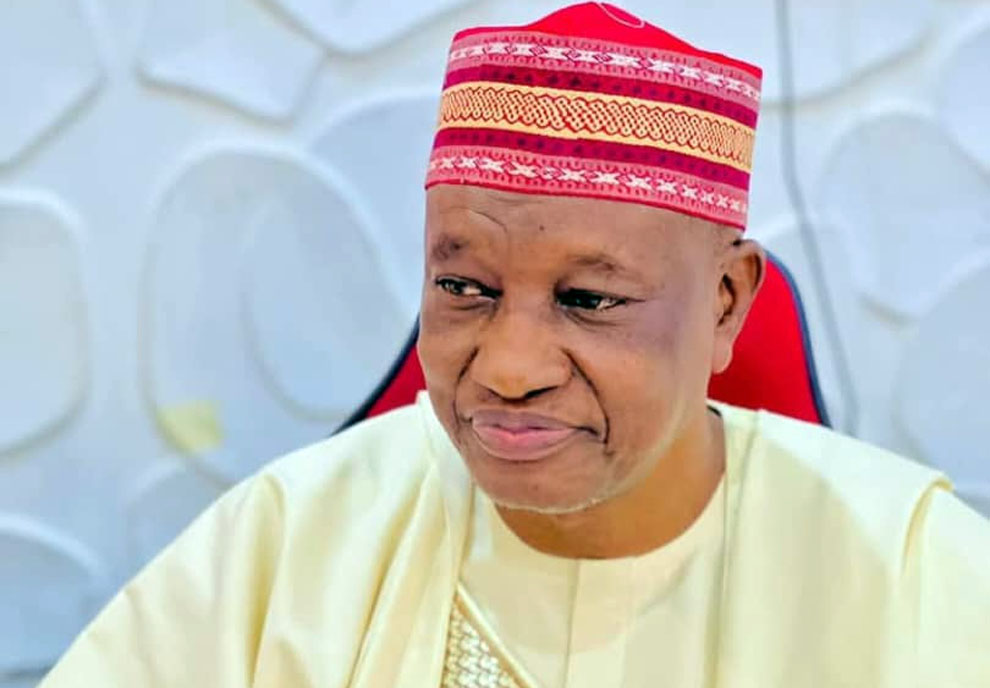
Kano Deputy Governor, Aminu Abdussalam Gwarzo, Resigns
Kano Deputy Governor, Aminu Abdussalam Gwarzo, Resigns
The Deputy Governor of Kano State, Aminu Abdussalam Gwarzo, has resigned from office, bringing a sudden twist to the state’s evolving political landscape.
His spokesperson, Ibrahim Shuaibu, confirmed the development on Friday, stating that the resignation had been formally communicated.
“Yes, it is true. The deputy governor has resigned from his position,” Shuaibu said, declining to provide further details surrounding the decision.
Although no official reason has been disclosed, the resignation comes amid escalating tensions between Gwarzo and the Kano State House of Assembly.
In recent days, the Assembly had levelled a series of allegations against the former deputy governor, including claims of misconduct and concerns related to the discharge of his official duties. Lawmakers were also reported to have initiated moves widely seen as a precursor to possible disciplinary action, raising fears of an impending political crisis within the state executive.
The development also follows recent political shifts in Kano, particularly the defection of Governor Abba Yusuf to the All Progressives Congress, a move that has triggered significant realignments within the state’s political structure.
Since the defection, the governor has undertaken sweeping changes aimed at repositioning the administration. These include the removal of the Head of Service, Abdullahi Musa, as well as the dismissal of the Commissioner for Investment, Commerce and Industry, Shehu Wada Sagagi, as part of broader efforts to enhance efficiency and discipline in governance.
Political observers interpret these actions as part of a strategic move by the administration to consolidate power within the new political alignment and streamline government operations in line with evolving priorities.
While details of the allegations against Gwarzo remain unclear, sources within the Assembly indicated that the matter had been under legislative scrutiny prior to his resignation.
Efforts to obtain further clarification from the Kano State Government were unsuccessful as of the time of filing this report.
Gwarzo’s exit is expected to trigger constitutional procedures for the appointment of a new deputy governor, subject to approval by the State House of Assembly.
Analysts believe the development could further reshape Kano’s political landscape, particularly as the state navigates ongoing alignments ahead of future electoral contests.
Kano Deputy Governor, Aminu Abdussalam Gwarzo, Resigns

-

 metro2 days ago
Tragedy in Aramoko: Trailer Rams Residential Building, Kills 300‑Level Student
-

 News2 days ago
Final Notice: FG Orders Civil Servants to Complete PASGA Verification by March 31
-
 metro12 hours ago
Jos Attack: Plateau Govt Declares 48-Hour Curfew After Deadly Assault
-

 Entertainment2 days ago
Nollywood Actress Declares Love for Ibrahim Chatta, Offers to Pay Her Own Dowry
-

 Entertainment2 days ago
Streamer Peller Escorted Out of Alake of Egbaland’s Palace in Abeokuta
-

 International2 days ago
Iranian Missiles, Drones Strike US Air Base in Saudi Arabia
-
 metro2 days ago
ADC Chairman’s Daughter Joins Pro-Tinubu Campaign Organisation
-

 Entertainment3 hours ago
Funke Akindele, Toyin Abraham Spark Reactions Over Alleged Snub at Iyabo Ojo’s Premiere