

News
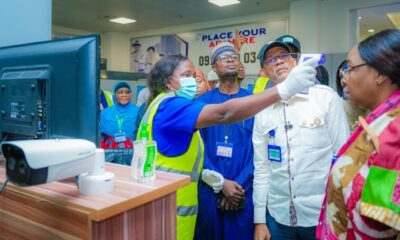
Breaking: Two Fresh Ebola Cases Emerge in North-East, says NCDC, begins test

Breaking: Two Fresh Ebola Cases Emerge in North-East, says NCDC, begins test
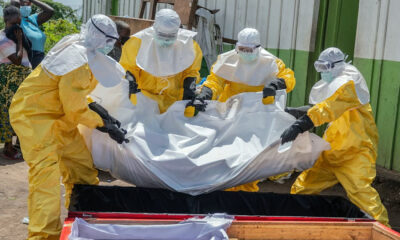
Nigeria’s efforts to contain the Ebola virus disease outbreak have come under renewed pressure following the identification of two suspected cases in the North-East, prompting health authorities to isolate the individuals and intensify investigations to determine their infection status.
The Nigeria Centre for Disease Control and Prevention (NCDC) disclosed the development on Saturday, saying both individuals had been isolated while contact identification, listing and laboratory investigations were ongoing.
The latest development has heightened public health concerns, coming barely 11 days after Nigeria confirmed its first case of Ebola disease in the Federal Capital Territory (FCT), involving a 42-year-old woman who arrived in Abuja from Uganda through Addis Ababa on October 3.
In its latest update on the disease situation, the NCDC stressed that the classification of the two individuals as suspected cases did not mean they had tested positive for the virus, explaining that only laboratory investigations could establish their status.
The agency said samples collected from the individuals were undergoing laboratory testing, while surveillance teams were working to identify and document people who might have had contact with them.
It assured Nigerians that further information would be made available as investigations progressed and verified details emerged.
The emergence of the suspected cases in the North-East comes against the backdrop of an ongoing national response to the confirmed Ebola infection in Abuja.
Nigeria confirmed the case on October 20 after the woman, who had developed symptoms days after arriving in the country, was admitted to a private health facility. The infection was subsequently established through laboratory tests.
The development triggered an intensified public health response, including the activation of the national Incident Management System, isolation arrangements, enhanced surveillance and contact tracing.
READ ALSO:
- 2027 Presidency: Allah’s Will Must Prevail, Tinubu Declares in Makkah
- Rhodes-Vivour Tackles Lagos Government Over Threat to Seal Residents’ Boreholes
- EPL: Chelsea Hand Manchester United 2-0 Defeat to Deepen Carrick’s Crisis
According to the NCDC’s October 29 situation report, 62 contacts linked to the confirmed case had been identified and placed under monitoring, with no positive cases recorded among them at the time.
The infected woman, who was reported to be clinically stable, was subsequently evacuated to Switzerland on October 26 following a formal request from her country and clearance by Nigerian authorities.
The latest suspected cases in the North-East will require further investigation to establish whether they are connected to the earlier outbreak or represent separate alerts.
Ebola virus disease is a severe and potentially fatal infectious disease transmitted through direct contact with the blood, bodily fluids or tissues of an infected person or animal, as well as contaminated materials.
Symptoms may include fever, severe weakness, headache, muscle pain, vomiting and diarrhoea, although the disease can initially resemble other common illnesses.
Health authorities have repeatedly emphasised that early detection, prompt isolation, effective infection prevention and control, and thorough contact tracing are critical to preventing further transmission.
Against this background, the NCDC urged Nigerians to maintain strict personal hygiene, particularly regular handwashing with soap and running water or the use of alcohol-based hand sanitisers.
It also advised the public to maintain environmental sanitation, avoid direct contact with the blood and bodily fluids of anyone suspected of having the disease and comply with preventive measures issued by public health authorities.
The agency further urged Nigerians to remain calm, avoid spreading unverified information and rely on official communication for updates on the situation.
As investigations continue in the North-East, attention will be focused on the outcome of the laboratory tests and the ability of health authorities to promptly identify any possible transmission links.
The immediate priority remains ensuring that suspected infections are quickly investigated, potential contacts identified and appropriate containment measures sustained to prevent a wider outbreak.
Breaking: Two Fresh Ebola Cases Emerge in North-East, says NCDC, begins test








News
Tinubu Gets Court Relief as US Judge Rejects Fresh Move in FBI, DEA Case
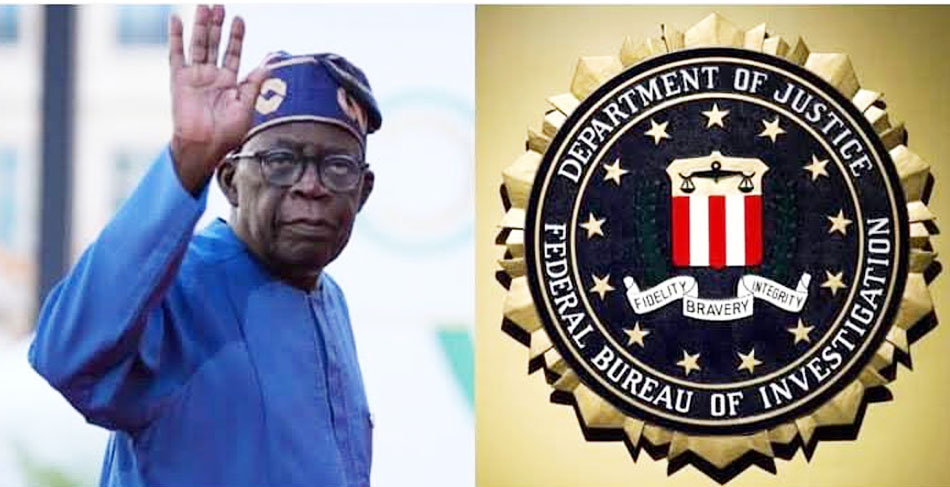
A United States federal court has rejected a fresh attempt by Aaron Greenspan to obtain additional information directly from President Bola Ahmed Tinubu and a Washington-based lobbying firm, DCI Group, in an ongoing legal battle over historical FBI and DEA records.
The ruling, delivered on Friday, October 30, 2026, by the United States District Court for the District of Columbia, dismissed Greenspan’s application to serve additional discovery requests on Tinubu and subpoena documents from DCI Group AZ LLC and/or its parent company.
However, the decision was not an outright victory for the Nigerian President or the American federal agencies, as the court also directed the Federal Bureau of Investigation (FBI) and the Drug Enforcement Administration (DEA) to provide further explanations for withholding certain historical records.
Judge Beryl Howell ruled that Greenspan’s proposed discovery requests were not sufficiently relevant to the central issues in the Freedom of Information Act (FOIA) lawsuit.
The judge emphasised that the application concerned the legal process for obtaining government records and did not establish that Tinubu committed any drug-related offence.
Greenspan, who is representing himself in the lawsuit, had asked the court for permission to serve six interrogatories, four requests for admission and one request for production on Tinubu.
He also sought permission to subpoena documents from DCI Group AZ LLC and/or its parent company.
The proposed discovery was connected to allegations of repeated, large-scale distributed denial-of-service (DDoS) attacks on Greenspan’s website, PlainSite.
Greenspan claimed the alleged cyberattacks disrupted his ability to publish materials relating to the litigation.
He argued that the attacks suggested that some individuals were closely monitoring the case and might have an interest in preventing public access to documents.
However, he did not accuse Tinubu of organising or carrying out the alleged cyberattacks.
In rejecting the application, Judge Howell held that investigating the source of the alleged attacks would not help determine whether the FBI and DEA had conducted adequate searches or lawfully withheld information.
The court consequently found that the proposed discovery failed to meet the relevance and proportionality requirements under American civil procedure rules.
The decision represents another development in the lengthy legal dispute over access to historical American investigative records concerning Tinubu.
The lawsuit, filed on June 12, 2023, followed a series of FOIA requests submitted by Greenspan between 2022 and 2023 to six American government agencies.
The agencies included the FBI, DEA, Central Intelligence Agency (CIA), Internal Revenue Service (IRS), Executive Office for US Attorneys and Department of State.
Greenspan sought investigative records relating to an alleged Chicago-based heroin trafficking and money-laundering operation investigated by American law enforcement agencies in the early 1990s.
Tinubu and another Nigerian, Abiodun Agbele, were among the individuals identified in the requests.
The case took a significant turn in April 2025 when Judge Howell ruled that the FBI and DEA could no longer rely on their earlier refusal to confirm or deny whether the requested records existed.
The judge noted that previous public court documents had already acknowledged aspects of the investigations involving the individuals named in the requests.
The agencies were subsequently required to search for the records and justify any information withheld under applicable FOIA exemptions.
According to the latest court proceedings, the FBI processed 399 pages, releasing 30 pages in full while withholding others entirely or partially. The agency also identified 59 duplicate pages.
The DEA processed 240 pages but did not release any of them in full.
Significantly, Judge Howell observed that none of the records released by either agency contained Tinubu’s name, despite his inclusion in the original requests.
Tinubu had earlier intervened in the proceedings to protect his privacy interests, particularly concerning personal information contained in the historical investigative records.
His legal team argued that sensitive personal information should not be disclosed, maintaining that the President’s privacy interests deserved protection.
However, Judge Howell questioned some of the agencies’ reliance on privacy exemptions, noting that Tinubu was already a public official during the period covered by the records, having been a candidate for and subsequently a member of the Nigerian Senate.
The court also recognised the public interest in understanding how American law enforcement agencies investigated the historical case and handled the records.
Beyond rejecting Greenspan’s discovery application, the judge delivered a mixed decision on the substantive FOIA dispute.
Judge Howell granted the FBI summary judgment concerning the adequacy of its search and its reliance on one statutory exemption but rejected the broader summary judgment applications by both sides on the remaining issues.
The judge particularly questioned some of the FBI and DEA’s explanations for withholding information under statutory exemptions relating to personal privacy, confidential sources and potential harm to individuals.
One issue concerned the FBI’s continued redaction of information from an affidavit by an IRS special agent, Kevin Moss, which had previously appeared in public court records.
The court questioned why some information already available in public documents remained withheld in the agencies’ disclosures.
Judge Howell also found that some of the agencies’ explanations did not adequately demonstrate the foreseeable harm that could result from releasing the disputed information.
Consequently, the FBI and DEA were directed to prepare supplementary declarations explaining their continued withholding of certain records.
The agencies were also ordered to confer with Greenspan and propose an expedited schedule for further proceedings.
The October 30 ruling did not order the immediate release of additional records. Any further disclosure will depend on whether the agencies can provide sufficient legal justification for their withholding decisions and satisfy the court’s requirements.
For Tinubu, the decision means Greenspan cannot use the proposed discovery process to obtain additional information directly from him or DCI Group in the manner requested.
However, the wider legal battle over access to the historical investigative records remains unresolved.
Importantly, the lawsuit is a Freedom of Information Act dispute, not a criminal trial against the Nigerian President. The latest ruling does not establish that Tinubu committed any drug-related offence, nor does it amount to a judicial determination of his guilt or innocence regarding the historical allegations.
The next stage of the proceedings will focus on the supplementary explanations from the FBI and DEA and whether the agencies can justify continuing to withhold the disputed records.
Tinubu Gets Court Relief as US Judge Rejects Fresh Move in FBI, DEA Case
News
2027 Presidency: Allah’s Will Must Prevail, Tinubu Declares in Makkah
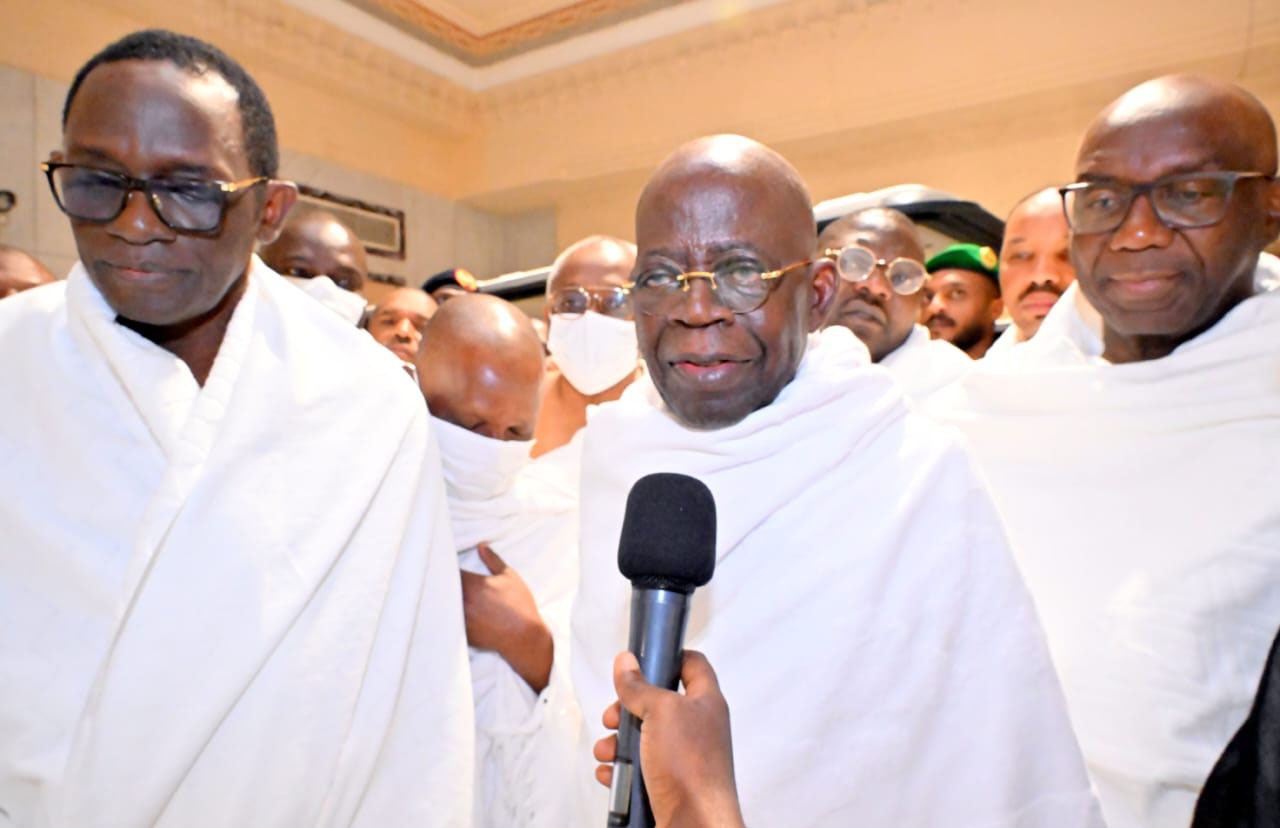
President Bola Ahmed Tinubu has declared that the will of Almighty Allah must prevail in determining who leads Nigeria after the 2027 presidential election, saying his political future ultimately rests in God’s hands.
Tinubu made the declaration in Makkah, Saudi Arabia, shortly after performing the lesser Hajj, known as Umrah, at the Grand Mosque, Masjid al-Haram, on Friday.
The President spoke while responding to journalists who asked about the significance of his return to the holy city after visiting Makkah ahead of the 2023 presidential election, which he won.
Tinubu described the visit as significant, expressing confidence in divine guidance and acknowledging that the outcome of the forthcoming political contest was beyond human control.
“I believe the love of the people, the commitment to the job, and the physical commitment to it. I believe that Allah’s wish in His court must prevail. And there’s no other God but Allah,” he said.
He added that Allah alone determines what a person becomes in life, stressing the importance of faith and prayer as Nigeria approaches another electoral cycle.
The President also described the pilgrimage as a spiritual experience for him and the country, saying he felt fulfilled after completing the religious rites.
“It’s a spiritual thing for me and the country, Nigeria. I’m grateful to Allah for this opportunity,” he said.
READ ALSO:
- Rhodes-Vivour Tackles Lagos Government Over Threat to Seal Residents’ Boreholes
- EPL: Chelsea Hand Manchester United 2-0 Defeat to Deepen Carrick’s Crisis
- Sowore’s Ekiti Clash: How Argument Over Hunger, Tinubu’s Govt Triggered Fight — Source
Tinubu said he and members of his delegation had prayed for Nigeria, particularly for peace, unity, harmony and happiness among citizens.
“We just prayed for our nation. We prayed for everyone to live in harmony, happiness, and faith in God Almighty,” he added.
The President’s comments come as political activities gather momentum ahead of the 2027 general election, in which he is seeking another presidential mandate under the platform of the All Progressives Congress (APC).
Tinubu formally launched his re-election campaign at a rally in Kaduna on October 24, urging supporters to give him another term in office.
His major challengers include former Vice-President Atiku Abubakar, who is associated with the African Democratic Congress, and Peter Obi, the presidential candidate of the Nigeria Democratic Congress, among other political contenders.
The President’s Makkah visit also provided an opportunity for members of his delegation to seek divine intervention for Nigeria, particularly over insecurity, national unity and the conduct of the forthcoming elections.
Chairman of BUA Group, Abdul Samad Rabiu, who accompanied Tinubu, said the delegation had prayed for lasting peace, national unity and a successful electoral process.
Rabiu described the visit as an opportunity to seek God’s intervention at a critical period in the country’s political development.
He said the delegation would continue praying for peaceful, free and fair elections, expressing hope that Nigeria would overcome its challenges.
Governor Babagana Zulum of Borno State also emphasised the need for lasting peace and stability, saying security remained essential to the country’s future and the success of the electoral process.
Zulum said Nigerians needed to work towards national unity and peaceful coexistence, adding that the delegation had prayed for an end to insecurity.
Governor Ahmadu Fintiri of Adamawa State described the pilgrimage as part of a collective effort to seek divine guidance for the country and its electoral process.
He said the delegation had prayed for God to grant Nigerians the leadership and future that would serve their interests.
Governor Ahmad Aliyu of Sokoto State also said the visit provided an opportunity for the country’s leaders to pray for peace, stability and progress.
Meanwhile, Tinubu’s Special Adviser on Media and Special Duties, Tunde Rahman, said the President had maintained a longstanding practice of undertaking spiritual visits to seek divine guidance.
Rahman said he had accompanied Tinubu on such visits since around 2016, adding that the President regularly used the opportunity to pray for himself and the country.
He described the current pilgrimage as particularly important because Nigeria was approaching another general election.
In a separate statement, the President’s Special Adviser on Information and Strategy, Bayo Onanuga, said Tinubu performed the Umrah in the early hours of Friday and offered prayers of gratitude to Allah for Nigeria and its people.
According to the statement, the President prayed for sustainable peace, national unity, harmony and stability, while asking God to guide the country’s leaders and grant Nigeria lasting relief from insecurity and other challenges.
Tinubu also reaffirmed his administration’s commitment to building a peaceful and prosperous country where Nigerians, irrespective of their religious or social backgrounds, could live in safety and dignity.
The President departed Abuja for Saudi Arabia on Thursday, October 29, and is expected to return to Nigeria next week after completing the spiritual exercise.
2027 Presidency: Allah’s Will Must Prevail, Tinubu Declares in Makkah
News
‘Debt Is Worse Than Leprosy’: Obasanjo Slams Tinubu’s Borrowing Policy
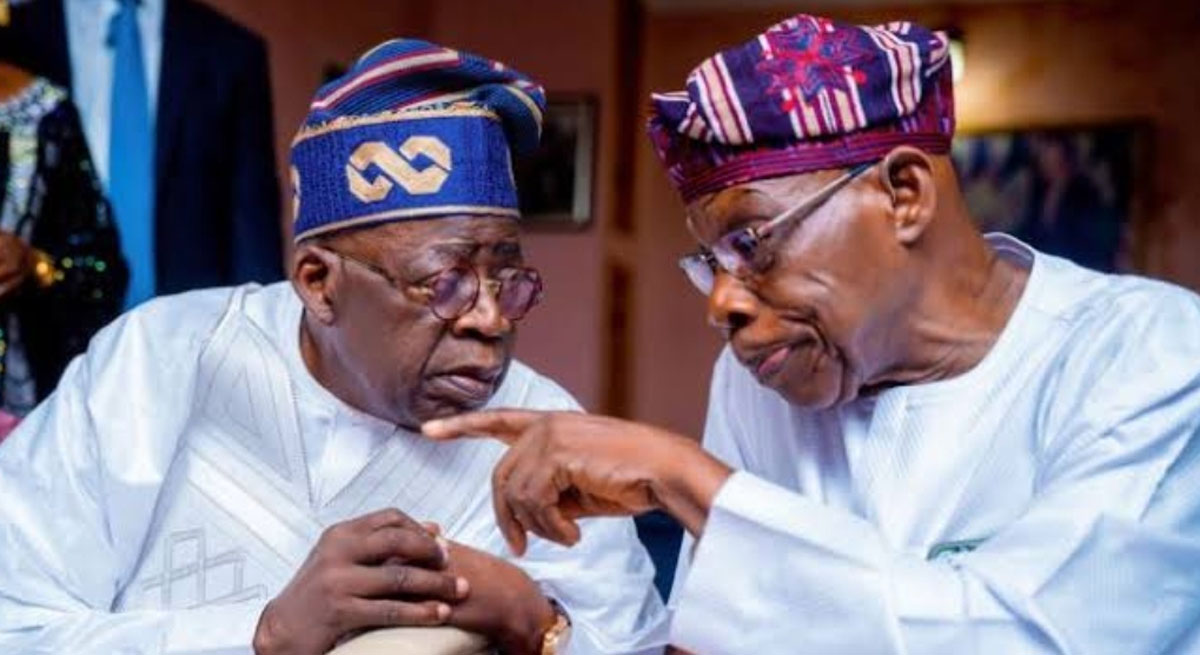
Former President Olusegun Obasanjo has criticised President Bola Ahmed Tinubu over his administration’s borrowing policy, describing the president’s position that borrowing is not leprosy as “absolute nonsense”.
Obasanjo warned that excessive borrowing could mortgage the future of generations of Nigerians, arguing that the consequences of accumulated national debt extend far beyond the present generation.
The former president made the remarks on Friday, October 30, 2026, while speaking at the Ajibosin Platform, a public forum held in Abeokuta, Ogun State, with the theme, “Leveraging Artificial Intelligence to Solve Grassroots Problems and Accelerate National Development.”
His comments were a direct response to Tinubu’s defence of government borrowing in April, when the president maintained that taking loans was not necessarily wrong if the government could generate sufficient revenue to repay them.
“If we have to borrow, we borrow. Borrowing is not leprosy; we just have to work hard to be able to pay for it,” Tinubu had said during a meeting with Plateau State leaders at the Presidential Villa in Abuja.
Rejecting the president’s comparison, Obasanjo said debt was more destructive than leprosy because its effects could burden entire generations.
“And for anybody to say debt is no leprosy is absolute nonsense. Debt is worse than leprosy. Because leprosy destroys only one person. Debt destroys generations,” the former president declared.
READ ALSO:
- US Midterm Elections: Democrats Outpace Republicans as Early Voting Hits Record 48 Million
- NCC Deploys Device Checker App to Tackle Fake, Cloned Phones in Nigeria
- Romance Scam: FBI Declares Nigerian Woman Wanted, Offers ₦6.7m Reward
Obasanjo also questioned Nigeria’s economic performance over the past 47 years, particularly the dramatic depreciation of the naira against the United States dollar.
Recalling when he established his farm nearly five decades ago, the former president said the naira exchanged at approximately N1 to $1.85, contrasting the historical rate with what he described as the current exchange rate of about N1,500 to the dollar.
“When I started my farm, 47 years ago, naira to the dollar was one naira to $1.85. Forty-seven years ago. What has Nigeria done in 47 years that we now have 1,500 naira to the dollar? What have we done?” he asked.
He also questioned the capacity of Nigeria’s political leadership to formulate policies that would improve the living conditions of ordinary citizens.
“What do our leaders know? And what do they not know? And from what they know, what can they do for us?” Obasanjo queried.
The former president further criticised Nigeria’s dependence on foreign financial institutions, particularly the World Bank and International Monetary Fund (IMF), arguing that their economic prescriptions were not necessarily designed to address the country’s peculiar challenges.
According to him, Nigeria should not unquestioningly adopt economic policies recommended by international institutions without considering local realities.
“World Bank and IMF were not designed for us. They were not built by us. They were built before we became independent. And that’s the people who would determine what we do,” he said.
READ ALSO:
- ₦50,000 Monthly Relief: FG Begins Cash Payments to Vulnerable Nigerians
- Zamfara Kidnap: Three Imams Regain Freedom After Weeks in Captivity, Three Others Still Held
- Atiku’s Son Dumps Father’s Political Camp, Launches Tinubu Re-Election Campaign
Obasanjo also recalled Nigeria’s past agricultural policies, arguing that the country had been discouraged from supporting its farmers through subsidies even as developed economies continued to provide substantial assistance to their agricultural sectors.
He cautioned Nigerian policymakers against relying excessively on recommendations from foreign-trained economists without examining whether such policies would work under the country’s economic conditions.
The former president’s criticism comes amid renewed debate over Nigeria’s rising public debt and the Tinubu administration’s latest borrowing plans.
On October 27, Tinubu asked the National Assembly to approve a supplementary external borrowing plan totalling approximately $20.52 billion and €1.045 billion for the 2026–2027 period.
The request, conveyed in a letter read by Senate President Godswill Akpabio, is intended to finance projects and programmes across several sectors, including infrastructure, power, transportation, healthcare, education, agriculture, security and job creation.
The proposed borrowing has renewed concerns about the country’s ability to manage its debt obligations and generate sufficient revenue to finance public expenditure.
According to figures from the Debt Management Office (DMO), Nigeria’s public debt stood at N166.79 trillion as of June 2026, compared with N87.38 trillion in June 2023. Exchange-rate movements also contributed to the increase in the naira value of the country’s debt.
Tinubu’s administration has consistently defended borrowing as necessary to bridge infrastructure gaps, finance development projects and support its ambition of building a $1 trillion economy by 2030.
The president has argued that the more important consideration is how borrowed funds are invested, the economic value they generate and the government’s capacity to repay its obligations.
However, Obasanjo’s latest intervention has added to the growing public debate over the country’s borrowing strategy, debt sustainability and the long-term economic consequences for future generations.
‘Debt Is Worse Than Leprosy’: Obasanjo Slams Tinubu’s Borrowing Policy
-

 metro2 days ago
Eight Days After Abduction, Kidnappers Demand ₦50m for Nasarawa Teacher
-
 metro2 days ago
Ajaero Fires Back at TUC Over Rejection of FG’s ₦70,000 Allowance
-

 International2 days ago
Hackers Leak Details of 41,000 US Homeland Security Personnel in Major Data Breach
-
 metro1 day ago
Captured Bandit Exposes Alleged Military Arms Supplier, Claims Gang Collected ₦1bn From Two Customs-Linked Kidnappings
-
 metro3 days ago
TUC Rejects Tinubu’s ₦70,000 Transport Allowance, Demands ₦300,000 Salary
-
 Entertainment3 days ago
Emeka Ike Loses ₦10bn Privacy Suit Against Wike’s Aide, INEC
-
 News2 days ago
Ijeh Barracks Mosque: Police Promise to Monitor Reconstruction as MURIC Urges Calm
-
 Politics3 days ago
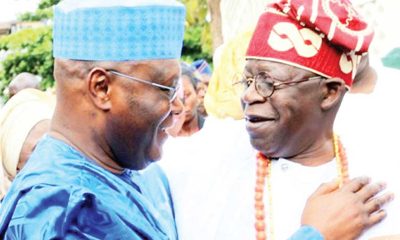
2027: APC Chieftain Boasts Tinubu Will Defeat Atiku Even in His Polling Unit