
International
Canada removes bonus ranking points for job offers in Express Entry system
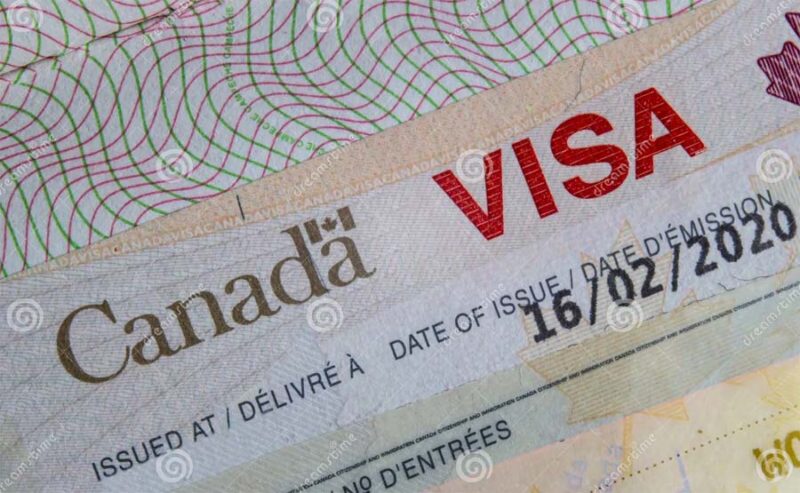
Canada removes bonus ranking points for job offers in Express Entry system
Canada’s Immigration, Refugees and Citizenship Canada (IRCC) has announced that, effective March 25th, 2025, bonus Comprehensive Ranking System (CRS) points for job offers will no longer be awarded to Express Entry candidates.
This change will affect both current candidates in the Express Entry pool and future applicants, impacting the path to permanent residence (PR) for many.
Immigration News Canada (INC) cites that the elimination of these bonus CRS points removes a key advantage for candidates with arranged employment.
Previously, candidates could earn up to 200 additional CRS points for senior management positions and 50 points for other skilled job offers.
These points often helped candidates rank higher in the pool and improve their chances of receiving an Invitation to Apply (ITA) for permanent residence. As of March 25th, 2025, this benefit will no longer be available.
READ ALSO:
- Security operatives stop another pipeline bombing in Rivers
- UNN appoints Prof Olayiwola Usman as first Yoruba DVC (Academics)
- Constitution amendment: Reps move to stop gov’ship election cases at A/Court
Details of the policy update
The policy change applies to both existing candidates and those planning to apply after March 25th. Before the change, candidates with a valid job offer supported by a Labour Market Impact Assessment (LMIA) could earn 200 points for senior management positions and 50 points for other skilled jobs.
- These bonus points were instrumental in propelling candidates to the top of the Express Entry pool, increasing their likelihood of receiving an ITA.
However, with the new policy, these additional points will no longer be awarded. IRCC described this change as a “temporary measure” in a press release dated December 23, 2024, but has not provided a timeline for when or if the bonus points will be reinstated.
- The Ministerial Instructions updated on March 25, 2025, keep the definition of a valid job offer but remove the section that awarded points for them. For candidates who depended on these points, the change takes effect immediately.
Meaning that the updated rules from March 25th, 2025, still explain what counts as a valid job offer, but they no longer give extra points for having one. Candidates who were relying on these points will notice the change right away.
What remains unchanged?
Although the bonus points for job offers will be eliminated, job offers continue to be an important factor for eligibility in certain immigration programs:
- Federal Skilled Trades Program (FSTP): A valid job offer remains a requirement for eligibility.
- Federal Skilled Worker Program (FSWP): Job offers can still help candidates meet minimum eligibility criteria.
- Provincial Nominee Programs (PNPs): Some PNP streams continue to require or benefit from job offers.
However, these job offers will no longer provide additional CRS points, which had previously helped candidates improve their scores.
Reasons behind the change
While the full reasoning behind IRCC’s decision to remove bonus points has not been clearly outlined, reports inform that some possible explanations have emerged.
One theory is that IRCC may be aiming to level the playing field by prioritizing candidates based on factors such as education, language skills, and work experience, rather than those with employer connections.
Another possibility is that the move is a response to concerns over the authenticity of job offers and Labour Market Impact Assessments (LMIAs), though IRCC has not explicitly tied this change to fraud prevention. Economic factors may also be a consideration, as Canada’s labor market evolves and certain industries experience fluctuations in demand for skilled workers.
Impact on candidates
The removal of job offer points will directly affect current candidates in the Express Entry pool. Those who were depending on these bonus points for job offers may see a decrease in their CRS score, which could impact their chances of receiving an ITA in future draws. IRCC has advised applicants to allow several days for their CRS scores to update and to avoid contacting the agency unless discrepancies remain after a week.
For future applicants, the playing field has shifted. Without the bonus points, candidates will need to focus on maximizing other aspects of their profile, such as language proficiency, Canadian education, or work experience, to stay competitive in the pool.
Candidates who have already received an ITA or are in the process of applying for permanent residence will not be affected. Their points from job offers remain unchanged.
What candidates can do now
Candidates seeking to improve their CRS scores can still take steps to strengthen their profiles:
- Enhance language scores: Higher language proficiency can add valuable points.
- Pursue additional education: New qualifications can increase the education score.
- Gain Canadian work experience: This can add up to 200 points.
- Consider Provincial Nominee Programs (PNPs): A provincial nomination can provide 600 points.
- Utilize a spouse’s profile: A partner’s qualifications can add up to 40 points.
As of March 25th, 2025, the immigration process has become more competitive, and candidates will need to adapt to the new system by focusing on other ways to improve their CRS scores. The full long-term effects of this policy change remain to be seen.
Canada removes bonus ranking points for job offers in Express Entry system
nairametrics











International
Israeli Fire Kills Three UN Peacekeepers in Southern Lebanon
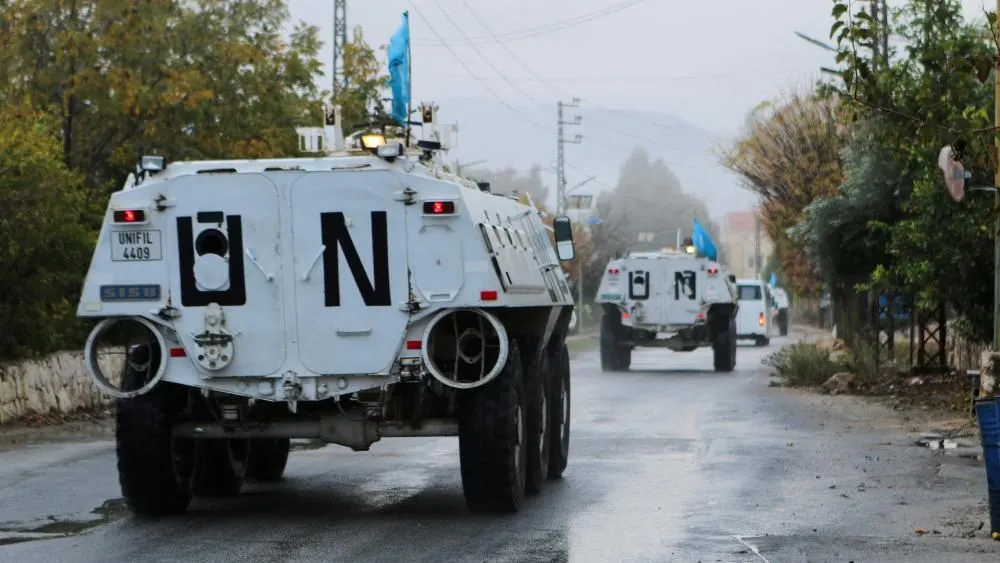
Israeli Fire Kills Three UN Peacekeepers in Southern Lebanon
Three United Nations peacekeepers have been killed in southern Lebanon, with others seriously injured, as clashes between Israeli forces and Hezbollah militants intensify. The fatalities, all members of Indonesia’s UNIFIL contingent, mark one of the deadliest attacks on peacekeepers in recent years.
The first incident occurred on Sunday, March 29, when a projectile exploded near a UNIFIL position in Adchit al-Qusayr, killing one peacekeeper and seriously injuring another. Evidence suggests the projectile may have been fired from an Israeli tank, though investigations are ongoing. The following day, two more Indonesian peacekeepers were killed when a logistics convoy vehicle was destroyed by an explosion of unknown origin near Bani Hayyan, leaving additional personnel injured.
UN Secretary-General António Guterres condemned the killings, calling them “grave violations of international humanitarian law” and emphasizing that “no one should ever have to die while serving the cause of peace.” He extended condolences to the families of the deceased and wished a speedy recovery to the injured.
READ ALSO:
- Iyabo Ojo Quits Mediation Between Funke Akindele, Toyin Abraham
- 2027: Badagry elders rally Tinubu to back zone’s first Lagos governor
- Nigerian Man Gets 15-Year US Prison Term for $1.5M Romance Scam
The incidents have prompted the UN Security Council to convene an emergency session to address the attacks. Several European countries, including France, the United Kingdom, and Belgium, issued a joint statement urging all parties to ensure the safety of UNIFIL personnel in accordance with international law. South Korea and other nations also condemned the attacks, highlighting the critical need to protect peacekeepers in conflict zones.
The deaths come amid escalating hostilities between Israel and Hezbollah, which have involved airstrikes, rocket fire, and ground operations along the Israel-Lebanon border. Civilians in southern Lebanon have been severely affected, with thousands displaced and casualties mounting on both sides.
The Indonesian government has called for a transparent investigation into the deaths of its personnel and stressed the importance of accountability. Meanwhile, UNIFIL continues to operate along the Blue Line, though the recent attacks underscore the growing risks faced by peacekeepers in volatile regions.
Israeli Fire Kills Three UN Peacekeepers in Southern Lebanon
International
Nigerian Man Gets 15-Year US Prison Term for $1.5M Romance Scam

Nigerian Man Gets 15-Year US Prison Term for $1.5M Romance Scam
A U.S. federal court has sentenced Nigerian national Saheed Sunday Owolabi to 15 years in prison for orchestrating an international wire fraud and money laundering scheme that defrauded victims of over $1.5 million. The sentence follows his conviction for conspiracy to commit wire fraud and conspiracy to commit money laundering, highlighting the U.S. government’s crackdown on cross-border cybercrime.
According to the U.S. Department of Justice, Owolabi was a key figure in a sophisticated online scam in which he posed as a woman to build fake romantic relationships with U.S. victims—a tactic commonly known as a romance scam. Once trust was gained, the victims were persuaded to wire money into accounts controlled by Owolabi, who then laundered the funds to Nigeria.
READ ALSO:
- Céline Dion Announces Stage Comeback After Four-Year Health Battle
- Senate Passes ₦68.32trn 2026 Budget, Increases Tinubu’s Proposal
- FG Raises Gas Price to $2.18/MMBtu, Signals Fresh Economic Pressure for Nigerians
Investigations by the Federal Bureau of Investigation (FBI) revealed that Owolabi and his co-conspirators also used victim-provided accounts to launder money from other fraudulent operations. In one case, a single victim in the Eastern District of North Carolina lost more than $120,000, with many other victims nationwide affected by the scheme.
U.S. Attorney Ellis Boyle described Owolabi as a “cheat” and said the sentence underscores the FBI’s commitment to identifying, disrupting, and dismantling international fraud and money-laundering networks targeting American citizens.
The court proceedings, led by Assistant U.S. Attorney Brad DeVoe, highlighted Owolabi’s role as an organiser in the fraud, using complex money-laundering methods to conceal illicit proceeds. The case is part of broader U.S. enforcement efforts against online fraud, cybercrime, and cross-border financial crimes, particularly schemes leveraging digital platforms to exploit victims.
Authorities say the sentence serves as a strong deterrent to others involved in international scams and demonstrates that sophisticated internet fraud operations will be pursued rigorously, regardless of the perpetrators’ location.
Nigerian Man Gets 15-Year US Prison Term for $1.5M Romance Scam
International
US Warns Iran Against Closing Strait of Hormuz, Cites “Severe Consequences”
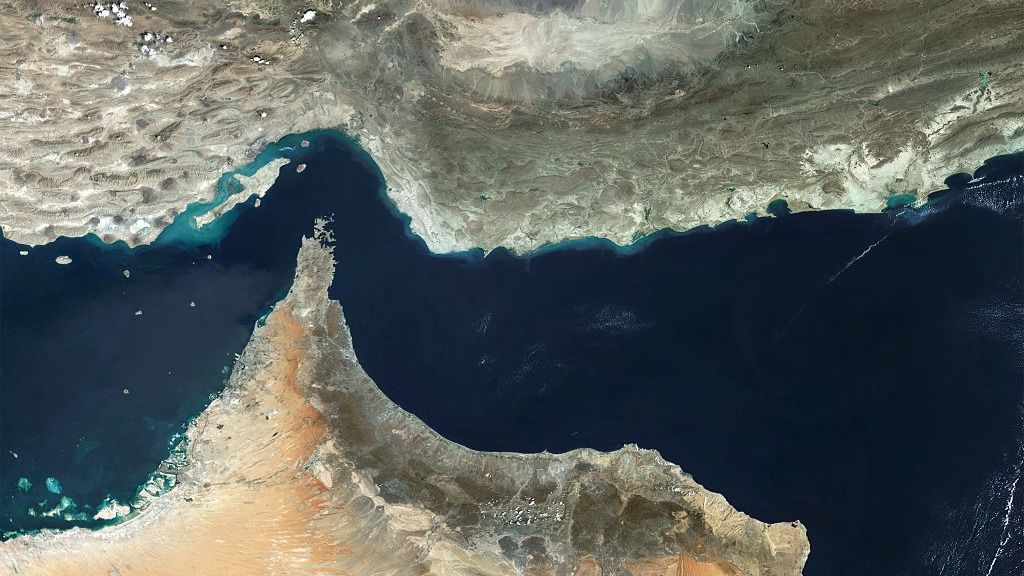
US Warns Iran Against Closing Strait of Hormuz, Cites “Severe Consequences”
Washington, D.C. — The United States has issued a strong warning to Iran over any potential move to shut down the strategic Strait of Hormuz following ongoing military operations in the region, with Secretary of State Marco Rubio cautioning that such an action would attract “severe consequences.”
Rubio, speaking amid heightened tensions in the Middle East, stressed that the vital waterway must remain open to global shipping, describing any attempt by Iran to block access as unacceptable and destabilising.
“The Strait of Hormuz is an international waterway that must remain open,” Rubio said. “If Iran chooses to close it after military operations conclude, it will face serious consequences. The United States will ensure that freedom of navigation is maintained.”
The Strait of Hormuz is one of the world’s most critical oil transit routes, serving as a gateway for nearly a fifth of global petroleum supplies. Any disruption to its operations could send shockwaves through international energy markets and significantly impact global trade.
Tensions have escalated in recent days following military developments involving the United States and its regional allies, alongside growing concerns over Iran’s response. Analysts say Tehran has previously hinted at the possibility of leveraging the strait as a strategic pressure point during periods of conflict.
READ ALSO:
- China Thanks ‘Relevant Parties’ as Ships Cross Strait of Hormuz Amid Tensions
- Osimhen Among Highest-Paid African Footballers in 2026 — See Full List
- Lagos NURTW Chairman Sego Distributes Exotic Cars, Luxury Items to Cabinet Members (Video)
Security experts warn that a closure of the narrow waterway could trigger a broader regional crisis, potentially drawing in global powers and leading to military confrontations at sea. The U.S. Navy, which maintains a strong presence in the region, has historically conducted operations to safeguard commercial shipping routes.
While Iranian officials have not formally announced any decision to block the strait, past rhetoric from Tehran has included threats to disrupt maritime traffic if its national interests are threatened.
In response, U.S. officials reiterated their commitment to maintaining stability and ensuring the uninterrupted flow of commerce. Rubio emphasised that any move to interfere with international shipping lanes would not only affect the United States but also have far-reaching consequences for the global economy.
Observers note that the warning underscores the strategic importance of the Strait of Hormuz and highlights the fragile security situation in the Gulf region. With tensions still simmering, diplomatic efforts are expected to continue alongside military preparedness.
As the situation unfolds, the international community remains watchful, with many nations urging restraint to avoid further escalation in an already volatile region.
US Warns Iran Against Closing Strait of Hormuz, Cites “Severe Consequences”

-

 Entertainment2 days ago
Funke Akindele, Toyin Abraham Spark Reactions Over Alleged Snub at Iyabo Ojo’s Premiere
-

 metro3 days ago
Jos Attack: Plateau Govt Declares 48-Hour Curfew After Deadly Assault
-

 Education2 days ago
WAEC Releases 2026 WASSCE Timetable for School Candidates
-

 Auto2 days ago
Lagos NURTW Chairman Sego Distributes Exotic Cars, Luxury Items to Cabinet Members (Video)
-

 metro2 days ago
Cars Torched as South Africans Protest Alleged Nigerian ‘Igbo King’ Coronation
-
 News2 days ago
UK Raises Visa Costs, Tightens Immigration Rules From April 8
-

 Auto3 days ago
Motoring World marks 30 years, set to rally industry leaders in Lagos
-

 metro3 days ago
Debate as OPM Pastor Marries Autistic Man to Older Woman