

International
China Blames US‑Israeli Strikes on Iran for Strait of Hormuz Blockage

China Blames US‑Israeli Strikes on Iran for Strait of Hormuz Blockage
China has accused the United States and Israel of being the “root cause” of the disruption of shipping in the Strait of Hormuz, following recent military strikes on Iran. Chinese foreign ministry spokeswoman Mao Ning said on Thursday that the interruption to navigation resulted directly from what Beijing described as “illegal military operations” by Washington and Tel Aviv against Tehran.
The Strait of Hormuz, a crucial maritime corridor connecting the Persian Gulf to the Gulf of Oman, is one of the world’s busiest shipping lanes for crude oil and liquefied natural gas (LNG). Iran has effectively restricted access to the strait in retaliation for the joint strikes, escalating tensions in the Middle East and threatening global energy supply chains.
China, as the largest importer of Iranian crude, has been particularly affected. Mao Ning warned that further military escalation would not resolve the crisis, saying, “Military means cannot fundamentally solve the problem, and the escalation of conflicts is not in the interests of either side.” Beijing called for an immediate ceasefire and de-escalation to restore safe passage and regional stability.
READ ALSO:
- Soaring Fuel Prices Drive Nigerians Toward Electric Vehicles
- Ogun Partners with NAHCON, Names Key Hajj Leadership Team
- Timi Frank: INEC Actions Threaten Democracy, Calls on Trump to Support Nigeria
The remarks came after U.S. President Donald Trump urged nations dependent on oil shipments through the strait to “take care of that passage” themselves. Trump also indicated that the conflict could continue for another two to three weeks, with potential strikes targeting critical Iranian infrastructure if negotiations fail.
The disruption has already sent shockwaves through global energy markets, with oil prices surging between 40 to 50 percent. Industries reliant on fuel have been hard hit, including airlines such as Air China, which announced increases in fuel surcharges on domestic routes. Analysts warn that sustained instability in the strait could prolong energy price volatility and further strain global supply chains.
Market experts say that reopening the Strait of Hormuz is crucial for stabilising international energy flows. Private and public sectors are closely monitoring developments, with international diplomacy expected to play a key role in resolving the crisis. China’s call for a negotiated solution highlights its strategic interest in protecting maritime energy imports and preventing long-term disruption to global oil supply.
China Blames US‑Israeli Strikes on Iran for Strait of Hormuz Blockage





International
UK Councillor Gets 150 Hours Community Service Over ‘Melt Nigerians’ Post
UK Councillor Gets 150 Hours Community Service Over ‘Melt Nigerians’ Post
A United Kingdom court has convicted a suspended Reform UK councillor, Glenn Gibbins, over a Facebook post suggesting that Nigerians living in his town should be melted down and used to fill potholes.
Gibbins, 66, who represents the Hylton Castle ward on Sunderland City Council, was found guilty of sending a grossly offensive message following a trial at South Tyneside Magistrates’ Court on Monday, November 9, 2026.
District Judge Zoe Passfield sentenced him to a 12-month community order, including 150 hours of unpaid work.
He was also ordered to pay £650 in court costs and a £114 victim surcharge, bringing his total financial penalty to £764.
The controversial Facebook post was published in March 2024, more than two years before Gibbins was elected to Sunderland City Council.
In the post, he complained about the number of Nigerians in the town and suggested that they should be melted down and used to fill potholes.
The message became public after the campaign group Hope Not Hate examined his social media history ahead of the May 2026 local government elections.
Despite the controversy, Gibbins won the Hylton Castle ward election with 1,295 votes under the Reform UK platform.
The party initially suspended him after the post emerged but later reinstated him following an internal disciplinary process, reportedly issuing him a final written warning.
However, he was suspended again after police charged him in July 2026.
During the trial, Gibbins admitted making the post but insisted that it was intended as a joke and should not be taken literally.
He told the court that he had consumed a couple of cans of beer on the night he published the message and had initially attempted to share a similar post written by someone else.
When that failed, he said he typed the message himself and published it on his public Facebook account.
Describing his intention, he maintained that it was a tongue-in-cheek remark rather than a serious threat against Nigerians.
However, prosecutors argued that the statement was grossly offensive and dehumanising because it portrayed Nigerians as people who could be exterminated and reduced to materials for road construction.
Delivering her verdict, Judge Passfield rejected the councillor’s explanation, saying the post specifically targeted Nigerians as an ethnic group and reduced their status as human beings to that of materials used to fill potholes.
She said the comment was neither a genuine political argument nor part of a wider discussion about immigration.
The judge also considered Gibbins’ right to freedom of expression under Article 10 of the European Convention on Human Rights but concluded that the post was not a genuine expression of political views.
The court heard that the publication caused considerable distress among Nigerians living in Sunderland.
Godwin Ejeh, a leader in the Nigerian community, told the court that the post created fear among residents, particularly over their safety and that of their children.
He said the controversy prompted an emergency meeting within the community and a protest outside Sunderland City Hall, where Nigerians demanded an apology from the councillor.
Ejeh, who also contested a council seat under the Liberal Democrats during the May elections, denied suggestions that the matter was being used for political purposes.
He maintained that the issue was about human dignity and the safety of Nigerians living in the area.
Gibbins’ defence lawyer, Adam King, described the Facebook post as an unpleasant and unfunny joke, while raising concerns about the boundaries of freedom of expression.
The court was also told that Gibbins had no previous criminal convictions and had not committed any further offence since publishing the message in 2024.
Following the conviction, his legal team indicated that it intended to appeal the verdict at the Crown Court.
The case has attracted attention among Nigerians at home and abroad, particularly amid concerns about discrimination, xenophobia and the treatment of Nigerian communities in foreign countries.
UK Councillor Gets 150 Hours Community Service Over ‘Melt Nigerians’ Post
International
Trump Makes Stunning Admission: ‘I Will Always Hate Some of My Enemies’
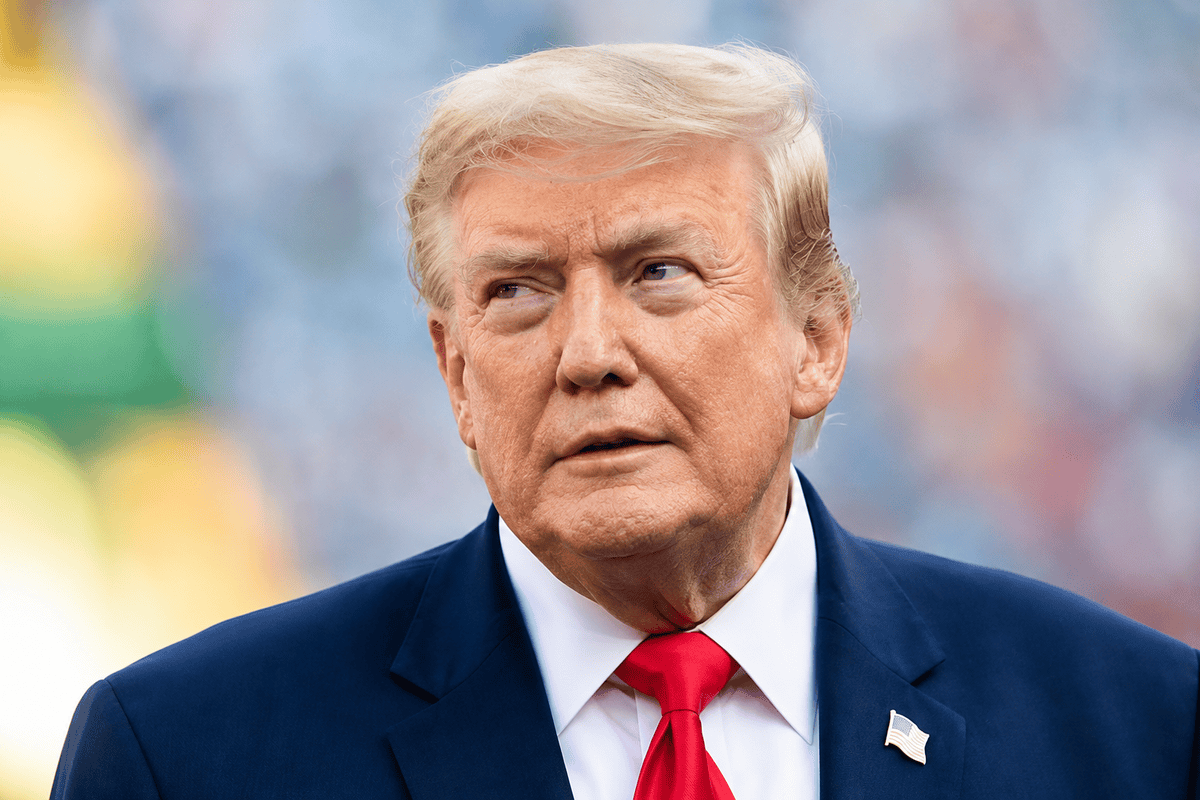
US President Donald Trump has declared that he cannot forgive some of his political enemies, even if doing so were necessary to enter heaven, insisting that he would rather be honest about his feelings than pretend to forgive them.
Trump made the remarks during an interview with CBS News’ 60 Minutes, aired on Sunday, November 8, 2026, while discussing his religious beliefs, death and political grievances.
CBS correspondent Ross Douthat asked Trump whether he would forgive political opponents, including former FBI Director James Comey and former House Speaker Nancy Pelosi, if forgiveness were a condition for entering paradise.
Trump questioned whether pretending to forgive people he disliked would amount to being dishonest.
“Well, then I wouldn’t be real, would I?” he asked.
Pressed for a direct answer, the president replied: “The answer is no. I want to be honest, no.”
He linked his resentment towards some political opponents to what he described as their treatment of him, including his criminal indictments and two impeachments.
READ ALSO:
- Fayose Petitions IGP, Threatens Lawsuit Over Rape, Torture Allegations
- INEC Flags 268 Voter Records Over AI-Generated Photos, Begins Cleanup Ahead of 2027 Elections
- Tension in Delta as Task Force Members Protest Over Colleague’s Killing at NDC Rally
“I do hate some of my enemies. I think they’ve been terrible. Look what they’ve put me through, the weaponisation. I got indicted, I got impeached,” he said.
When Douthat asked whether his achievements and extraordinary life could help him find it in his heart to forgive his opponents, Trump maintained that he probably could not.
“I probably cannot do that, no, because I do hate some of my enemies, and I always will,” he added.
The conversation also turned to religion and life after death, with Douthat asking Trump where he believed he would go when he died.
Describing himself as a religious person, Trump said he hoped to enter heaven.
“I’m a religious person, so in theory, I go to heaven,” he said.
Douthat also referred to Trump’s remarks at the memorial service of conservative activist Charlie Kirk, where Kirk’s widow, Erika Kirk, spoke about the importance of Christian forgiveness.
The exchange prompted questions about whether the president could reconcile his religious beliefs with his refusal to forgive some political opponents.
Towards the end of the interview, Douthat asked how Trump wanted his presidency to be remembered 100 years from now.
Trump said he wanted to be remembered as the president who “made America great again”, a reference to his long-standing political slogan.
His comments have attracted attention because of the contrast between the Christian message of forgiveness raised during the interview and his admission that he remains unwilling to forgive some political opponents.
Trump Makes Stunning Admission: ‘I Will Always Hate Some of My Enemies’
International
Job Seeker Steals Bugatti CEO’s £2m Car After Finding Keys Inside
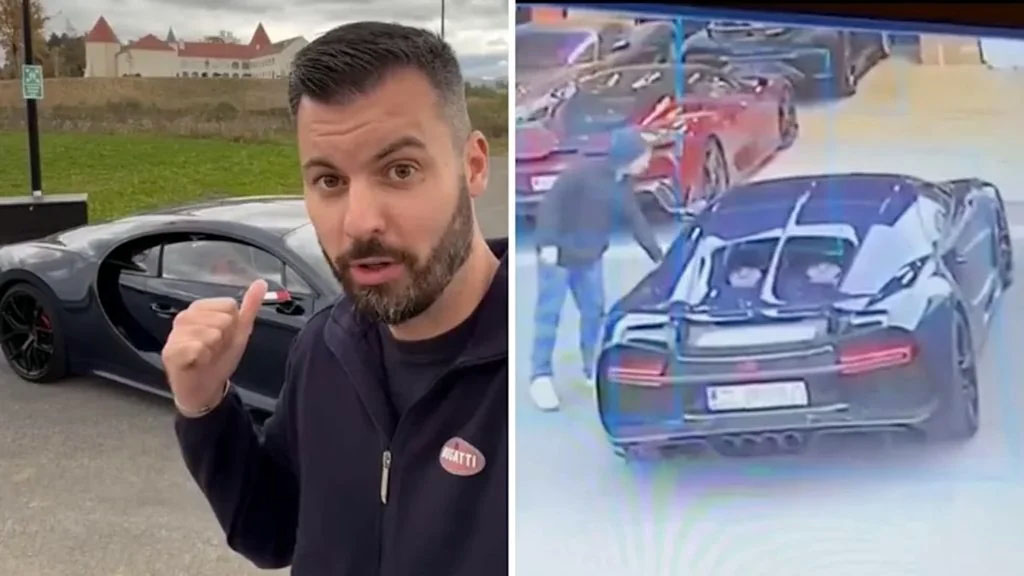
A man who reportedly visited the headquarters of luxury car manufacturer Bugatti in search of employment allegedly drove away in the company chief executive’s £2 million sports car after discovering that its keys had been left inside.
The incident involved Mate Rimac, the Croatian businessman and chief executive of Bugatti, whose personal Bugatti Chiron was stolen from the company’s production and technology campus near Zagreb, Croatia.
The suspect, a Croatian man in his mid-30s, reportedly entered the facility looking for a job before spotting the high-performance vehicle with its keys inside and driving away.
Rimac disclosed the incident in a series of posts on Instagram, explaining that he had routinely left the keys inside his vehicles because he considered Croatia a safe place.
He admitted that the habit had continued for years without any incident until the Chiron disappeared.
The theft was discovered after an employee alerted colleagues that an unfamiliar person had driven away in the expensive vehicle.
Rimac immediately contacted the police and used the car’s built-in tracking and telemetry system to monitor its movements.
The tracking technology provided information about the vehicle’s location, speed and fuel level, allowing the Bugatti team to follow its journey and share updates with law enforcement officers.
READ ALSO:
- Netanyahu Faces Political Setback as Israeli President Picks Rival to Form Government
- 2027: Tinubu Challenges Atiku to Explain How He Financed University
- Afenifere Crisis: ‘There Is Only One Afenifere’, Secretary Insists Amid Breakup Allegations
After discovering that the stolen vehicle was heading towards Slovenia, Rimac jumped into a Porsche 911 and pursued it.
The pursuit continued across borders, with the Chiron eventually reaching Austria. Rimac and his team maintained communication with the police through a group chat, providing updates that helped Austrian officers locate and intercept the vehicle.
The suspect was subsequently arrested in Austria, where Rimac later met him at a police station.
According to the Bugatti boss, the man explained that he had initially visited the company’s premises to seek employment but decided to take the car after noticing that its keys were inside.
Rimac said he was not planning to press charges against the suspect. However, he acknowledged that the man could still face prosecution because of the high value of the stolen vehicle.
The CEO also revealed that he had considered giving the suspect a lift home to his family but police officers did not allow him to do so.
The recovered Chiron sustained some damage during the incident, although Rimac said it could be repaired.
The businessman thanked the Austrian police for their intervention, saying he was relieved that nobody was injured during the incident.
He also admitted that the experience had taught him an expensive lesson, promising never again to leave the keys inside his vehicles.
The Bugatti Chiron, unveiled in 2016, is one of the world’s most powerful luxury hypercars. The model has a starting price of about €2.4 million, equivalent to approximately £2 million, and a manufacturer-limited top speed of 420 kilometres per hour.
Bugatti operates under Bugatti Rimac, a joint venture in which Rimac Group holds a majority stake.
The unusual theft has attracted international attention because of the vehicle’s value, the suspect’s reported reason for visiting the facility and the extraordinary cross-border pursuit involving the Bugatti chief executive.
Job Seeker Steals Bugatti CEO’s £2m Car After Finding Keys Inside
-

 News3 days ago
One Killed, Five Injured as Violence Disrupts Obi-Kwankwaso Rally in Delta
-
 Politics3 days ago
‘My History Is Traceable’: Atiku Fires Back at Tinubu Over University Funding
-

 metro3 days ago
[ICYMI] Lagos Summons DisCos, Regulators Over Persistent Power Outages, Seeks 24-Hour Electricity
-

 Sports3 days ago
Messi Breaks MLS Record, Becomes First Player To Win Back-to-Back Golden Boots
-

 metro2 days ago
‘Miracle’ Turns Sour as Visiting Pastor Vanishes with Congregants’ Phones During Crusade in Edo
-

 Politics3 days ago
How Buhari’s Promise Cost Me 2022 APC Presidential Ticket – Amaechi
-
 metro1 day ago
Fayose Petitions IGP, Threatens Lawsuit Over Rape, Torture Allegations
-
Politics2 days ago
Tension in Delta as Task Force Members Protest Over Colleague’s Killing at NDC Rally