
International
China executes man drove car into crowd killing 35
China executes man drove car into crowd killing 35
China executed a man on Monday for killing 35 people in a car rampage in the southern city of Zhuhai in November 2024, the country’s bloodiest mass attack in years.
On November 11, Fan Weiqiu, 62, intentionally drove a tiny SUV through crowds of people exercising outside a sports complex, injuring 45 people in China’s deadliest such incident since 2014.
He was condemned to death last month, with a court ruling that his motivations “were extremely vile, (and) the nature of the crime extremely egregious.”
CCTV reported Monday that a Zhuhai court “executed Fan Weiqiu in accordance with the execution order issued by the Supreme People’s Court.”
The municipal public prosecutor “sent personnel to supervise (the execution) in accordance with the law,” according to CCTV.
READ ALSO:
- Global leaders in Lagos for Africa’s clean energy future
- LG autonomy: FG directs 774 councils to open account with CBN
- Biden pardons Milley, Fauci to protect them from Trump
Fan’s attack generated enormous public outrage and introspection in China about the state of society. He was seized at the site with self-inflicted knife wounds and later entered a coma, according to authorities.
At his trial last month, Fan pleaded guilty in front of some of the victims’ families, officials and members of the public.
The court found he “decided to vent his anger” over “a broken marriage, personal frustrations, and dissatisfaction with the division of property after divorce.”
It ruled that his methods were “particularly cruel, and the consequences particularly severe, posing significant harm to society.”.
In a similar ruling, CCTV reported Monday that a separate court in eastern Jiangsu province had carried out the death penalty on a man who killed eight people and wounded 17 in a mass stabbing in November.
Xu Jiajin, a 21-year-old former student who attacked a vocational school in the city of Wuxi, was executed “in accordance with the law,” CCTV reported.
He too had been sentenced to death in December, with the court concluding that his crime was “extraordinarily serious,” CCTV stated.
According to the broadcaster, Xu was given the opportunity to “meet with his close relatives” before being executed.
China classifies death penalty figures as a state secret, but rights groups such as Amnesty International think many are executed each year.
China executes man drove car into crowd killing 35









International
Saudi Arabia Intercepts Multiple Ballistic Missiles, Drones in Major Defence Operation
Saudi Arabia Intercepts Multiple Ballistic Missiles, Drones in Major Defence Operation
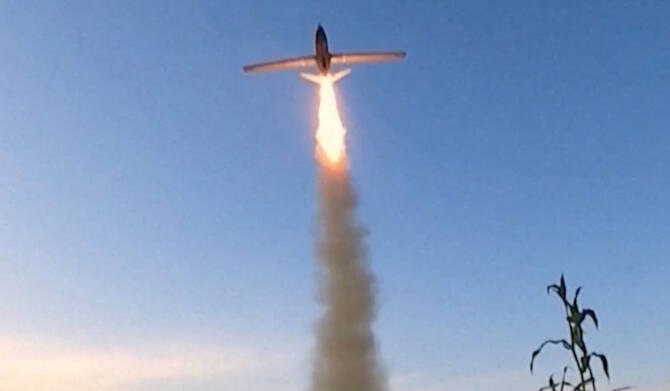
Saudi Arabia’s air defence forces have shot down a wave of ballistic missiles and drones fired toward the kingdom as the Middle East conflict escalates, officials said on Wednesday, highlighting rising regional instability and ongoing threats to critical infrastructure. (Arab News)
According to the Saudi Ministry of Defense, at least seven ballistic missiles were intercepted and destroyed, including six aimed at Prince Sultan Air Base — a major military installation in Al‑Kharj — and one that was heading toward the Eastern Province. Additionally, Saudi air defences knocked down more than 20 attack drones targeting key locations including the Shaybah oil field in the Empty Quarter, Al‑Kharj, Hafar Al‑Batin, and other parts of the Eastern Province. (Arab News)
READ ALSO:
- Nigerian Midfielder Daniel Daga Jailed in Norway for Sexual Assault
- Quack Doctor Sentenced to Death for Murder in Ekiti
- Galatasaray Beat Liverpool 1–0 in Champions League Last‑16 First Leg
Prince Sultan Air Base, used by both Saudi and allied forces, has been a repeated target in recent days as Iran and allied factions intensify cross‑border attacks in retaliation against US‑Israeli military operations in Iran that began in late February. These strikes are part of a broader barrage of missile and drone attacks across the Gulf region, complicating security and defence efforts for Gulf Cooperation Council (GCC) states. (Al Jazeera)
The Saudi government has vowed to protect its sovereignty and security, with the cabinet condemning the attacks on the kingdom and neighbouring states. In a recent session chaired by Crown Prince Mohammed bin Salman, officials reaffirmed Saudi Arabia’s right to take “all necessary measures” to safeguard its territory and citizens from external threats. (Arab News PK)
The ongoing barrage has also threatened energy infrastructure and global oil markets. Brent crude prices surged earlier in the week — hitting historic highs before stabilising — as oil supplies from the Gulf region face disruption due to hostilities and shipping risks through the Strait of Hormuz, through which a significant portion of the world’s oil and LNG normally flows. (The Guardian)
Amin Nasser, CEO of Saudi Aramco, warned that continued disruptions could have “catastrophic consequences for the world’s oil markets,” stressing that prolonged instability would worsen the impact on global energy supply chains. (Arab News PK)
The conflict, which shows no immediate sign of abating despite statements from US President Donald Trump suggesting it could be drawing to a close, is expected to persist for months. Tehran’s Islamic Revolutionary Guard Corps has made clear that any end to hostilities will be decided on its terms. (Arab News PK)
Saudi Arabia Intercepts Multiple Ballistic Missiles, Drones in Major Defence Operation
International
Iran Continues Crude Oil Exports to China Despite Middle East Conflict

Iran Continues Crude Oil Exports to China Despite Middle East Conflict
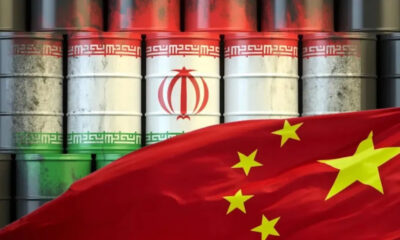
Iran has maintained a steady flow of crude oil exports to China despite escalating Middle East tensions and threats to disrupt the Strait of Hormuz, a key global energy corridor. Since the outbreak of the conflict on February 28, 2026, Iranian vessels have transported at least 11.7 million barrels of crude oil to China, according to satellite-based tanker tracking data cited by CNBC and independent monitoring firms.
The Strait of Hormuz normally carries about 20 percent of global seaborne oil and LNG supplies, but the ongoing conflict involving US and Israeli military strikes has caused many international tankers to avoid the route due to the threat of attacks and naval mines. Despite this, Iranian tankers, including some that “went dark” by switching off tracking systems, have continued transporting crude to Chinese ports, highlighting Beijing’s reliance on Iranian oil.
READ ALSO:
- Nigerian Midfielder Daniel Daga Jailed in Norway for Sexual Assault
- Quack Doctor Sentenced to Death for Murder in Ekiti
- Galatasaray Beat Liverpool 1–0 in Champions League Last‑16 First Leg
Maritime intelligence firms, such as TankerTrackers and Kpler, reported that multiple tankers have transited the strait in recent weeks. One supertanker flagged in Guyana carrying around 2 million barrels of crude recently passed through the strait en route to China, contributing to the total exports that now exceed 11 million barrels since the conflict began.
China remains Iran’s largest oil buyer, with long-standing contracts and strategic energy ties that have continued despite sanctions and heightened geopolitical risks. While Iranian crude continues flowing to China, other regional exporters, including Saudi Arabia, Kuwait, and Iraq, have scaled back shipments due to conflict-related risks.
The sustained flow of Iranian oil through the Strait of Hormuz occurs even as global energy markets face rising freight costs, higher insurance premiums, and supply volatility. Analysts warn that continued disruptions could exacerbate fuel price spikes and threaten energy security for importing nations.
The ongoing exports underscore Iran’s determination to preserve vital revenue streams while China secures diverse crude sources amid global uncertainty, reflecting the resilience of their bilateral energy relationship even during a regional crisis.
Iran Continues Crude Oil Exports to China Despite Middle East Conflict
International
Iran Rejects Ceasefire as Explosions Rock Tehran
Iran Rejects Ceasefire as Explosions Rock Tehran
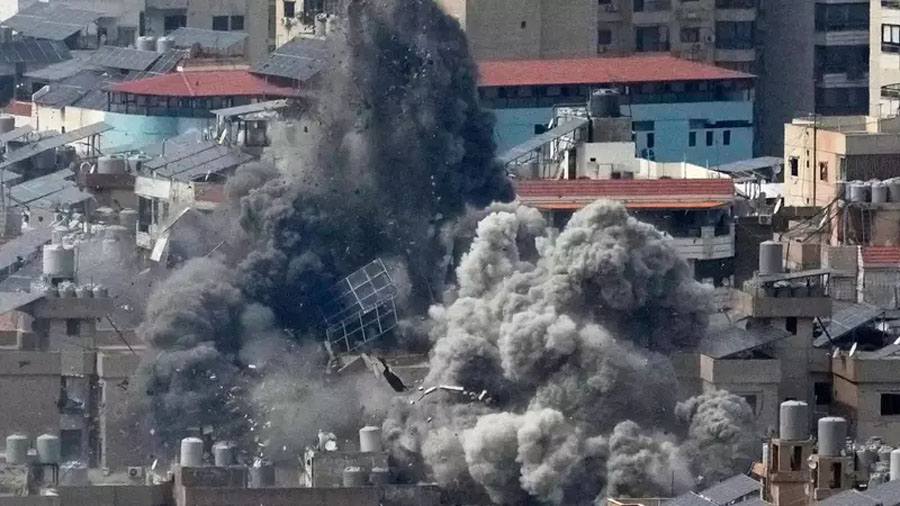
Iran has rejected calls for a ceasefire, even as explosions shook Tehran and tensions rose sharply around the strategic Strait of Hormuz, a key global shipping lane. The conflict, triggered by US–Israeli strikes on February 28 that killed Iran’s Supreme Leader Ali Khamenei, has spread rapidly across the Middle East, disrupting energy markets worldwide.
Iranian parliament speaker Bagher Ghalibaf stated that Tehran has no interest in halting the conflict. “Certainly we aren’t seeking a ceasefire,” he wrote on social media, adding that “the aggressor must be punished and taught a lesson to deter them from attacking Iran again.” The Pentagon confirmed that Tuesday saw its most intense wave of strikes inside Iran since the conflict began, deploying “the most fighters and the most bombers” to date. In response, the Iranian Revolutionary Guards launched fresh missile barrages on Israeli cities and US military targets, while explosions were also reported in Manama, Bahrain.
READ ALSO:
- India, Other Countries Reject Tinubu’s Ambassadorial Nominees
- Lagos Court Remands Four Police Officers Over Owode Onirin Market Killings
- UNILAG Faults ASUU Strike, Insists Examinations Will Continue Despite Lecturers’ Protest
The crisis has centred on the Strait of Hormuz, through which about 20–25% of the world’s oil exports transit. Iranian attacks on shipping and threats to block the strait have already forced a halt in tanker traffic. US President Donald Trump warned that placing mines in the waterway would provoke military consequences “never seen before,” as US intelligence cited Iran laying explosives in the channel. Energy infrastructure across the Gulf is increasingly at risk. The UAE’s largest refinery at Ruwais shut down temporarily after a drone strike sparked a fire, while Qatari LNG exports have been disrupted, pushing European gas prices higher. Saudi Aramco CEO Amin H. Nasser warned that restoring shipping in the strait is “absolutely critical” to avoid severe global repercussions.
The global economic impact of the conflict is mounting. The United Nations cautioned that continued closure of the Strait of Hormuz could raise the cost of essentials worldwide, particularly fuel and food. In Cairo, residents report that higher fuel prices are already affecting daily life. Analysts warn that the conflict’s ongoing uncertainty could further destabilize global markets, driving oil and gas prices higher while increasing inflationary pressures on essentials.
The human cost of the conflict continues to rise. Hundreds of military and civilian casualties have been reported on both sides, with explosions and missile strikes in Tehran and neighboring regions terrifying residents. Despite efforts by other nations to mediate, neither Iran nor the US shows readiness to de-escalate, leaving the Middle East on edge and international markets bracing for further volatility.
Iran Rejects Ceasefire as Explosions Rock Tehran

-

 metro2 days ago
Viral Video Shows Man Disarming Robbers After Minna Bank Heist, ₦10m Stolen
-
 Business3 days ago
NNPCL, Marketers Increase Petrol Price Again Within 24 Hours After Dangote Refinery Hike
-

 metro2 days ago
Tragedy in Ibadan as Woman, 26, Dies at Boyfriend’s Residence
-

 metro3 days ago
EFCC Intercepts Wife of Federal High Court Chief Judge With $160,000 Cash
-

 Business23 hours ago
JUST IN: Dangote Refinery Cuts Petrol, Diesel Ex-Depot Prices Amid Market Relief
-

 metro2 days ago
Students Escape as Four-Storey School Building Collapses in Lagos
-

 Politics2 days ago
BREAKING: Zamfara Governor Dauda Lawal Defects from PDP to APC
-

 News2 days ago
OYOSUBEB Chairman Adeniran Joins 2027 Oyo Governorship Race