
International
Comoros ex-president Sambi jailed for life for ‘high treason’

Sambi was originally placed under house arrest for disturbing public order.
Three months later he was placed under pre-trial detention for embezzlement, corruption and forgery, over a scandal involving the sale of Comorian passports to stateless people living in Gulf nations. (Photo by Ibrahim YOUSSOUF / AFP)
A court in the Comoros on Monday handed down a life sentence for high treason to ex-president Ahmed Abdallah Sambi, who was convicted of selling passports to stateless people living in the Gulf.
Sambi, 64, an arch-rival of President Azali Assoumani, was sentenced by the State Security Court, a special judicial body whose rulings cannot be appealed.
“He betrayed the mission entrusted to him by the Comorians,” public prosecutor Ali Mohamed Djounaid told the court last week as he requested a life sentence.
Sambi, who led the small Indian Ocean archipelago between 2006 and 2011, pushed through a law in 2008 allowing the sale of passports for high fees.
The scheme aimed at the so-called bidoon — an Arab minority numbering in the tens of thousands who cannot obtain citizenship.
READ ALSO:
- Lagos Fourth Mainland Bridge to have three tollgates, three bidders shortlisted
- Tinubu lacks capacity to grasp statistics – Obi-Datti team
- Senate uncovers N200m fraud in Labour ministry payments
The former president was accused of embezzling millions of dollars under the scheme.
The prosecution said the cost was more than $1.8 billion — more than the impoverished nation’s GDP.
“They gave thugs the right to sell Comorian nationality as if they were selling peanuts,” said Eric Emmanuel Sossa, a lawyer for civilian plaintiffs.
But Sambi’s French lawyer Jean-Gilles Halimi said “no evidence” of missing money or bank accounts had been put forward to suggest a crime.
Sambi refused to attend the trial after a brief appearance at the first hearing, as his lawyers said there were no guarantees he would be judged fairly.
He was originally prosecuted for corruption, but the charges were reclassified as high treason, a crime that “does not exist in Comorian law,” Halimi said.
Sambi had already spent four years behind bars before he faced trial, far exceeding the maximum eight months. He was originally placed under house arrest for disturbing public order.
Guardian




International
Saudi Arabia Intercepts Multiple Ballistic Missiles, Drones in Major Defence Operation
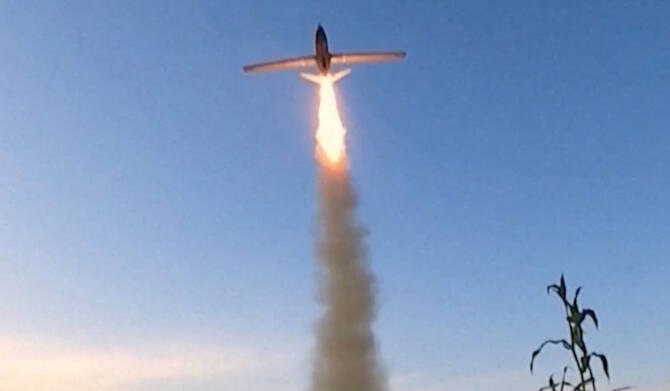
Saudi Arabia Intercepts Multiple Ballistic Missiles, Drones in Major Defence Operation
Saudi Arabia’s air defence forces have shot down a wave of ballistic missiles and drones fired toward the kingdom as the Middle East conflict escalates, officials said on Wednesday, highlighting rising regional instability and ongoing threats to critical infrastructure. (Arab News)
According to the Saudi Ministry of Defense, at least seven ballistic missiles were intercepted and destroyed, including six aimed at Prince Sultan Air Base — a major military installation in Al‑Kharj — and one that was heading toward the Eastern Province. Additionally, Saudi air defences knocked down more than 20 attack drones targeting key locations including the Shaybah oil field in the Empty Quarter, Al‑Kharj, Hafar Al‑Batin, and other parts of the Eastern Province. (Arab News)
READ ALSO:
- Nigerian Midfielder Daniel Daga Jailed in Norway for Sexual Assault
- Quack Doctor Sentenced to Death for Murder in Ekiti
- Galatasaray Beat Liverpool 1–0 in Champions League Last‑16 First Leg
Prince Sultan Air Base, used by both Saudi and allied forces, has been a repeated target in recent days as Iran and allied factions intensify cross‑border attacks in retaliation against US‑Israeli military operations in Iran that began in late February. These strikes are part of a broader barrage of missile and drone attacks across the Gulf region, complicating security and defence efforts for Gulf Cooperation Council (GCC) states. (Al Jazeera)
The Saudi government has vowed to protect its sovereignty and security, with the cabinet condemning the attacks on the kingdom and neighbouring states. In a recent session chaired by Crown Prince Mohammed bin Salman, officials reaffirmed Saudi Arabia’s right to take “all necessary measures” to safeguard its territory and citizens from external threats. (Arab News PK)
The ongoing barrage has also threatened energy infrastructure and global oil markets. Brent crude prices surged earlier in the week — hitting historic highs before stabilising — as oil supplies from the Gulf region face disruption due to hostilities and shipping risks through the Strait of Hormuz, through which a significant portion of the world’s oil and LNG normally flows. (The Guardian)
Amin Nasser, CEO of Saudi Aramco, warned that continued disruptions could have “catastrophic consequences for the world’s oil markets,” stressing that prolonged instability would worsen the impact on global energy supply chains. (Arab News PK)
The conflict, which shows no immediate sign of abating despite statements from US President Donald Trump suggesting it could be drawing to a close, is expected to persist for months. Tehran’s Islamic Revolutionary Guard Corps has made clear that any end to hostilities will be decided on its terms. (Arab News PK)
Saudi Arabia Intercepts Multiple Ballistic Missiles, Drones in Major Defence Operation
International
Iran Continues Crude Oil Exports to China Despite Middle East Conflict

Iran Continues Crude Oil Exports to China Despite Middle East Conflict
Iran has maintained a steady flow of crude oil exports to China despite escalating Middle East tensions and threats to disrupt the Strait of Hormuz, a key global energy corridor. Since the outbreak of the conflict on February 28, 2026, Iranian vessels have transported at least 11.7 million barrels of crude oil to China, according to satellite-based tanker tracking data cited by CNBC and independent monitoring firms.
The Strait of Hormuz normally carries about 20 percent of global seaborne oil and LNG supplies, but the ongoing conflict involving US and Israeli military strikes has caused many international tankers to avoid the route due to the threat of attacks and naval mines. Despite this, Iranian tankers, including some that “went dark” by switching off tracking systems, have continued transporting crude to Chinese ports, highlighting Beijing’s reliance on Iranian oil.
READ ALSO:
- Nigerian Midfielder Daniel Daga Jailed in Norway for Sexual Assault
- Quack Doctor Sentenced to Death for Murder in Ekiti
- Galatasaray Beat Liverpool 1–0 in Champions League Last‑16 First Leg
Maritime intelligence firms, such as TankerTrackers and Kpler, reported that multiple tankers have transited the strait in recent weeks. One supertanker flagged in Guyana carrying around 2 million barrels of crude recently passed through the strait en route to China, contributing to the total exports that now exceed 11 million barrels since the conflict began.
China remains Iran’s largest oil buyer, with long-standing contracts and strategic energy ties that have continued despite sanctions and heightened geopolitical risks. While Iranian crude continues flowing to China, other regional exporters, including Saudi Arabia, Kuwait, and Iraq, have scaled back shipments due to conflict-related risks.
The sustained flow of Iranian oil through the Strait of Hormuz occurs even as global energy markets face rising freight costs, higher insurance premiums, and supply volatility. Analysts warn that continued disruptions could exacerbate fuel price spikes and threaten energy security for importing nations.
The ongoing exports underscore Iran’s determination to preserve vital revenue streams while China secures diverse crude sources amid global uncertainty, reflecting the resilience of their bilateral energy relationship even during a regional crisis.
Iran Continues Crude Oil Exports to China Despite Middle East Conflict
International
Iran Rejects Ceasefire as Explosions Rock Tehran
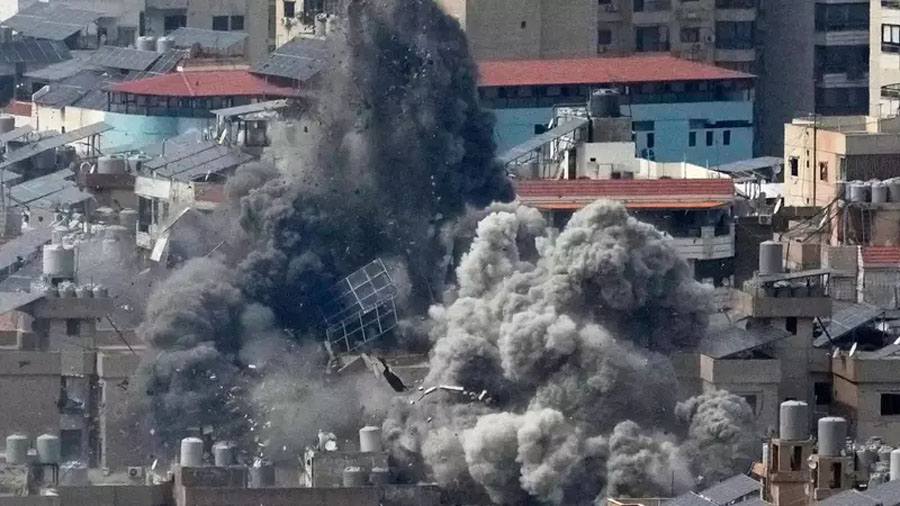
Iran Rejects Ceasefire as Explosions Rock Tehran
Iran has rejected calls for a ceasefire, even as explosions shook Tehran and tensions rose sharply around the strategic Strait of Hormuz, a key global shipping lane. The conflict, triggered by US–Israeli strikes on February 28 that killed Iran’s Supreme Leader Ali Khamenei, has spread rapidly across the Middle East, disrupting energy markets worldwide.
Iranian parliament speaker Bagher Ghalibaf stated that Tehran has no interest in halting the conflict. “Certainly we aren’t seeking a ceasefire,” he wrote on social media, adding that “the aggressor must be punished and taught a lesson to deter them from attacking Iran again.” The Pentagon confirmed that Tuesday saw its most intense wave of strikes inside Iran since the conflict began, deploying “the most fighters and the most bombers” to date. In response, the Iranian Revolutionary Guards launched fresh missile barrages on Israeli cities and US military targets, while explosions were also reported in Manama, Bahrain.
READ ALSO:
- India, Other Countries Reject Tinubu’s Ambassadorial Nominees
- Lagos Court Remands Four Police Officers Over Owode Onirin Market Killings
- UNILAG Faults ASUU Strike, Insists Examinations Will Continue Despite Lecturers’ Protest
The crisis has centred on the Strait of Hormuz, through which about 20–25% of the world’s oil exports transit. Iranian attacks on shipping and threats to block the strait have already forced a halt in tanker traffic. US President Donald Trump warned that placing mines in the waterway would provoke military consequences “never seen before,” as US intelligence cited Iran laying explosives in the channel. Energy infrastructure across the Gulf is increasingly at risk. The UAE’s largest refinery at Ruwais shut down temporarily after a drone strike sparked a fire, while Qatari LNG exports have been disrupted, pushing European gas prices higher. Saudi Aramco CEO Amin H. Nasser warned that restoring shipping in the strait is “absolutely critical” to avoid severe global repercussions.
The global economic impact of the conflict is mounting. The United Nations cautioned that continued closure of the Strait of Hormuz could raise the cost of essentials worldwide, particularly fuel and food. In Cairo, residents report that higher fuel prices are already affecting daily life. Analysts warn that the conflict’s ongoing uncertainty could further destabilize global markets, driving oil and gas prices higher while increasing inflationary pressures on essentials.
The human cost of the conflict continues to rise. Hundreds of military and civilian casualties have been reported on both sides, with explosions and missile strikes in Tehran and neighboring regions terrifying residents. Despite efforts by other nations to mediate, neither Iran nor the US shows readiness to de-escalate, leaving the Middle East on edge and international markets bracing for further volatility.
Iran Rejects Ceasefire as Explosions Rock Tehran

-
 International3 days ago
Top 10 Strongest Militaries in the World in 2026 – Full Ranking
-

 metro2 days ago
Viral Video Shows Man Disarming Robbers After Minna Bank Heist, ₦10m Stolen
-
 Business3 days ago
NNPCL, Marketers Increase Petrol Price Again Within 24 Hours After Dangote Refinery Hike
-

 metro2 days ago
Tragedy in Ibadan as Woman, 26, Dies at Boyfriend’s Residence
-

 metro3 days ago
EFCC Intercepts Wife of Federal High Court Chief Judge With $160,000 Cash
-

 Business18 hours ago
JUST IN: Dangote Refinery Cuts Petrol, Diesel Ex-Depot Prices Amid Market Relief
-

 metro2 days ago
Students Escape as Four-Storey School Building Collapses in Lagos
-
 metro3 days ago
NDLEA Arrests Ex‑Lagos Councillor Over 40kg Cannabis