
metro
Court Accepts Sowore’s Tweet Calling President Tinubu ‘Criminal’ as Exhibit in Cybercrime Trial

Court Accepts Sowore’s Tweet Calling President Tinubu ‘Criminal’ as Exhibit in Cybercrime Trial
A Federal High Court in Abuja has admitted a tweet by activist and journalist Omoyele Sowore, in which he called President Bola Ahmed Tinubu a “criminal,” as part of the evidence in his ongoing cyberstalking and defamation trial brought by the Department of State Services (DSS).
Justice Mohammed Umar ruled on Thursday, January 22, 2026, that screenshots of the controversial posts from Sowore’s verified X (formerly Twitter) and Facebook accounts, along with video clips submitted on a flash drive, would be formally marked as exhibits in the case. The court overruled defense objections, allowing the social media evidence to form a central part of the prosecution’s case.
READ ALSO:
- U.S. Urges Nigeria to Step Up Protection for Christians Following Kaduna Abductions
- Police Nab Woman Who Hired Armed Robbers to Steal Boyfriend’s ₦13m Gold
- Nigeria Political Battle: Akpabio Drags Natasha Akpoti to Supreme Court
The trial relates to posts published in August 2025, following President Tinubu’s official visit to Brazil. The government alleges that Sowore’s online statements were false, inflammatory, and capable of undermining public peace, contrary to provisions under the Cybercrimes (Prohibition, Prevention, etc.) Amendment Act, 2024. DSS witnesses told the court that Sowore’s posts attracted millions of views and were capable of escalating political tension and threatening national security.
Sowore, a former presidential candidate and founder of the African Action Congress (AAC), has pleaded not guilty, insisting that his posts are protected under freedom of expression and free speech rights. The court adjourned the matter to January 27, 2026, for the cross-examination of DSS witnesses and continuation of proceedings.
The case has sparked a nationwide debate over cyber defamation, limits of online political criticism, and freedom of expression in Nigeria, attracting significant attention from journalists, human rights groups, and political commentators.
Court Accepts Sowore’s Tweet Calling President Tinubu ‘Criminal’ as Exhibit in Cybercrime Trial









metro
Tinubu Marks 74th Birthday with Special Fund for Soldiers, Fallen Heroes’ Families
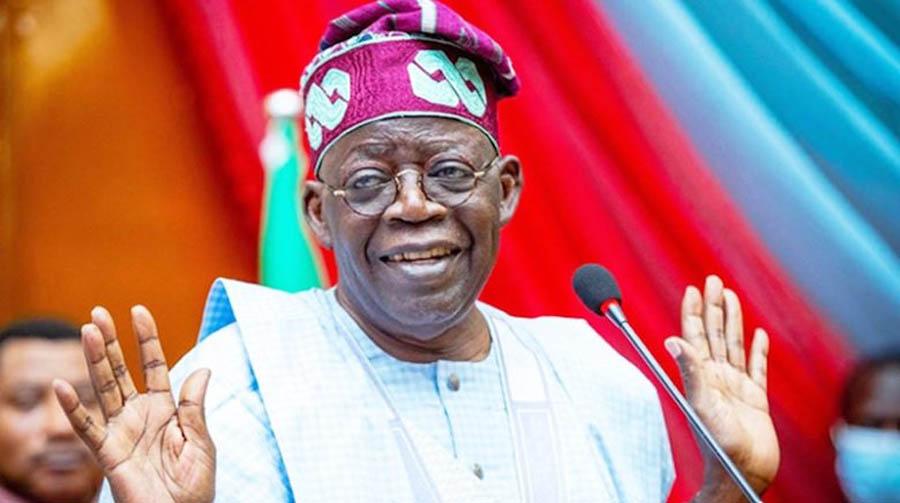
Tinubu Marks 74th Birthday with Special Fund for Soldiers, Fallen Heroes’ Families
President Bola Ahmed Tinubu has announced the creation of a special fund to support members of the Nigerian Armed Forces, including personnel wounded in active service and families of soldiers who died defending the nation.
The President made the disclosure in a statement issued on Sunday to commemorate his 74th birthday, describing the initiative as a personal commitment to honour the sacrifices of military personnel.
According to him, he has directed the Accountant-General of the Federation to establish a dedicated account that will serve as the financial base for the intervention.
“On this my 74th birthday, I celebrate the valiant men and women of our Armed Forces,” Tinubu stated, paying tribute to the courage and dedication of Nigeria’s military.
He explained that the fund is designed to cater to soldiers injured in the line of duty as well as dependents of those who lost their lives while serving the country.
“Today, I have directed the Accountant-General of the Federation to establish a special account for a fund dedicated to those who serve, those wounded in the line of duty, and the families of those who have paid the ultimate price,” he said.
In a significant personal gesture, the President also pledged to donate all his salaries since assuming office to serve as seed funding for the initiative. He noted that this contribution would be made irrespective of existing insurance and welfare provisions available to members of the armed forces.
“As a personal commitment, all my salaries since assuming office will be paid into this account as seed funding,” he added.
Tinubu further called on state governors, members of the National Assembly, private sector stakeholders and well-meaning Nigerians to support the initiative in order to strengthen welfare support for military personnel and their families.
The announcement has been widely seen as part of ongoing efforts by the administration to boost morale within the armed forces amid persistent security challenges across the country.
Tinubu Marks 74th Birthday with Special Fund for Soldiers, Fallen Heroes’ Families
metro
From Royal Wedding to Courtroom War: Gana’s Son, Wife in Explosive Split
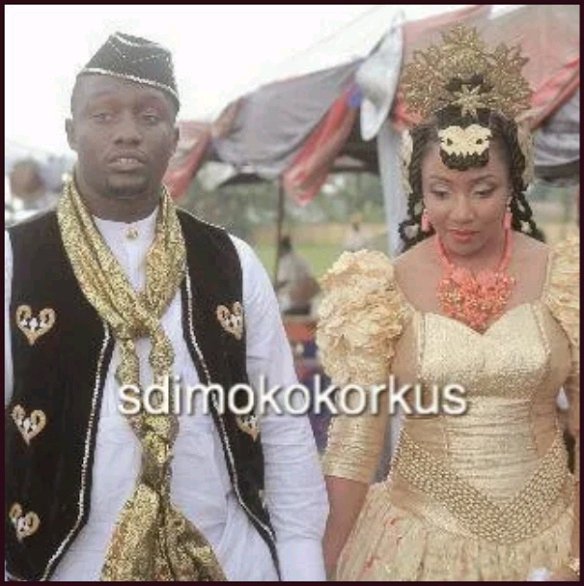
From Royal Wedding to Courtroom War: Gana’s Son, Wife in Explosive Split
What began as one of Nigeria’s most glamorous society weddings in 2014 has reportedly unraveled into a tense legal showdown, marked by allegations, silence, and an escalating custody dispute.
When James Gana, son of elder statesman and former Minister of Information Jerry Gana, married Akwa Ibom royal figure Jessica Edet, the ceremony drew national attention. Political heavyweights, traditional rulers, and high society figures gathered in Akwa Ibom State to witness what many described as a symbolic union of influence and prestige.
More than a decade later, that image of unity has sharply faded.
Cracks Beneath the Surface
Multiple sources familiar with the situation indicate that the marriage had been under strain for some time before the situation escalated into formal legal action. While details remain closely guarded, insiders suggest that irreconcilable differences may have led to the breakdown.
It is alleged that James Gana filed for divorce, though official court documents have not been made public to confirm this claim.
Custody Battle Emerges
At the center of the dispute is the couple’s son, with both parties reportedly seeking custody. Legal observers note that such battles, especially among high-profile families, often become prolonged and emotionally charged.
Family law practitioners contacted by our correspondent explain that Nigerian courts typically prioritize the welfare of the child, but outcomes can vary depending on circumstances presented during proceedings.
Allegations and Social Media Noise
The case has also been complicated by a wave of unverified claims circulating online, including controversial accusations targeted at Jessica Edet. Terms and insinuations trending on social media have added a layer of public scrutiny, though none of these claims have been substantiated in court.
Observers warn that such narratives, often amplified without evidence, risk distorting public perception and inflaming an already delicate situation.
Silence from Key Parties
Efforts to obtain official statements from both James Gana and Jessica Edet have so far yielded no response. Associates close to the families have also declined to comment, citing the sensitivity of the matter and ongoing legal proceedings.
From Celebration to Litigation
The reported breakdown of the marriage highlights how even the most celebrated unions can face private challenges far removed from public glamour. What was once a widely admired relationship has now become a subject of legal scrutiny and public speculation.
As proceedings continue, attention remains fixed on the courtroom, where the final outcome—particularly regarding custody—will likely define the next chapter of this high-profile separation.
From Royal Wedding to Courtroom War: Gana’s Son, Wife in Explosive Split
metro
Three Feared Dead as Journalists’ Bus Crashes on Enugu–Onitsha Expressway
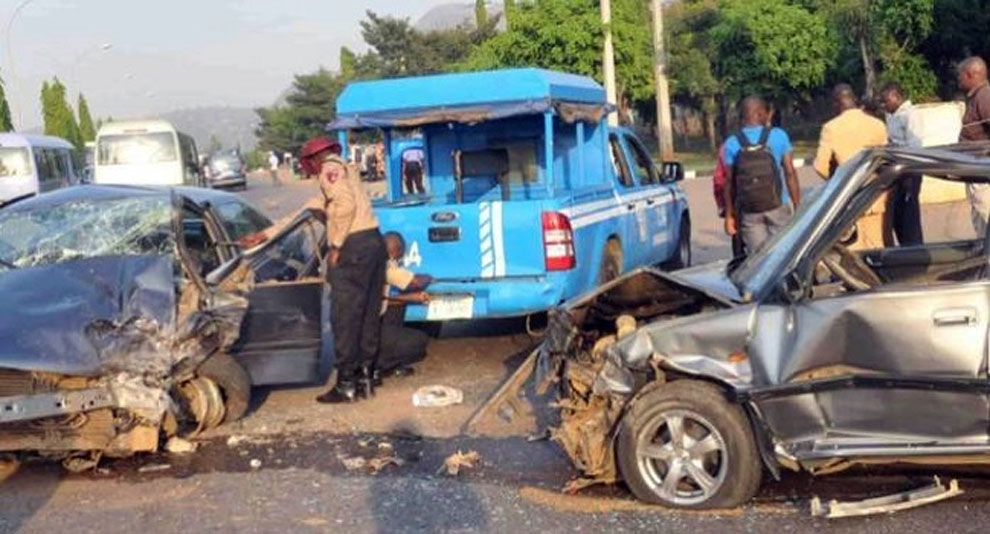
Three Feared Dead as Journalists’ Bus Crashes on Enugu–Onitsha Expressway
At least three persons have been confirmed dead following a tragic motor accident along the notorious Onyeama Hills axis of the Enugu–Onitsha Expressway in Enugu.
The accident involved a black Toyota Sienna bus conveying journalists who were reportedly on an official assignment to Igbo-Etiti Local Government Area of the state. Several occupants of the vehicle sustained injuries of varying degrees.
Among those injured are Chimaroke Ugwu, a reporter with Nigerian Television Authority and Chairman of the NTA Chapel, alongside his cameraman, Jerry. Also affected are Kelechi Ehirim, a reporter with African Independent Television and Secretary of the Private Broadcast Chapel, as well as his cameraman, Ifeanyi Ogbodo.
The identities of the deceased victims were yet to be confirmed as of the time of filing this report.
Officials of the Federal Road Safety Corps and the police were at the scene carrying out rescue operations and managing traffic to prevent further incidents.
The Onyeama Hills stretch of the expressway has long been regarded as a high-risk corridor due to its steep terrain and frequent record of accidents. Authorities have commenced investigations to determine the immediate and remote causes of the crash.
Further updates are expected as more details emerge.
Three Feared Dead as Journalists’ Bus Crashes on Enugu–Onitsha Expressway

-

 metro3 days ago
“We Pay Men to Sleep With Us in Germany” — Nigerian Woman Laments Loneliness Abroad
-

 metro1 day ago
Tragedy in Aramoko: Trailer Rams Residential Building, Kills 300‑Level Student
-
 Entertainment3 days ago
Tragedy in Music Industry as ‘Show Your Style’ Singer Sabinus Dies
-

 News2 days ago
Final Notice: FG Orders Civil Servants to Complete PASGA Verification by March 31
-
 metro2 days ago
El-Rufai’s Mother, Hajiya Umma, Dies Amid Son’s Legal Battle
-

 Entertainment2 days ago
Nollywood Actress Declares Love for Ibrahim Chatta, Offers to Pay Her Own Dowry
-

 Business3 days ago
Relief in Sight as Dangote Refinery Lowers Petrol Price
-

 Entertainment3 days ago
Gospel Singer Onos Brisibi Dies at 55 After Prolonged Illness