
News
Court fixes judgment for Sept 10 in Orji Kalu’s suit against retrial
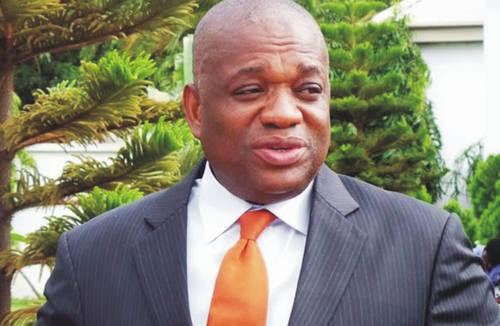
A Federal High Court in Abuja on Friday scheduled judgment for September 10 in the suit by ex-Abia State Governor, Orji Uzor Kalu against his retrial.
Justice Inyang Ekwo chose the date after entertaining final arguments from lawyers representing parties.
Kalu is by the suit, challenging his planned retrial by the Economic and Financial Crimes Commission (EFCC) on a N7.1billion fraud case, after the Supreme Court voided his earlier trial and conviction along with two others.
The ex-governor, who hinged his case on Section 36 (9) of the Constitution argued that been tried, convicted and sentenced on same charges, FHC/ABJ/CR/56/ 2007, by the court under Justice M.B. Idris, it would amount to double jeopardy if he is subjected to a fresh trial on same charge
Kalu was charged and tried with his firm, Slok Nigeria Limited and an ex-Finance Director in the state, Ude Jones Udeogu for their alleged complicity in diverting the N7.1b from Abia State’s coffers.
They were convicted and, while Kalu and Udeogu were imprisoned, Slok was wound up.
But, upon an appeal by Udeogu, the Supreme Court set aside their trial and conviction in a judgment on May 8, 2020 on the grounds that the trial judge, having been elevated, ought not to have continued to hear the case.
In the judgment marked: SC/62C/2019 filed by Udeogu, the Supreme Court ordered a retrial in the case.
It is that retrial that Kalu now seeks to prevent with his suit, in which he argued among others that a retrial would subject him to double jeopardy.
On Friday, Prof. Awa Kalu, SAN, (lawyer to Kalu), George Ukaegbu (for Udeogu) and Chris Uche, SAN, (for Slok) urged the court to uphold the ex-governor’s argument.
Kalu contended that, in the absence of any extant judgment or order of a competent court directing his client’s fresh trial, the Economic and Financial Crimes Commission (EFCC) cannot engage in any retrial.
He argued that there was no disagreement among parties that his client was not a party to the appeal before the Supreme Court and that the order for retrial made by the Supreme Court did not relate to his client.
Kalu noted that the former governor stood for trial for 12 years, convicted and jailed for 10 years.
He added that the former governor, having served a period of jail term, would be subjected to double jeopardy if allowed by the court to be put on trial for the second time.
Reading from a copy of the Supreme Court judgment, upon which Kalu was released from prison after five months, the lawyer stated that there was nowhere in the judgment where his client trial was ordered to be retried.
Kalu, who challenged the EFCC to point out where the order for his client’s retrial is contained in the judgment, urged the court to prohibit the anti-graft agency from proceeding with the planned retrial.
In a counter-argument, lawyer to the EFCC, Rotimi Jacobs (SAN) faulted Kalu’s position and urged the court to dismiss the suit.
Jacobs noted that it amounted to blowing hot and cold at the same time for Kalu to have benefited from the Supreme Court judgment, but yet, seeks to avoid the burden of retrial contained in the same judgment.
He submitted that the judgment, on which basis Kalu was jailed has been declared a nullity by the Supreme Court, which also ordered retrial of the appellant (Udeogu) in the same charge on which he was jointly tried with Kalu and Slok.
Jacobs added that since Kalu took advantage of the Supreme Court judgment, on which basis he was released, he must bear the burden that arose from the same judgment.
He described the suit by the ex-governor as an attempt at approbating and reprobating at the same time. He further described it as frivolous, irritating and prayed the court to dismiss it.
Meanwhile, the Chairman of the EFCC, Abdulrasheed Bawa was sighted in court shortly after the conclusion of the proceedings.
Dressed in white native attire, Bawa was accompanied by some lawyers and security operatives. It was not clear what he was in court for.
He was later seen heading towards the office of the Chief Judge of the Federal High Court.


News
Tinubu Orders Nationwide CNG Initiative to Curb Transport Expenses

Tinubu Orders Nationwide CNG Initiative to Curb Transport Expenses
President Bola Ahmed Tinubu has directed the Presidential Initiative on Compressed Natural Gas (PiCNG) to immediately deploy 100,000 vehicle conversion kits nationwide, a bold move aimed at easing the burden of rising global fuel prices and promoting compressed natural gas (CNG) as a cheaper, cleaner alternative to petrol.
The directive was issued during a closed-door meeting between the president and PiCNG Executive Chairman Ismaeel Ahmed at the Presidential Villa, Abuja. Ahmed disclosed that the president requested updates on the initiative’s progress, particularly regarding measures to cushion Nigerians from the impact of fuel price volatility driven by tensions in the Middle East.
“The president is concerned about the effect of global petroleum price spikes on Nigerians. He has given a direct mandate to immediately deploy about 100,000 CNG conversion kits,” Ahmed said. The kits will allow vehicle owners, including cars and tricycles, to convert petrol engines to run on compressed natural gas, offering an affordable and environmentally friendly alternative.
READ ALSO:
- Middle East Conflict: FG Begins Evacuation of Nigerians from Iran
- Iran Rejects Ceasefire as Explosions Rock Tehran
- India, Other Countries Reject Tinubu’s Ambassadorial Nominees
The rollout is expected to begin within the next two to three weeks, with conversion centres nationwide becoming active as large-scale vehicle conversions commence. Ahmed noted that the initiative is also accelerating infrastructure development to support CNG and electric mobility, including the expansion of refuelling and charging stations across key transport corridors.
Currently, around 77 CNG refuelling stations are at various stages of development across Nigeria. Kano already operates two liquefied CNG stations, with additional daughter stations under construction. The infrastructure expansion covers major routes from Lokoja to Abuja, Kaduna, Zaria, Kano, and Maiduguri, ensuring broad access to alternative fuel.
The initiative also encourages the local assembly of CNG and electric vehicles through partnerships with domestic and international manufacturers. Collaboration with the Rural Electrification Agency is underway to deploy solar-powered charging stations in off-grid areas, supporting a clean energy transition.
President Tinubu emphasized that the PiCNG programme should deliver quick results, reducing transportation costs, improving mobility for Nigerians, and mitigating the impact of global fuel shocks on the economy.
Tinubu Orders Nationwide CNG Initiative to Curb Transport Expenses
News
Middle East Conflict: FG Begins Evacuation of Nigerians from Iran

Middle East Conflict: FG Begins Evacuation of Nigerians from Iran
The Federal Government of Nigeria has begun evacuating Nigerian citizens from Iran as the Middle East conflict intensifies, guiding those who choose to leave safely across the Armenian border. The move comes after US–Israeli military strikes on February 28, which sparked retaliatory attacks and heightened fears of a wider regional war affecting foreign nationals.
Abike Dabiri-Erewa, Chairman and CEO of the Nigerians in Diaspora Commission (NiDCOM), confirmed the evacuation on her X account, stating that officials from the Nigerian Embassy in Tehran are coordinating the operation. She emphasized that no Nigerian in Iran has been directly affected by the conflict and that embassy personnel remain stationed at the border to assist evacuees.
READ ALSO:
- Iran Rejects Ceasefire as Explosions Rock Tehran
- India, Other Countries Reject Tinubu’s Ambassadorial Nominees
- Lagos Court Remands Four Police Officers Over Owode Onirin Market Killings
“Willing Nigerians are being escorted across the Armenian border by embassy officials for safe passage. No Nigerian has been affected by the war as officials remain to receive all who want to leave,” Dabiri-Erewa said.
The evacuation initiative prioritizes Nigerians in Iran, including students and residents who may face disruptions due to airspace closures and regional insecurity. Overland evacuation routes through neighboring Armenia were identified as the safest option amid escalating military activity.
The Ministry of Foreign Affairs has also activated emergency contact systems, urging Nigerians in conflict-affected countries — including Iran, Kuwait, Qatar, Bahrain, and the UAE — to maintain regular communication with their nearest Nigerian diplomatic missions. Authorities are coordinating with foreign partners to ensure the safe and orderly movement of citizens.
Officials stress that the evacuation underscores the Federal Government’s commitment to protecting the safety and welfare of Nigerian citizens abroad, especially as the conflict shows no signs of immediate de-escalation. Further plans are being reviewed to accommodate additional evacuees if the situation worsens.
Middle East Conflict: FG Begins Evacuation of Nigerians from Iran
News
India, Other Countries Reject Tinubu’s Ambassadorial Nominees
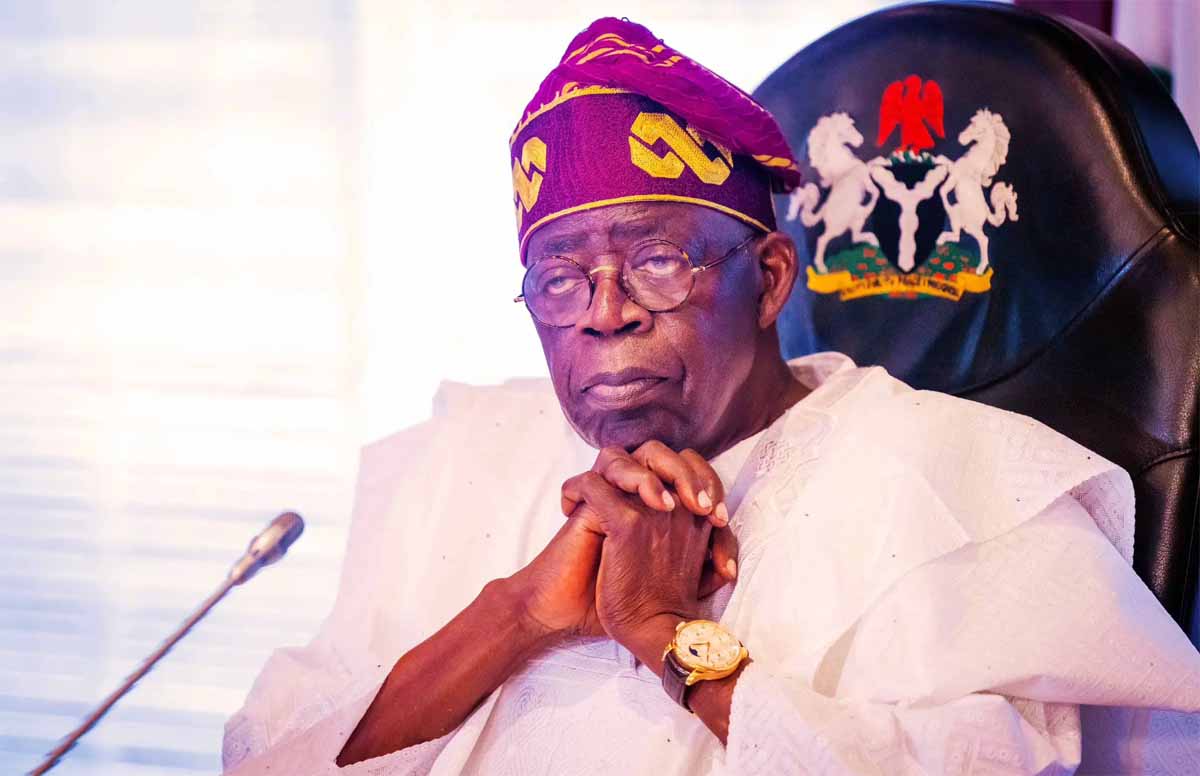
India, Other Countries Reject Tinubu’s Ambassadorial Nominees
Some countries, including India, have reportedly declined to accept ambassadorial nominees recently put forward by President Bola Tinubu, citing concerns over the remaining tenure of the sending government. The decision affects Nigeria’s efforts to restore full diplomatic representation across its foreign missions.
Diplomatic sources disclosed that India has a standing practice of not granting agrément—the formal approval required before an ambassador can assume office—to nominees from governments with less than two years remaining in office. This policy has reportedly delayed the posting of several Nigerian ambassadors, including career diplomat Ambassador Muhammad Dahiru, who was designated to serve in New Delhi.
“They don’t accept an ambassador from an administration that has less than two years in office. So they are giving us that body language already,” a Presidency source said, emphasizing that the stance is tied to diplomatic norms rather than personal objections to the nominees.
READ ALSO:
- Lagos Court Remands Four Police Officers Over Owode Onirin Market Killings
- UNILAG Faults ASUU Strike, Insists Examinations Will Continue Despite Lecturers’ Protest
- Boko Haram, ISWAP Kill Officers, Soldiers in Fresh Attacks on North-East Military Bases
The delayed agrément process has implications for several ambassadorial nominees whose appointments were approved by the Federal Government on March 6, 2026. The approved list includes over 60 envoys, among them former Aviation Minister Femi Fani-Kayode (Germany), presidential aide Reno Omokri (Mexico), former Katsina Governor Lt. Gen. Abdulrahman Dambazzau (China), and Senator Jimoh Ibrahim (UN Permanent Representative).
While India’s position is the most explicit so far, officials warn that other countries may adopt similar approaches, potentially delaying Nigeria’s plan to fully fill vacant foreign missions. Some nations prefer ambassadors who can serve a minimum period of three to four years, enabling them to build strong diplomatic relationships and provide continuity in bilateral engagement.
Diplomatic analysts note that the agrément process is standard under international law, specifically Article 4 of the 1961 Vienna Convention on Diplomatic Relations, which allows host countries to decline nominees without explanation.
The Tinubu administration recalled all previous ambassadors in September 2023, leaving many of Nigeria’s 109 diplomatic missions operating under chargé d’affaires. The current delays in obtaining agrément are viewed as a challenge to restoring Nigeria’s full diplomatic capacity before the country’s next presidential election scheduled for early 2027.
Officials, however, remain optimistic that diplomatic negotiations will secure approval for most nominees, particularly for countries where Nigeria has longstanding bilateral ties.
India, Other Countries Reject Tinubu’s Ambassadorial Nominees

-

 metro2 days ago
Viral Video Shows Man Disarming Robbers After Minna Bank Heist, ₦10m Stolen
-

 Business3 days ago
NNPCL, Marketers Increase Petrol Price Again Within 24 Hours After Dangote Refinery Hike
-

 metro2 days ago
Tragedy in Ibadan as Woman, 26, Dies at Boyfriend’s Residence
-
 metro3 days ago
EFCC Intercepts Wife of Federal High Court Chief Judge With $160,000 Cash
-

 Business23 hours ago
JUST IN: Dangote Refinery Cuts Petrol, Diesel Ex-Depot Prices Amid Market Relief
-

 metro2 days ago
Students Escape as Four-Storey School Building Collapses in Lagos
-

 Politics2 days ago
BREAKING: Zamfara Governor Dauda Lawal Defects from PDP to APC
-
 News2 days ago
OYOSUBEB Chairman Adeniran Joins 2027 Oyo Governorship Race