

Africa
Court Remands Woman Accused of Poisoning Two Sons, Defers Bail Hearing

Court Remands Woman Accused of Poisoning Two Sons, Defers Bail Hearing
A 27-year-old South African woman has briefly appeared in court on charges of murdering her two young children after reportedly administering a poisonous substance to them at their family home in Limpopo. Ntanganedzeni Siphugu made a brief appearance before the Tshilwavhusiku Magistrate’s Court on Tuesday, where she has been charged with two counts of murder following the deaths of her children, aged six and nine. Siphugu remains in custody pending the outcome of bail proceedings scheduled for June 12, 2026.
According to the National Prosecuting Authority (NPA) spokesperson Mashudu Malabi, the alleged incident occurred on June 1, 2026, at Madabani Village in Limpopo. Malabi said prosecutors allege that Siphugu gave the two children a poisonous substance, resulting in both children becoming seriously ill. The children did not show immediate signs of distress on the day of the alleged poisoning. However, both children fell ill the following day. The deaths prompted a police investigation, which ultimately led to Siphugu’s arrest on June 3, 2026. Authorities subsequently charged her with two counts of murder. The case was brought before the Tshilwavhusiku Magistrate’s Court, where proceedings were postponed to June 12, 2026, to allow for a formal bail application. Meanwhile, Siphugu remains in custody pending the outcome of those proceedings. The NPA has signaled its intention to see the matter through the full criminal justice process, with spokesperson Malabi stating that “the National Prosecuting Authority will continue to present the state’s case in court as the matter proceeds through the criminal justice process”.
The sequence of events on June 2, 2026, paints a harrowing picture of the tragedy that unfolded in Madabani Village. At approximately 9:20 am, the father of one of the children, who does not reside with him, transported the six-year-old boy to Tshilwavhusiku Health Centre after the child complained of stomach pains, diarrhoea, and vomiting earlier that morning. The child was certified dead at the facility at around 11:10 am. Later that same day, at about 12:30 pm, police received a complaint from a family member regarding a missing eight-year-old boy who had been at school. A search was conducted in the area, and the child was found dead at his home in Madabani village, lying on a bed wearing a blue tracksuit top and long tracksuit trousers. Emergency Medical Services personnel declared him dead at the scene. Preliminary investigations revealed that the two deceased are siblings from Madabani village, and both deaths are suspected to be linked to poisoning. A forensic pathology post-mortem examination will be conducted to determine the exact cause of death. The motive for the incident is not yet known, though some reports suggest that Siphugu may have poisoned her children following a dispute with their father.
READ ALSO:
- Nigeria-US Joint Strikes Eliminate 21 ISWAP Fighters in Borno – Presidency
- NRC counters Transport ministry on Warri-Itakpe train crash passenger list, casualties
- Okonkwo Releases Evidence Against Peter Obi as ₦5bn Defamation Battle Looms
This tragic case comes amid growing concerns about child poisonings in South Africa, particularly those involving highly toxic substances. The deaths have been linked in other incidents to a pesticide known as Terbufos, an organophosphate chemical legally permitted only for agricultural use, mainly in the cultivation of potatoes and maize. Terbufos, also known as Halephirimi, has been linked to the deaths of more than 175 South Africans annually, according to a review carried out by the Department of Health’s Advisory Committee on Foodborne Illness. Approximately 35 percent of these victims were children. The issue was thrust into the public spotlight after the deaths of six young children in Naledi, Soweto, in October 2024, who consumed snacks bought from a local spaza shop that had been contaminated with the pesticide. Professor Leslie London, a public health expert at the University of Cape Town, described Terbufos as “one of the most toxic pesticides known,” noting that it is classified by the World Health Organisation in the highest toxicity category possible. The effects of Terbufos poisoning can range from eye watering, vomiting and diarrhea to muscle weakness, breathing difficulties, convulsions, coma and eventually death. Despite these tragedies, Terbufos continues to be sold openly for as little as R10 by street vendors and in informal markets, particularly in townships and informal settlements where residents contend with rat infestations. It is not registered for sale in the European Union and has already been banned in a number of other African countries.
The South African government has taken steps to address the crisis. In June 2025, the cabinet approved a ban on Terbufos and its import into South Africa. The Department of Agriculture gazetted a prohibition notice in January 2026, calling for public input until February 27, 2026, with the ban proposed to take effect from February 28, 2026. The ban would prohibit the acquisition, disposal, use, sale, manufacturing, and distribution of agricultural remedies containing Terbufos. However, Professor London expressed concern about the delay in implementation. He estimated that given the rate of deaths in 2023 and 2024 averaging one every second day, a delay of six months or more could mean up to another 100 deaths. “This means prolongation of the fatal poisoning epidemic from Terbufos,” he said. President Cyril Ramaphosa addressed the issue in a national address in November 2024, noting that while Terbufos was only registered for agricultural use, it was being sold informally as a so-called “street pesticide” for domestic use in townships to control rats. “After stringent testing, a chip packet found on one of the children who had died had traces of Terbufos on both the inside and the outside of the packet,” he said.
This case is not isolated. In a separate incident in May 2026, a 43-year-old Zimbabwean national was convicted by the Johannesburg Magistrate’s Court for the murder of her two young children after poisoning them at a public park in Parktown nearly three years ago. The National Prosecuting Authority confirmed that Lister Nkomo was found guilty on two counts of murder for the deaths of her two-year-old daughter and seven-month-old son, who died on June 3, 2023, at Empire Park in Johannesburg after ingesting poison administered by their mother. According to evidence presented during the trial, Nkomo contacted her sister on the day of the incident and told her that she was in trouble and intended to kill herself together with the children. The sister informed their father, who rushed to the park and discovered both children lying motionless. Nkomo was also found unconscious after allegedly consuming poison herself but survived after receiving medical treatment. A State forensic analyst testified that the substance used was capable of causing death in humans. Nkomo chose not to testify during the trial. When delivering judgment, the magistrate ruled that, without any explanation from Nkomo, the only reasonable inference was that she had poisoned the children.
The case against Ntanganedzeni Siphugu continues to unfold. She is scheduled to return to the Tshilwavhusiku Magistrate’s Court on June 12, 2026, for a formal bail application, where the court will hear arguments on whether she should be released pending trial. The exact nature of the poisonous substance allegedly used in this case remains subject to forensic investigation and post-mortem examination results. The NPA has indicated it will proceed with prosecution as the case moves through the criminal justice system. These incidents highlight the concerning reality of filicide (the killing of one’s own child) in South Africa. While each case has its own circumstances, common factors such as mental health challenges, financial distress, and relationship difficulties often emerge in such tragic cases. As the nation watches closely, hoping for justice for the two young victims whose lives were tragically cut short, the broader crisis of pesticide poisoning and the urgent need for effective regulation of highly toxic substances remain pressing public health concerns.
Court Remands Woman Accused of Poisoning Two Sons, Defers Bail Hearing










Africa
21 Dead, 40 Injured as Drone Hits Market in Sudan’s Darfur Region
21 Dead, 40 Injured as Drone Hits Market in Sudan’s Darfur Region
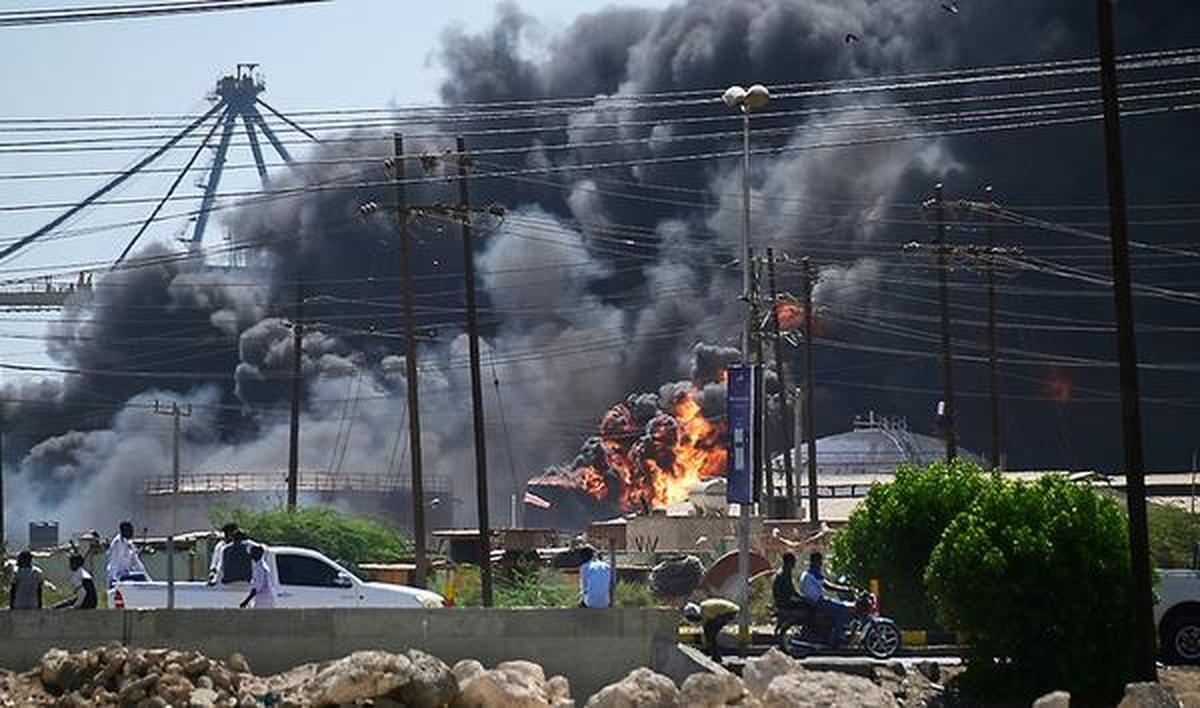
At least 21 people have been killed and more than 40 injured in a drone strike on a market in Nyala, a city in Sudan’s western Darfur region, as fighting between the Sudanese military and the paramilitary Rapid Support Forces (RSF) continues.
The attack occurred at about 8 p.m. on Monday, October 26, 2026, in a market in northern Nyala, according to witnesses and a medical source at Nyala Hospital. The city serves as the de facto capital of the RSF-controlled areas in western Sudan.
A medic at Nyala Hospital confirmed the death toll and said more than 40 people had been wounded. However, the medic could not determine how many of those killed or injured were RSF fighters and how many were civilians.
A resident said the market was frequented by young men, including members of the paramilitary group. The identities of the victims and the intended target of the strike had not been independently established.
READ ALSO:
- Ansaru Claims Killing of Katsina Cleric Masussuka as Police Launch Manhunt
- MURIC Accuses Police Contractor of Refusing to Rebuild Mosque at Lagos Barracks, Demands Equal Treatment
- Nigerian Navy Recruitment 2026: October 31 Deadline, Full Requirements and How to Apply
The Sudanese military has regularly carried out airstrikes on Nyala, where the RSF has established a rival administration. However, responsibility for the latest market strike had not been independently confirmed.
The attack comes amid an intensification of drone warfare in Sudan, with unmanned aircraft increasingly being used in the conflict. Reports citing United Nations figures said drone attacks killed more than 300 people and injured hundreds more during the first three weeks of October.
The conflict between Sudan’s armed forces and the RSF began in April 2023 and has triggered widespread destruction, mass displacement and severe food shortages. Millions of people have been forced from their homes, while access to healthcare and other essential services has deteriorated in many parts of the country.
The latest strike adds to concerns over the safety of civilians in areas affected by the fighting, particularly markets and other public places where armed personnel and ordinary residents may be present.
Further information about the victims, the intended target and responsibility for the Nyala attack was not immediately available.
21 Dead, 40 Injured as Drone Hits Market in Sudan’s Darfur Region
Africa
Nairobi Mother Says Husband Abandoned Her During Childbirth, Paid Dowry for Another Woman

A Kenyan mother has recounted the emotional and financial hardship she allegedly endured after her husband left her struggling to pay hospital bills following childbirth, only for her to later discover signs that he was preparing to marry another woman.
Salome Wambui, a mother of two from Njoro in Nakuru County, Kenya, said she moved to Nairobi in 2024 to build a home with her husband after dating him for about a year. However, she told Kenyan news outlet TUKO.co.ke that their relationship deteriorated during her pregnancy, leaving her increasingly isolated and struggling to meet basic needs.
According to Salome, her husband began spending less time at home after taking up work driving public service vehicles along the Kitengela route. She said he eventually visited only about once a week and declined her suggestion that they relocate closer to his workplace.
The situation became more difficult when Salome was five months pregnant and lost her grandmother, who had raised her following her mother’s death. She said her husband did not attend the burial and later told her he intended to move out.
Having left her job in Nakuru when she relocated to Nairobi, Salome said she had no steady income to support herself as her pregnancy progressed. Her sister became an important source of assistance, helping her with food and other basic needs.
Salome said she began experiencing frequent bleeding when she was pregnant, raising concerns about her health and that of her unborn child. She eventually gave birth about a month before her expected delivery date after doctors induced labour.
READ ALSO:
- Akpabio Under Fire as Senators Move to Secure His Return as Senate President in 2027
- Lamine Yamal Shines as Barcelona Thrash Real Betis 5-2
- Tinubu Scraps Recruitment Waiver Requirement for Federal Universities
The most distressing experience, according to her account, came when she needed money to pay the hospital admission deposit. She said she contacted her husband, but he claimed he had been arrested in Athi River and did not provide the money she needed.
With the hospital bill still outstanding, Salome said she approached a woman who operated an M-Pesa shop in the building and borrowed money to pay the deposit. She gave birth that night.
Her husband reportedly visited the following day, saw the newborn and left without providing money for the immediate expenses.
Salome said she subsequently had to borrow more money to settle the discharge bill and meet basic needs for herself and the baby. She also discovered that some household belongings, including a television, gas cylinder and cooker, were missing from their home.
According to her account, her husband returned when the baby was about six weeks old and brought back the television. They lived together for approximately another month before he left again, later taking the television away.
As the debts accumulated, Salome said she eventually sold her refrigerator to repay people who had assisted her during her hospital stay. She recalled that her husband questioned her decision to sell the appliance without consulting him, despite the financial difficulties she said she had faced.
Her suspicions about another woman reportedly grew after she noticed that her husband was protective of his phone. Salome said she later saw messages between him and another woman’s mother that appeared to indicate money was being sent following requests.
She contrasted the alleged financial support with what she received during her pregnancy, saying her husband gave her about KSh150 a day and did not buy supplies for the expected baby.
Salome said she sometimes skipped meals to save money for baby clothes, relying on her sister and other people for assistance.
The situation took another turn about a month after her husband left for good. Salome said she came across a photograph he had posted showing him dressed in matching outfits with another woman. She suspected that a dowry ceremony had taken place, although the details of the reported ceremony were not independently established in her account.
She also said she later learnt that her husband had converted to Islam and changed his name.
Salome, who had worked in different jobs in Nakuru before moving to Nairobi, said she had expected marriage to offer stability and an opportunity to raise a family. Instead, she said, she was left to care for her children while depending heavily on her sister’s support.
Despite the experience, Salome said she did not want to resume the relationship, explaining that the future she had hoped to build with her husband had not materialised.
Her account highlights the financial pressure, emotional distress and practical challenges she says she experienced during pregnancy, childbirth and the breakdown of her marriage. She is now focused on raising her children and rebuilding her life.
‘Nairobi Mother Says Husband Abandoned Her During Childbirth, Paid Dowry for Another Woman
Africa
Djibouti Boat Disaster: 139 Migrants Dead, Dozens Missing

Djibouti Boat Disaster: 139 Migrants Dead, Dozens Missing
At least 139 migrants, including 15 children, have died after an overcrowded boat capsized off the coast of Djibouti while carrying passengers towards Yemen, in one of the deadliest recent disasters along the migration route to Gulf countries.
The International Organization for Migration (IOM), a United Nations agency, said the vessel was carrying more than 300 people when it overturned near Guhere, north of Obock, during the night of October 8–9, 2026.
Initial reports put the death toll at 109, including 15 children, with more than 116 people missing. Subsequent reporting by Reuters and the Associated Press cited an updated toll of at least 139 dead, with about 84 people still missing. The figures may continue to change as authorities verify recoveries and survivors.
The boat was reportedly carrying around 305 people, according to the IOM’s later account. At least 82 people survived the disaster, although early reports gave a slightly different survivor count.
The 15 children among the initially reported dead comprised nine girls and six boys. The IOM also reported that 52 of the bodies recovered were men and 42 were women.
The vessel capsized shortly after setting out on the perilous journey across the waters separating Djibouti and Yemen. Survivors said the boat was overcrowded, while the IOM described the incident as a devastating reminder of the dangers confronting people attempting the crossing.
The agency’s Chief of Mission in Djibouti, Alexandre Coissac, said its teams were working with local authorities to provide emergency assistance to survivors and affected families.
READ ALSO:
- Oshiomhole Accuses Umahi of Bias in Road Projects, Demands Repairs Before New Construction
- 2027: Pantami Breaks Silence as INEC Excludes Him From Final Gombe Governorship List
- US Names 24 More Nigerians in Fresh Fraud, Money Laundering Crackdown
- How Bauchi Court Jailed Three 21 Years Each for Abducting Seven Children
Djiboutian authorities continued search-and-rescue operations as concerns mounted over the fate of those still missing. Local authorities were also providing medical care and arranging burials for recovered bodies.
The IOM said survivors were receiving assistance at its migrant response centre in Obock, including healthcare, food and psychosocial support.
The tragedy highlights the risks faced by migrants travelling along the Eastern Route, which connects the Horn of Africa to Yemen and, for many, onward destinations in the Gulf region.
Many people undertaking the journey are from Ethiopia and Somalia. They seek employment and better living conditions, while others are fleeing insecurity, conflict, drought and other hardships.
Despite the dangers, migrants continue to cross the Bab el-Mandeb Strait in the hope of reaching wealthier Gulf countries. The journey exposes them to shipwrecks, trafficking, exploitation and other serious threats.
The risks have been compounded by instability in Yemen, where fighting continues between the internationally recognised government and Houthi forces, alongside wider regional tensions. Meanwhile, renewed conflict and difficult living conditions in parts of Ethiopia have added to the pressures driving people to leave.
According to the IOM, more than 900 migrants died or went missing along the Eastern Route in 2025, as the number of people attempting the journey increased.
The UN agency has called for greater support for Djibouti’s response, including search-and-rescue operations and emergency assistance for migrants.
The latest shipwreck has renewed calls for safer and legal migration pathways, as humanitarian agencies warn that people will continue to risk dangerous sea crossings while seeking security and economic opportunities.
As recovery operations continue, the final death toll may rise further as authorities verify missing-person reports and establish the number of people who were aboard the vessel.
Djibouti Boat Disaster: 139 Migrants Dead, Dozens Missing
-

 metro14 hours ago
Cancelled Wedding: Man Sues Ex-Fiancée’s Father Over Unpaid ₦70,000 Dowry
-

 Politics3 days ago
2027: APGA Chairman Says South-East Must Back Tinubu to Secure Igbo Presidency
-

 Entertainment3 days ago
Tope Alabi Threatens Pastor With Lawsuit Over Toluwanisings’ Death Claims
-

 International2 days ago
France Deploys 70,000 Police as Cost-of-Living Protests Intensify
-

 metro3 days ago
Borno: Troops Kill 15 Terrorists in Midnight Air Strike
-

 Politics3 days ago
Atiku Condemns Attack on Edo Comedian Over Refusal to Support Tinubu
-

 Auto15 hours ago
Car of the Year, other top honours up for grabs as NAJA Awards race begins
-

 International3 days ago
Tibet in Mourning: 7.0 Quake Kills 16, Injures 76 as Rescue Teams Race Against Time in Nagqu