

Opinion
CPC: What the US got wrong about Nigeria

CPC: What the US got wrong about Nigeria
Since 2020 when the Biden administration took Nigeria off the Country of Particular Concern (CPC) list, Nigeria has once again become the subject of intense international scrutiny. Advocacy groups, global church networks, and foreign policy actors in Washington have amplified one message: that Christians in northern Nigeria are under systematic attack.
The horror of village raids, church burnings, abductions, and killings is cited as evidence, and some in the U.S. Congress now urge that Nigeria be returned to the CPC list— a designation that signals grave violations of religious freedom.
For many Nigerians, this framing is not entirely wrong, but it is incomplete. It reflects real pain but flattens a complex landscape into a single story. Yes, Christians have suffered disproportionately in certain areas. But Muslims too have been massacred, mosques destroyed, and whole communities displaced.
What links these tragedies is not faith alone but a wider crisis of governance: the inability of the state to secure its citizens, resolve local conflicts, or fairly manage the resources on which millions depend. Nigeria at 65 cannot afford to let its story be told only through the lens of persecution. It must reclaim its narrative with honesty, compassion, and resolve.
To walk through Borno or Yobe is to witness the scars of Boko Haram and ISWAP. Churches lie in ruins, pastors abducted, congregations scattered. Yet the same groups have razed mosques, slaughtered imams, and forced Muslim villagers into exile for rejecting extremist rule.
In Plateau and Benue, farming villages, often Christian-majority, have faced repeated militia raids linked to herder-farmer tensions. But in Zamfara and Katsina, Muslim communities are devastated by bandit attacks, their children kidnapped from schools, their livelihoods destroyed.
The numbers tell a bleak story: millions displaced, thousands dead. But behind the statistics are Nigerians of every creed, united in grief if not in narrative.
The insistence, therefore, that “Christians are being killed” is both true and insufficient. The fuller truth is that Nigerians are being failed by a state that cannot consistently secure them, and by political actors who exploit identity fractures rather than mend them.
READ ALSO:
- Flying Eagles suffer humiliating 4-0 defeat in World Cup blow
- Navy rescues 17 kidnapped passengers on Calabar waterway
- Vandals, others arrested after attempted attack on Kaduna TCN towers
Faith as battleground, governance as void
Why, then, does the international conversation spotlight only Christians? Partly because global advocacy networks mirror their constituencies. Christian organizations rightly amplify the suffering of Christians. Their reports are often accurate but partial. What they underplay is the governance void in which violence festers.
When local policing is weak, when borders are porous, when land conflicts are unmanaged, religion becomes a shorthand for deeper structural breakdowns. What looks like a holy war is often, at root, a crisis of governance. That does not erase the religious dimension.
Victims targeted at Sunday worship cannot be told it was “just politics.” But it shifts the conversation toward responsibility: who should have prevented it, who must now act, and how justice can be done.
The CPC dilemma: Symbolism without solutions
For Washington, the CPC designation is a powerful lever. It can isolate governments, trigger sanctions, and mobilize pressure. For Abuja, being labelled as failing to protect its Christian citizens would sting deeply, undermining diplomatic standing at a time when Nigeria seeks investment and credibility.
Yet there is a paradox. CPC status can raise alarm, but it cannot rebuild schools in Borno, resolve herder-farmer disputes in Plateau, or restore trust in Kaduna’s neighbourhoods. Worse, it risks fuelling defensive nationalism: officials dismissing reports as “Western bias,” communities retreating into victimhood, and the political class turning tragedy into talking points.
The danger is that Nigerians become spectators in a story told about them, while the root causes of violence remain unaddressed.
When resources mirror religion
It may seem far afield, but Nigeria’s Petroleum Industry Act (PIA) offers a telling parallel. The PIA was designed to address long-standing grievances in the Niger Delta by ensuring host communities benefit directly from oil extraction. The principle is simple: resource justice reduces violence.
Northern Nigeria suffers from the absence of such frameworks. Land use, grazing routes, and local revenue distribution remain poorly managed, feeding resentment that extremists and militias exploit. When communities feel excluded from resources, from security, from dignity, religion becomes an easy rallying cry.
In this sense, just as oil misgovernance once fuelled militancy in the South, land and livelihood mismanagement now fuel identity-driven violence in the North. The lesson is not that religion is irrelevant. It is that religious violence thrives where governance is absent.
Narratives that heal
How Nigerians choose to tell this story matters. If violence is narrated only as “Muslims attacking Christians,” cycles of retaliation deepen. If narrated only as “banditry,” the religious pain of communities is erased. What is needed is a narrative of shared vulnerability and shared responsibility.
Some attempts already exist. Interfaith councils like NIREC, grassroots peace committees in Jos and Kaduna, and civil society projects in conflict-prone areas have built fragile but real bridges. They are underfunded, but they embody a crucial truth: the solution lies not in denying differences but in managing them with fairness and dignity.
Toward a Nigerian response
What, then, should be done? First, Nigeria must own the crisis with honesty. Denials and defensive postures erode credibility both at home and abroad.
Second, it must strengthen local security and justice systems. Community policing, early-warning networks, conflict-resolution mechanisms, and transparent prosecutions. Security is not only about military firepower; it is about trust between citizens and the state.
Third, resource governance must be reimagined. The spirit of the PIA, embedding social obligations in economic activity should extend to land, grazing, and revenue allocation in the North. Communities must see that justice is not abstract, but delivered in schools built, clinics staffed, and farms protected.
Finally, Nigeria must reclaim the narrative. Not by silencing international advocates, but by telling its own story in a way that acknowledges Christian suffering without erasing Muslim loss; that frames the crisis as a national failure of governance, not as an inevitable war of religions.
Dignity as security
At stake is more than reputation or foreign policy. It is the civic dignity of Nigerians — the right of every villager to farm without fear, every child to walk to school, every worshipper to gather without terror. True national security is not only about missiles, budgets, or diplomacy. It is about whether citizens feel safe, seen, and valued.
The CPC debate may rage abroad. But Nigeria’s task is to prove to itself and to the world that it can protect its people regardless of creed, not because Washington demands it, but because its citizens deserve it.
•Olayiwola is a peace & conflict researcher/policy analyst. He can be reached via lekanolayiwola@gmail.com








Opinion
2027: Competence, Not Zoning, Should Decide Nigeria’s Next President — Imasuagbon
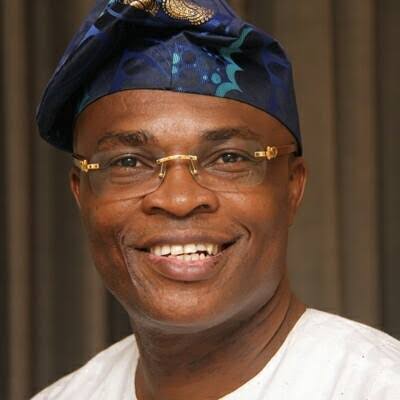
Nigerians should look beyond ethnicity, region and the longstanding debate over rotational presidency when choosing the country’s next leader, according to a chieftain of the African Democratic Congress (ADC), Kenneth Imasuagbon.
The former Edo State governorship aspirant said the priority ahead of the 2027 election should be finding a president with the ability to confront Nigeria’s economic, security and infrastructure challenges.
Speaking to journalists in Benin, Imasuagbon argued that presidential rotation is not a requirement of the Nigerian Constitution and should therefore not outweigh the question of competence.
He said voters should be more concerned about replacing poor schools with better ones, improving healthcare and addressing hardship than debating where the next president comes from.
Imasuagbon specifically appealed to voters in the South to support former Vice President Atiku Abubakar, who is contesting the 2027 presidency on the ADC platform.
According to him, Atiku has demonstrated the experience and determination needed to improve the country, describing the former vice president as someone capable of promoting national unity and fairness.
He also accused the Bola Tinubu administration of worsening economic pressure through policies including the removal of fuel subsidy, while expressing concern about the condition of roads, electricity and other infrastructure.
Imasuagbon argued that the next administration must focus on practical improvements in areas such as power, transportation, employment, security and public services.
The ADC chieftain also dismissed the idea that the ruling All Progressives Congress (APC) would automatically benefit from its incumbency advantage in 2027.
He maintained that the electorate ultimately determines the outcome of an election, arguing that voters could change the political direction of the country if they were determined to do so.
Imasuagbon further criticised what he described as regional and ethnic considerations in the distribution of political appointments and opportunities, insisting that the next president should give Nigerians across different parts of the country a sense of belonging.
His comments come as political parties and their candidates intensify preparations for the 2027 presidential election.
Opinion
Lesson from Dotun Oladipo’s Brave Daughters, by Bamidele Johnson
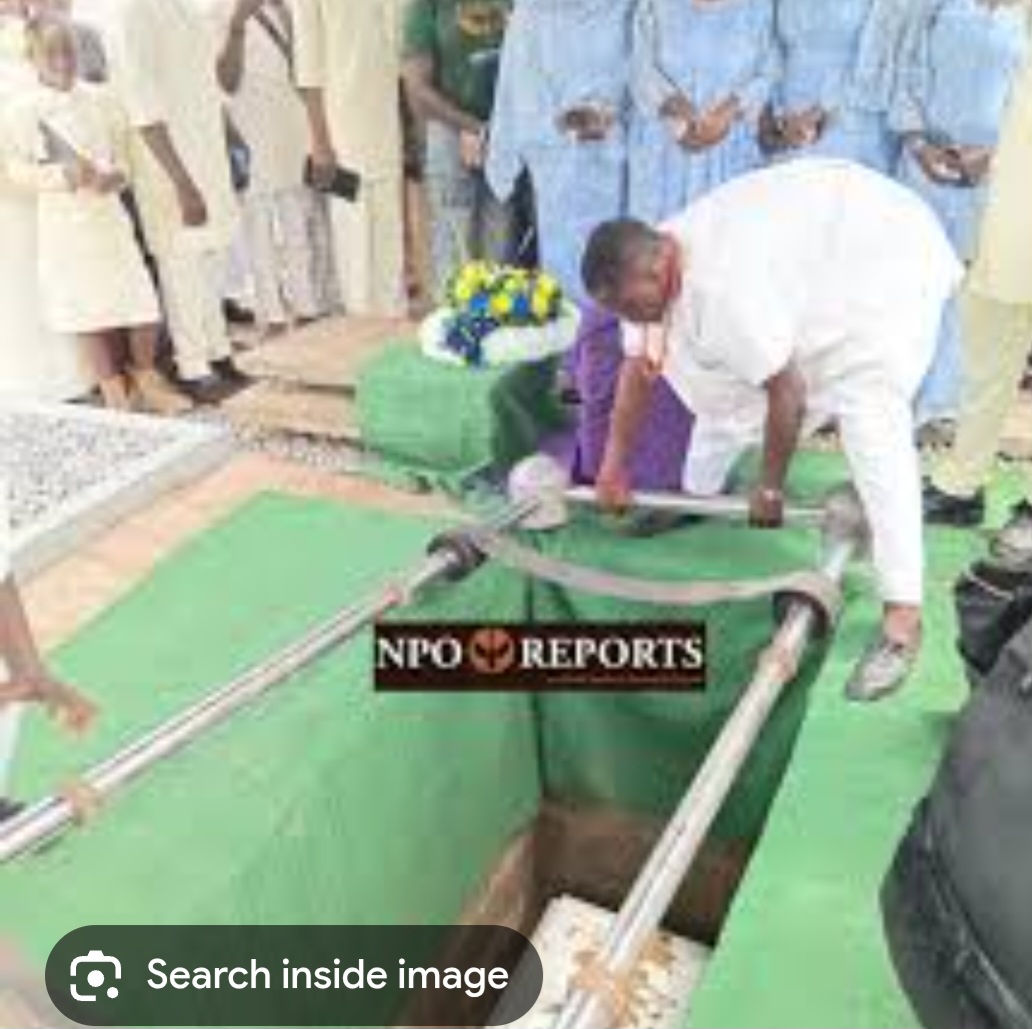
Lesson from Dotun Oladipo’s Brave Daughters, by Bamidele Johnson
I hope to grow old. I want to see my kids become real adults, find their own feet, make mistakes, recover from them, and perhaps one day complain that their own children are giving them grey hairs. I want that plainly stated before anything else, as everything that follows might read as a man agreeing to an early exit rather than a man simply being honest about the odds.
I want the decades. I want to become the grandfather who repeats the same stories until nobody bothers correcting him anymore. But wanting a thing and being granted are different things. The last year has made that difference harder to ignore than I would like. I have lost many friends recently to keep thinking that optimism is my natural resting state. Some of these men had better blood pressure than mine, better habits, better everything that is supposed to count. It did not save them.
There is no formula I know that reliably separates the men who make it to 70 from those who do not. Anyone who says he knows one is selling something. So, I do not assume that old age is an already booked destination. Even if I once did, which I doubt, the last three years have cured me of such an illusion. As such, I treat it as a hope rather than an expectation, and I have found that a more honest way to live.
It is exactly why I want something placed on record now, while I am still able to place things on record, rather than leave it for people to guess what my wishes were in the fog of a funeral week. If I do not make old bones, my children are not to be asked to read tributes at my funeral. Not one line, however short, however lovingly written.
This, for me, was settled today rather than re-opened. At Dotun Oladipo’s funeral service, his three daughters took turns to read their tributes to their dad, and I found myself watching them with awe. There was a kind of strength in them that I do not possess. It is the strength needed to stand in front of a hall brimming with grieving adults and speak about a man they have just lost. Forever. Strength, however, is not the same as ease. I could see plainly what that strength was costing them as they read. Their voices caught. Their composure held and then did not hold and then held again through sheer will.
In front of them, in the pews, men and women considerably older than them came undone in ways the girls themselves were somehow managing to resist. I went mightily close. Some of the sobbing was quiet, the type people try to fold into a handkerchief. Some of it was not quiet at all, the kind that announces itself whether or not you want it.
Those young women honoured their father with a grace that is beyond me. What they did was astonishing. So, what I am attempting is an observation of a custom I have now watched wound people. This was not the first time I had watched this particular ritual extract more than it should from people already running on fumes. I saw an earlier and harder version of it at a friend’s wake back in 2015.
The first son was called forward to read his father’s tribute, and he could not do it. He tried, but the words would not come, and he stood there in front of a crowd of mourners, with his grief simply refusing to organise itself into sentences. The officiating minister, rather than releasing him from the task, urged him to continue. I sat fizzing with sorrow and ire. He could not go on and, eventually, the minister accepted, but not before insisting a while longer than it should have reasonably taken. His younger brother was called up next, presumably on the theory that if one grieving son could not manage it, maybe another one could. He flunked it in the same way. Grief does not distribute itself more conveniently among siblings just because a programme has been printed and needs to be followed.
I have turned that memory over many times since, trying to work out why this part of the rites is treated as mandatory in the first place. I have not found a satisfying answer. Maybe it comes from a belief that a child’s words carry more weight than anyone else’s, which may even be true, but weight is exactly the problem when those carrying it are struggling to hold themselves together with nothing but adrenaline and the fear of dissolving in public.
Maybe it is simply inertia, the reason we still do a hundred things at funerals that nobody can explain the original purpose of. Either way, I have stopped looking for the justification. I no longer think one exists that is good enough to weigh against what I watched happen to that boy in 2015.
So, let this stand as my instruction rather than my preference, the kind of thing I would rather state plainly now than leave for my children to infer later from how uncertain I sound when the subject comes up in passing. If I do not get the old age I am hoping for, my children will not be asked to read a single word over my body. Someone else can speak for me. A friend, a stranger with a steadier voice and a smaller stake in the loss, anyone whose grief will not be quite so total that standing upright becomes almost impossible.
My children, of course, will sit in front and fall apart if that is what the day requires of them, but without the microphone. That, at least, is one small mercy I intend to arrange for them while I am still here to arrange it.
Dotun deserved every bit of the send-off his daughters gave him today, and I suspect he would have been the first to tell them to sit down and let someone else carry the weight for a while. He did not get a say in that, as none of us ever do once we are the ones being spoken of rather than the ones speaking. Rest well, Dotun. You raised three young women whose strength I will not soon forget. That alone says everything worth saying about the man you were.
Opinion
‘Tinubu Will Win Again in 2027’ — Charismatic Bishops’ Secretary
‘Tinubu Will Win Again in 2027’ — Charismatic Bishops’ Secretary
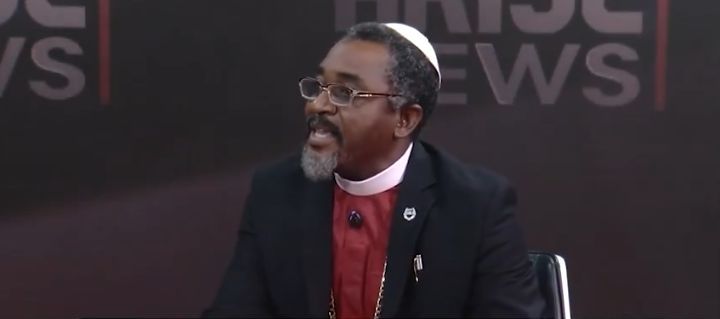
A senior Nigerian cleric, Archbishop Chivir Chianson, has declared that President Bola Tinubu will retain the presidency after the 2027 general election, attributing the prediction to a message he said came from God.
Chianson, who serves as Secretary General of the Charismatic Bishops’ Conference of Nigeria, made the statement while appearing on Arise Television on Saturday.
Rather than basing his prediction on political calculations, the archbishop said his confidence came from what he described as the prophetic role of bishops.
He maintained that the conference had previously spoken about Tinubu’s political future based on what he said was divine revelation and that the President would return for another term.
Chianson also predicted that Tinubu’s performance would improve if he wins the 2027 election.
READ ALSO:
- DSS warns Osun churches, mosques, markets over alleged terrorist attack plot ahead of 2027
- ‘Tinubu Will Win Again in 2027’ — Charismatic Bishops’ Secretary
- Fake miracles, bogus grants: How clerics allegedly fleece Nigerians of millions
Addressing the political opposition, the cleric said the bishops could not be blamed if rival parties failed to unite or organise themselves effectively ahead of the election.
He also sought to clarify the position of the bishops when dealing with government, saying their role in speaking truth to power did not mean they should approach political leaders with hostility or disrespect.
According to him, the Constitution, alongside their religious convictions, should guide how they engage the President and the country.
Chianson said he was sufficiently confident in his prediction to promise that he would return to the Arise TV studio after the 2027 election, when he expects the result to demonstrate that the bishops’ prophecy was correct.
His comments add a religious dimension to the increasingly active political conversation surrounding the 2027 presidential race.
‘Tinubu Will Win Again in 2027’ — Charismatic Bishops’ Secretary
-
 Politics2 days ago
2027: Northern Lecturers Back Tinubu, ASUU Disowns Endorsement
-
 metro3 days ago
Mother ‘sold daughter’s abuse videos for $300’: Nigeria child pornography case shocks nation
-

 metro2 days ago
Police Arrest Mother Over Alleged Brutal Abuse of 7-Year-Old Girl in Anambra
-

 News3 days ago
Adeleke Orders Arrests After Associate Ajagungbade Is Reportedly Killed in Ife
-

 News3 days ago
Petrol Subsidy: Presidency Rejects Atiku’s Plan, Says No Going Back
-
 Sports1 day ago
‘I Was Never the Chosen One’ — Dembele Responds to Mbappe
-
 Education3 days ago
JAMB Takes Over HND Admissions in Polytechnics, Health Institutions Nationwide
-
 News2 days ago
Nwifuru Dismisses Cubana Chief Priest as ‘Attention-Seeker’