
metro
Customs officials beat Ogun NNPC station attendants over N100
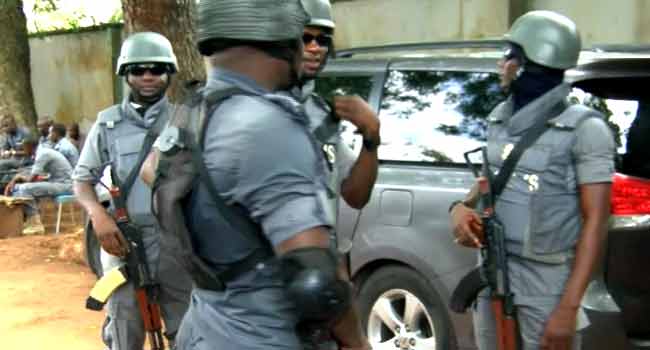
Customs officials beat Ogun NNPC station attendants over N100
Officials of the Nigeria Customs Service (NCS) assaulted staff members of the Nigerian National Petroleum Corporation (NNPC) filling station at the Honda Bus Stop in Ota, Ogun State, on Friday, FIJ has gathered.
FIJ learned that the customs officers took umbrage and threatened to shoot after a staff member of the filling station asked for N100 charges for their transaction on the point-of-sale machine.
An eyewitness said that the angry Nigerian customs officers beat up the NNPC’s station supervisor and injured a customer.
She said that the point-of-sale merchant at the station had told the customs officers, who wanted to fill up their tank with fuel worth N30,000, that if they paid with an ATM card all at once, they would have to add N100 for bank charges.
According to the eyewitness, the attendant explained that if the officers were willing to allow her to withdraw N15,000 twice, they would incur no charges, as only transactions of N20,000 and above attracted such.
“As the officers were arguing with the lady, the male attendant trying to sell the fuel to the officers chimed in to explain that the filling station was not benefiting from the charges, as it belongs to Moniepoint, the filling station’s bank, but that made their hackles rise,” the eyewitness said.
“They got so angry that one of them hit the male attendant with a gun. In an attempt to parry the gun, he sustained an injury to his arm. In fear, the attendant ran away.”
She said the customs officers asked the PoS merchant, who was now afraid, not to leave. At that point, she said, the officers then began pointing the gun at other filling station attendants, saying, “You’re all thieves. Is that what Nigeria asked you to do?”
READ ALSO:
- Groundnut seller gets life sentence for defiling four-year-old
- Super Eagles Ademola Lookman wins Africa’s Best footballer award
- Panama beat Bolivia to reach Copa quarters
The officers began to cock their guns and charge at everyone at the filling station, so both customers and staffers fled the premises, except a customer who had a flat tyre.
“They beat the customer and broke his phone. They said he was recording them, but he was only calling someone to bring some tyres to him. He had to beg them, rolling on the floor, before they let him go,” she said.
“And while doing this, they kept asking for the manager of the filling station. At this time, she didn’t face them but ran to a nearby police station to report the matter. In place of the manager, they beat the supervisor, thinking he was the general manager.
“They started saying they came here and asked the attendants to sell inside kegs but they refused and now wanted to collect money for charges. They called the attendants thieves.”
She said that the filling station’s general manager returned from the Obasanjo Onipanu police station with four policemen.
The team leader of the police spoke with the commander of the customs officers.
“After their discussion, the police officer told her to forgive the erring officers. She immediately said the action of the customs officers was unfair because her staffers did nothing wrong,” the eyewitness said.
“They then asked her why she didn’t show up when they were asking for the manager of the filling station. She told them it was impossible to confront them at the time as the manager because they were armed, which was why she reported to the police instead.
“One of the customs officers said, ‘As you have reported, what do you now want to happen? We cocked our guns, so what do you want to do?’ While they were shouting, people took her away from their midst and back to the station. When they were ready to buy, the attendants refused to sell to them, so they just had to leave the compound.”
Based on the eyewitness’ discussions with the attendants, she believed that the customs officers acted irresponsibly because, on the previous Monday and Tuesday, they refused to sell fuel to them in jerrycans.
When FIJ called the Nigeria Customs Service via the phone number displayed on its Facebook page, they said they had yet to hear of this matter. They asked this reporter to go to the Ogun State Command of the Nigeria Customs Service for information.
Customs officials beat Ogun NNPC station attendants over N100







metro
Court Grants ICPC Access to Examine Devices Seized from El-Rufai’s Home
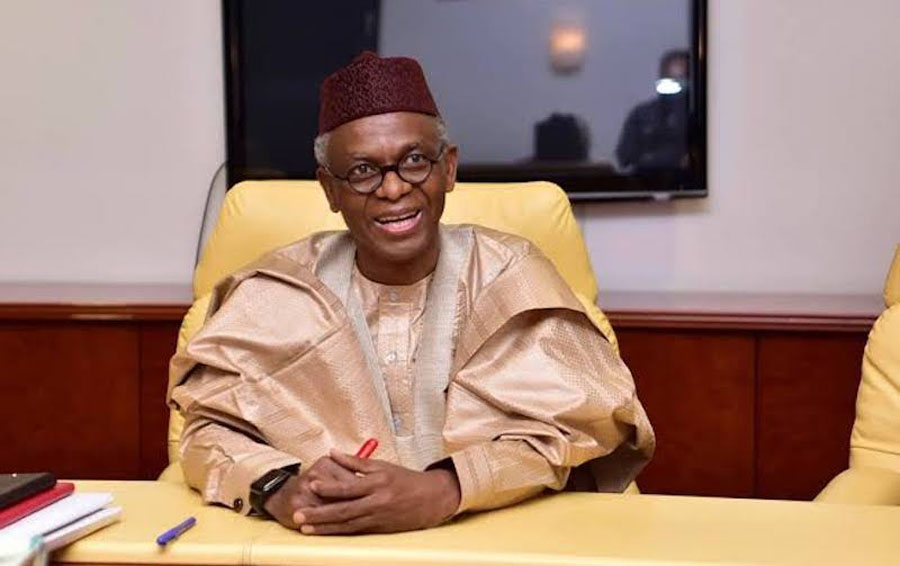
Court Grants ICPC Access to Examine Devices Seized from El-Rufai’s Home
The Federal High Court in Abuja has granted the Independent Corrupt Practices and Other Related Offences Commission (ICPC) permission to examine and analyse electronic devices recovered from the residence of former governor of Kaduna State, Nasir El-Rufai in Abuja. The ruling, delivered by Justice Joyce Abdulmalik, follows an ex-parte motion filed by the commission through its counsel, Osuobeni Akponimisingha.
The court’s order allows ICPC to conduct forensic inspections, data extraction, and analysis on about 14 electronic devices seized during a search operation at El-Rufai’s residence. The items include Sony and Toshiba storage devices, Samsung and Nokia phones, a Blackberry device, Google IDEOS phone, Remarkable tablet, Apple MacBook Pro, Seagate FreeAgent external drive, ZTE mobile phone, multiple flash drives, and a microSD memory card. The matter, listed as FHC/ABJ/CS/499/2026 (Federal Republic of Nigeria vs. Nasir Ahmad El-Rufai), is part of an ongoing investigation by ICPC into alleged corruption involving the former governor.
READ ALSO:
- UK Announces Airspace Restrictions, Road Closures for Tinubu’s State Visit
- Lagos Youths Protest Power Outages as Nigeria’s Electricity Crisis Deepens
- Sowore Joins Aba Protest as Supporters Demand Release of Nnamdi Kanu
Earlier, El-Rufai filed a fundamental rights enforcement suit at the same Federal High Court (FHC/ABJ/CS/345/2026), challenging the lawfulness of the search conducted at his residence on February 19, 2026. In his suit, filed through Oluwole Iyamu, SAN, he alleged that the operation violated his constitutional rights, including rights to dignity, privacy, fair hearing, and personal liberty. He sought, among other reliefs, a declaration that the search warrant was invalid, an order that any evidence obtained during the search be deemed inadmissible, immediate return of all seized items along with a detailed inventory, and ₦1 billion in general, exemplary, and aggravated damages.
In response, the ICPC maintained that the search was based on a valid court-issued warrant executed on February 19 between 1:37 pm and 3:56 pm. The commission added that its operatives were accompanied by Nigeria Police Force personnel and that the search was witnessed by El-Rufai’s wife, Hadiza El-Rufai, and son, Mohammed El-Rufai. The police, in a counter-affidavit sworn by Insp. Ewa Anthony, affirmed their statutory authority to investigate and prosecute offenses and described the operation as lawful and procedurally compliant. They also argued that El-Rufai’s suit appeared to be an attempt to obstruct ongoing investigations.
Legal experts note that the ruling is a significant development in Nigeria’s anti-corruption enforcement, reinforcing the ICPC’s authority to conduct forensic investigations even against high-profile public officials. The outcome is expected to set a precedent for how electronic evidence can be seized and analysed in ongoing corruption probes. The case continues to attract national attention as proceedings unfold, with El-Rufai’s fundamental rights suit still pending before the court.
Court Grants ICPC Access to Examine Devices Seized from El-Rufai’s Home
metro
Lagos Youths Protest Power Outages as Nigeria’s Electricity Crisis Deepens
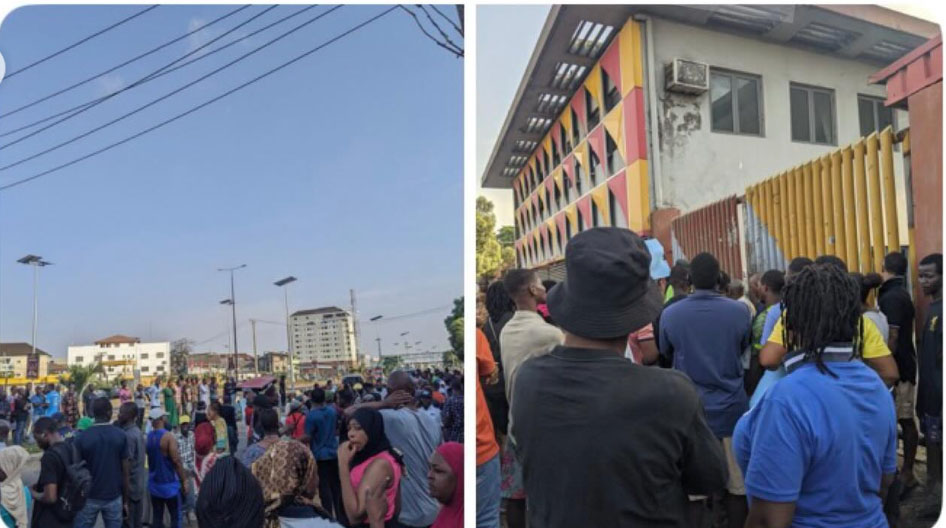
Lagos Youths Protest Power Outages as Nigeria’s Electricity Crisis Deepens
Youths in Lagos on Thursday, March 12, staged protests over persistent power outages, blaming the worsening electricity crisis in Nigeria on gas supply constraints affecting power generation.
The demonstrators, largely made up of young residents and small business owners, gathered in parts of the city early in the morning to express frustration over prolonged blackouts that they say are disrupting daily life and damaging economic activities.
Chanting slogans and carrying placards, the protesters accused the government of failing to address the country’s long-standing power supply challenges. Some of the placards read, “We Need Light,” “Power Our Homes,” and “Electricity Is Not a Luxury.”
Residents say the erratic electricity supply in Lagos has worsened in recent weeks, forcing households and businesses to rely heavily on fuel-powered generators, which has further increased the cost of living amid rising fuel prices.
READ ALSO:
- Fuel Costs Remain Elevated at ₦1,300 per Litre Despite Dangote Price Adjustment
- Iran Threatens Strikes on US, Israeli Banks, Tech Giants
- BREAKING: Tambuwal Quits PDP, Defects to ADC Amid Internal Party Crisis
Nigeria’s electricity sector has struggled for years with multiple challenges, including gas supply disruptions to power plants, aging infrastructure, weak transmission networks, and insufficient investment in the sector.
During the campaign leading to the 2023 presidential election, President Bola Ahmed Tinubu promised to tackle Nigeria’s chronic power shortages by boosting electricity generation and improving the distribution network. However, critics argue that progress has been slow, and the recent blackouts have renewed scrutiny of the administration’s energy policies.
Protesters said reliable electricity supply is essential for economic growth, small businesses, and everyday life. They urged the federal government and stakeholders in the power sector to urgently resolve the gas supply bottlenecks affecting electricity generation across the country.
Authorities have not yet issued an official statement on the protest. However, energy experts maintain that addressing gas supply constraints, improving infrastructure, and increasing investment will be critical to stabilising Nigeria’s electricity supply.
The protest reflects growing public frustration in Lagos and other parts of Nigeria, where millions of residents continue to grapple with unreliable electricity despite repeated government promises of reform in the power sector.
Lagos Youths Protest Power Outages as Nigeria’s Electricity Crisis Deepens
metro
Sowore Joins Aba Protest as Supporters Demand Release of Nnamdi Kanu
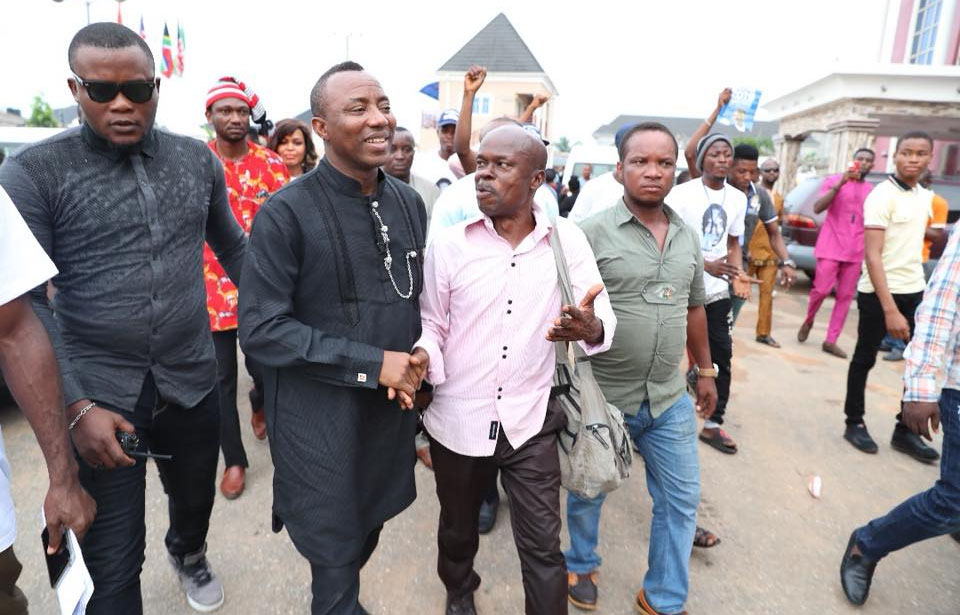
Sowore Joins Aba Protest as Supporters Demand Release of Nnamdi Kanu
Human rights activist and publisher of Sahara Reporters, Omoyele Sowore, on Thursday joined demonstrators in Aba, Abia State, as supporters intensified calls for the release of Nnamdi Kanu, the leader of the Indigenous People of Biafra (IPOB).
Sowore, a former presidential candidate of the African Action Congress (AAC), marched alongside hundreds of residents and activists through major streets of Aba, the commercial hub of Abia State, during a protest organised by pro-Biafra supporters and civil rights groups.
Videos circulating online showed the activist walking among the crowd while demonstrators chanted solidarity songs and demanded the immediate freedom of the IPOB leader.
The protesters repeatedly chanted slogans such as “Holy, Holy, Holy, Nnamdi Kanu is another saviour” and “Free Nnamdi Kanu,” while marching through several parts of the city.
Many participants carried large banners and placards displaying Kanu’s image alongside inscriptions including “Freedom for Nnamdi Kanu” and “Justice for Nnamdi Kanu.”
READ ALSO:
- Fuel Costs Remain Elevated at ₦1,300 per Litre Despite Dangote Price Adjustment
- Iran Threatens Strikes on US, Israeli Banks, Tech Giants
- BREAKING: Tambuwal Quits PDP, Defects to ADC Amid Internal Party Crisis
Organisers described the demonstration as part of a broader campaign by supporters seeking the freedom of the detained separatist leader. Activists said the protest formed part of a mass mobilisation tagged the “One Million March” aimed at drawing national attention to the continued detention of the IPOB leader.
During the protest, Sowore reportedly addressed supporters, insisting that Kanu should be released and allowed to reunite with his family and followers.
The IPOB leader, Nnamdi Kanu, was brought back to Nigeria in June 2021 after he was arrested in Kenya and transferred to Nigerian authorities.
After years of legal proceedings, he was convicted on November 20, 2025, by a Federal High Court in Abuja over terrorism-related charges, including treasonable felony and incitement through broadcast messages.
Delivering the judgment, Justice James Omotosho ordered that Kanu be transferred from Abuja to a correctional facility in Sokoto to serve multiple concurrent life sentences.
Despite the conviction, calls for Kanu’s release have continued from supporters, activists and several organisations who insist that the circumstances surrounding his arrest, trial and sentencing remain controversial.
Critics of the process argue that the case against the IPOB leader is politically motivated and have urged the Federal Government to consider a political solution to address the tensions linked to Biafra agitation in Nigeria’s South-East.
Supporters have also organised several demonstrations across parts of the country and in diaspora communities demanding what they describe as justice for the detained separatist leader.
The latest protest in Aba, Abia State, highlights the continued agitation by pro-Biafra supporters and activists pressing for Nnamdi Kanu’s freedom despite his conviction.
Sowore Joins Aba Protest as Supporters Demand Release of Nnamdi Kanu

-

 metro21 hours ago
Ikeja Electric Apologises to Customers Over Power Disruptions
-

 Business2 days ago
JUST IN: Dangote Refinery Cuts Petrol, Diesel Ex-Depot Prices Amid Market Relief
-
 News1 day ago
India, Other Countries Reject Tinubu’s Ambassadorial Nominees
-

 Politics3 days ago
BREAKING: Zamfara Governor Dauda Lawal Defects from PDP to APC
-
 News3 days ago
OYOSUBEB Chairman Adeniran Joins 2027 Oyo Governorship Race
-

 Business2 days ago
Middle East Crisis Pushes Petrol Price to N1,300 Per Litre in Nigeria
-

 News20 hours ago
Iran Rules Out Participation in 2026 FIFA World Cup
-

 International1 day ago
Iran Rejects Ceasefire as Explosions Rock Tehran