
Business
Dangote Refinery Hikes Petrol Price to ₦995 per Litre Amid Global Oil Price Surge

Dangote Refinery Hikes Petrol Price to ₦995 per Litre Amid Global Oil Price Surge
The Dangote Petroleum Refinery has raised its Premium Motor Spirit (PMS) gantry price to ₦995 per litre, marking a sharp increase of ₦221 in just four days amid rising global crude oil prices and shipping costs. The move signals further upward pressure on fuel prices nationwide, with retail petrol likely to surpass ₦1,050 per litre in many parts of Nigeria.
A senior refinery official confirmed the revision, stating that the price adjustment reflects recent fluctuations in international oil markets, crude oil replacement costs, and logistics expenses. The official said, “Yes, the price has been reviewed. The new gantry price is now ₦995 per litre.”
This hike follows an earlier increase this week when the refinery raised its ex-depot price from ₦774 to ₦874 per litre, meaning the cost of petrol from Dangote Refinery has risen nearly 29 per cent within four days. Updated pricing data on petroleumprice.ng confirmed the new benchmark for Nigeria’s downstream petroleum sector.
The refinery temporarily halted truck-out operations early Friday, a move often preceding price adjustments, leaving marketers uncertain about future costs. Industry sources noted that this pause in loading activities indicated a likely price increase, which has now been confirmed.
READ ALSO:
- Nigeria Immigration Service Denies Connection as Cleric Scams Nigerians in US
- Omoile Admits Lying to EFCC in Emefiele $4.5bn Fraud Trial
- Explosion Heard Over Dubai Airport as Debris Falls After Air Defence Interception
Refinery officials emphasised that petrol prices in Nigeria’s fully deregulated market are influenced by global crude oil prices, foreign exchange rates, and supply chain costs, and are not set arbitrarily. They added that the facility has absorbed about 20 per cent of rising costs to reduce the impact on the domestic market.
The development comes amid geopolitical tensions, particularly the US-Iran conflict, which has pushed Brent crude prices above $84 per barrel, fueling additional cost pressures. Dangote Petroleum stated that it will prioritise domestic supply to help insulate Nigerians from global supply shocks.
Data from the Major Energies Marketers Association of Nigeria (MEMAN) shows that imported petrol remains cheaper than locally refined fuel, with landing costs at ₦809.37 per litre, compared to Dangote’s gantry price. Diesel prices reflect a similar trend, with Dangote diesel at ₦1,169.42 per litre versus ₦1,125.70 per litre for imports.
The latest price hike is expected to push retail petrol prices higher, further straining household budgets and increasing transport costs across the country. Consumers and businesses alike are bracing for a surge in energy costs as the ripple effects of the gantry price increase reach filling stations nationwide.
Dangote Refinery Hikes Petrol Price to ₦995 per Litre Amid Global Oil Price Surge






Aviation
FAAN Introduces Hybrid Toll Payment System Following Tinubu’s Directive
FAAN Introduces Hybrid Toll Payment System Following Tinubu’s Directive
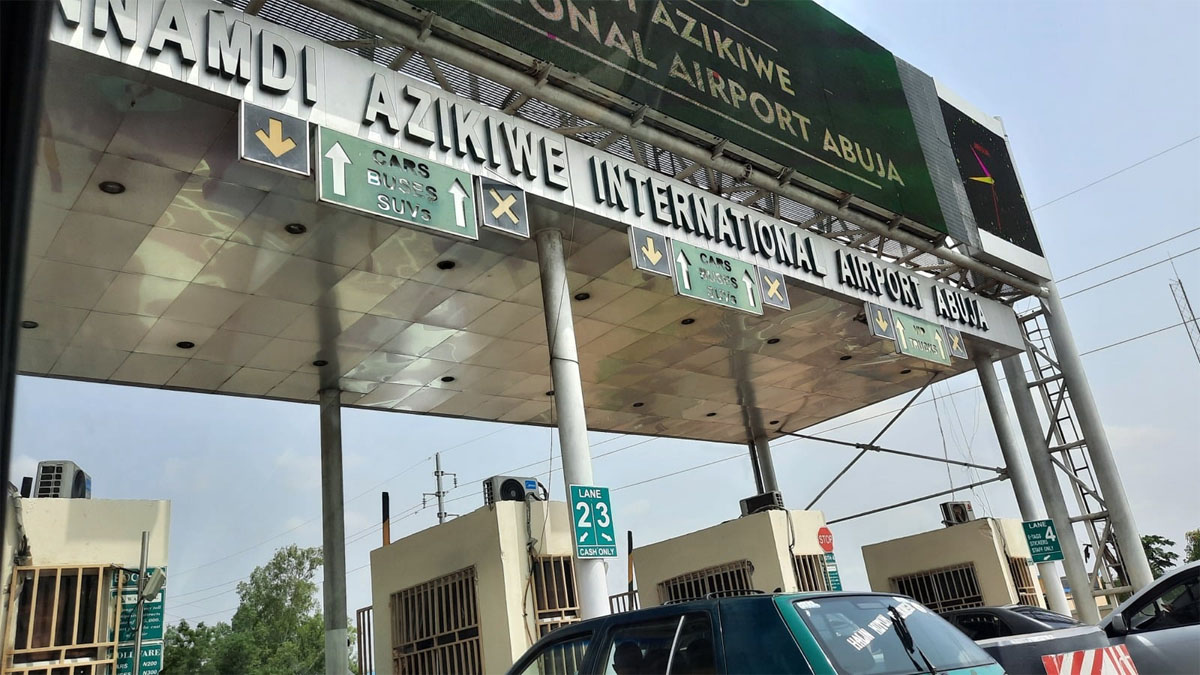
The Federal Airports Authority of Nigeria (FAAN) has introduced a temporary hybrid toll payment system at airports nationwide following heavy traffic congestion caused by the rollout of its cashless toll payment policy. The move comes after President Bola Tinubu directed the authority to ease implementation challenges to prevent travel disruptions.
FAAN Managing Director, Mrs. Olubunmi Kuku, told journalists in Lagos on Thursday that the decision followed severe gridlock at major airport toll gates, particularly Murtala Muhammed International Airport (MMIA), Lagos, as motorists struggled to adapt to fully digital payment methods. “He [the President] saw the traffic congestion and directed us to temporarily revert to a hybrid approach,” Kuku said. “This ensures smoother access while we refine the cashless system — it is a win for the industry.”
The hybrid model allows commuters and travellers to pay tolls using a combination of cash, prepaid FAAN cards, e-tags, debit cards, and other electronic options. Kuku emphasized that the arrangement will let FAAN continue its digital payment initiative while still accommodating users who have yet to register or activate electronic payment channels.
READ ALSO:
- Trump Warns Iranian Military, Including IRGC, to Surrender or Face “Certain Death”
- Trump Rejects Khamenei’s Son, Demands Role in Iran Leadership Selection
- FG Clarifies FEC Decision, Says PhD Not Equivalent to Medical Fellowship in Nigeria
She highlighted that the authority had registered over 100,000 users on its cashless platform between October 2025 and March 3, 2026, with around 60,000 sign-ups occurring in the final three days before the March 1 rollout deadline. The technology reportedly achieved a 99% success rate during initial operations, demonstrating strong potential for adoption once operational challenges are addressed.
Kuku explained that the initial rollout lacked a comprehensive pilot phase due to the pressure to meet the government’s deadline. The additional time granted by the Presidency now serves as an extended pilot period, enabling FAAN to raise public awareness, onboard private technology partners, and enhance monitoring mechanisms to prevent revenue leakages while cash payments are still allowed.
The MD noted that no new deadline has been set for the complete elimination of cash payments. The focus now is on refining the system, ensuring user convenience, and achieving a smooth transition to a fully digital tolling platform in line with global best practices in airport infrastructure management.
FAAN said the hybrid arrangement aims to prevent delays that could cause passengers to miss flights, while also maintaining transparency in revenue collection and improving overall airport operational efficiency.
FAAN Introduces Hybrid Toll Payment System Following Tinubu’s Directive
Business
NNPC Raises Petrol Price to ₦933 in Lagos, ₦960 in Abuja
NNPC Raises Petrol Price to ₦933 in Lagos, ₦960 in Abuja
The Nigerian National Petroleum Company Limited (NNPC) has increased the pump price of petrol at its retail stations to ₦933 per litre in Lagos and ₦960 per litre in Abuja, triggering fresh concerns among motorists and businesses over rising fuel costs in Nigeria.
The national oil company raised the price by ₦103 in Lagos, moving from ₦830 per litre to ₦933, while motorists in the federal capital Abuja now pay ₦960 per litre, representing an ₦85 increase from the previous ₦875 price.
Checks on Wednesday showed that the new petrol price has already been implemented at several NNPC retail outlets, including stations at Apple Junction and Ago Palace Way in Lagos, while stations along Airport Road in Lugbe, Abuja, were dispensing petrol at the new ₦960 rate.
The latest fuel price hike comes shortly after the Dangote Petroleum Refinery increased its ex-gantry petrol price to ₦874 per litre on March 2, up from ₦774 per litre, a development that has influenced retail pricing across the downstream petroleum sector.
Industry analysts say the rise in petrol prices in Nigeria is closely linked to growing geopolitical tensions in the Middle East, which have unsettled global energy markets and pushed up crude oil prices.
READ ALSO:
- Yul Edochie Blasts Arise TV Anchor Rufai Oseni in Viral Video
- Court Discharges Abba Kyari, Brothers in NDLEA Non-Disclosure of Assets Case
- Kano State House of Assembly Initiates Impeachment Proceedings Against Deputy Gov
Recent market data shows that Brent crude oil rose to about $85 per barrel on March 3, compared with around $72 per barrel recorded on February 28, intensifying pressure on petrol landing costs for markets that still rely partly on imports.
Experts note that Nigeria’s deregulated fuel market means pump prices now fluctuate in response to international oil prices, exchange rate volatility, and supply chain costs.
Meanwhile, the Petroleum Products Retail Outlets Owners Association of Nigeria (PETROAN) has called on the federal government to ensure steady crude oil supply to domestic refineries, particularly as Nigeria seeks to strengthen local refining capacity.
The association warned that continued instability in global oil markets could weaken the naira, raise petrol prices further, and push inflation higher, thereby worsening the cost-of-living challenges faced by Nigerians.
Energy stakeholders have also stressed the importance of expanding local refining operations, including production from the Dangote refinery and rehabilitation of government-owned refineries, to reduce dependence on imported fuel.
The latest price adjustment reflects the ongoing transition in Nigeria’s downstream petroleum sector following the removal of fuel subsidies and the adoption of a market-driven pricing system.
Motorists across Lagos, Abuja and other major cities have expressed concern that rising petrol prices could increase transportation costs, food prices and overall inflation, placing additional pressure on households and businesses.
NNPC Raises Petrol Price to ₦933 in Lagos, ₦960 in Abuja
Business
TCAN Targets Logistics Reforms to Drive Economic Growth at 2026 Transport Summit
TCAN Targets Logistics Reforms to Drive Economic Growth at 2026 Transport Summit
The Transportation Correspondents Association of Nigeria (TCAN) has begun preparations for its 2026 Annual Transport Summit, placing Nigeria’s logistics value chain at the centre of national economic discourse.
Scheduled for September 2026 in Lagos, the summit will be held under the theme, “Unlocking Economic Growth Through Transportation Logistics.”
It is expected to draw major stakeholders across the aviation, maritime, rail and road transport sectors, alongside logistics service providers, policymakers, regulators, development partners and financial institutions.
In a statement, TCAN said the summit would critically examine how efficient transportation logistics can serve as a catalyst for sustainable economic growth, trade facilitation, job creation and regional integration, especially in the context of ongoing reforms and infrastructure investments within the sector.
Chairman of TCAN, Tola Adenubi, described transportation logistics as the backbone of economic development, stressing that the performance of Nigeria’s logistics ecosystem directly impacts the nation’s competitiveness.
“From cargo handling at airports and seaports to inland freight movement and last-mile delivery systems, the efficiency of Nigeria’s logistics architecture plays a decisive role in determining the competitiveness of the nation’s economy,” Adenubi said.
He noted that the 2026 summit would explore innovative strategies to strengthen the sector, including digital transformation, infrastructure financing models, public-private partnerships and regulatory reforms aimed at optimising performance.
Chairman of the 2026 Conference Committee, Suleiman Idris, said the summit would feature high-level panel discussions, keynote addresses and interactive sessions designed to assess the current state of Nigeria’s transportation logistics framework.
According to him, deliberations will focus on identifying bottlenecks hindering seamless cargo and passenger movement, examining the impact of multimodal transport integration on economic expansion, and highlighting investment opportunities within the logistics and supply chain ecosystem.
Idris added that experts at the summit would also provide policy recommendations targeted at enhancing operational efficiency and boosting Nigeria’s global competitiveness in trade and transportation.
As part of the programme, TCAN will confer its Champions of Transport Industry Development (COTID) certificates on selected government agencies and private operators that have made significant contributions to the advancement of Nigeria’s transportation sector.
Over the years, the TCAN Annual Transport Summit has evolved into a credible platform for constructive engagement between regulators, operators and other industry stakeholders.
The association said the 2026 edition aims to deepen policy conversations, promote transparency and accountability, and accelerate reforms capable of unlocking the full economic potential of Nigeria’s transport and logistics industry.
With logistics increasingly recognised as a key enabler of economic growth, industry observers expect the 2026 summit to set the tone for fresh strategies that could reshape Nigeria’s transportation landscape in the years ahead.

-

 Education1 day ago
NERD Registration Now Mandatory for NYSC Participation, FG Confirms
-

 News2 days ago
FG Approves Medical Fellowships as PhD Equivalent in Nigerian Universities
-

 metro2 days ago
Police Announce Dates, Requirements for 2026 Constable Recruitment Screening
-

 Entertainment21 hours ago
Davido Loses Close Friend Denisi Amid ₦1bn Legal Dispute
-

 News21 hours ago
BREAKING: Tinubu Posts Yakubu, Omokri, Fani-Kayode, 62 Other Ambassadors (Full List)
-

 metro2 days ago
Family Prepares Funeral for Abducted NYSC Member After ₦10m Ransom Fails
-

 metro1 day ago
CSP Aliyu Giwa Set to Become Nigeria Police Force PRO, Replacing Hundeyin
-

 metro2 days ago
Leadership Reshuffle: IGP Tunji Disu Removes Hundeyin as Nigeria Police Force PRO