Defendant in Vatican trial takes case to UN, accuses pope of violating his rights with surveillance - Newstrends
Connect with us

International

Defendant in Vatican trial takes case to UN, accuses pope of violating his rights with surveillance

Published

on

Pope Francis

Defendant in Vatican trial takes case to UN, accuses pope of violating his rights with surveillance

  • Mincione’s complaint to the UN focused on the role of the pope during the investigation, an area that was flagged as problematic by defense lawyers during the trial and external experts in its aftermath

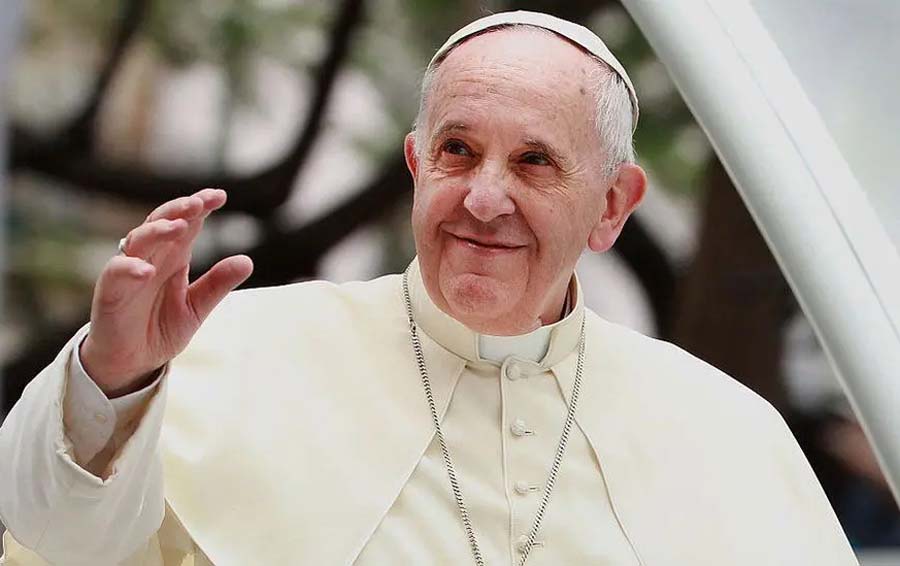
NEW YORK: One of the defendants in the Vatican’s big financial trial has formally complained to the United Nations that Pope Francis violated his human rights by authorizing wide-ranging surveillance during the investigation.

A lawyer for Raffaele Mincione, a London-based financier, submitted a complaint last week to the UN Office of the High Commissioner for Human Rights via a special procedure that allows individuals or groups to provide the UN with information about alleged rights violations in countries or institutions.

The filing marks the latest and highest-profile complaint about the Vatican trial, highlighting the peculiarity of the Vatican’s criminal justice system and its seeming incompatibility with European and democratic norms. The Vatican is an absolute monarchy where the pope wields supreme legislative, executive and judicial power.

The trial, which opened in 2021 and ended in December, focused on the Holy See’s money-losing 350 million euro investment in a London property but also included other tangents. Vatican prosecutors alleged brokers and Vatican officials fleeced the Holy See of tens of millions of euros in fees and commissions, and then extorted the Holy See for 15 million euros ($16.5 million) to cede control of the property.

The trial ended in December with convictions for nine of the 10 defendants, including Mincione and a once-powerful cardinal, Angelo Becciu. The court’s motivations for the sentence still haven’t been published, but both Vatican prosecutors and the nine convicted defendants have announced appeals.

READ ALSO:

Mincione’s complaint to the UN focused on the role of the pope during the investigation, an area that was flagged as problematic by defense lawyers during the trial and external experts in its aftermath.

The complaint cited four secret executive decrees Francis signed in 2019 and 2020 that gave Vatican prosecutors wide-ranging powers to investigate, including via unchecked wiretapping and to deviate from existing laws. The decrees only came to light right before trial, were never officially published, provided no rationale or timeframe for the surveillance, or oversight of the wiretapping by an independent judge.

The chief prosecutor argued Francis’ decrees provided unspecified “guarantees” for the suspects, and the judges rejected the defense motions at the time that argued they violated the fundamental right to a fair trial. In a somewhat convoluted decision, the judges ruled that no violation of the principle of legality had occurred since Francis had made the laws.

Mincione’s complaint also alleged the tribunal is not independent or impartial, a claim the Vatican has rejected previously. Francis can hire and fire judges and prosecutors, and recently decided such things such as their compensation, pension and term limits.

It is not clear what, if anything, the UN will do with the complaint. The Geneva-based office fields special rapporteurs, or experts, to monitor specific areas of human rights, including the judiciary and independence of judges and lawyers.

Previous complaints to the UN human rights office about the Vatican or Catholic Church, in the areas of child sexual abuse and LGBTQ+ discrimination, resulted in letters from the UN special rapporteur to the Vatican’s UN ambassador in Geneva listing problems and requesting responses and changes.

Mincione has also tried to engage the Council of Europe on the matter, given the Holy See is subject to periodic review as part of the COE’s Moneyval process to guard against money laundering. In January, a British representative asked if the COE would look into the Vatican’s human rights situation given the trial outcome.

The plenary assembly chairman dodged the question.

In ongoing litigation, Mincione has also sued the Vatican secretariat of state in a British court over the reputational harm he says he suffered as a result of the Vatican trial.

Defendant in Vatican trial takes case to UN, accuses pope of violating his rights with surveillance

Arabnews

Loading

International

Drone attack hits tanker in Strait of Hormuz

Published

on

Iran Shuts Strait of Hormuz, Threatens to Target All Ships After New US Strikes

Drone attack hits tanker in Strait of Hormuz

A commercial tanker was reportedly hit in a drone attack while transiting the Strait of Hormuz on Tuesday, sparking fresh concerns over security in one of the world’s most strategic shipping lanes.

According to initial reports, the vessel allegedly came under attack after passing through the waterway without obtaining the required permission from Iranian authorities. However, the claim has not been independently verified.

Details of the incident, including the identity of the tanker, the extent of the damage and whether there were casualties among the crew, were not immediately available as of the time of filing this report.

READ ALSO:

No group has claimed responsibility for the attack, while authorities have yet to issue an official statement on the circumstances surrounding the incident.

The Strait of Hormuz, which lies between Iran and Oman, is a critical global maritime corridor through which a substantial share of the world’s crude oil and liquefied natural gas exports is transported.

The latest incident is expected to heighten concerns among global shipping operators and energy markets, with analysts warning that any disruption along the route could have significant implications for international trade and oil prices.

Authorities are expected to launch an investigation as more information emerges.

Drone attack hits tanker in Strait of Hormuz

Loading

Continue Reading

International

18 Wounded in Twin Damascus Blasts During Macron’s Historic Syria Visit

Published

on

18 Wounded in Twin Damascus Blasts During Macron's Historic Syria Visit

18 Wounded in Twin Damascus Blasts During Macron’s Historic Syria Visit

DAMASCUS — At least 18 people, including four police officers, were injured on Tuesday when twin explosions rocked central Damascus during French President Emmanuel Macron‘s landmark visit to Syria — the first by a European Union leader since the fall of Bashar al-Assad’s regime, marking a significant moment in the country’s fragile transition. The blasts occurred near the Four Seasons Hotel in the heart of the capital, where the French leader had been staying, and the Ministry of Tourism building, close to Victoria Bridge and Umayyad Square, a bustling area that is home to government buildings and commercial establishments, making it a high-profile target for any group seeking to disrupt the visit. A security source confirmed to AFP that one device was planted in a dumpster and another in a vehicle near the hotel, and Syrian state television reported that security forces detected the devices during field operations, but they exploded while specialised units were preparing to defuse them, suggesting that the attackers may have been monitoring the security response or that the devices were booby-trapped to detonate upon tampering.

Social media footage showed a vehicle engulfed in flames, plumes of smoke rising from the scene, and blood stains on the street near the hotel, with panicked civilians running for cover and emergency responders rushing to the scene to assist the wounded. Roads around the site were immediately sealed off, and security forces established a cordon to protect civilians and secure the area, while ambulances transported the injured to nearby hospitals for treatment. No group has claimed responsibility for the attack, and Syrian authorities have launched an investigation to establish the circumstances and identify those responsible, with security sources indicating that they are examining surveillance footage and interviewing witnesses to piece together the events leading up to the explosions.

READ ALSO:

The explosions occurred after Macron had entered the Presidential Palace to meet Syrian President Ahmed al-Sharaa for talks on bilateral relations, reconstruction, and Syria’s political transition, and at no point was the French president in danger, as the blast site was outside the secure perimeter designated for his movement and accommodation. The Elysee Palace confirmed that Macron did not hear the explosions while travelling to the meeting, and a Reuters journalist with the press group accompanying Macron did not hear the blast or see any commotion during the president’s morning events, underscoring the distance between the explosion site and the location of the French leader’s engagements. French presidency sources stated: “The programme continues,” adding that the explosion site was outside the security perimeter designated for the president’s accommodation, and that Macron’s schedule remained unchanged, with the visit proceeding as planned to demonstrate France’s commitment to engaging with Syria’s new leadership.

Macron arrived in Damascus on Monday evening, becoming the first European Union leader to visit Syria since the fall of Bashar al-Assad’s 24-year rule in December 2024, a historic moment that signals a significant shift in international engagement with the country. He was accompanied by a business delegation including the chief executives of TotalEnergies and French container shipping group CMA CGM, with Syria’s reconstruction among the key themes of the visit, reflecting France’s interest in securing economic opportunities in the war-torn nation. In a post on social media, Macron declared: “I have come to express France’s commitment to the Syrian people. For a sovereign Syria, united in its diversity and at peace with its neighbours. Together, let us open a new chapter of stability and peace,” emphasizing France’s support for Syria’s territorial integrity and its vision for a peaceful future. The visit highlights Syria’s geopolitical transformation under al-Sharaa, a former al Qaeda commander who has established close ties with Western and Middle Eastern powers that shunned Assad, as he seeks to rebuild a country shattered by 13 years of war and re-establish its place in the international community.

France has signalled support for those who can “contribute to build a new Syria” in line with the aspirations expressed since the 2011 Arab Spring, a reference to the pro-democracy protests that sparked the brutal conflict and eventually led to Assad’s downfall. The incident comes just days after a bomb blast at a crowded cafe near the Palace of Justice in central Damascus killed at least ten people and injured 21 others, and earlier this week, Syrian authorities also foiled an attempt to bomb a passenger bus in a Damascus suburb, indicating that security threats remain a persistent challenge. It underscores the fragile security situation in Syria even as the country’s new leadership seeks to rebuild ties with Western powers and attract investment for reconstruction, as remnants of the previous regime, extremist groups, or other actors may seek to destabilise the transition through acts of violence.

The visit is scheduled to continue as planned, with Macron set to travel next to Ankara, Turkey, for the NATO summit, where al-Sharaa is also expected to attend, providing an opportunity for further high-level discussions on regional security and Syria’s future. The French presidency has emphasised that the visit demonstrates France’s determination to engage with the new Syrian authorities and support the country’s transition, despite the security risks that such engagement entails. As the investigation into Tuesday’s explosions continues, Syrian authorities have vowed to bring those responsible to justice and to maintain security in the capital, while the international community watches closely to see whether the country can navigate its transition without descending into further violence.

18 Wounded in Twin Damascus Blasts During Macron’s Historic Syria Visit

Loading

Continue Reading

International

US to closely monitor Nigeria’s 2027 elections, tie future support to religious freedom

Published

on

US to closely monitor Nigeria’s 2027 elections, tie future support to religious freedom
US lawmaker Riley Moore

US to closely monitor Nigeria’s 2027 elections, tie future support to religious freedom

The United States has signalled that it will closely monitor Nigeria’s 2027 general elections, warning that future US security assistance, financial support and bilateral engagement could increasingly depend on the credibility of the polls and the Nigerian government’s commitment to religious freedom and human rights.

The warning came from US Congressman Riley Moore, a Republican representing West Virginia, during an interview with NoireTV, where he disclosed that both the Trump administration and members of the US Congress would pay “very close attention” to how Nigeria conducts its next general elections.

According to Moore, the outcome and credibility of the 2027 elections in Nigeria have become an important issue for policymakers in Washington, who are assessing the country’s democratic progress alongside concerns over insecurity and religious violence.

“What I’d say is that we’re certainly going to be watching these results and how these elections unfold and how they’re executed. And that’s something that myself and the administration are going to be paying very close attention to,” Moore said.

Beyond election monitoring, Moore revealed that the US House of Representatives is advancing legislation that could reshape future relations between Washington and Abuja.

He said lawmakers are working on the Nigeria Religious Freedom and Accountability Act of 2026, introduced alongside veteran Congressman Chris Smith, as well as provisions contained in a broader appropriations bill currently before Congress.

Moore explained that the proposed legislation contains strong provisions addressing concerns over religious persecution, particularly attacks affecting Christian communities, while also reviewing broader issues relating to human rights, accountability and security cooperation.

READ ALSO:

According to him, the legislation could impose stricter conditions on future US security assistance to Nigeria, requiring measurable actions from the Nigerian government before certain forms of support are approved.

“We’re working on Chris Smith’s bill, which obviously I’m a co-sponsor of. But more importantly is the appropriations bill that we’re going to have on the floor.”

He added:

“There is strong language in that bill relating to Nigeria, the persecution of Christians and restrictions on security assistance to the government of Nigeria, including steps they have to take.”

The congressman expressed confidence that the legislation would secure congressional approval.

“That bill is likely to become law. We’re about to hopefully pass that. There’s some pretty strong and aggressive language in that bill that’s going to be binding as it relates to our relationship with Nigeria moving forward.”

Moore also disclosed that he remains in regular discussions with the administration of President Donald Trump regarding developments in Nigeria.

According to him, he planned to further brief the US President during a scheduled dinner meeting.

“I continue to work with the administration on next steps that we’re going to take. I’m actually going to see President Trump tonight. I’ll be having dinner with him and some other members, so I continue to talk to him about these issues, and it’s very important to him.”

The Nigeria Religious Freedom and Accountability Act of 2026, introduced in February 2026 by Moore and Chris Smith, seeks to strengthen congressional oversight of US-Nigeria relations by requiring the US Secretary of State to submit periodic reports on religious freedom, sectarian violence, accountability for attacks and Nigeria’s compliance with international human rights obligations.

The proposed legislation also calls for regular assessments of how US foreign assistance is used, whether perpetrators of religious violence are being prosecuted, and the effectiveness of humanitarian interventions for displaced communities.

In addition, the bill encourages stronger diplomatic engagement aimed at improving the protection of vulnerable communities and promoting accountability for violent attacks across Nigeria.

Moore’s comments come as political activities gradually gather momentum ahead of Nigeria’s 2027 general elections, which will determine the country’s next President, governors, members of the National Assembly and state legislators.

The elections are expected to attract significant domestic and international attention following the controversies, legal challenges and debates surrounding the conduct of the 2023 general elections.

Election observers believe that transparency, voter confidence, security, technological improvements by the Independent National Electoral Commission (INEC) and peaceful participation by citizens will remain key issues as preparations for the 2027 polls gather pace.

Although the Nigerian government has yet to officially respond to Moore’s latest remarks, analysts say the statements reflect growing international interest in Nigeria’s democratic process and its broader implications for diplomatic, security and economic relations with the United States.

If you’d like, I can also make this version more investigative and newspaper-like by adding additional background, reactions from the Nigerian government or INEC, and expert analysis to increase its depth and Google SEO value.

US to closely monitor Nigeria’s 2027 elections, tie future support to religious freedom

Loading

Continue Reading

Trending