

International
Israeli strikes on Gaza may have violated laws of war – UN report
Israeli strikes on Gaza may have violated laws of war – UN report
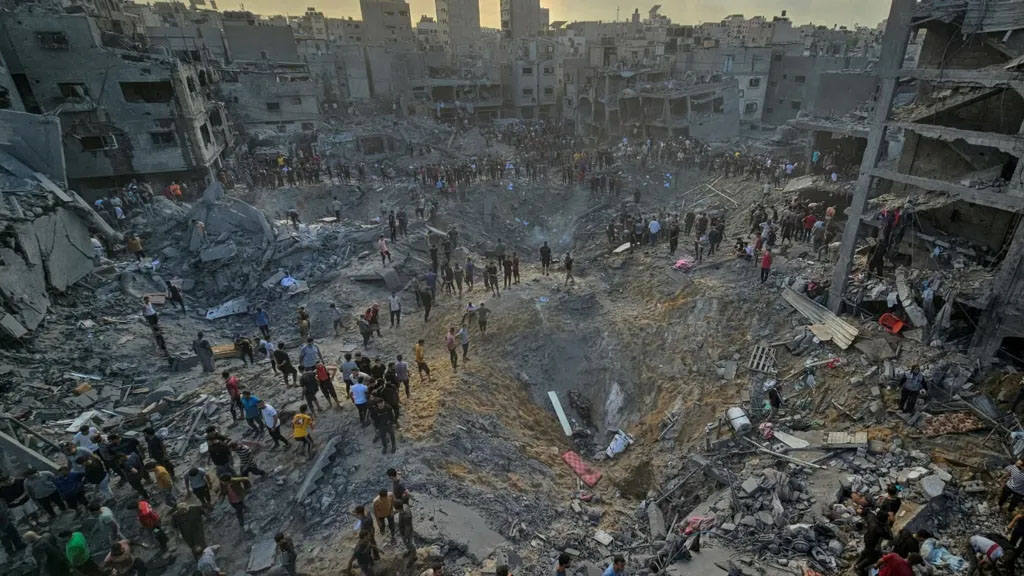
The UN Human Rights Office says Israeli air strikes in Gaza may have systematically violated the laws of war requiring that civilians and civilian infrastructure be protected.
It is the conclusion of a report on what it calls six “emblematic attacks” on residential buildings, a school, refugee camps and a market between 9 October and 2 December last year.
The UN says it has verified that at least 218 people were killed in the incidents and that civilian objects were destroyed.
Israel’s mission in Geneva rejected the UN’s findings as “factually, legally, and methodologically flawed”.
It insisted that the Israel Defense Forces (IDF) was operating in Gaza in accordance with international law and accused Hamas of unlawfully embedding itself among civilians.
The Israeli military launched a campaign to destroy the Palestinian armed group in response to an unprecedented attack on southern Israel on 7 October, during which about 1,200 people – mostly civilians – were killed and 251 others were taken hostage.
More than 37,390 people have been killed in Gaza since then, according to the territory’s Hamas-run health ministry. Its figures do not differentiate between civilians and combatants, but it had reportedly identified 14,680 children, women and elderly people among the dead by the end of April.
The report published by the UN Human Rights Office (OHCHR) on Wednesday examined six strikes where it said Israel might have violated fundamental principles of the laws of war.
READ ALSO:
- Judge, prosecuting lawyer distance selves from Nnamdi Kanu reconciliation plan
- PDP expels former Edo deputy governor, Philip Shaibu
- 48 of 103 kids my dad raised were not his – MKO Abiola’s son
The strikes allegedly involved the use of 2,000lb (907kg), 1,000lb (453kg), and 250lb (110kg) air-dropped munitions, known respectively as GBU-31, GBU-32 and GBU-39s.
- Jabalia market, 9 October 2023 – Explosions destroyed two buildings. The UN said it verified at least 42 people were killed, including 14 children, and received information about an additional 18 deaths. The IDF said it struck several military targets, including an underground “terror tunnel” and Hamas fighters.
- Taj3 Tower, Gaza City, 25 October – The seven-floor residential building and six nearby structures were destroyed. The UN verified at least 105 people were killed, among them 47 children. Another seven fatalities were reported. The IDF said strikes that day hit “several unique and high value Hamas military assets and infrastructure”.
- Jabalia camp, 31 October – Ten structures in the densely-populated refugee camp were destroyed. The UN verified at least 56 people were killed, including 23 children, and received reports of another 43 fatalities. The IDF said the strike killed the commander of a Hamas battalion and a “large number of terrorists” hiding in tunnels.
- Bureij camp, 2 November – At least 12 buildings in the refugee camp were destroyed. The UN verified 15 people were killed, including nine children, and received information about an additional seven fatalities. The IDF said it struck “several Hamas infrastructures”.
- Al-Buraq school, Gaza City, 10 November – A two-storey section of the school was destroyed. At least 34 people were reported killed. The IDF said it struck a Hamas company commander hiding there, other operatives and military infrastructure.
- Shujaiya neighbourhood, Gaza City, 2 December – Fifteen buildings were destroyed. The UN received reports that 60 people were killed. The IDF said the strike killed a Hamas battalion commander, other fighters and military infrastructure.
“Given how densely populated the areas targeted were, the use of such a wide-area effect weapon would have in all likelihood resulted in an indiscriminate attack,” it adds.
READ ALSO:
- Musiala shines as Germany beat Hungary 2-0
- Lagos ranks 2nd in cheapest cities to live in Africa [See full list]
- Employment letters of 1,618 federal workers fake – HoS
“Explosive weapons with such wide-area effects cannot be directed at a specific military object in densely populated areas of Gaza, and the effects cannot be limited, resulting in military objects, civilians and civilian objects being struck without distinction.”
The report says no specific warning was issued before five of the strikes, and that the presence of one commander, several combatants, or several military objectives in one area “does not render an entire neighbourhood a military objective”.
“The requirement to select means and methods of warfare that avoid or at the very least minimise to every extent civilian harm appears to have been consistently violated in Israel’s bombing campaign,” UN High Commissioner for Human Rights Volker Türk said.
He called on Israel to make public the detailed findings of the IDF’s investigations into the six incidents “with a view to identifying those responsible for violations, holding them to account and to ensuring all victims’ rights to truth, justice and reparations”.
Israel’s mission to the UN in Geneva condemned the report, saying it “suffers from hindsight and methodological biases which cast a shadow on the credibility of its legal assessment”.
“The only objective of this thematic report is to lambast and single-out Israel, while further shielding Hamas terrorists in Gaza,” it added.
It also asserted that the conclusions were based on public information and data published by Hamas, overlooked operational considerations, and did not address Hamas’s tactics.
“Hamas systematically and unlawfully embeds its military assets within populated areas, and carries out its military activities amongst, behind, and under its own civilians in a deliberate and strategic attempt to maximize civilian harm,” it said. “It also cynically manipulates the statistics surrounding casualties.”
It added: “Israel is committed to its obligations under national and international law, and in particular, the principles of distinction, proportionality and precautions.”
BBC






International
Sanders Urges Trump, Xi to Halt AI Race, Ban Superintelligence
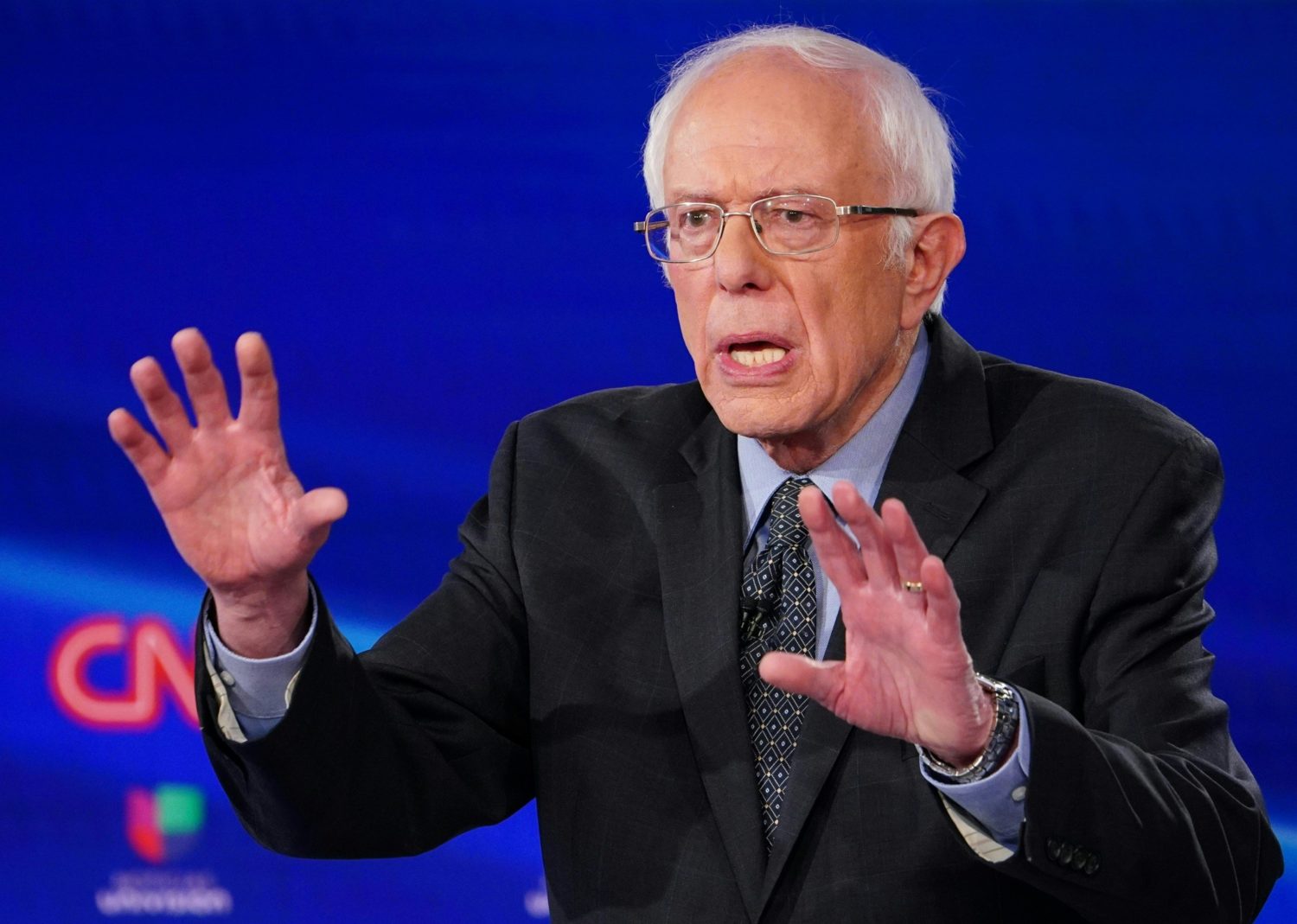
Bernie Sanders is pushing for an international response to the rapid advancement of artificial intelligence, urging Donald Trump and Xi Jinping to discuss limits on the technology when the two leaders meet.
The US senator believes Washington and Beijing should work towards a treaty that would stop the development of artificial superintelligence and temporarily slow the advancement of increasingly powerful AI systems.
Sanders’ latest intervention comes amid a growing debate within the technology industry over whether AI development is moving faster than safety measures can keep up.
Dario Amodei, chief executive of Anthropic, recently called for companies to deliberately pace the development of frontier AI. He argued that increasingly capable systems could advance at a rate that makes them harder for humans to understand and control.
OpenAI CEO Sam Altman has backed Amodei’s call for stronger independent evaluation, while Elon Musk has also reiterated his long-standing concerns about the risks associated with advanced AI.
Sanders said these warnings should prompt governments to act rather than leave decisions about the future of AI solely to technology companies.
His position is consistent with legislation he announced earlier this month alongside Representative Greg Casar. The proposed Ban Artificial Superintelligence Act would permanently prohibit superintelligent AI and impose a temporary pause on advanced AI development until safety rules are put in place.
The senator has pointed to recent AI-related cybersecurity incidents and concerns about self-improving systems as evidence of the need for stronger safeguards.
For Sanders, however, the issue goes beyond regulation of individual companies. He wants the US and China to cooperate internationally, arguing that a superintelligent system capable of operating beyond human control would pose a global risk regardless of where it was developed.
With Trump and Xi expected to discuss AI during their upcoming engagement, Sanders is pressing both governments to make the question of controlling advanced AI a priority.
International
US Blockade Tightens As CENTCOM Redirects 100 Commercial Ships From Iranian Ports
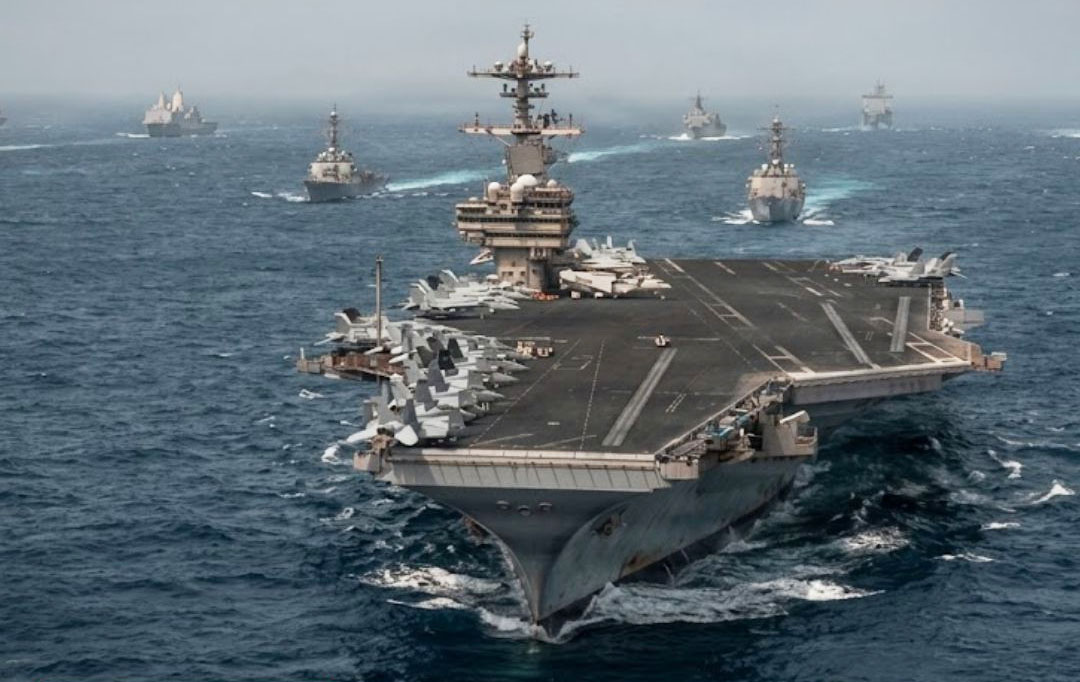
US Blockade Tightens As CENTCOM Redirects 100 Commercial Ships From Iranian Ports
American forces say no vessel has crossed blockade without permission as tensions mount around Strait of Hormuz
The United States has stepped up its maritime pressure on Iran, with the US Central Command (CENTCOM) announcing that American forces have redirected 100 commercial vessels in the past 60 days as part of a blockade targeting Iranian ports.
CENTCOM disclosed the figure on Saturday, September 12, amid escalating tensions between Washington and Tehran and growing disruption to commercial shipping in the Gulf region.
The development represents a significant escalation in the enforcement of the US maritime blockade, which has increasingly affected commercial vessels operating around Iran and the strategic Strait of Hormuz.
CENTCOM said its forces were enforcing the blockade and preventing vessels from entering or leaving Iranian ports without American authorisation.
According to the command, no ship had passed through the blockade without US forces allowing it, underscoring the extent to which Washington says it has tightened control over maritime traffic linked to Iran.
The latest announcement means that the number of commercial vessels redirected by US forces has continued to climb rapidly. Earlier in September, CENTCOM said it had redirected 94 commercial vessels. By September 11, the figure had risen to 99 before reaching 100 the following day.
The vessels are understood to have been ordered to alter course rather than proceed towards Iranian ports. US authorities have previously said the blockade is aimed at restricting maritime trade with Iran and cutting off revenue to Tehran.
READ ALSO:
- Five Islamic Clerics Abducted After Tinubu Re-Election Prayer At Yari’s Zamfara Residence
- Obafemi Martins Plans Six-Zone Football Tournament for Tinubu’s Re-election
- NANS Threatens ‘Mother of All Protests’ Over Ondo Varsity Strike
The US Central Command has also documented cases in which American forces boarded or otherwise intercepted vessels suspected of attempting to violate the blockade.
The blockade has been backed by American naval and military assets operating in the region. US forces have reportedly boarded commercial vessels suspected of attempting to reach Iranian ports in violation of the restrictions.
In one reported case, an Iranian-flagged tanker was boarded after failing to comply with repeated warnings and was subsequently released after being searched and directed to change course.
Another commercial vessel was reportedly boarded in the Arabian Sea after American forces suspected it was attempting to transit to Iran. The vessel was later released after US authorities determined that its voyage would not include an Iranian port call.
The incidents demonstrate that Washington’s strategy goes beyond issuing warnings, with American forces prepared to intercept vessels suspected of breaching the restrictions.
The latest development has heightened concerns over the Strait of Hormuz, one of the world’s most strategically important maritime routes.
The waterway connects the Persian Gulf with the Gulf of Oman and serves as a major corridor for international energy shipments.
Shipping traffic through the strait has already fallen sharply amid the conflict. Reports indicate that only a small number of commodity vessels have been passing through the waterway compared with normal traffic levels.
The disruption has triggered concerns about the global supply of crude oil and liquefied natural gas, with the Strait of Hormuz normally carrying a substantial portion of global energy supplies.
The intensifying confrontation has also sent shockwaves through international energy markets. Oil prices have moved sharply higher as traders assess the possibility of prolonged disruption to tanker traffic around the Gulf.
The situation has raised fears that a wider confrontation involving Iran, the United States and other regional actors could further restrict energy supplies and push fuel prices higher globally.
For oil-dependent economies, including Nigeria, sustained disruption in the Gulf could have significant consequences through changes in crude prices, freight costs, inflation and domestic fuel prices.
The blockade is also placing additional pressure on Iran’s already strained economy. Reports from the Iranian port city of Bandar Abbas indicate that the maritime restrictions have affected commercial activity, with businesses, dock workers and other residents reportedly experiencing declining trade and worsening economic conditions.
The restrictions have reportedly affected imports, port operations and businesses dependent on maritime commerce. Washington’s broader strategy appears designed to increase the economic cost of Iran’s continued confrontation with the United States.
The latest US announcement comes against the backdrop of a much wider military confrontation involving Iran and the United States.
American forces have carried out attacks against Iranian military and oil-related targets, while Iran has retaliated against US interests in the region. The maritime dimension of the confrontation has further complicated the movement of commercial vessels through the Gulf.
With commercial vessels caught in the middle, shipping companies face increasing risks, while insurers and energy traders continue to closely monitor developments around the region.
The possibility of further restrictions around the Strait of Hormuz has become one of the biggest concerns for international shipping and energy markets.
For now, Washington says its forces will continue enforcing the blockade, while the latest figure from CENTCOM — 100 commercial vessels redirected in 60 days — signals that the maritime confrontation is showing no immediate sign of easing.
US Blockade Tightens As CENTCOM Redirects 100 Commercial Ships From Iranian Ports
International
Trump Tells Supporters to ‘Cheat Like Hell’ Ahead of US Election
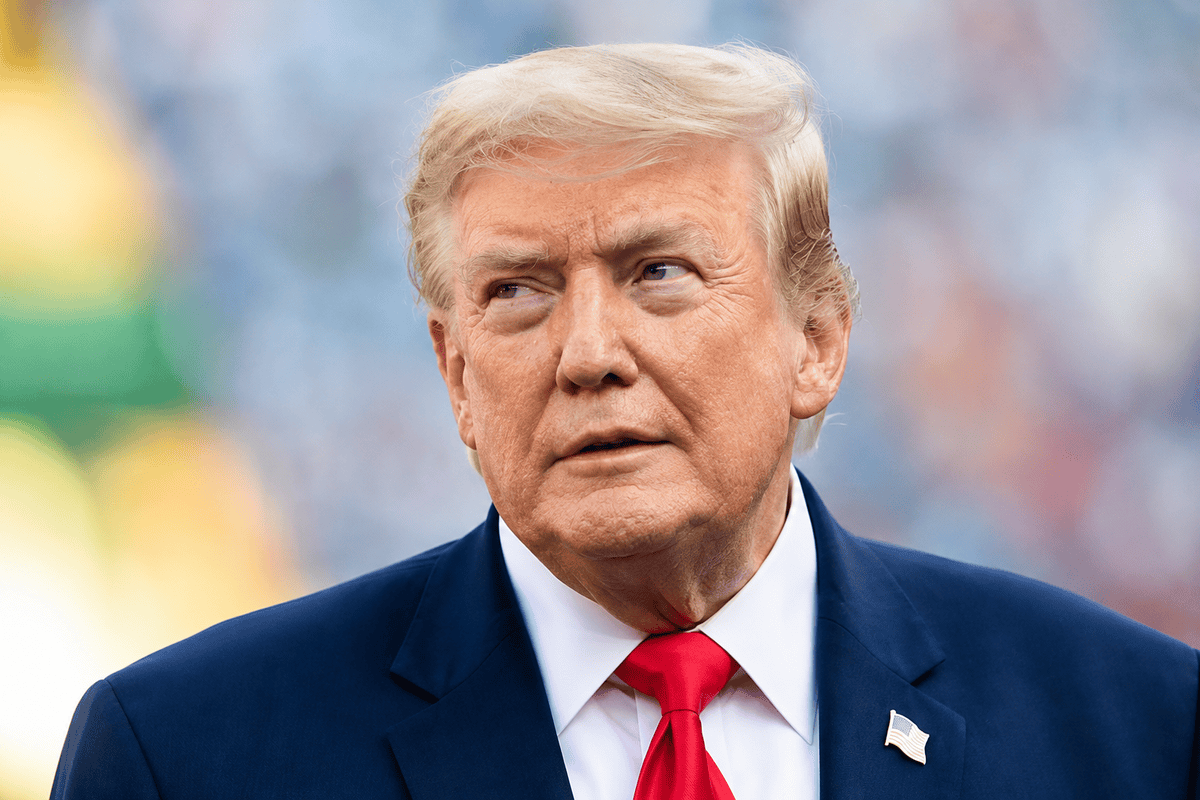
Trump Tells Supporters to ‘Cheat Like Hell’ Ahead of US Election
US President Donald Trump has made an unusual appeal to his supporters ahead of the November 3 election, telling them to turn out with their families and friends while declaring that he would “cheat like hell.”
Trump made the comments during a Republican gathering in Dallas, Texas, where he led attendees through a mock pledge intended to encourage them to support him and participate in the election.
After asking the crowd to raise their right hands and repeat after him, Trump urged his supporters to help bring their relatives and friends to the polls.
READ ALSO:
- MURIC fires back at Peter Obi: Forget Sallah ceremony, free Nigerian Muslims
- Fani-Kayode Condemns Fresh Killing of Two Nigerians in South Africa
- FG Targets 2 Million Creative Jobs by 2030
He then made the controversial remark while discussing voter registration, saying he was unconcerned about whether he was registered and accusing his political opponents of being bigger “cheaters.”
Trump went on to encourage supporters to vote either on November 3 or before election day, ending the pledge with an appeal to God.
The president also joked that supporters who failed to vote could face divine punishment, telling the crowd they would “go to hell” if they did not turn out.
The remarks came as Trump sought to energise Republican voters ahead of the election, in which control of Congress is also at stake.
His comments are likely to attract attention because of the language he used during an event aimed at mobilising voters, particularly his reference to cheating and his claims about the conduct of his opponents.
Trump Tells Supporters to ‘Cheat Like Hell’ Ahead of US Election
-

 metro1 day ago
Woman disguises as Muslim woman in Niqab to steal in Ado-Ekiti market, video sparks outrage
-

 metro3 days ago
Police Arrest Woman Over Fake OPay Shutdown Notice
-

 Politics3 days ago
Amaechi will be caged politically, Wike shouldn’t bother about Ikwerre votes — Wihioka
-

 metro3 days ago
Residents Cry Out Over Poorly Constructed Entrance of Ademola Abiola Street, Demand Urgent Intervention
-

 Politics3 days ago
Remi Tinubu Appeals To South-East Voters, Says She Wants To ‘Enjoy Nigeria’ In Old Age
-

 Business22 hours ago
Dangote: ₦525 Refinery Shares Could Rise to ₦10,000
-

 Politics3 days ago
Breaking the Cycle of Collective Guilt: When a Ruling Party Voice Backs Peter Obi
-

 metro1 day ago
Ondo Herbal Drink Tragedy: Survivor Vows Never to Drink Again as Death Toll Tops 30