

International
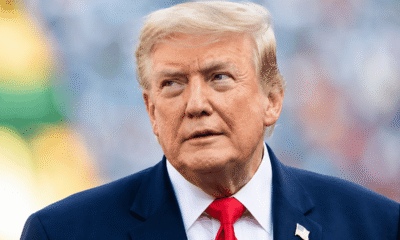
Hamas Accepts US-Backed Disarmament Plan as Trump Unveils Gaza Peace Roadmap
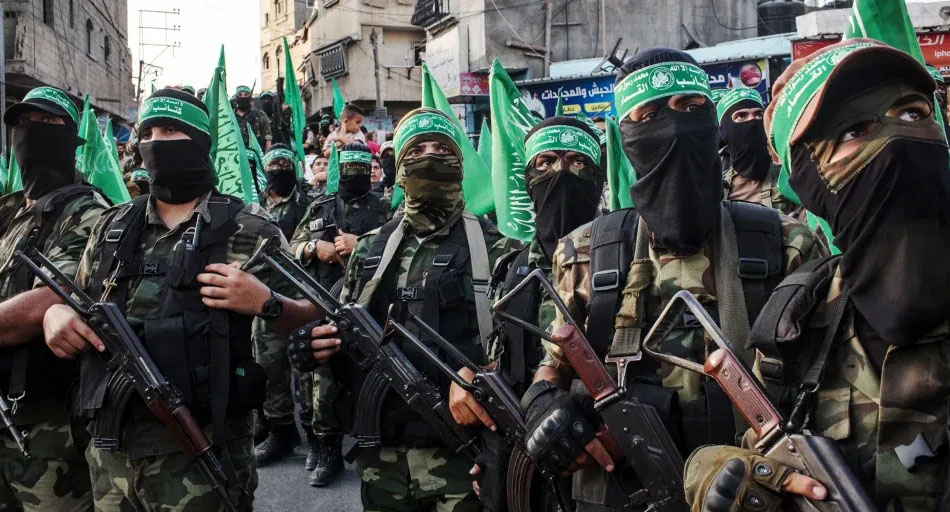
Hamas Accepts US-Backed Disarmament Plan as Trump Unveils Gaza Peace Roadmap
- A landmark agreement could reshape the future of Gaza, but Israel’s official response remains pending as key details hang in the balance.
In a significant diplomatic breakthrough, the Palestinian group Hamas has formally accepted a United States-backed proposal aimed at ending the 10-month-long war in the Gaza Strip. The agreement, unveiled by U.S. President Donald Trump, outlines a phased roadmap that includes the group’s complete disarmament and a gradual withdrawal of Israeli troops from the territory. The announcement, made on Friday, marks one of the most substantial developments since the October ceasefire. However, the deal remains conditional, and Israel has not yet issued an official response, leaving the international community in a state of cautious optimism.
Under the proposed framework, Hamas has agreed to surrender its weapons to the National Committee for the Administration of Gaza (NCAG) , a Palestinian governing body established under the Trump-administration-led Board of Peace initiative. The disarmament process is designed to be phased and verifiable, beginning with an initial phase where Hamas police forces are expected to hand over light weapons to the NCAG within the first two weeks. This would be followed by a second, more extensive phase lasting between 200 and 350 days, during which the full decommissioning of heavy weapons, tunnels, depots, and weapons production facilities would take place under strict international oversight. The roadmap follows a “zero trust” model, meaning each phase of disarmament must be independently verified before the next step of Israeli military withdrawal can proceed. Echoing this cautious approach, Nickolay Mladenov, the Board of Peace’s High Representative for Gaza, emphasized that “withdrawal must move in lockstep with decommissioning,” underscoring the need for synchronized and carefully monitored implementation.
For Hamas, the decision represents a difficult but necessary concession aimed at alleviating the suffering of Palestinian civilians. Ghazi Hamad, a member of the group’s negotiating team, described the move as a sacrifice made for the sake of the people in Gaza, to save them from continued killing and displacement. He further clarified that Israel will not intervene in the disarmament process, which will be solely managed by the NCAG. However, a senior Hamas official stressed that full implementation of the agreement depends on Israel fulfilling its prior commitments under the initial ceasefire, which include ending all military attacks, withdrawing forces to October 2025 positions, and significantly increasing humanitarian aid deliveries into the besieged territory.
READ ALSO:
- FG to phase out electricity subsidy from 2027 as power sector debts rise
- At least 43 migrants die as 49,000 cross into Spain’s Ceuta enclave
- Segun Aina assumes office as JAMB registrar, vows to protect examination integrity
As of this report, Israel’s government has not formally responded to the proposal, and its position remains a critical unknown. An Israeli political source indicated that the current framework does not “satisfactorily” address Israel’s core demand for the complete demilitarisation of the Gaza Strip. The source also reiterated that Prime Minister Benjamin Netanyahu’s recent meeting with President Trump in Washington did not include discussions on the Gaza conflict, casting doubt on the level of Israeli engagement with the plan. Another major sticking point is the so-called “Yellow Line” buffer zone, with an Israeli official insisting there would be no withdrawal from this area before Hamas is fully disarmed. Despite these reservations, the U.S. has expressed confidence that Israel will ultimately adhere to the 20-point plan, with one official noting that President Trump would be “very, very disappointed” if it did not.
The agreement was brokered by a coalition of international mediators, including Egypt, Qatar, and Turkey, who have been engaged in months of difficult negotiations. Egypt’s state-linked Al-Qahera News reported that Cairo is expected to host another meeting to advance discussions on the second phase of the truce, signaling continued diplomatic momentum. A diplomatic source familiar with the negotiations emphasized the roadmap’s commitment to unity and order, stating that “there will be no exceptions for certain weapons or certain people,” and that the goal is to establish “one authority, one law, one weapon.” The roadmap also includes a verification mechanism designed to monitor compliance by both parties, ensuring accountability and transparency throughout the entire process.
Despite the diplomatic progress, hostilities have persisted on the ground, underscoring the fragility of the current situation. Gaza’s health authorities reported that Israeli airstrikes on Thursday killed at least four people, including two children, even as negotiations advanced. The humanitarian situation in Gaza remains dire, with widespread displacement, acute food insecurity, and a collapsing healthcare system that has left thousands without access to basic medical care. The success of the agreement hinges not only on political will from all parties but also on tangible, on-the-ground improvements in the daily lives of Palestinian civilians, many of whom have been displaced multiple times since the conflict began.
The focus now shifts from negotiation to implementation, with the Board of Peace confirming in a post on X (formerly Twitter) that the NCAG will “soon begin a phased transition toward full authority.” Key milestones to watch include Israel’s official response to the proposal, which could shape the entire trajectory of the deal; the actual start of the weapons handover process; the deployment of an International Stabilization Force to work alongside a new Palestinian police force; and meaningful progress on humanitarian aid and reconstruction efforts that could help stabilize the region. Each of these steps carries significant weight and will be closely monitored by the international community.
This agreement represents a rare moment of compromise in a conflict marked by decades of violence and deep-seated mistrust. However, the path forward is fraught with challenges, and the “zero trust” approach reflects the profound suspicions that persist on both sides. Any misstep, whether a delay in weapons handover or a disagreement over troop withdrawal, could unravel the entire framework and plunge the region back into conflict. For now, the world watches and waits, with hopes pinned on a process that remains as fragile as it is historic. As Mladenov aptly put it, “What happens next matters even more. Implementation and verification have to be real.”
Hamas Accepts US-Backed Disarmament Plan as Trump Unveils Gaza Peace Roadmap










International
China Denies Supplying Iran Intelligence Linked to Attack That Killed US Troops
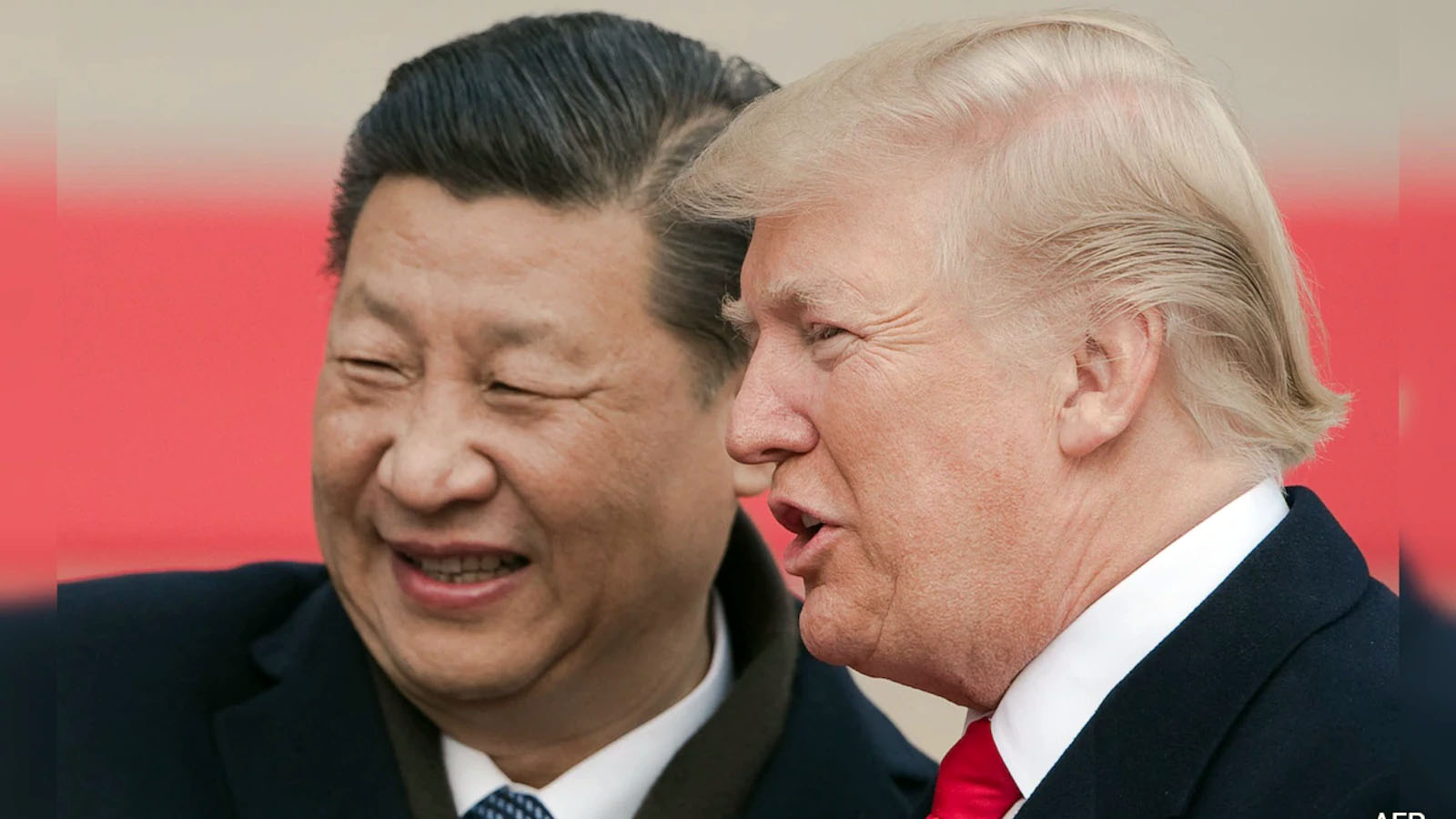
China Denies Supplying Iran Intelligence Linked to Attack That Killed US Troops
China has rejected as “groundless” reports that Chinese entities supplied Iran with satellite imagery of a US military base in Jordan before and after an Iranian missile attack that killed three American troops in July.
The denial followed a report by The Wall Street Journal, which cited unnamed US officials as saying that Iran obtained high-resolution satellite images of the Muwaffaq Salti Air Base in Jordan, where US forces are stationed, from Chinese entities.
The July 17 Iranian missile attack on the base killed three US Army soldiers and injured four others, according to US officials cited in the report.
The US officials reportedly linked the satellite imagery to the Iranian attack but did not identify the Chinese entities involved. Importantly, the report did not accuse the Chinese government of directly ordering, coordinating or facilitating the strike.
Chinese officials have rejected the allegation and demanded evidence, maintaining that Beijing complies with international law and opposes what it described as unfounded accusations.
The development has nevertheless raised fresh questions in Washington over the growing strategic relationship between China and Iran, particularly amid the wider US-Iran conflict and continuing tensions between Washington and Beijing.
The report said the satellite images were obtained before and after the attack, potentially giving Iran detailed information about the military facility and helping it assess the impact of its strikes.
READ ALSO:
- Police Arrest Mother Over Alleged Brutal Abuse of 7-Year-Old Girl in Anambra
- King’s College Concession: 115 Unity Colleges Shut as Education Workers Defy FG
- Petrol Price Hits N1,450/Litre as Middle East Crisis Pushes Oil Above $108
US officials have previously expressed concern about China’s technological and satellite-related links with Iran. Washington sanctioned three China-based satellite companies in May over allegations that they supported Iran’s military operations.
The latest report has intensified scrutiny of the role of commercial and private Chinese entities in providing technology or imagery that could potentially enhance Iran’s military capabilities.
However, US President Donald Trump has sought to play down the significance of the latest allegations.
Speaking to reporters aboard Air Force One on Sunday, Trump was asked whether he would raise the issue with Chinese President Xi Jinping during their expected meeting in the United States.
Rather than directly addressing whether Beijing should be held responsible, Trump compared Chinese intelligence-gathering activities with those of the United States.
Trump also maintained that he has a good relationship with Xi, saying the Chinese leader had behaved reasonably well and that Washington and Beijing had likewise conducted themselves reasonably.
The comments come as the United States and China attempt to manage several areas of tension, including trade, technology, national security and China’s relationship with Iran.
The allegations are particularly sensitive because the reported transfer of imagery occurred before an attack that resulted in the deaths of American service members.
The Iran missile strike in Jordan was part of the broader conflict involving Iran and the United States, which has increasingly drawn in regional actors and raised concerns about the security of American military personnel and facilities across the Middle East.
The Wall Street Journal report, according to Reuters, could not immediately be independently verified. It also did not establish that Chinese authorities themselves provided the imagery or that Beijing had prior knowledge of the Iranian attack.
The distinction is significant because evidence that individual Chinese companies or entities supplied commercial satellite imagery would not, by itself, establish direct involvement by the Chinese government.
The controversy comes ahead of a potential meeting between Trump and Xi, with the two leaders expected to meet in the United States on September 24, although Beijing had not officially confirmed the meeting as of Monday.
China’s denial and Trump’s decision to downplay the allegation could help prevent the issue from becoming a major diplomatic confrontation ahead of the anticipated meeting.
For now, the central question remains whether Chinese commercial entities provided the imagery to Iran and, if so, what information was transferred and whether it materially contributed to the Iranian operation that killed the three US troops.
The allegations are likely to remain under scrutiny as Washington assesses the extent of Chinese support for Iran and its possible implications for US military operations in the Middle East.
China Denies Supplying Iran Intelligence Linked to Attack That Killed US Troops
International
‘Completely False’ — Moreno Denies Using AI to Prepare Games

Robert Moreno has begun his interim tenure as South Korea’s coach with a denial of one of the more unusual controversies attached to his coaching career, claims that he used ChatGPT to help prepare his teams for matches.
The Spanish coach, who arrived in South Korea this weekend, was asked about the allegation as he began work with the national side.
Moreno was accused by Russian media earlier this year of heavily relying on artificial intelligence during his spell at Sochi, where he left in September 2025 following a poor run of results.
He has consistently rejected the claim.
Moreno said the reports were “completely false” and argued that his use of technology had been misrepresented.
His explanation comes as he takes over a South Korean side attempting to recover from a turbulent World Cup campaign. The team crashed out in the group stage, leading Hong Myung-bo to resign and leaving the Korea Football Association under pressure over both the team’s performance and its previous recruitment process.
The KFA appointed Moreno as a temporary replacement rather than immediately committing to a permanent coach. He is expected to lead the team through six international matches, beginning with September and October friendlies against Ecuador, Uruguay, Venezuela and Uzbekistan.
His first squad includes veteran captain Son Heung-min, who now plays for Los Angeles FC, as well as Lee Kang-in and Kim Min-jae.
Moreno said he wants his tenure to be about more than results, with the immediate goal of rebuilding the relationship between the national team and its supporters.
“I want to make Korean football fans happy,” he said.
For now, however, the AI controversy remains part of the baggage surrounding his appointment, something Moreno appears keen to put behind him as he begins the task of rebuilding South Korea’s national team.
International
Trump Downplays Report of Chinese Satellite Help to Iran

US President Donald Trump has played down a report alleging that Chinese entities supplied Iran with satellite imagery of a US military base in Jordan before and after a deadly Iranian missile strike.
The report, published by The Wall Street Journal, said US officials had linked high-resolution satellite imagery provided by Chinese entities to Iran’s July 17 attack on Muwaffaq Salti Air Base, where three American soldiers were killed and four others injured.
Trump, however, appeared to dismiss the significance of the allegation while speaking to reporters aboard Air Force One on Sunday.
“When they say that China spies on us, I say you’re right, and we spy on them too,” he said, adding that the two countries essentially engage in similar intelligence activities.
The report has not established that Beijing directly authorised or participated in the alleged transfer. US officials cited by the Journal did not identify the Chinese entities involved, while Chinese officials reportedly rejected the allegation and asked Washington to provide evidence.
The development comes as Washington and Beijing prepare for a potentially sensitive meeting between Trump and Chinese President Xi Jinping, expected to take place at the White House on September 24.
The US has previously accused Chinese companies of assisting Iran’s military capabilities. Washington sanctioned three China-based satellite firms in May over alleged support for Iran’s military operations.
Despite the latest dispute, Trump struck a conciliatory tone when discussing Xi, saying the Chinese leader had “behaved reasonably well” and that the US had done the same.
Trump’s response leaves the satellite imagery allegations unresolved, with Beijing denying involvement and Washington yet to publicly identify the companies allegedly involved.
-

 metro3 days ago
Woman disguises as Muslim woman in Niqab to steal in Ado-Ekiti market, video sparks outrage
-

 metro3 days ago
Ondo Herbal Drink Tragedy: Survivor Vows Never to Drink Again as Death Toll Tops 30
-

 Business2 days ago
Dangote: ₦525 Refinery Shares Could Rise to ₦10,000
-

 metro3 days ago
Sokoto Cleric Stabbed Twice in Neck After Juma’at Prayer, Attacker Killed
-

 News1 day ago
SERAP Threatens Legal Action Over ₦126bn INEC Electoral Funds
-

 metro2 days ago
MURIC fires back at Peter Obi: Forget Sallah ceremony, free Nigerian Muslims
-

 metro2 days ago
Abia Police Arrest Father, Three Others Over Alleged Attempt to Sell 16-Month-Old Daughter
-
 International2 days ago
Trump Tells Supporters to ‘Cheat Like Hell’ Ahead of US Election