

metro
DHQ Lambasts Reuters’ Attempt to Blackmail Nigerian Military over Boko Haram Families

Efforts by Reuters to Blackmail the Nigerian Military Through Mercenary Journalism Fails
Reuters, an international news agency, now part of Thomson Reuters, wrote that it was working on a series of stories about purported actions of the Nigerian military during the government’s 13-year war against Islamist insurgents in the country’s North East. To them, they were committed to producing an accurate, fair and complete report hence, their request to arrange a time to discuss before their reporting. The supposed stories were purported to focus on 2 specific areas: First, supposed military-run programme of forced abortions performed on women and girls who were held captive and impregnated by Islamist militants and second, a supposed killing of children by the military as part of counterinsurgency operations.
The Reuters report was to also allege that, since 2013, Nigeria’s military had run a secret, systematic and illegal abortion programme in the country’s North East terminating at least 12,000 pregnancies among women and girls. That, many children were shot, poisoned, suffocated or run down by vehicles in army-led actions. Furthermore, the report was to allege that soldiers selected babies and toddlers for killing after rescuing them and their mothers from Islamist militants, amongst other weighty concocted allegations. The key motive for supposedly carrying out the abortions was allegedly the notion that the children of Islamist militants, because of the blood in their veins, would one day follow in their father’s footsteps and take up arm against the Nigerian Government and society.
Hmmm! Wickedness really runs in the veins of some people and it surely runs deep in the veins of the Reuters team that concocted such evil for interrogation. The fictitious series of stories actually constitute a body of insults on the Nigerian peoples and culture for, no people or culture in Nigeria practices such evil as dreamt up by the Reuters team. Irrespective of the security challenges we face as a nation, Nigerian peoples and cultures still cherish life. Hence, Nigerian military personnel have been raised, bred and further trained to protect lives, even at their own risk especially, when it concerns the lives of children, women and the elderly. This much is reflected in Standing Operating Procedures (SOPs), Concepts of Operations, Rules of Engagements (ROEs) and other documents that guide military operations. Hence, nowhere has the Nigerian military operated (Congo, Liberia, Sierra Leone, Somalia, Rwanda, Yugoslavia, [Darfur] Sudan, Gambia and Guinea Bissau, amongst others) that, there has been any trace or allegation of infanticide. The Nigerian military will not therefore, contemplate such evil of running a systematic and illegal abortion programme anywhere and anytime, and surely not on our own soil. The Nigerian military will not also deliberately plan to target children during its counterinsurgency operations or other operations, both within and outside Nigeria.
READ ALSO:
- Aisha Buhari bows to pressure, withdraws case against Internet critic
- Suspected yahoo boys die of drug overdose while celebrating ‘financial breakthrough’
- Gunmen attack mosque in Delta, abduct Imam, 11 worshippers injured
The Reuters team must have been schooled in, and have now become proponents of scorched-earth and inhuman policies employed by colonialists during the colonial era and during the battles for independence in Indo-China, Malaysia, Algeria and other places. Villages and crops were burnt. Children, women, elderly, the innocent were killed in systematic and inhuman programmes. Nigerians, and by extension Nigerian military, are not made in such wicked mould, and the Reuters team cannot appropriate the evil of infanticide to the Armed Forces of Nigeria and the Nigerian peoples.
But, let’s interrogate the issues. It took Reuters 13 solid years to craft an allegation of infanticide against the Nigerian military and the Nigerian nation. This shows that a news agency as ‘renown’ as Reuters is itself complicit for failing in its mandate to draw attention, to inform the publics about supposed occurrences that offend not only the laws of armed conflict but also international humanitarian law.
Let us analyze the period from July 2021 till November 2022. A total of 82,064 Boko Haram fighters with members of their families have surrendered to troops of Op HADIN KAI. Out of this number, 16,553 were active male fighters, 24,446 were women while 41,065 were children. The Borno State Government is camping and accommodating them family-by-family, as per households, without having to separate the children from their parents. In the same camp are thousands of pregnant women and nursing mothers. A total of 262 babies were born within a period of 4 months (94 in July, 98 in August, 60 in September and 11 in October 2022). This figure comprises 150 female and 112 male children. The children were neither aborted nor yanked from their mothers and killed, as may have been the joy of Reuters.
Let us now spotlight the rescued Chibok girls who were kidnapped from their school by Boko Haram Terrorists in 2014. A total of 11 of the Chibok girls were rescued this year 2022. Hauwa Joseph with her child, Mary Dauda with her child, and Ruth Bitrus were rescued in June 2022. Troops also rescued Kauna Luka with her child and Hanatu Musa with her 2 children in July 2022. In the same vein, Aisha Grema with her 4 year-old child and Falmata Lawal were rescued in August 2022. Furthermore, Asabe Ali with her child, Jinkai Yama with her 3 children, Yana Pogu with her 4 children and Rejoice Senki with her 2 children were rescued in September and November this year. The names of the rescued girls are in Serials 18, 46, 41, 38, 7, 11, 3, 12, 20, 19 and 70 respectively (in the order of rescue) in the list of the abducted Chibok School girls. The rescued girls were handed over to the Borno State government after their rescue.
A visit to the Rehabilitation Centre accommodating the Chibok girls on 29 November 2022 revealed that, there were 2 other Chibok girls (with their children) recued earlier, making the number of the Chibok girls in the Centre to be 13. Other residents in the facility were children who were rescued by troops unaccompanied (by any adult) or who separated from their parents/relatives due to fog of war. The welfare of the Chibok girls with their children and the unaccompanied children, is a major priority of the Borno State Government. UNICEF is assisting the Centre in tracing the relatives of the Chibok girls as well as those of the unaccompanied/separated children to facilitate reintegration with their communities. If there was any evil, illegal programme to systematically kill the children of Boko Haram terrorists, then the children that the terrorists begat through the Chibok girls would have been prime targets.
READ ALSO:
- I may accept if Ooni proposes marriage — Peju Johnson
- I caught Kim Kardashian with another man, Kanye West alleges
- Michelle Dede, Rita Dominic’s chief bridesmaid begs for husband
The Joint Investigation Centre (JIC) is where captured terrorists (men and women) are being processed, to determine their level of complicity in the heinous crimes committed by the Boko Haram Terrorist group. There were 1,952 persons in the facility, which included 23 women with 11 children who remain attached to their mothers as at 30 November 2022. There is also a medical facility being run by the Centre in collaboration with medical staff of ICRC. The welfare of all the occupants at the JIC is thus highly prioritised, including basic education for the children, tailoring and hat-making skills acquisition for the adults as well as provision of recreational and sporting facilities for all the occupants.
Since July 2021 when the Boko Haram terrorists started surrendering with their families in droves, a community-based reintegration process is evolving, involving local traditional leaderships, town councils and family members. The process is made easier due to the fact that most of the surrendered terrorists were actually conscripted from their villages by the core terrorists, whose ranks have been degraded by more than 95 percent. Accordingly, a total of 4,933 recued civilians/surrendered persons (including 1,977 children, 1,423 women and 1,533 men) have been reintegrated with their communities from the camp housing the Chibok girls alone. The children were not taken from their parents and killed; unaccompanied ones were not also rounded up and killed.
A crucial point to note is the fact that, more than 245 United Nations agencies, International NGOs and local NGOs operate in the North East, who are active in the IDP camps and other concentrations of vulnerable peoples. They provide food, medical care and other services in collaboration with the Nigerian and Borno State Governments. But the wickedness of the Reuters team members must have blinded them, shutting them off from the humanitarian realities in the North East of Nigeria. UNICEF, Girl Child Concern, International Medical Corps, Save the Children International, Girl Effect, Concern For Women and Children Development Foundation, International Federation of Women Lawyers, Women and Children’s Right and Peace Building Awareness Initiative, Medicin Sans Frontiers (France, Switzerland, Belgium and Spain) as well as Centre for Protection of Women and Girls are some of the humanitarian organizations operating in the North East. These have direct responsibilities for the welfare of children and/or women in the crisis area. Could the humanitarian community operating in the North East of Nigeria be equally complicit in condoning or supporting infanticide as thought of by Reuters? Could the United Nations Secretary General have commended troops of OP HADIN KAI when he visited Maiduguri recently? Or, is he, himself also complicit for failure to address an organized infanticide in the North East, which exists only in the warped, wicked imagination of the Reuters team?
The history of the Nigerian military dates back to 1863, especially with respect to the Nigerian Army that conducts land operations either as a single Service or in joint operations with other Services or security agencies. So, what metamorphosed into the Nigerian military actually passed through several processes and experiences through the First and Second World Wars as well as a Nigerian Civil War. Contingents of the Nigerian military have also taken part in several UN or regional peace keeping or peace enforcement missions abroad, with honours as mentioned in previous paragraphs. To participate in such missions, Pre-Induction Training and In-Theatre Training are usually carried out vigorously. The protection of civilians especially women, children and the elderly, always formed a major plank of such training sessions.
Military training institutions in Nigeria also focus extensively on Laws of Armed Combat and International Humanitarian Law. Aside all these, Nigerians and the Nigerian military are lovers of children. Nigerian military personnel have thus constantly denied themselves ration, supplies, transport and medicine in order to cater for rescued civilians especially children, women and the elderly. The Nigerian military have grown in leaps and bounds in experience and stature in humanizing operations, even in the most confused and intense operational environment. Hence, it offends the pedigree of the Nigerian military, it offends the Nigerian culture, and it offends honour for Reuters to postulate that the Nigerian military had routinely carried out both small-scale and mass killings of children in its counter-insurgency/counter-terrorism efforts in the North-East of Nigeria.
The Reuters condemnable series of stories can only have arisen from a mentality of “media or Press-bullying”. Reuters is a media company with world-wide reach that sells news to print, electronic and online media outlets. The so-called News Editor for Sub-Saharan Africa, Alexandra Zavis, remains in South Africa and concoct evil lies to insult Nigerian peoples and cultures with allegations of infanticide purportedly being sponsored and carried out by the military and civilian leaderships in North East of Nigeria.
The Reuters’ series of stories are akin to telling the world that Nigerians still live on top of trees. It now seems that the new stock in trade for Reuters is, ‘mining’ and selling lies to demonize Nigerian military, Nigerian institutions and Nigerian leaderships. This new vocation of Reuters is worse than illegal arms trade, worse than hard-drug trafficking, and actually worse than terrorism. The so-called Reuters’ News Editor for Sub-Saharan Africa, Alexandra Zavis, should better retrace her steps, before the founder, Paul Julius Reuter, starts to regret the demonic journalism being practiced by the journalists that he left behind!
JIMMY AKPOR
Major General
Director Defence Information
2 December 2022
prnigeria





metro
‘We Don’t Know What Else to Do’ — Mother Begs for Release of Abducted Children
‘We Don’t Know What Else to Do’ — Mother Begs for Release of Abducted Children
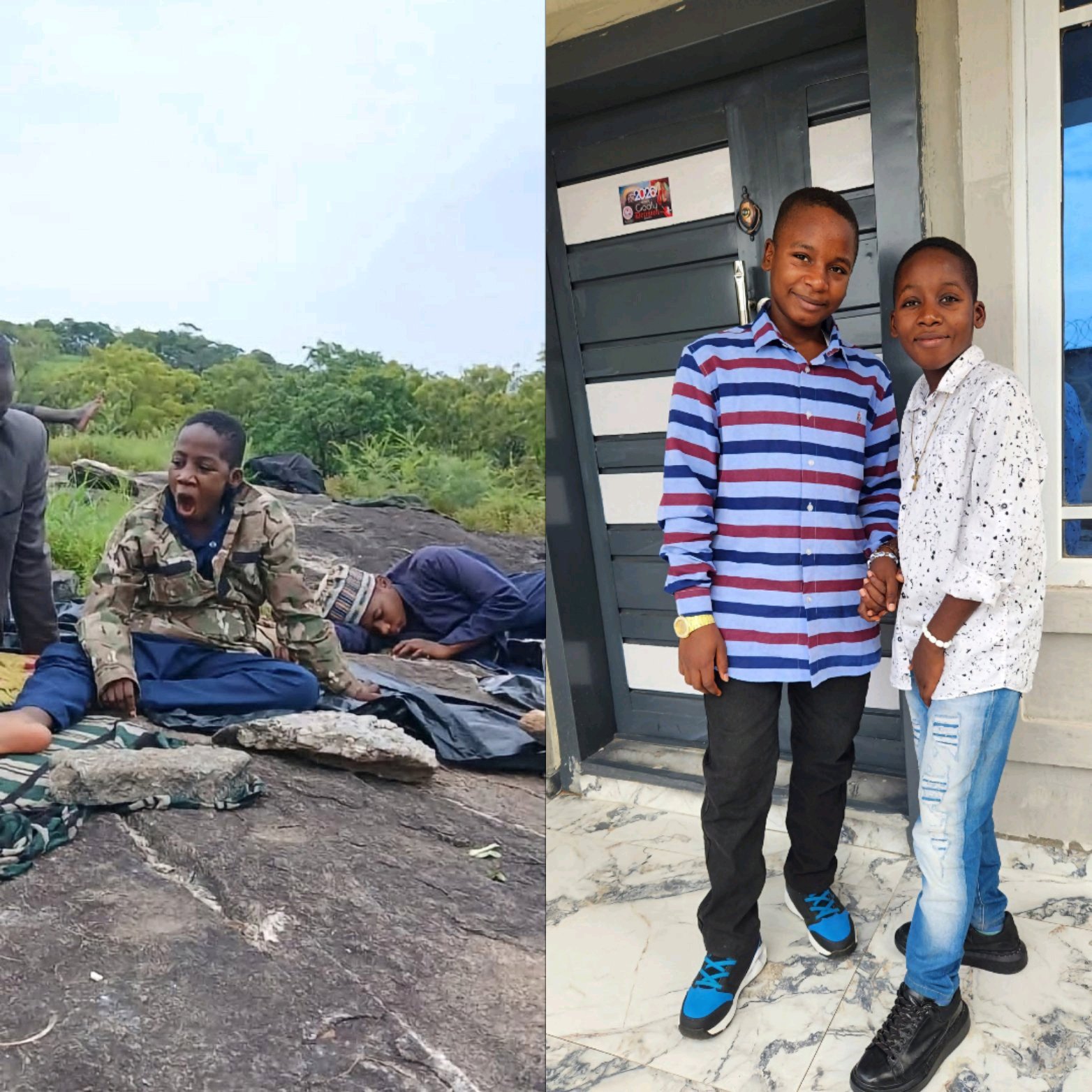
A distraught mother in Kaduna State, Dominic Tina, has appealed to Nigerians and security agencies to help secure the release of her two children, who were reportedly abducted in Rimi Kamazou about seven weeks ago.
Tina made the emotional appeal in a social media post, saying her family desperately needed assistance to secure the children’s safe return.
According to a report published by Linda Ikeji’s Blog on October 19, 2026, the mother shared photographs of her children, including an image she said was sent to the family by their abductors.
The photograph reportedly raised fresh concerns about the children’s situation as their family continued to seek help to bring them home.
In her appeal, Tina expressed frustration over the prolonged ordeal, saying her family no longer knew what else to do.
She wrote: “My family don’t know what to do again, please help me reshare. We desperately need assistance.”
The children’s abduction has left their mother and other family members in distress, with the appeal aimed at attracting public attention and possible assistance from relevant authorities.
However, details surrounding the abduction, including the identities of the suspected kidnappers, their possible demands and the latest condition of the children, could not be independently verified from the information available.
It was also unclear whether security agencies had made any breakthrough in efforts to secure the children’s release.
The case underscores the anguish experienced by families whose loved ones remain in captivity for extended periods and the urgent need for coordinated efforts to locate abducted persons.
Tina’s appeal has called attention to her family’s desperate search for a resolution, as hopes remain that the children will be reunited with their loved ones.
The relevant security authorities are urged to investigate the reported abduction and take appropriate steps to facilitate the children’s safe return.
EDITORIAL NOTE: Newstrends.ng could not independently verify the latest status of the case before publication. Further confirmation should be sought from the family or the Kaduna State Police Command.
‘We Don’t Know What Else to Do’ — Mother Begs for Release of Abducted Children
metro
‘I Never Asked Them to Abandon Loved Ones’ — Obi Clarifies Diaspora Remarks

ABUJA — The presidential candidate of the Nigeria Democratic Congress (NDC), Peter Obi, has denied asking Nigerians living abroad to abandon their relatives at home, insisting that his comments about financial assistance were misrepresented by political opponents.
Obi issued the clarification on Tuesday in a statement titled “My Message Has Been Twisted”, posted on his X account following widespread reactions to his remarks at a town hall meeting with Nigerians in Manchester, United Kingdom.
The former Anambra State governor said he appreciated Nigerians in the diaspora who worked hard and made sacrifices to support their families in Nigeria, stressing that their contributions remained essential to millions of households.
“I deeply appreciate Nigerians in the diaspora who work tirelessly and make enormous sacrifices to support their families back home,” Obi said.
He noted that money sent home by Nigerians abroad helped relatives pay school fees, hospital bills, rent and feeding expenses, adding that their sacrifices deserved recognition and respect.
“Their patriotism and sacrifices deserve our profound respect. I never asked them to abandon their loved ones,” he stated.
Obi explained that his concern was the economic situation forcing millions of Nigerians to depend on relatives abroad to meet their basic needs, rather than having access to decent jobs and essential services at home.
READ ALSO:
- FG Confirms Ebola Case in Abuja, Identifies 44 Contacts
- Breaking: Afenifere Leader Pa Fasoranti Dies at 100
- Army Major, Soldiers Killed in ISWAP Ambush in Yobe State
- Chaos in Abeokuta as Algerian Fans Attack Coach, Vandalise Stadium After Rangers Defeat
“My concern is that Nigeria should not remain a country where millions depend on relatives abroad for basic survival,” he said.
According to the NDC candidate, Nigeria needs a system that provides employment opportunities, affordable healthcare, quality education and the conditions necessary for citizens to support themselves and their families.
“Our goal must be to build a nation that provides jobs, affordable healthcare, quality education, and economic opportunities for its citizens,” he added.
Obi accused unnamed political opponents of distorting his message, maintaining that his argument was directed at the underlying causes of poverty and economic hardship rather than the willingness of Nigerians abroad to help their relatives.
“Political opponents may twist my message, but the truth remains clear: I am not asking Nigerians abroad to abandon their families. I am advocating for a Nigeria that will no longer abandon its own people,” he said.
The clarification followed controversy over comments Obi made during a town hall meeting with diaspora supporters in Manchester on Sunday.
In a video of the engagement that circulated widely on social media, Obi urged Nigerians living in the United Kingdom to reject requests for money from people at home and encourage them to support leaders capable of improving the country’s economic conditions.
“You have people at home in Nigeria today who are begging you for money. Tell them no!” he said.
Obi argued that financial assistance from relatives abroad could provide immediate relief but would not resolve the wider economic problems forcing many Nigerians to seek help.
He linked the situation to concerns about governance, corruption and economic hardship, urging Nigerians in the diaspora to use their influence to encourage greater political accountability at home.
The remarks generated mixed reactions, with some interpreting them as a call to stop sending money to struggling relatives, while others viewed them as an appeal to address the structural causes of poverty.
Obi’s latest statement seeks to clarify that distinction, emphasising that he values diaspora remittances but wants Nigeria to become a country where families can meet their basic needs without depending on financial assistance from abroad.
The controversy comes as political parties and prospective candidates intensify engagement with Nigerians at home and in the diaspora ahead of the 2027 general election.
‘I Never Asked Them to Abandon Loved Ones’ — Obi Clarifies Diaspora Remarks
metro
Breaking: Afenifere Leader Pa Fasoranti Dies at 100

Breaking: Afenifere Leader Pa Fasoranti Dies at 100
AKURE, Ondo State — Nigeria has lost a prominent elder statesman and pro-democracy advocate, Pa Reuben Famuyide Fasoranti, the national leader of the pan-Yoruba socio-political organisation, Afenifere, who died on Tuesday, October 20, 2026, at the age of 100.
Ondo State Governor, Lucky Aiyedatiwa, announced the death in a statement, describing Fasoranti as a respected leader whose life was marked by integrity, wisdom and selfless service to Ondo State, Yorubaland and Nigeria.
The governor said the late Afenifere leader provided guidance on critical issues affecting governance, justice and national development, adding that his counsel and fatherly leadership would be greatly missed.
Aiyedatiwa also extended his condolences to the Fasoranti family, the people of Akure Kingdom and residents of Ondo State over the loss.
Fasoranti, who celebrated his 100th birthday on May 11, 2026, was one of the influential figures in Yoruba politics and a prominent disciple of the late nationalist and political leader, Chief Obafemi Awolowo.
Born on May 11, 1926, in Uso, Ondo State, Fasoranti built a career in education before becoming deeply involved in politics and the struggle for democratic governance in Nigeria.
A trained educationist, he taught at Ondo Boys’ High School and later served as principal of Oyemekun Grammar School and Iju-Itaogbolu Grammar School. He also established educational institutions, including Omolere Nursery and Primary School and Akure High School.
His commitment to education remained an important part of his legacy, alongside his involvement in public service and political development.
READ ALSO:
- Chaos in Abeokuta as Algerian Fans Attack Coach, Vandalise Stadium After Rangers Defeat
- Nollywood Mourns as Actress, Beauty Queen Tenia Abraham Dies at 32
- FG Challenges World Bank’s 124% Debt-to-Revenue Warning, Cites Rising Income
Between 1979 and 1983, Fasoranti served as Commissioner for Finance in the old Ondo State under the administration of the late Governor Michael Adekunle Ajasin. His political outlook was strongly influenced by Awolowo’s progressive philosophy and its emphasis on education, social welfare and good governance.
Fasoranti later emerged as the leader of Afenifere following the death of Pa Abraham Adesanya. Under his leadership, the organisation remained an influential voice in debates on Yoruba interests, national unity, restructuring and the future of Nigeria’s federal system.
He was also associated with the National Democratic Coalition (NADECO), a pro-democracy movement that opposed military rule and demanded the restoration of democratic government. His role in the struggle placed him among the prominent voices advocating constitutional rule and political accountability during Nigeria’s years of military dictatorship.
Throughout his public life, Fasoranti consistently expressed views on governance, justice, equity and the need for a more balanced federal structure. His interventions in national affairs made him a reference point for political leaders and members of the Yoruba community.
Following news of his death, tributes began pouring in from political leaders and public figures.
Ogun State Governor and Chairman of the Southern Governors’ Forum, Dapo Abiodun, described Fasoranti’s death as a significant loss to the Yoruba nation and Nigeria. He praised the late elder statesman’s contributions to democratic development and his commitment to justice, equity and good governance.
President Bola Ahmed Tinubu had also celebrated Fasoranti’s 100th birthday in May, joining other prominent Nigerians in recognising his contributions to public service and the country’s political history.
Fasoranti’s death marks the end of a century-long life that spanned Nigeria’s colonial period, independence, military rule and the return to civilian democracy.
His legacy is expected to endure through his contributions to education, public administration, Yoruba political affairs and the campaign for democratic governance.
As the family, Afenifere and the wider Yoruba community mourn his passing, the late elder statesman will be remembered for his long-standing involvement in public life and his advocacy for justice, accountability and national development.
Breaking: Afenifere Leader Pa Fasoranti Dies at 100
-

 metro3 days ago
Oyo Baby Trafficking Scandal: Mother, Doctor Arrested Over Alleged ₦2m Sale of Infant
-

 metro3 days ago
Kano: Soldiers Kill Two Kidnappers, Rescue Victim, Recover ₦10m
-

 Africa3 days ago
Nairobi Mother Says Husband Abandoned Her During Childbirth, Paid Dowry for Another Woman
-

 metro2 days ago
NAFDAC Probes Corps Member’s Death at Enugu Camp as Fake Drug Claims Emerge
-

 metro2 days ago
Ogun House Fire Horror: Husband Arrested After Wife Dies Following Domestic Dispute
-
 News2 days ago
FG Challenges World Bank’s 124% Debt-to-Revenue Warning, Cites Rising Income
-

 metro3 days ago
SERAP Sues INEC Over ₦126bn Electoral Funds, Demands Full Accountability
-

 Politics2 days ago
Buhari Feared Tinubu Presidency, Resisted Pressure to Back Him – Baba-Ahmed Claims