
metro
EFCC witness reveals how intelligence report sparked investigation into ex-NSA Dasuki

EFCC witness reveals how intelligence report sparked investigation into ex-NSA Dasuki
A prosecution witness on Tuesday told the FCT High Court in Abuja how an intelligence report triggered the Economic and Financial Crimes Commission (EFCC)’s investigation into former National Security Adviser (NSA) Sambo Dasuki and others over alleged diversion of arms funds.
The witness, Adariku Michael, an EFCC detective, stated that the commission received the report on 21 September 2015, which contained allegations of money laundering and abuse of office.
According to Michael, the intelligence prompted a thorough probe that eventually formed the basis of the high-profile corruption case against Dasuki and several associates.
Mr Michael also said the Office of the National Security Adviser (ONSA), which Mr Dasuki headed as the NSA between 2012 and 2015 during the administration of then-President Goodluck Jonathan, diverted huge amounts of money between October 2014 and April 2015 to various companies.
The anti-graft agency is prosecuting Mr Dasuki, a retired colonel, alongside a former General Manager at the Nigerian National Petroleum Corporation (NNPC), Aminu Baba-Kusa; Acacia Holdings Limited and Reliance Referral Hospital Limited on 32 counts of fraud involving diversion of 33.2 billion arms funds entrusted to the NSA office.
In March, the EFCC re-arraigned the defendants on criminal breach of trust, among other charges.
The rearraignment followed the reassignment of the case that started in 2015 to a new judge, Charles Agbaza.
The defendants denied all charges as they did when they were first arraigned in 2015.
READ ALSO:
- Tinubu’s reforms ended governors’ dependence on borrowing for salaries – Akpabio
- Alleged certificate forgery: Tinubu accepts Minister Nnaji’s resignation
- Alleged certificate forgery: Tinubu accepts Minister Nnaji’s resignation
Defence’s objection cuts short testimony
Led in evidence by prosecution lawyer Oluwaleke Atolagbe, EFCC detective Mr Michael told the court that he was part of the commission’s team of special task force.
According to him, the team led by Halimah Kazeem, an officer of the EFCC, was assigned to crack the intelligence received about the alleged diversion of funds entrusted in ONSA’s care.
“I got to know about this case when the commission (EFCC) received an intelligence report on 21 September 2015 bordering on abuse of office and money laundering, alleging that the Office of the National Security Adviser had moved a huge sum of money between October 2014 and April 2015 to the accounts of various companies,” he said.
On receiving the report, he said, the team wrote a letter of investigation to the Central Bank of Nigeria (CBN).
It was at this point that of the prosecution witness’ testimony that Mr Baba-Kusa’s defence lawyer, Solomon Umoh, a Senior Advocate of Nigeria (SAN), raised an objection.
Mr Umoh informed the court that Mr Michael was not listed on the list of witnesses served to the defence team by the prosecution.
He said the failure to include Mr Michael in the list of prosecution witnesses frontloaded to the defence was a violation of section 379 of the Administration of Criminal Justice Act (ACJA).
However, the EFCC’s lawyer, Mr Atolagbe, told the court that it was not the first time the witness had given evidence in the case.
Mr Atolagbe said Mr Michael had testified in the case while the current FCT Chief Judge, Hussein Baba-Yusuf, was overseeing the case.
He further stated that the prosecution tendered multiple documents as exhibits through.
Mr Atolagbe requested an adjournment to allow the prosecution do the needful.
READ ALSO:
- $4.5bn fraud case: Emefiele’s phone forensic analysis halted amid EFCC – defence dispute
- Forbes: Elon Musk on track to become the world’s first trillionaire
- Nigeria to receive fresh $500m AfDB loan for budget support
The judge adjourned the case until 31 October.
Mr Dasuki and his co-defendant have stood trial in twin cases of diversion of various sums of funds from ONSA before the FCT High Court.
Both cases, with chequered history, have gone on in court with little progress for about 10 years.
Mr Atolagbe said Mr Michael had testified in the trial while the current FCT High Court Chief Judge, Hussein Baba-Yusuf, was overseeing the case.
He further said the prosecution had tendered multiple documents as exhibits through the same witness before the previous judge.
The trial, now before the new trial judge, Mr Agbaza, was stalled after the prosecution presented only one witness.
Also in 2015, the EFCC filed a separate case against Mr Dasuki. He was charged alongside former Minister of State for Finance, Bashir Yuguda; former Sokoto State Governor, Attahiru Bafarawa; his son, Sagir Bafarawa; and their company, Dalhatu Investment Limited.
They were accused of criminal breach of trust and misappropriation of N19.4 billion.
The case also suffered several adjournments. It is currently before another FCT High Court judge, Yusuf Halilu.
These trials suffered multiple adjournments in their early years, largely due to the State Security Services (SSS) refusing to release Mr Dasuki on bail despite multiple court orders.
The cases are part of Nigeria’s longest-running high-profile corruption trials, reflecting systemic delays in the country’s judicial system.
Mr Dasuki served as NSA between 2012 and 2015, at the height of Boko Haram attacks in Nigeria’s North-east, during the administration of then-President Goodluck Jonathan.
An audit panel set up by the administration of President Muhammadu Buhari, who came to office after defeating Mr Jonathan in the 2015 presidential election, revealed that about $2 billion entrusted in the office of the NSA, then led by Mr Dasuki, for procurement of arms could not be accounted for.
The EFCC, which instituted multiple charges against diverse persons who received funds from the NSA office, alleged that the arms funds were doled out to friends, relatives, political allies, particularly members of the then-ruling Peoples Democratic Party (PDP), for purposes unrelated to the purchase of arms.
EFCC witness reveals how intelligence report sparked investigation into ex-NSA Dasuki
(PremiumTimes)











metro
Bandits Abduct Seven Family Members, Three Neighbors in Kaduna
Bandits Abduct Seven Family Members, Three Neighbors in Kaduna
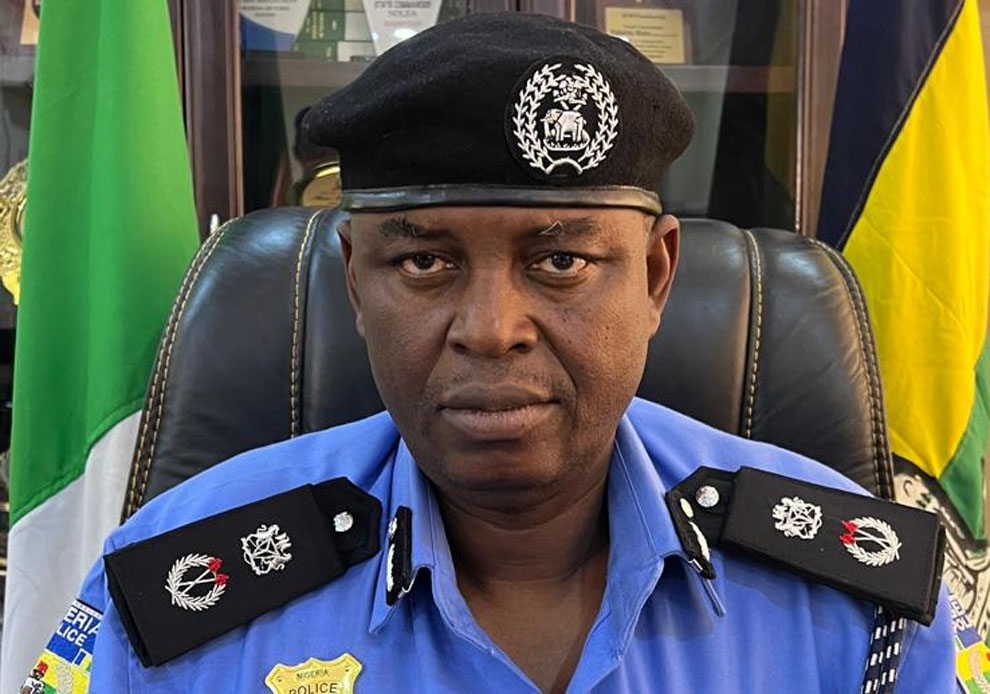
Suspected bandits have abducted ten people, including seven members of a single family, in a violent raid on Unguwar Sabon‑Titi, along Katari‑Hayin Dam in Kaduna State’s Kachia Local Government Area.
The attack occurred around 9:32 p.m. on Thursday, according to a local resident, Mr. Markus Yakubu, who described how the gunmen, armed with sophisticated weapons, quietly surrounded a family compound before whisking away the victims. The bandits then moved to a neighboring house and abducted three more residents.
Yakubu identified the abducted as Jummai Amos, Barnabas Amos, Iko Amos, Baby Amos, Eunice Amos, Eshiwan Amos, Godwin Amos, Bagudu Damisa, Evelyn Damisa, and Alfred Iriyo. He explained that the assailants refrained from firing inside the town, possibly because the attacked houses were close to the District Police Officer’s residence in Katari, only beginning to shoot after moving the victims away from the area.
READ ALSO:
- Festus Keyamo Urges ADC to Thank INEC Over Derecognition of Rival Factions
- INEC Warns ADC Against Holding Convention Without Supervision
- APC Rejects ADC Claims, Says Tinubu Not Responsible for Party’s Legal Troubles
A community leader, speaking on condition of anonymity, confirmed receiving distress calls about the raid but said security operatives’ contacts were unreachable, leaving locals to await intervention. Neighbors reportedly visited the homes of the abducted on Friday morning to offer support to the families.
A security source also confirmed that police and military personnel are combing forests and surrounding areas in search of the kidnappers and to rescue the victims alive. Efforts to reach the Kaduna State Police Command spokesman, DSP Hassan Mansur, for comment were unsuccessful.
The incident highlights the persistent insecurity in Kaduna State, where rural communities have frequently been targeted by armed bandits. Residents continue to demand urgent government action, improved security patrols, and rapid response teams to prevent further abductions and ensure the safe return of victims.
Bandits Abduct Seven Family Members, Three Neighbors in Kaduna
metro
Fani‑Kayode Fires Back at Peter Obi, Defends NADECO’s Legacy

Fani‑Kayode Fires Back at Peter Obi, Defends NADECO’s Legacy
Former Minister of Aviation Femi Fani‑Kayode has sharply criticised Peter Obi over remarks perceived to diminish the role of the National Democratic Coalition (NADECO) in Nigeria’s democratic history, thrusting the debate over the nation’s pro‑democracy legacy back into the spotlight.
In a lengthy post shared widely on social media, Fani‑Kayode labelled Obi’s alleged comments about NADECO as “a crying shame” and warned that they “shall not go unanswered.” He accused Obi of attempting to denigrate the sacrifices of NADECO leaders and activists who opposed military rule in the 1990s.
“Peter Obi’s attack on NADECO and his attempt to denigrate the leaders of that movement and its members — who single‑handedly fought military rule and made the ultimate sacrifice for democracy in our country — is a crying shame,” Fani‑Kayode wrote.
He recalled how Obi, in his early political life, had been associated with the administration of General Sani Abacha, one of Nigeria’s most oppressive military rulers. Fani‑Kayode contrasted this with the actions of NADECO figures and footsoldiers who resisted military oppression, endured persecution and brutality, and were driven into exile for their activism.
READ ALSO:
- Presidency Clarifies Why Tinubu Met Plateau Victims Only at Airport
- Iran’s IRGC Threatens Google, Microsoft, Apple as ‘Legitimate Military Targets’
- Nigeria Apologises Over ‘Igbo King’ Controversy in South Africa as Protests Turn Violent
Fani‑Kayode stressed the heavy cost paid by NADECO members during the struggle. “Many of us were in NADECO and are living witnesses to what happened. We spoke out, wrote articles, suffered persecution, were locked up, were tortured, were killed and were forced into exile,” he said. He argued that the sacrifices made between 1992 and 1999 should never be dismissed or belittled.
The former minister also took aim at politicians linked with the African Democratic Congress (ADC), including ex‑Senate President David Mark. Fani‑Kayode alleged that Mark had previously spoken against Moshood Kashimawo Olawale Abiola, the presumed winner of the June 12, 1993 presidential election whose annulment by the military regime of Ibrahim Babangida plunged the country into prolonged unrest.
He reiterated that NADECO activists faced brutal repression, including imprisonment, torture, and exile under successive military rulers, and warned that Nigeria’s current democratic freedoms and free speech are the results of those struggles.
“He (Obi) should enjoy the democracy and free speech that we have today which others fought and died for between 1992 and 1999,” Fani‑Kayode said, urging Obi and others to refrain from comments that appear to undermine the legacy of pro‑democracy figures.
Obi’s comments, though not publicly expanded in recent days, sparked discussions across political and historical circles, with analysts noting that the debate over Nigeria’s democratic heritage and the sacrifices of groups like NADECO remains politically sensitive, particularly as the country continues to grapple with governance, electoral reforms, and national identity.
Political commentators also highlighted how the exchange reflects broader tensions within Nigeria’s opposition and among public figures vying to define the narrative of the nation’s democratic journey.
As of now, Obi’s camp has not formally responded to Fani‑Kayode’s rebuttal, but the debate has garnered attention on social media and in political commentary platforms, underscoring the enduring significance of NADECO’s legacy in contemporary political discourse.
Fani‑Kayode Fires Back at Peter Obi, Defends NADECO’s Legacy
metro
Plateau Killings: Ezekwesili Blasts Tinubu, APC Over ‘Failure to Act’
Plateau Killings: Ezekwesili Blasts Tinubu, APC Over ‘Failure to Act’
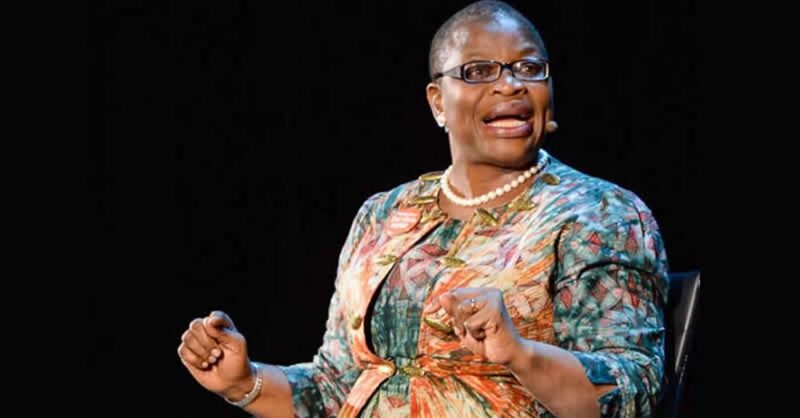
Former Minister of Education, Oby Ezekwesili, has strongly criticised President Bola Tinubu and the ruling All Progressives Congress (APC) over the ongoing killings in Plateau State, accusing the government of inaction and failure to protect citizens.
In a sharply worded statement posted on her X account, Ezekwesili questioned the priorities of political leaders who continue with engagements while communities are under attack. She condemned what she described as a pattern where authorities respond to violence with statements, silence, and committee formations instead of decisive security action.
Reacting to disturbing images from recent attacks in Jos, she said the blood of innocent Nigerians rests on leaders who “knew, looked away, and chose a convention hall over a command centre,” warning that such conduct reflects a deeper governance failure.
The former minister also raised concerns about the normalisation of violence in Nigeria, stressing that citizens must reject any situation where human lives are treated as expendable. She urged Nigerians to transform grief into collective action, demanding accountability, justice, and urgent reforms to address insecurity.
READ ALSO:
- Lasaco Assurance Launches N18.47bn Rights Issue to Strengthen Capital Base
- ADC Crisis Deepens as Bala Denies Resignation, Insists on Chairmanship
- Ghana Sweeps Top Three Positions in 2025 WASSCE, Outshining Nigeria, Others
Her comments come amid renewed violence in Plateau State, particularly in Jos North and nearby communities, where recent attacks have reportedly left dozens dead and many injured. The persistent crisis has once again drawn attention to the fragile security situation in Nigeria’s north-central region.
Despite increased military presence and government assurances, Plateau has continued to experience recurring attacks linked to communal tensions, armed groups, and farmer-herder conflicts. Analysts say the repeated outbreaks highlight the limitations of current security strategies.
President Tinubu had earlier condemned the attacks and directed security agencies to bring perpetrators to justice, while promising that such incidents would not recur. Additional security deployments and restrictions have also been introduced in affected areas.
However, critics argue that these responses remain largely reactive, with little progress in addressing the underlying causes of the violence. Ezekwesili’s remarks add to growing public pressure on the federal government to adopt a more proactive and coordinated approach to national security.
As outrage continues to build, many Nigerians are calling for stronger leadership, improved intelligence gathering, and decisive action to end the cycle of killings and restore confidence in government.
Plateau Killings: Ezekwesili Blasts Tinubu, APC Over ‘Failure to Act’

-

 Railway2 days ago
Easter train: NRC increases Lagos-Ibadan trips, offers free Osun holiday transit
-

 metro1 day ago
VeryDarkMan Dares Sowore Over Blord’s Kuje Prison Remand
-

 Politics3 days ago
Adebayo Adelabu Resigns as Power Minister to Run for Oyo State Governorship
-

 Business1 day ago
NNPC Boosts Crude Supply to Dangote Refinery to Address Rising Fuel Prices
-

 metro1 day ago
Nigerians to Enjoy Four-Day Break as FG Declares Easter Holidays
-

 metro2 days ago
Power Crisis Looms as NLC Shuts AEDC, Protests Sack of 900 Workers
-
 International1 day ago
Iran Fires Missiles at Israel After Trump Threatens Weeks of ‘Extremely Hard’ Strikes
-

 News2 days ago
Alkali resigns as Transport minister to chase Gombe governor’s seat