
Politics
Electoral Act: Gbajabiamila Introduced Direct Primary To Favour Someone – Na’Allah

The Chairman of Senate Committee on Air force, Senator Bala Ibn Na’Allah, has accused the Speaker of the House of Representatives, Femi Gbajabiamila, of introducing mandatory direct primary clause into the Electoral Act Amendment Bill “to favour someone”.
Na’Allah, representing Kebbi South Senatorial District, explained that the Speaker’s idea of direct primary was to favour someone, whom he failed to name.
President Muhammadu Buhari had withheld his assent on the controversial bill over inclusion mandatory Direct primary among other reasons.
Former INEC Chairman, Prof Attahiru Jega and Members of the Civil Society had mounted pressure on the National Assembly to withdraw the controversial clause and transmit the bill back to Buhari for his assent.
The President of the Nigerian Bar Association (NBA), Olumide Apata, particularly said the bill “is too good” to be thrown away because of the Direct primary clause.
On Wednesday, the National Assembly bowed to the pressure, removed the clause that makes direct primary mandatory for the election of candidates in political parties from the electoral act amendment bill and equally passed it into law.
Speaking on Thursday when he featured on Channels Television’s Sunrise Daily programme, Na’Allah pointed accusing fingers at Gbajabiamila over the controversial clause.
READ ALSO:
- PVCs: Tinubu apologises to Nigerians over misleading comment
- People beginning to respect Super Eagles, says Coach Eguavoen
- [UPDATED]Fire incident at Oke- Ayo, Iju Ishaga(Photos + Videos) … Lagos Fire Service Chased
He also said that during the discussions at the committee level, the issue of direct primaries was never brought up.
“We are hearing that that law (direct primary) was intended for an individual. I don’t know. I honestly don’t know but I must say and maintain that the process was not painstaking enough,” the Senator said.
Na’Allah said “The issue of direct primary came at the dying minute on the floor of the House of Representatives when they were considering the report of the committee of electoral matters. What it means is that it was never discussed or adopted by the committee of the House but that it came as an amendment allegedly because I don’t have the records, by the Speaker of the House of Representatives.”
Na’Allah said the second argument by Gbajabiamila that the direct primary had become necessary in order to protect federal lawmakers from overbearing governors, showed that the proposed law was done for personal reasons.
“And I have seen the Speaker doing whatever was humanly possible to defend that position. But what would prove me right is that in one breath, I heard the Speaker saying that because of the rate of return at the National Assembly, there was the need to protect the members of the National Assembly from the influence of governors, therefore the resort to direct primaries.
“Now, the catch there is that personal interest was allowed in the process. That is the catch because he particularly said the turnover of members is very disturbing and that there is the need to protect members of the National Assembly from the governors.
“In the first place, that argument will fall flat because it means that decision was taken to promote personal interest against the oath of office that we have taken as members of the National Assembly.”
Speaking at the plenary on Thursday, Gbajabiamila gave a vague reaction to Na’Allah’s position.
He said, “Honourable colleagues, I am constrained to say at this point that I watched with dismay this morning, some members of this National Assembly exercising their freedom of expression and speech, and that is well within their right. But when you exercise such freedom, be careful not to mislead the public; be careful not to malign, unjustifiably, this institution.
“This leadership has allowed people to express their opinions at all times; I have no problem with that. But when you begin to call the institution which you are a part of names, unwittingly maligning even yourself, we need to draw a line especially when you are peddling untruths. And I just thought it was important that we mention this so (that) in future we will be guided both by the freedom of expression and by the truth.
“It was a show of disgrace as far as I’m concerned – I don’t care what anybody says – the things that were uttered by members of this National Assembly. A show of disgrace! (I am) extremely disappointed.”
Daily Trust










Politics
Atiku’s Son Resigns as Adamawa Commissioner Following Fintiri’s APC Defection
Atiku’s Son Resigns as Adamawa Commissioner Following Fintiri’s APC Defection
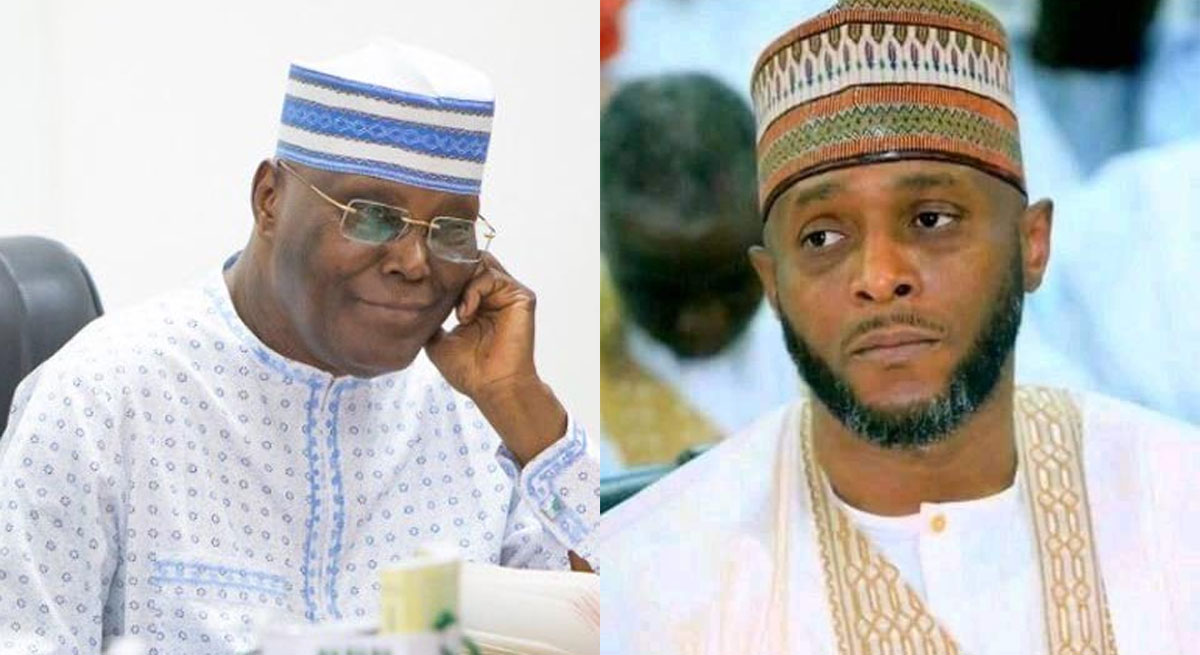
Yola, Adamawa State — Adamu Atiku Abubakar, son of former Vice President Atiku Abubakar, has formally resigned from his role as Commissioner for Works and Energy Development in Adamawa State. The resignation comes in the wake of recent political shifts in the state, including the defection of Governor Ahmadu Umaru Fintiri and several cabinet members from the Peoples Democratic Party (PDP) to the All Progressives Congress (APC).
In a resignation letter dated March 2, 2026, addressed to Governor Fintiri, Adamu cited “deep personal reflection and careful consideration” as the reason for stepping down. He described his tenure as an honour and expressed gratitude for the opportunity to serve, highlighting the privilege of contributing to the state’s infrastructural development.
READ ALSO:
- The world dislikes the weak, by Hakeem Baba-Ahmed
- Pastor, Wife Arrested in Bayelsa Over Alleged Rape of 13-Year-Old Girl
- DSS Busts Alleged Arms Trafficking Network in Gombe, Seizes RPGs
Adamu also thanked the people of Adamawa State for their support throughout his time in office and acknowledged the trust placed in him by the governor, stating that the enabling environment allowed him to discharge his duties with commitment and diligence. He concluded the letter with prayers for the governor, asking Allah to grant him continued strength and guidance in serving the state.
Observers note that Adamu’s resignation is particularly significant because he chose not to follow Governor Fintiri and other commissioners in defecting to the APC on February 27, 2026. His absence from the group of 22 commissioners who announced the defection highlighted a deliberate decision to chart his own course in the current political landscape.
Political analysts suggest that Adamu’s move may reflect personal conviction or a strategic step towards future political ambitions. During his tenure, he oversaw key initiatives in infrastructure and energy development, although his departure leaves questions about continuity and the future leadership of the ministry.
Governor Fintiri has yet to announce a replacement for Adamu, though insiders indicate that a shortlist of potential successors is being considered. Analysts believe the resignation adds a new layer to Adamawa State politics, particularly as the state navigates party realignments and positions itself ahead of the next electoral cycle.
Atiku’s Son Resigns as Adamawa Commissioner Following Fintiri’s APC Defection
Politics
Wike Blasts Kingibe Over FCT Council Election Remarks
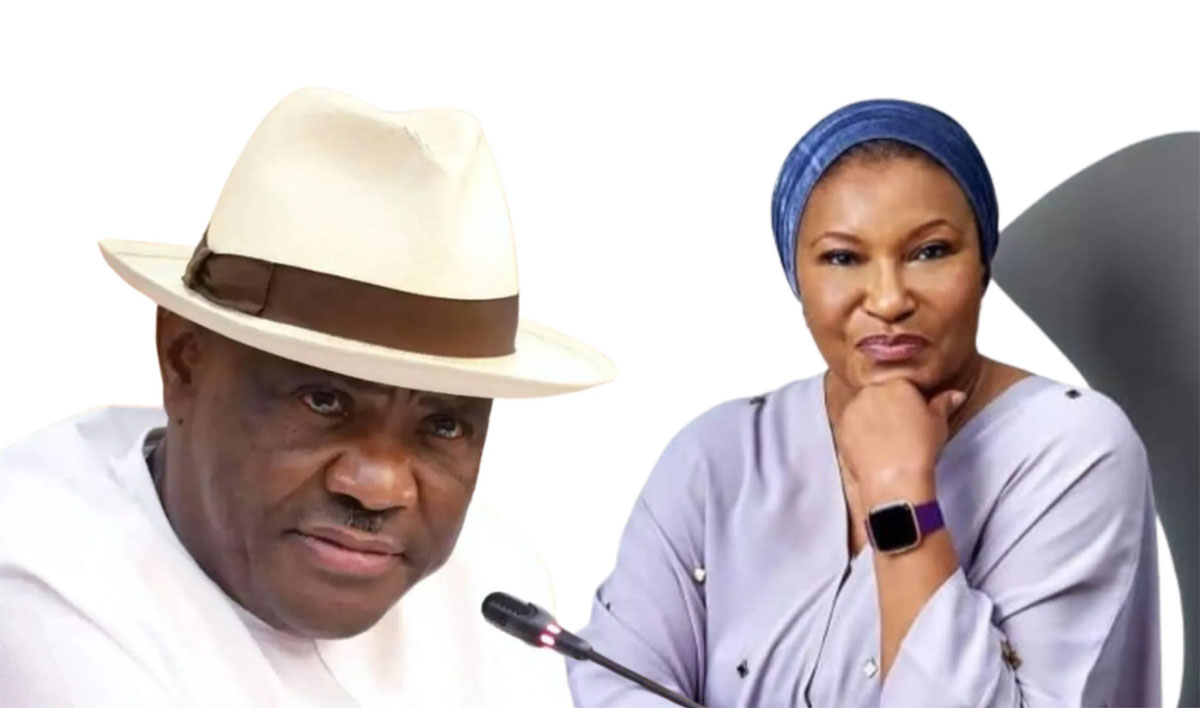
Wike Blasts Kingibe Over FCT Council Election Remarks
The Nyesom Wike, Minister of the Federal Capital Territory (FCT), has criticised Senator Ireti Kingibe over her comments on the recent FCT local government council elections, insisting that elections are a process, not a one-day event.
Speaking during a media briefing in Abuja, Wike emphasised that voters, not surveys or last-minute claims, determine election results. He explained that preparations for elections begin well before voting day, from candidate nomination and party primaries to campaigns and voter engagement, noting that a survey conducted on February 21 should not be used as a definitive reflection of outcomes.
“It’s a process that starts from the nomination of candidates. It’s a process that goes through a campaign before it gets to an election. So election is not just that particular date of voting,” Wike said.
He compared the electoral process to exam preparation, warning that those who fail to prepare often make excuses.
“You know the exam will come in two or three months. Nobody waits for the last minute to prepare. You must attend classes and read,” Wike explained.
“That is why students who are not prepared call for strikes to avoid the exam,” he added.
READ ALSO:
- Israeli Airstrikes Kill 31 in Lebanon as Hezbollah Loses Senior Figures
- Nigeria to Receive Breakthrough HIV Prevention Drug This Month – NACA
- Iran Retaliates: Gulf States Allied With US Hit by Missiles, Drones
Wike also referenced claims by Kingibe, who reportedly vowed to use the February 21 council elections to “teach me a lesson”. He dismissed this as politically motivated, noting that some parties had earlier suggested that the council election could influence the 2027 general election.
The minister rejected allegations that he declared a curfew, saying the decision he referenced was approved by President and granted residents a work-free day to travel safely to their areas of origin.
“By the approval of Mr. President, people were given a work-free day so they could travel and not return late. I never declared any curfew,” Wike said.
He added that, as a minister representing the President, his decisions are guided by security intelligence reports unavailable to the public.
The exchange highlights growing political tensions in the FCT, where electoral credibility and governance remain contentious ahead of upcoming elections.
Wike Blasts Kingibe Over FCT Council Election Remarks
Politics
ADC South‑South Leaders Clash on Alleged Amaechi Consensus Support

ADC South‑South Leaders Clash on Alleged Amaechi Consensus Support
Benin City / Abuja — March 1, 2026
The African Democratic Congress (ADC) is currently experiencing internal divisions after conflicting reports emerged regarding the alleged endorsement of former Rotimi Amaechi as the South‑South consensus candidate for Nigeria’s 2027 presidential election.
Initial reports suggested that Amaechi had received unanimous backing from senior ADC leaders across the South‑South geopolitical zone during a February 27 meeting in Benin City. Attendees reportedly included party executives from Akwa Ibom, Bayelsa, Cross River, Delta, Edo, and Rivers states, with the session chaired by former John Odigie‑Oyegun, a prominent national party leader. Sources claimed Amaechi outlined his presidential ambitions and was met with a show of regional support.
However, other senior party officials quickly disputed these claims, insisting that no formal endorsement was made. The South‑South ADC Zonal Publicity Secretary, Mabel Oboh, clarified that the meeting’s main objectives were to strengthen party cohesion, mobilize grassroots support, and prepare strategically for future elections. She emphasized that Amaechi’s presentation of his presidential intent was a courtesy briefing to regional leaders, and no motion, vote, or resolution endorsing any aspirant occurred at the gathering.
READ ALSO:
- Umahi Rejects Viral Allegations by Ohiri, Says Claims Only Make Him Stronger
- Ex-CIG Motors GM Jubril of Lagos floats Hybrid Motors Nigeria
- Guterres Says UN Cannot Confirm Khamenei’s Death After U.S.–Israeli Strikes
Supporting Oboh’s position, the party’s National Deputy Publicity Secretary, Jackie Wayas, stated that consultation does not equate to endorsement, stressing that candidate selection resides with the ADC’s constitutional organs and membership, not solely with zonal executives. Similarly, ADC chieftain Prof. Pat Utomi described the reports of Amaechi’s endorsement as “inaccurate and misleading”, noting that presenting ambitions to party leaders is a standard practice but does not confer automatic backing.
Despite these clarifications, National Vice Chairman (South‑South), Usani Uguru Usani, insisted that regional leaders had shown support for Amaechi through a voice affirmation, while noting that such backing was voluntary and non-binding on individual party members.
The situation illustrates a widening divide within ADC’s South‑South ranks over early positioning in the 2027 presidential race. Amaechi is among several aspirants seeking the party’s ticket, alongside notable figures such as former Atiku Abubakar and 2023 presidential candidate Peter Obi, heightening competition and scrutiny of internal party democracy.
Political analysts say the controversy underscores broader challenges in party cohesion, process legitimacy, and regional influence in Nigeria’s opposition politics. How the ADC resolves these conflicting narratives may have significant implications for its 2027 electoral strategy and national alliances.
ADC South‑South Leaders Clash on Alleged Amaechi Consensus Support

-

 International2 days ago
Ayatollah Ali Khamenei, Iran’s Supreme Leader, Dies After U.S.–Israeli Strikes
-

 International2 days ago
Iran: US, Israel launch another strikes, Commander, Defence leader, five other top officials killed
-

 International3 days ago
Middle East on Edge as Iran Retaliates Against Israel, U.S Bases
-

 International2 days ago
Kamala Harris Slams Trump for Dragging U.S. Into ‘Unwanted War’ in Iran Conflict
-

 metro2 days ago
Hajj, Umrah Are for Muslims Only – Scholar Urges NAHCON to Tighten Screening
-

 International1 day ago
Iran Retaliates: Gulf States Allied With US Hit by Missiles, Drones
-
 International1 day ago
Saudi Arabia Denies Lobbying US to Strike Iran as Gulf States Respond to Escalation
-

 International2 days ago
BREAKING: Iran Forms Three-Member Leadership Council to Steer Country After Khamenei’s Death