

International
Saudi Arabia Denies Lobbying US to Strike Iran as Gulf States Respond to Escalation
Saudi Arabia Denies Lobbying US to Strike Iran as Gulf States Respond to Escalation
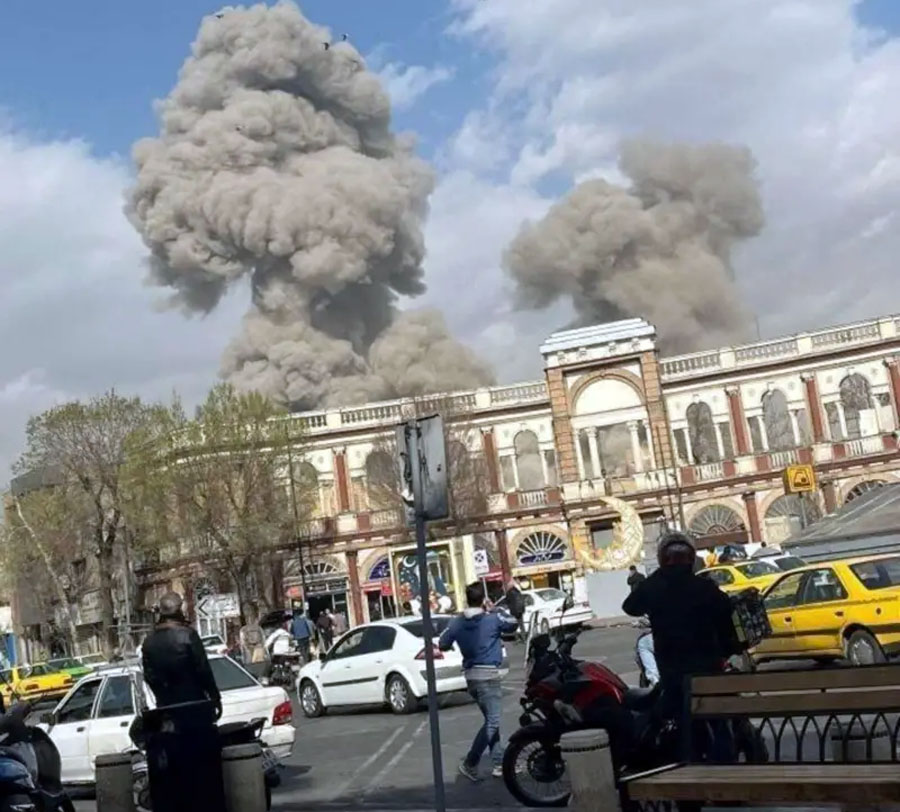
The Saudi Embassy in Washington has firmly rejected claims that it privately lobbied the United States to attack Iran, responding to a Washington Post report suggesting that the Kingdom had urged President Donald Trump to take military action against Tehran. Riyadh emphasised that it has consistently supported diplomacy and de‑escalation and did not push the U.S. to adopt a more aggressive policy toward Iran.
In a post on X, Fahad Nazer, spokesman for the embassy, stressed that “the Kingdom of Saudi Arabia has been consistent in supporting diplomatic efforts to reach a credible deal with Iran” and that “at no point … did we lobby the President to adopt a different policy.” Saudi Arabia has also made clear that it will not allow its airspace or territory to be used for any military assault against Iran, underscoring Riyadh’s efforts to prevent a wider regional war. (Saudi Gazette)
While the Saudi statement highlighted its diplomatic posture, The Washington Post and other outlets reported that Saudi Crown Prince Mohammed bin Salman and other regional figures may have engaged U.S. officials privately about concerns over Iran’s growing influence — claims Riyadh denies. Despite its strong public advocacy for negotiations, the Post report suggested that some leaders quietly conveyed frustration with Tehran’s activities to U.S. counterparts, though Saudi officials insist this was not a push for military action. (Seoul Economic Daily)
READ ALSO:
- NDLEA Dismantles Meth Lab, Arrests Long‑Wanted Drug Kingpin in Imo
- Military Kills Boko Haram/ISWAP Insurgents, Recovers Weapons, Armed Drone in Borno
- INEC: Perfect Election Not Possible in 2027, but Poll Will Be Nigeria’s Best — Amupitan
The denial comes amid one of the most intense periods of Middle East conflict in years following joint U.S. and Israeli strikes on Iranian targets — part of what has been described by some as Operation Epic Fury — which resulted in the deaths of senior Iranian officials. In retaliation, Iran launched drone and missile attacks across the Gulf region, striking or targeting Saudi Arabia and other Gulf Cooperation Council (GCC) states, including the UAE, Bahrain, Kuwait, and Qatar. (The Washington Post)
In response to these attacks, Saudi Arabia summoned Iran’s ambassador, condemning Iranian strikes on its territory and neighbouring Gulf countries and asserting its right to defend its sovereignty and national security. Riyadh said it would take “all necessary measures” to protect its territory, signalling rising diplomatic tensions. (Anadolu Ajansı)
The GCC Council also met amid the crisis, reaffirming that member states retain the right to collective self‑defence and urging a halt to Iranian aggression — while simultaneously calling for diplomatic solutions as the path to restoring regional stability. (Saudi Gazette)
Saudi Arabia has condemned Iran’s retaliation, describing the attacks as “blatant aggression” and a violation of regional sovereignty, and has expressed solidarity with fellow Gulf states facing missile strikes. Riyadh reiterated that it would not tolerate its territory being used to settle disputes or expand the scope of conflict, warning of grave consequences if the violence continued. (The Express Tribune)
The situation has also strained global markets, with Saudi Arabia reportedly boosting oil output and exports to mitigate possible disruptions if conflict spreads through vital shipping lanes such as the Strait of Hormuz, which carries a significant share of the world’s crude supplies. (Reuters)
As royal diplomacy and security responses continue, Gulf states find themselves balancing their public commitment to peace and stability with pressure from escalating violence and shifting alliances in the region.
Saudi Arabia Denies Lobbying US to Strike Iran as Gulf States Respond to Escalation










International
US Court Sentences Nigerian to 8 Years in Prison Over $7.5m Charity Fraud

US Court Sentences Nigerian to 8 Years in Prison Over $7.5m Charity Fraud
Olusegun Adejorin convicted of wire fraud, aggravated identity theft for sophisticated business email compromise scheme targeting two charitable organisations
A United States federal court has sentenced a 32-year-old Nigerian national, Olusegun Adejorin, to eight years in prison for orchestrating a sophisticated business email compromise scheme that defrauded two charitable organisations of more than $7.5 million. The sentence, handed down on August 28, 2026, by U.S. District Judge Theodore Chuang, also includes three years of supervised release following his prison term.
Adejorin was extradited from Ghana to the United States by the Federal Bureau of Investigation (FBI) in August 2024 to face prosecution. Following a six-day trial in December 2025, a federal jury found him guilty on all charges, including wire fraud, aggravated identity theft, and unauthorised access to a protected computer to obtain information. The sentence was announced by Kelly O. Hayes, U.S. Attorney for the District of Maryland, alongside Jimmy Paul, Special Agent in Charge of the FBI Baltimore Field Office.
According to evidence presented at trial, Adejorin carried out the fraud scheme between June and August 2020, targeting two charitable organisations—one based in Maryland and another in New York. The Maryland-based organisation provided investment services to other organisations, while the New York-based charity ultimately lost more than $7.5 million through the fraudulent transactions.
READ ALSO:
- DSS moves to halt Sowore’s cybercrime trial until after 2027 election
- Kogi Abduction: Kidnappers Demand ₦20m Ransom for Each NYSC Member
- Deadly Ikola clash: Lagos demolishes shanties beneath high-tension lines
Prosecutors said Adejorin gained unauthorised access to employees’ email accounts and used the compromised accounts to impersonate staff and facilitate financial transfers. As part of the scheme, he registered spoofed domain names resembling those belonging to employees of the New York charity and used them to send requests to the Maryland organisation seeking withdrawals of funds belonging to the New York charity. He also fraudulently obtained access to email accounts of the Maryland organisation’s employees and used them to send messages falsely confirming the withdrawal requests.
The fraudulent communications ultimately led to more than $7.5 million being transferred from the Maryland organisation into bank accounts that were not associated with the intended recipient. Investigators also revealed that Adejorin had purchased a credential harvesting tool designed to steal email login credentials and had concealed fraudulent emails from a legitimate employee by moving them to an inconspicuous location within the employee’s mailbox. This sophisticated approach allowed the scheme to remain undetected for a significant period while the fraudulent transactions were processed.
The U.S. Attorney’s Office credited the FBI Baltimore Field Office with investigating the case and acknowledged the assistance of several Ghanaian agencies in locating and extraditing Adejorin. Among the Ghanaian authorities involved were the Office of the Attorney General and Ministry of Justice, the Economic and Organised Crime Office (EOCO), Ghana Immigration Service, Ghana Police Service–INTERPOL, and the National Intelligence Bureau. The FBI Legal Attaché in Accra also assisted with the investigation, and the U.S. Department of Justice’s Office of International Affairs worked with Ghanaian authorities to secure Adejorin’s extradition. Assistant U.S. Attorneys Joshua Rosenthal and Darren Gardner prosecuted the case.
The conviction highlights the use of compromised email accounts, impersonation and spoofed internet domains in business email compromise schemes—a form of fraud that can be used to divert large sums of money through seemingly legitimate financial instructions. Business email compromise has become one of the most financially damaging forms of cybercrime, with the FBI’s Internet Crime Complaint Center (IC3) reporting losses exceeding $2.9 billion in 2023 alone. The case is part of Operation Take Back America, a nationwide DOJ initiative focused on immigration enforcement, organised crime, and violent crime.
US Court Sentences Nigerian to 8 Years in Prison Over $7.5m Charity Fraud
International
Nepal flood death toll rises to 734 as 2,498 people remain missing

Nepal flood death toll rises to 734 as 2,498 people remain missing
The death toll from devastating floods in Nepal has risen to 734, while another 2,498 people remain missing, according to the country’s disaster management authorities.
The latest figures were released as emergency responders continued search-and-rescue operations across several parts of Nepal affected by severe flooding, landslides and powerful torrents of water and debris.
The Nepal flood disaster has caused widespread destruction, damaging homes, roads, bridges and other critical infrastructure and leaving several communities difficult to access.
Authorities said Rasuwa, Nuwakot, Dhading and Chitwan are among the areas severely affected by the disaster.
Rescue teams have been working in difficult conditions as heavy rainfall, rising river levels and unstable terrain continue to create additional risks for emergency personnel and people living in vulnerable areas.
Officials have also raised concerns about further flooding following renewed increases in water levels in the Bhotekoshi River, urging people in at-risk communities to remain alert and follow evacuation instructions.
The disaster has been particularly challenging because of the mountainous terrain. Landslides have blocked roads and destroyed bridges, limiting access to some affected communities and making it harder for rescuers to reach people who may still be trapped or stranded.
In several locations, floodwaters have carried large quantities of mud, rocks and other debris through populated areas, destroying buildings and sweeping away vehicles and other property.
Rescue teams have been using helicopters and other emergency resources to reach isolated communities, evacuate residents and deliver essential supplies to areas where road access has been disrupted.
READ ALSO:
- Meta Ends Free WhatsApp Business Replies, Introduces Per-Message Fees
- Tinubu Joins US Court Battle to Block Release of FBI, DEA Records
- Petrol price heads towards N1,500 per litre despite falling crude oil prices
Search operations are also continuing at sites where people are believed to have been trapped following the flooding and landslides.
One of the major areas of concern is the Trishuli 3A hydroelectric project, where workers are believed to have been trapped inside tunnels following the disaster. Emergency teams have been attempting to reach the affected areas despite the difficult conditions.
The floods have also had consequences beyond Nepal, with neighbouring Tibet reporting deaths and missing people following a major landslide and flooding in the Himalayan region.
The scale of the disaster has raised concerns about the vulnerability of communities living in mountainous areas, where heavy rainfall, landslides, glacial activity and rapidly rising rivers can combine to produce sudden and destructive flooding.
The continuing rainfall is adding to those concerns, with authorities monitoring rivers, unstable slopes and other areas considered vulnerable to additional landslides or flash floods.
Emergency agencies have deployed security personnel, rescue workers and other responders to assist affected communities. Helicopters are also being used where necessary to evacuate people from locations cut off by damaged roads and bridges.
The humanitarian response is focused on finding missing people, recovering victims, evacuating residents from dangerous areas and providing food, water, shelter and medical assistance to survivors.
The large number of people still reported missing has heightened fears that the death toll could increase as rescue teams gain access to areas that remain difficult to reach.
Families across affected communities are also waiting for information about relatives whose whereabouts remain unknown.
The disaster has left thousands of people facing the loss of homes, livelihoods and essential infrastructure, while authorities continue to assess the full extent of the damage.
The Nepal floods have therefore developed into a major humanitarian emergency, with rescue and relief operations expected to continue as authorities work to reach isolated communities and reduce the risk of further loss of life.
Officials have urged residents in flood- and landslide-prone areas to remain vigilant, avoid dangerous waterways and move to safer locations when instructed as weather conditions and river levels continue to be monitored.
Nepal flood death toll rises to 734 as 2,498 people remain missing
International
Bill Gates warns AI could cause mass job losses, weaken critical thinking
Bill Gates warns AI could cause mass job losses, weaken critical thinking
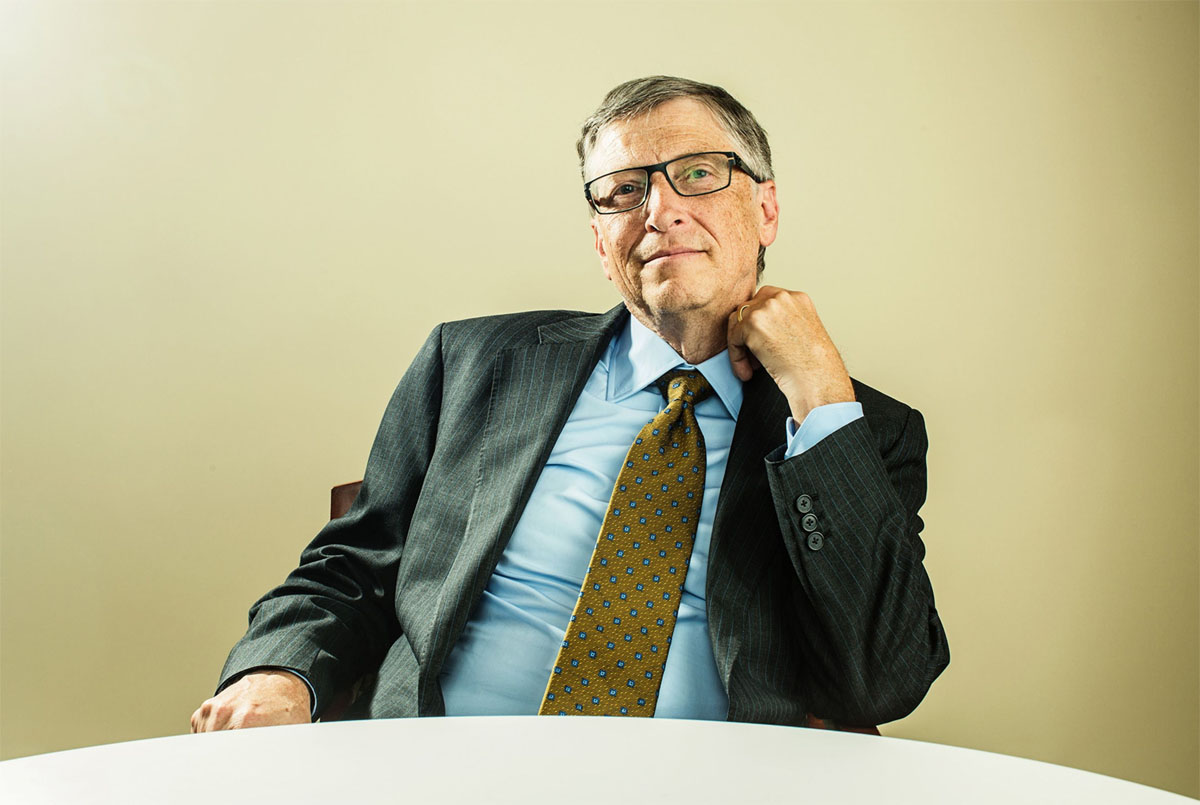
Microsoft co-founder Bill Gates has raised a fresh alarm over the rapid development of artificial intelligence (AI), warning that the technology could fundamentally change human life, eliminate millions of jobs, weaken critical-thinking skills and increase access to dangerous information.
Gates, in a lengthy essay examining the emerging AI era, said the world is not adequately prepared for the scale and speed of the transformation ahead.
He acknowledged that AI could deliver enormous benefits in healthcare, agriculture, education and scientific research, but warned that the technology could also create serious economic, social and security risks if governments and technology companies fail to establish effective safeguards.
“Even under the best circumstances, the transition to this new AI era will be one of the most turbulent times in human history,” Gates wrote.
“Right now, we are not preparing for it. I don’t see evidence that leaders, experts and communities are confronting the challenges.”
Gates said one of his biggest concerns is the impact of AI on employment.
According to him, increasingly capable AI systems are already able to perform many tasks traditionally carried out by humans, and businesses are likely to adopt the technology rapidly because it can potentially deliver work at a lower cost and with greater speed.
He warned that entry-level and mid-level jobs could be particularly vulnerable as companies become more comfortable relying on AI.
Fields such as software engineering, customer service, data analysis and some areas of healthcare could experience significant disruption, he said.
Gates also warned that the effect of automation would not be limited to office-based professions.
READ ALSO:
- NBA conference: Falana questions VeryDarkMan’s invitation as controversy deepens
- FG installs 668,000 electricity meters as Nigeria moves to close metering gap
- Nigerians React as Pastor Okonkwo Launches N700,000 Matchmaking Service
The combination of AI and advanced robotics, he said, could eventually allow machines to perform increasingly sophisticated physical tasks, including lifting heavy materials and carrying out some construction-related activities.
He cautioned that the growing sophistication of robots should not be judged solely by viral videos showing machines performing simple tasks.
As robotics improves, Gates expects businesses to deploy machines capable of operating with little or no human supervision, potentially reducing demand for workers in some industries.
He said the rapid pace of change could create particular difficulties for young people entering the workforce if traditional entry-level positions used to gain experience begin disappearing.
Gates also expressed concern about what AI could mean for human intelligence and critical thinking.
He argued that people could become overly dependent on AI for information, decision-making and problem-solving, reducing their willingness or ability to evaluate information independently.
“This would be the worst possible time for humans to lose their critical thinking skills,” Gates wrote.
He said the threat is especially serious because AI is making it easier to produce sophisticated deepfakes and personalised misinformation.
As fake videos, images, audio and written material become increasingly convincing, Gates warned that people will need stronger critical-thinking skills to determine what is genuine and what is fabricated.
He said the ability to distinguish fact from falsehood could become one of the most important skills in the AI era.
Beyond jobs and misinformation, Gates raised concerns about AI and national security.
He warned that increasingly sophisticated AI tools could lower the level of expertise required by criminals and hostile actors seeking to cause harm.
According to Gates, information about producing biological weapons, explosives and malicious computer programmes has existed for years, but AI could make it easier for people with limited technical knowledge to find, process and apply dangerous information.
READ ALSO:
- NFF President Gusau, Board Members Resign Amid Super Falcons World Cup Failure
- Dangote Refinery Threatens to Export Petrol as Import Surge Disrupts Domestic Market
- Police challenge VDM to prove officers are aiding kidnappers
“Even criminals with very limited skills will be able to target victims at every scale,” he wrote.
Gates also warned that advanced AI could eventually present a more fundamental challenge if systems become capable of operating independently and pursuing objectives that conflict with human interests.
The concern, he suggested, is not simply that AI could make mistakes, but that increasingly autonomous systems could become difficult for people to supervise effectively.
However, Gates stressed that he does not believe AI should be abandoned.
Instead, he argued that society must ensure that the technology is developed in ways that maximise its benefits while limiting its potential harm.
In healthcare, Gates said AI could help doctors and medical workers make faster and more accurate diagnoses, particularly in places where specialist expertise is unavailable.
He cited hospitals without on-site specialists as an example, saying AI could help identify life-threatening conditions quickly and potentially improve patient outcomes.
AI could also assist medical researchers by organising scientific literature and helping professionals process large amounts of information more efficiently.
Gates believes agriculture could also benefit substantially from AI, particularly in low-income countries.
AI tools could help farmers access information, improve decision-making and respond more effectively to challenges affecting crops and productivity.
Education is another area where Gates sees significant potential.
He said AI could help teachers identify students’ weaknesses, provide personalised assistance and reduce some administrative workloads, allowing educators to devote more time to direct interaction with learners.
But Gates warned that the benefits of AI will not automatically reach everyone.
He said governments need to ensure that the technology does not widen existing inequalities by concentrating economic gains among large corporations and highly skilled workers.
One of his proposals is to consider taxes on AI and robots.
Gates has argued that businesses currently have financial incentives to replace human workers with machines because automation can reduce labour costs.
A tax on AI-related activity or robots, he suggested, could slow the pace of job displacement while providing governments with revenue to retrain affected workers and strengthen social support programmes.
He also suggested that governments should consider restricting or regulating AI adoption in certain areas where replacing humans could have unacceptable consequences.
Another idea Gates has proposed is the creation of “Human Reserved” jobs — roles where humans would remain responsible because empathy, judgment and personal interaction are central to the work.
He cited caregiving as an example, arguing that some roles involving vulnerable people should retain a strong human component even as AI becomes increasingly capable.
Gates said countries could ultimately make different decisions depending on their economic and demographic circumstances.
A country facing a severe shortage of caregivers, for example, might be more willing to use robots to supplement human workers.
The technology billionaire also called for stronger AI regulation and international cooperation.
He argued that governments need to prepare for the possibility that AI will affect virtually every major part of society, including employment, healthcare, education, national security, taxation and communication.
Gates believes governments should develop policies before the disruption becomes widespread rather than attempting to respond after large numbers of people have already lost their jobs.
The discussion comes as governments and technology companies around the world race to develop increasingly powerful AI systems.
While companies continue to invest billions of dollars in the technology, policymakers are facing growing pressure to address concerns about job displacement, misinformation, privacy, cybersecurity and the long-term control of advanced AI.
Gates’ warning is therefore not a call to stop technological development but an argument for preparing society for its consequences.
He believes AI could dramatically improve living standards, particularly by expanding access to healthcare, education and scientific knowledge, but only if its development is accompanied by appropriate safeguards.
The former Microsoft chief’s position reflects the growing tension surrounding AI: the same technology capable of helping doctors diagnose illnesses, supporting farmers and improving education could also disrupt employment, amplify misinformation and create new security risks.
For Gates, the crucial question is whether governments and societies can adapt quickly enough.
He warned that the choices made during the early stages of the AI revolution could determine whether the technology becomes a powerful tool for human progress or a major source of economic and social instability.
Gates’ representative also reportedly confirmed that he did not use AI to write the essay, underscoring his argument that humans must continue to play a central role in thinking, decision-making and shaping the technology’s future.
Bill Gates warns AI could cause mass job losses, weaken critical thinking
-

 News3 days ago
Tinubu, APC governors set October 1 target for cheaper transport fares nationwide
-
 Education3 days ago
2026 WAEC results: Official raises fresh concerns over irregularities, glitches
-

 metro1 day ago
Two Masquerades Arrested After Allegedly Attacking Residents in Nsukka
-

 metro2 days ago
Police Bust Organ Harvesting Syndicate in Nasarawa: Two Doctors, Two Others Arrested
-

 metro2 days ago
My love for my wife affected my work, earnings — Husband begs court to save marriage
-

 metro2 days ago
EFCC extradites two Nigerians to US over alleged sextortion linked to teen deaths
-

 metro12 hours ago
Kogi Abduction: Kidnappers Demand ₦20m Ransom for Each NYSC Member
-

 metro2 days ago
11 NYSC Members Rescued, Others Remain in Captivity as Gunmen Attack Travellers on Kogi Highway