

metro
End of Weekly Shutdown: Igboho Advocates Negotiation to Resolve Kanu’s Legal Battle
End of Weekly Shutdown: Igboho Advocates Negotiation to Resolve Kanu’s Legal Battle
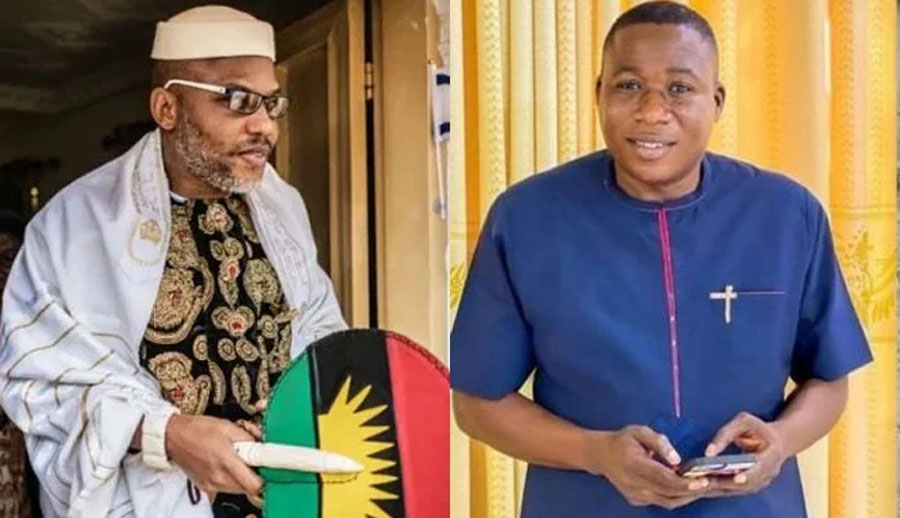
Yoruba nation activist, Chief Sunday Adeyemo, popularly known as Sunday Igboho, has called on the detained leader of the Indigenous People of Biafra (IPOB), Nnamdi Kanu, to engage in constructive dialogue with the Federal Government following the formal end of the controversial Monday sit‑at‑home directive across the South‑East region.
In a statement issued on Friday by his legal counsel, Pelumi Olajengbesi, Igboho applauded Kanu for suspending the weekly protest, which had disrupted economic and social activities in the region for over five years. The directive, first introduced in August 2021, led to periodic shutdowns of markets, offices, schools, and transport services, severely affecting local businesses and daily life.
Describing the suspension as a “thoughtful and necessary” step, Igboho noted that ending the sit‑at‑home signals a shift toward constructive engagement and could help restore stability and economic normalcy in the South‑East. He said the move represents the conclusion of a five-year period of economic disruption that has hampered growth and development in the region.
READ ALSO:
- NELFUND Refutes UniAbuja Loan Diversion Claims
- NRC, Entertainers Finalise Plans for 2026 Valentine Train Ride
- 2027 General Elections: INEC Announces February 20 for Presidential Poll
Beyond applauding the abolition of the civil disobedience measure, Igboho urged Kanu to adopt a conciliatory approach, opening channels for mediation and negotiation with the Federal Government. He emphasised that sustained dialogue could help break the deadlock surrounding Kanu’s legal battle and potentially pave the way for a political resolution to longstanding grievances.
Igboho also warned that those who profit from the destabilisation and violence in the South‑East should desist, highlighting the importance of peace for the economic recovery and prosperity of the region and the nation at large.
“This is a critical moment for the South‑East. True progress depends on dialogue, compromise, and the willingness of all parties to engage constructively,” the statement read. Igboho’s remarks reflect a growing call among activists and stakeholders for peaceful resolution and collaboration to ensure lasting stability in the region.
The end of the Monday sit‑at‑home has been welcomed by several civil society groups and business leaders, who view it as a key step toward restoring normalcy, resuming commerce, and promoting social cohesion in the South‑East.
End of Weekly Shutdown: Igboho Advocates Negotiation to Resolve Kanu’s Legal Battle








metro
Flood Cuts Off Part of Agbarho-Ughelli Road, Strands Commuters in Delta

Flood Cuts Off Part of Agbarho-Ughelli Road, Strands Commuters in Delta
Commuters and motorists have been stranded along the Agbarho-Ughelli section of the East-West Road in Delta State after three days of heavy rainfall caused severe flooding and cut off part of the major highway.
The worst-affected areas include sections around the Agbarho Police Station and Uvwiama/Orido Junction, where rising floodwater has made portions of the road nearly impossible to navigate. At one point, about half of the road was reportedly cut off, forcing motorists to use the remaining section.
The disruption has slowed movement between Agbarho, Ughelli and Effurun, with several motorists forced to make detours while others remained stranded. Traffic was still moving slowly through the flooded portion, meaning the highway was severely disrupted but not completely closed.
The situation has been further complicated by a petroleum tanker breakdown on another portion of the highway. The combination of the damaged road and tanker obstruction has created serious traffic congestion and made movement difficult for motorists and passengers.
READ ALSO:
- Dangote Draws Battle Lines as Fuel Import Fight Heads Back to Court
- Tinubu Returns After 30 Days in Europe, Says ‘I’m Healthy and Ready to Work’
- NMDPRA Moves Against Fuel Pump Fraud, Threatens Licence Revocation
Residents and road users have appealed to the Delta State Government, Federal Government and Niger Delta Development Commission (NDDC) to urgently intervene, repair the damaged section and improve drainage along the corridor.
They also called for the maintenance of alternative roads around Otovwodo, particularly as traffic has increased on those routes. Residents said better-maintained alternative roads could help ease pressure on the main highway while work continues around the affected areas.
The flooding has also affected several communities in Agbarho, Ughelli, Udu, Uvwie, Warri and Ughelli South, with homes, schools, businesses and access roads submerged in some locations. Communities around Agbarho, including Uvwiamuge, Orhokpokpo, Oguname, Ohrerhe, Uvwiama, Oviri and Ughwughelli, have reportedly experienced significant flooding.
The latest road disruption has renewed concerns about the condition of culverts, drainage systems and other road infrastructure along the East-West corridor. A culvert collapse had already contributed to serious traffic problems on the Agbarho-Ughelli expressway, while motorists were forced to manoeuvre through limited available space.
Residents fear that continued rainfall could worsen the damage and eventually make the remaining usable section of the road impassable. They have therefore called for urgent repairs, drainage clearance and inspection of other vulnerable sections of the highway.
The National Emergency Management Agency (NEMA) has meanwhile continued emergency response operations in flood-affected states, including Delta, as flooding disrupts communities, roads and other infrastructure.
For now, motorists using the Agbarho-Ughelli East-West Road face delays, flooding and difficult driving conditions, while residents and commuters await urgent intervention to prevent further deterioration of the strategic route.
Flood Cuts Off Part of Agbarho-Ughelli Road, Strands Commuters in Delta
metro
Anambra Pastor Accused of Taking 75 Married Women Appears in Court in Wheelchair

Anambra Pastor Accused of Taking 75 Married Women Appears in Court in Wheelchair
Pastor Harrison Anazodo, the General Overseer of Dayspring Assembly, Awada, Obosi, Anambra State, has appeared before the Anambra State High Court in Awka in a wheelchair, months after his arrest over allegations including abduction, unlawful confinement, murder and family separation.
Anazodo was arraigned on Monday, September 28, 2026, before Justice Jude Obiora on a seven-count charge relating to alleged offences said to have occurred between 2000 and 2025.
The pastor was brought to court from the Chukwuemeka Odumegwu Ojukwu University Teaching Hospital, Awka, where he had reportedly spent about three weeks receiving medical treatment, including time in the Intensive Care Unit.
He pleaded not guilty to all seven counts.
Following the proceedings, Justice Obiora ordered that Anazodo be returned to the teaching hospital, taking his reported medical condition into consideration. The court adjourned the case until October 12, 2026, when the defendant’s bail application is expected to be heard.
The case stems from Anazodo’s arrest on June 10, 2026, by officials of the Anambra State Government following allegations concerning his activities and relationships with members of his church.
One of the charges relates to alleged propagation of the accumulation of wealth through supernatural means, an offence reportedly prohibited under the Anambra State Homeland Security Law 2025. Other allegations before the court include murder, abduction and unlawful separation or isolation of individuals from their families.
READ ALSO:
- Dangote Draws Battle Lines as Fuel Import Fight Heads Back to Court
- Tinubu Returns After 30 Days in Europe, Says ‘I’m Healthy and Ready to Work’
- NMDPRA Moves Against Fuel Pump Fraud, Threatens Licence Revocation
The prosecution also alleged that some people were kept at Anazodo’s residence against the wishes of their families.
The pastor’s case attracted widespread attention after allegations emerged that he had taken as many as 75 married women away from their husbands and regarded them as his wives.
Reports at the time quoted purported victims and relatives as alleging that some women were persuaded to leave their marriages, while other allegations involved alleged wife-swapping among members of the church.
Authorities also reportedly found about 11 babies at Anazodo’s residence during his arrest. He was quoted as saying the children were his and were born to 11 of his wives.
He was also reportedly unable to give authorities a definite figure for the number of women he had married or the total number of children he had.
However, the allegation involving 75 married women has not been established by the court. It forms part of the broader allegations surrounding the case and should not be treated as a proven fact.
After the arraignment, Anazodo’s lawyer, W. O. Abonyi, applied for his client’s release on bail.
Prosecution counsel, C. V. Ononye, opposed the immediate consideration of the application, arguing that the prosecution had not received adequate notice and needed time to respond.
Justice Obiora did not determine the bail application immediately and instead ordered that the defendant be taken back to the hospital.
The court fixed October 12, 2026, for the hearing of the bail application and further proceedings.
The prosecution will be required to establish the allegations against Anazodo as the case progresses, while the pastor remains entitled to the presumption of innocence unless and until a court determines otherwise.
The proceedings are being closely watched in Anambra because of the unusual nature and scale of the allegations, particularly the claims concerning marriages, children and alleged restrictions on individuals’ relationships with their families.
Anambra Pastor Accused of Taking 75 Married Women Appears in Court in Wheelchair
metro
Retiring Supreme Court Justice Warns Politicians Against Giving Cows, Rams to Judges
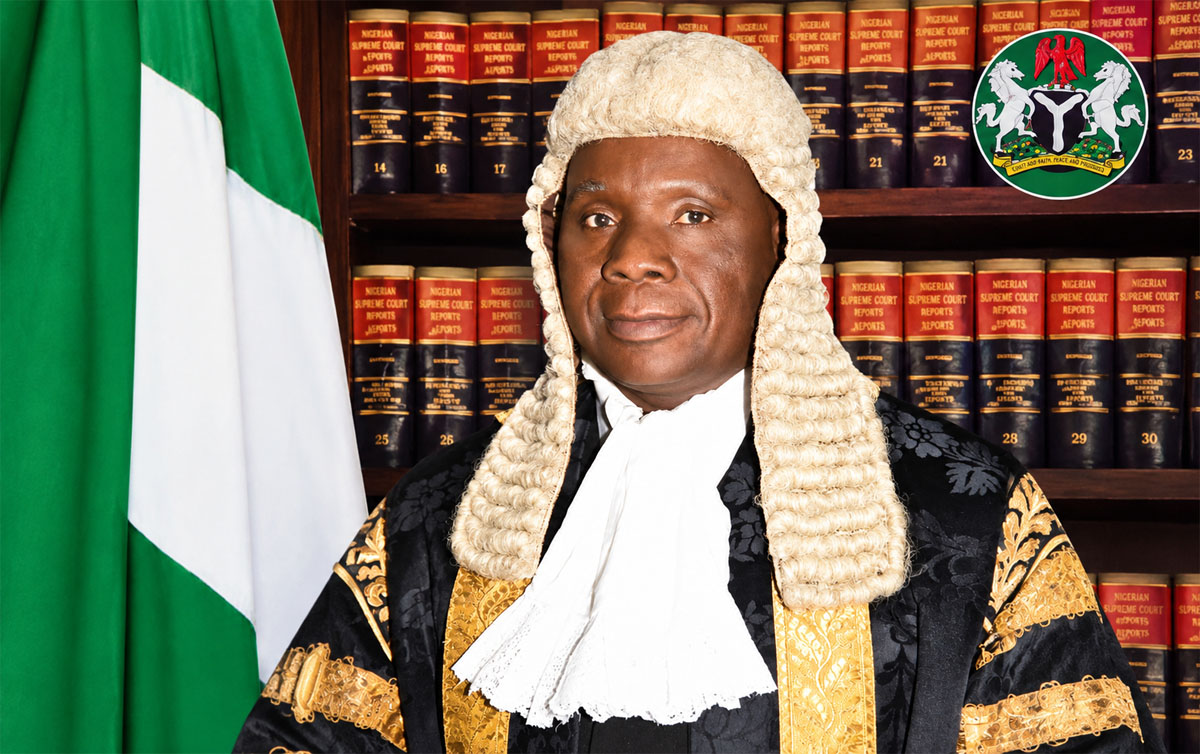
Retiring Supreme Court Justice Warns Politicians Against Giving Cows, Rams to Judges
Retiring Supreme Court Justice Ibrahim Musa Saulawa has urged politicians and litigants to stop giving cows, rams and other gifts to judges, warning that such gestures could undermine judicial integrity and independence.
Justice Saulawa made the call during his valedictory court session at the Supreme Court in Abuja following his retirement after attaining the mandatory age of 70.
The retiring justice described some of the gifts presented to judicial officers as “Greek gifts” and questioned why politicians should send cows, rams and other items to Supreme Court justices.
He said he had previously raised the issue with the Chief Justice of Nigeria, Justice Kudirat Kekere-Ekun, and urged the judiciary to take steps to discourage the practice.
Saulawa said judges must maintain honesty, morality, contentment and integrity and avoid accepting anything that could compromise their independence or create an appearance of influence.
He recalled an incident from his time on the Katsina State Magistrate’s Court, when a prominent businessman, Alhaji Ali Bagobiri, offered him a Peugeot 504 car.
According to Saulawa, he rejected the vehicle despite efforts by the businessman and other prominent individuals, including the Emir of Katsina, to persuade him to accept it.
READ ALSO:
- Dangote Draws Battle Lines as Fuel Import Fight Heads Back to Court
- Tinubu Returns After 30 Days in Europe, Says ‘I’m Healthy and Ready to Work’
- NMDPRA Moves Against Fuel Pump Fraud, Threatens Licence Revocation
The businessman later appeared before Saulawa in a case involving the alleged assault of a worker, Ahmad, who was said to have spent about two weeks in an intensive care unit.
Saulawa said the accused persons were convicted and fined N7,000 each, while the victim was awarded N10,000 in damages.
The retired justice said the experience reinforced his position that judges must keep personal benefits and judicial responsibilities separate.
He also recalled his role during the June 12, 1993 presidential election crisis, when he was serving as Chief Registrar of the Court of Appeal.
Saulawa said conflicting court orders had emerged over the election and that he acted on the directive of the then President of the Court of Appeal, Justice Mohammed Mustapha Akanbi, to secure the appellate court’s registry and ensure that judicial processes were properly handled.
He said the judiciary resisted attempts to interfere with the judicial process during the crisis before the election was eventually annulled by the military government headed by General Ibrahim Babangida.
Justice Saulawa’s judicial career began in 1983 when he was appointed a Magistrate Grade II in the Kaduna State Judiciary. He subsequently served as a chief magistrate, Chief Registrar of the Court of Appeal, High Court judge in Katsina and Justice of the Court of Appeal before his elevation to the Supreme Court in November 2020.
Born in Katsina on September 29, 1956, Saulawa studied law at Bayero University, Kano, and was called to the Nigerian Bar in 1982. His retirement brings an end to a more than four-decade legal and judicial career.
At the valedictory session, the Chief Justice of Nigeria, Justice Kudirat Kekere-Ekun, praised Saulawa for his contribution to the judiciary and described his career as one marked by service and principle.
Kekere-Ekun also recalled an earlier occasion when she and Saulawa resisted an attempt to place a personal benefit before their judicial responsibilities, saying the episode underscored the importance of protecting the integrity of judicial office.
Former Chief Justices of Nigeria Mahmud Mohammed and Olukayode Ariwoola, along with other senior judicial officers and members of the legal profession, attended the ceremony.
Saulawa’s retirement leaves behind a judicial career spanning the magistracy, High Court, Court of Appeal and Supreme Court, with his final message focused on the need for judges to protect public confidence in the administration of justice.
Retiring Supreme Court Justice Warns Politicians Against Giving Cows, Rams to Judges
-

 metro1 day ago
Osogbo Food Bonanza Turns Nightmare as Discount Vendor Vanishes With Customers’ Millions
-

 News3 days ago
Anambra Govt Demands Unreserved Apology From Peter Obi Over Debt Claims
-

 metro3 days ago
Passenger Dies After Jumping From Moving Bus In Lagos
-

 metro2 days ago
24 Hours in Darkness: Iju Ishaga Residents, Businesses Count Losses as Ikeja Electric Fails to Restore Power
-

 Politics3 days ago
APC Sweeps Enugu LG Election, Wins All 17 Chairmanship, 260 Councillorship Seats
-
 Education1 day ago
FG Releases 2026–2028 Approved Textbooks, Introduces QR Codes for Tracking
-

 News2 days ago
Agbede Mourns Baba Alado, Says Mushin Has Lost Pillar of Peace
-

 Sports21 hours ago
Nigeria XI vs Guinea-Bissau: Awoniyi, Lookman, Adams Lead Super Eagles Attack