

International
Europe’s largest nuclear power plant on fire after shelling

Russian forces pressed their attack on a crucial energy-producing city by shelling Europe’s largest nuclear plant early Friday, sparking a fire and raising fears that radiation could leak from the damaged power station.
Plant spokesman Andriy Tuz told Ukrainian television that shells were falling directly on the Zaporizhzhia plant in the city of Enerhodar and had set fire to one of the facility’s six reactors. That reactor is under renovation and not operating, but there is nuclear fuel inside, he said.
A government official told The Associated Press that elevated levels of radiation were detected near the plant, which provides about 25% of Ukraine’s power generation. The official spoke on condition of anonymity because the information has not yet been publicly released.
Tuz said firefighters cannot get near the flames because they are being shot at. Ukrainian Foreign Minister Dmytro Kuleba tweeted a plea to the Russians to stop the assault and allow fire teams inside.
“We demand that they stop the heavy weapons fire,” Tuz said in a video statement. “There is a real threat of nuclear danger in the biggest atomic energy station in Europe.”
The attack renewed fears that the invasion could result in damage to one of Ukraine’s 15 nuclear reactors and trigger another emergency like the 1986 Chernobyl accident, the world’s worst nuclear disaster, which happened about 110 kilometers (65 miles) north of the capital.
The mayor of Enerhodar said earlier that Ukrainian forces were battling Russian troops on the city’s outskirts. Video showed flames and black smoke rising above the city of more than 50,000, with people streaming past wrecked cars, just a day after the U.N. atomic watchdog agency expressed grave concern that the fighting could cause accidental damage to Ukraine’s 15 nuclear reactors.
The Ukrainian state atomic energy company reported that a Russian military column was heading toward the nuclear plant. Loud shots and rocket fire were heard late Thursday.
“Many young men in athletic clothes and armed with Kalashnikovs have come into the city. They are breaking down doors and trying to get into the apartments of local residents,” the statement from Energoatom said.
Later, a live streamed security camera linked from the homepage of the Zaporizhzhia plant showed what appeared to be armored vehicles rolling into the facility’s parking lot and shining spotlights on the building where the camera was mounted.
There were then what appeared to be bright muzzle flashes from vehicles, followed by nearly simultaneous explosions in the surrounding buildings. Smoke then rose into the frame and drifted away.
READ ALSO:
- Jungle Justice: Two Persons Set Ablaze For Snatching Handbag In Anambra
- JUST IN: Timaya Arrested Over ‘Hit And Run’ Incident
- [BREAKING] OAU student: Court remands Hilton hotel owner, Adedoyin, others
The fighting at Enerhodar came as another round of talks between the two sides yielded a tentative agreement to set up safe corridors inside Ukraine to evacuate citizens and deliver humanitarian aid.
Elsewhere, Russian forces gained ground in their bid to cut off the country from the sea, as Ukrainian leaders called on citizens to rise up and wage guerrilla war against the invaders.
While the huge Russian armored column threatening Kyiv appeared bogged down outside the capital, Vladimir Putin’s forces have brought their superior firepower to bear over the past few days, launching hundreds of missiles and artillery attacks on cities and other sites around the country and making significant gains in the south.
Ukrainian Prime Minister Denys Shmyhal called on the West to close the skies over the country’s nuclear plants as fighting intensified. “It is a question of the security of the whole world!” he said in a statement.
The U.S. and NATO allies have ruled out creating a no-fly zone since the move would pit Russian and Western military forces against each other.
The Russians announced the capture of the southern city of Kherson, a vital Black Sea port of 280,000, and local Ukrainian officials confirmed the takeover of the government headquarters there, making it the first major city to fall since the invasion began a week ago.
Heavy fighting continued on the outskirts of another strategic port, Mariupol, on the Azov Sea. The battles have knocked out the city’s electricity, heat and water systems, as well as most phone service, officials said. Food deliveries to the city were also cut.
Associated Press video from the port city shows the assault lighting up the darkening sky above largely deserted streets and medical teams treating civilians, including one inside a clinic who appeared to be a child. Doctors were unable to save the person.
Severing Ukraine’s access to the Black and Azov seas would deal a crippling blow to its economy and allow Russia to build a land corridor to Crimea, seized by Moscow in 2014.
Overall, the outnumbered, outgunned Ukrainians have put up stiff resistance, staving off the swift victory that Russia appeared to have expected. But a senior U.S. defense official, speaking on condition of anonymity, said Russia’s seizure of Crimea gave it a logistical advantage in that part of the country, with shorter supply lines that smoothed the offensive there.
Ukrainian leaders called on the people to defend their homeland by cutting down trees, erecting barricades in the cities and attacking enemy columns from the rear. In recent days, authorities have issued weapons to civilians and taught them how to make Molotov cocktails.
“Total resistance. … This is our Ukrainian trump card, and this is what we can do best in the world,” Oleksiy Arestovich, an aide to Ukrainian President Volodymyr Zelenskyy, said in a video message, recalling guerrilla actions in Nazi-occupied Ukraine during World War II.
The second round of talks between Ukrainian and Russian delegations was held in neighboring Belarus. But the two sides appeared far apart going into the meeting, and Putin warned Ukraine that it must quickly accept the Kremlin’s demand for its “demilitarization” and declare itself neutral, renouncing its bid to join NATO.
Putin told French President Emmanuel Macron he was determined to press on with his attack “until the end,” according to Macron’s office.
The two sides said that they tentatively agreed to allow cease-fires in areas designated safe corridors, and that they would seek to work out the necessary details quickly. A Zelenskyy adviser also said a third round of talks will be held early next week.
Despite a profusion of evidence of civilian casualties and destruction of property by the Russian military, Putin decried what he called an “anti-Russian disinformation campaign” and insisted that Moscow uses “only precision weapons to exclusively destroy military infrastructure.”
Putin claimed that the Russian military had already offered safe corridors for civilians to flee, but he asserted without evidence that Ukrainian “neo-Nazis” were preventing people from leaving and were using them as human shields.
He also hailed Russian soldiers as heroes in a video call with members of Russia’s Security Council, and ordered additional payments to families of men killed or wounded.
A top Russian officer, Maj. Gen. Andrei Sukhovetsky, commander of an airborne division, was killed in the fighting earlier this week, an officers organization in Russia reported.
The Pentagon set up a direct communication link to Russia’s Ministry of Defense earlier this week to avoid the possibility of a miscalculation sparking conflict between Moscow and Washington, according to a U.S. defense official who spoke on condition of anonymity because the link had not been announced.
The fighting has sent more than 1 million people fleeing Ukraine, according to the U.N., which fears those refugee numbers could skyrocket.
Ukrainians still in the country faced another grim day. In Kyiv, snow gave way to a cold, gray drizzle, as long lines formed outside the few pharmacies and bakeries that remained open.
More shelling was reported in the northern city of Chernihiv, where emergency officials said at least 33 civilians had been killed in the bombardment of a residential area.
milies with children fled via muddy and snowy roads in the eastern region of Donetsk, while military strikes on the village of Yakovlivka destroyed 30 homes, leaving three people dead, authorities said.
In Kharkiv, Ukraine’s second-largest city, with about 1.4 million people, residents desperate to escape the bombings crowded the railroad station and squeezed onto trains, not always knowing where they were headed.
In the south, Russian troops appeared to roll from Kherson toward Mykolaiv, another major Black Sea port and shipbuilding center to the west. A U.S. defense official said the Russians may want to set up a base in Mykolaiv ahead of a ground offensive against Odesa, Ukraine’s largest port city, which is also home to a large naval base.
The immense Russian column of hundreds of tanks and other vehicles still appeared to be stalled roughly 25 kilometers (16 miles) from Kyiv and had made no real progress in days, amid fuel and food shortages, according to U.S. authorities.
Karmanau reported from Lviv, Ukraine; Chernov from Mariupol, Ukraine. Sergei Grits in Odesa, Ukraine; Francesca Ebel, Josef Federman and Andrew Drake in Kyiv; Jamey Keaten in Geneva; Lynn Berry, Robert Burns and Eric Tucker in Washington; Edith M. Lederer and Jennifer Peltz at the United Nations; and other AP journalists from around the world contributed to this report.
Newsweek










International
China Denies Supplying Iran Intelligence Linked to Attack That Killed US Troops
China Denies Supplying Iran Intelligence Linked to Attack That Killed US Troops
China has rejected as “groundless” reports that Chinese entities supplied Iran with satellite imagery of a US military base in Jordan before and after an Iranian missile attack that killed three American troops in July.
The denial followed a report by The Wall Street Journal, which cited unnamed US officials as saying that Iran obtained high-resolution satellite images of the Muwaffaq Salti Air Base in Jordan, where US forces are stationed, from Chinese entities.
The July 17 Iranian missile attack on the base killed three US Army soldiers and injured four others, according to US officials cited in the report.
The US officials reportedly linked the satellite imagery to the Iranian attack but did not identify the Chinese entities involved. Importantly, the report did not accuse the Chinese government of directly ordering, coordinating or facilitating the strike.
Chinese officials have rejected the allegation and demanded evidence, maintaining that Beijing complies with international law and opposes what it described as unfounded accusations.
The development has nevertheless raised fresh questions in Washington over the growing strategic relationship between China and Iran, particularly amid the wider US-Iran conflict and continuing tensions between Washington and Beijing.
The report said the satellite images were obtained before and after the attack, potentially giving Iran detailed information about the military facility and helping it assess the impact of its strikes.
READ ALSO:
- Police Arrest Mother Over Alleged Brutal Abuse of 7-Year-Old Girl in Anambra
- King’s College Concession: 115 Unity Colleges Shut as Education Workers Defy FG
- Petrol Price Hits N1,450/Litre as Middle East Crisis Pushes Oil Above $108
US officials have previously expressed concern about China’s technological and satellite-related links with Iran. Washington sanctioned three China-based satellite companies in May over allegations that they supported Iran’s military operations.
The latest report has intensified scrutiny of the role of commercial and private Chinese entities in providing technology or imagery that could potentially enhance Iran’s military capabilities.
However, US President Donald Trump has sought to play down the significance of the latest allegations.
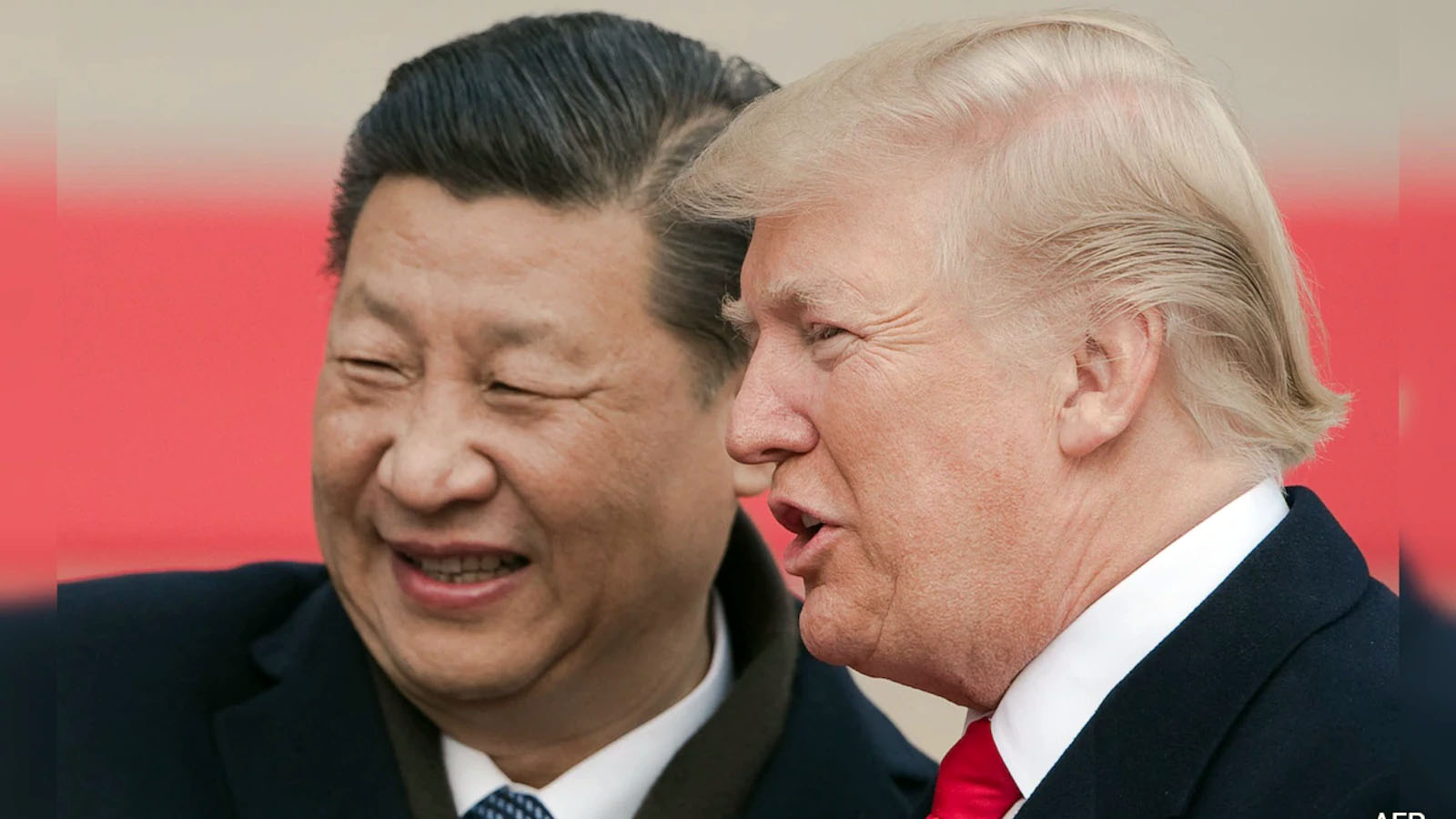
Speaking to reporters aboard Air Force One on Sunday, Trump was asked whether he would raise the issue with Chinese President Xi Jinping during their expected meeting in the United States.
Rather than directly addressing whether Beijing should be held responsible, Trump compared Chinese intelligence-gathering activities with those of the United States.
Trump also maintained that he has a good relationship with Xi, saying the Chinese leader had behaved reasonably well and that Washington and Beijing had likewise conducted themselves reasonably.
The comments come as the United States and China attempt to manage several areas of tension, including trade, technology, national security and China’s relationship with Iran.
The allegations are particularly sensitive because the reported transfer of imagery occurred before an attack that resulted in the deaths of American service members.
The Iran missile strike in Jordan was part of the broader conflict involving Iran and the United States, which has increasingly drawn in regional actors and raised concerns about the security of American military personnel and facilities across the Middle East.
The Wall Street Journal report, according to Reuters, could not immediately be independently verified. It also did not establish that Chinese authorities themselves provided the imagery or that Beijing had prior knowledge of the Iranian attack.
The distinction is significant because evidence that individual Chinese companies or entities supplied commercial satellite imagery would not, by itself, establish direct involvement by the Chinese government.
The controversy comes ahead of a potential meeting between Trump and Xi, with the two leaders expected to meet in the United States on September 24, although Beijing had not officially confirmed the meeting as of Monday.
China’s denial and Trump’s decision to downplay the allegation could help prevent the issue from becoming a major diplomatic confrontation ahead of the anticipated meeting.
For now, the central question remains whether Chinese commercial entities provided the imagery to Iran and, if so, what information was transferred and whether it materially contributed to the Iranian operation that killed the three US troops.
The allegations are likely to remain under scrutiny as Washington assesses the extent of Chinese support for Iran and its possible implications for US military operations in the Middle East.
China Denies Supplying Iran Intelligence Linked to Attack That Killed US Troops
International
‘Completely False’ — Moreno Denies Using AI to Prepare Games

Robert Moreno has begun his interim tenure as South Korea’s coach with a denial of one of the more unusual controversies attached to his coaching career, claims that he used ChatGPT to help prepare his teams for matches.
The Spanish coach, who arrived in South Korea this weekend, was asked about the allegation as he began work with the national side.
Moreno was accused by Russian media earlier this year of heavily relying on artificial intelligence during his spell at Sochi, where he left in September 2025 following a poor run of results.
He has consistently rejected the claim.
Moreno said the reports were “completely false” and argued that his use of technology had been misrepresented.
His explanation comes as he takes over a South Korean side attempting to recover from a turbulent World Cup campaign. The team crashed out in the group stage, leading Hong Myung-bo to resign and leaving the Korea Football Association under pressure over both the team’s performance and its previous recruitment process.
The KFA appointed Moreno as a temporary replacement rather than immediately committing to a permanent coach. He is expected to lead the team through six international matches, beginning with September and October friendlies against Ecuador, Uruguay, Venezuela and Uzbekistan.
His first squad includes veteran captain Son Heung-min, who now plays for Los Angeles FC, as well as Lee Kang-in and Kim Min-jae.
Moreno said he wants his tenure to be about more than results, with the immediate goal of rebuilding the relationship between the national team and its supporters.
“I want to make Korean football fans happy,” he said.
For now, however, the AI controversy remains part of the baggage surrounding his appointment, something Moreno appears keen to put behind him as he begins the task of rebuilding South Korea’s national team.
International
Trump Downplays Report of Chinese Satellite Help to Iran

US President Donald Trump has played down a report alleging that Chinese entities supplied Iran with satellite imagery of a US military base in Jordan before and after a deadly Iranian missile strike.
The report, published by The Wall Street Journal, said US officials had linked high-resolution satellite imagery provided by Chinese entities to Iran’s July 17 attack on Muwaffaq Salti Air Base, where three American soldiers were killed and four others injured.
Trump, however, appeared to dismiss the significance of the allegation while speaking to reporters aboard Air Force One on Sunday.
“When they say that China spies on us, I say you’re right, and we spy on them too,” he said, adding that the two countries essentially engage in similar intelligence activities.
The report has not established that Beijing directly authorised or participated in the alleged transfer. US officials cited by the Journal did not identify the Chinese entities involved, while Chinese officials reportedly rejected the allegation and asked Washington to provide evidence.
The development comes as Washington and Beijing prepare for a potentially sensitive meeting between Trump and Chinese President Xi Jinping, expected to take place at the White House on September 24.
The US has previously accused Chinese companies of assisting Iran’s military capabilities. Washington sanctioned three China-based satellite firms in May over alleged support for Iran’s military operations.
Despite the latest dispute, Trump struck a conciliatory tone when discussing Xi, saying the Chinese leader had “behaved reasonably well” and that the US had done the same.
Trump’s response leaves the satellite imagery allegations unresolved, with Beijing denying involvement and Washington yet to publicly identify the companies allegedly involved.
-

 metro3 days ago
Ondo Herbal Drink Tragedy: Survivor Vows Never to Drink Again as Death Toll Tops 30
-

 Business3 days ago
Dangote: ₦525 Refinery Shares Could Rise to ₦10,000
-

 metro3 days ago
Sokoto Cleric Stabbed Twice in Neck After Juma’at Prayer, Attacker Killed
-

 News1 day ago
SERAP Threatens Legal Action Over ₦126bn INEC Electoral Funds
-

 metro3 days ago
MURIC fires back at Peter Obi: Forget Sallah ceremony, free Nigerian Muslims
-

 metro3 days ago
Abia Police Arrest Father, Three Others Over Alleged Attempt to Sell 16-Month-Old Daughter
-
 International3 days ago
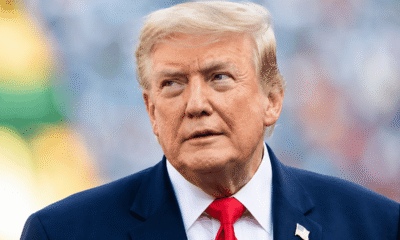
Trump Tells Supporters to ‘Cheat Like Hell’ Ahead of US Election
-

 metro3 days ago
FG Targets 2 Million Creative Jobs by 2030