

Africa
Ex-Kumawood Actor Makes Explosive Revelation, Alleges Popular Pastor Used Him to Stage Fake Miracles

Ex-Kumawood Actor Makes Explosive Revelation, Alleges Popular Pastor Used Him to Stage Fake Miracles
ACCRA, GHANA — Former Kumawood actor turned evangelist, Victor Moses, popularly known as Cyborg, has sparked controversy in Ghana’s religious community after alleging that he once collaborated with a popular pastor to stage fake miracles and deceive church congregations.
Cyborg, who has since abandoned acting to embrace Christian evangelism, made the revelation during an interview on Ezra TV aired on November 12, 2026.
According to him, his past dealings with the unnamed clergyman exposed what he described as deceptive practices allegedly used by some religious leaders to convince worshippers that supernatural miracles were taking place during church services.
The former actor claimed that the pastor initially approached him with a request to recruit blind people and individuals battling drug addiction for use in supposedly staged miracles.
He explained that the arrangement was intended to create convincing scenes of miraculous healing before unsuspecting church members.
Cyborg alleged that he attempted to find the people requested by the pastor but could not fulfil the assignment.
Rather than abandon the arrangement, he reportedly came up with an alternative plan based on his personal circumstances, particularly his frequent travels and possession of an international passport.
Recounting the incident, Cyborg said he subsequently travelled from Kumasi to Accra to attend a church service organised by the pastor.
He alleged that both men had already discussed and agreed on what would happen before the service.
According to his account, the pastor was conducting prophecies and making revelations about selected members of the congregation when attention eventually shifted to him.
Cyborg claimed that the pastor publicly spoke about his travelling activities and passport arrangements as though the information had been revealed to him through divine inspiration.
However, he alleged that the supposed prophecy was not supernatural but part of an arrangement secretly made before the service.
He said the congregation reacted with excitement, believing that the pastor had demonstrated extraordinary spiritual powers.
Cyborg further claimed that the pastor gave him a substantial amount of money after the service before he returned to Kumasi.
He did not publicly disclose the exact amount he allegedly received.
One of the most significant aspects of the revelation is that Cyborg did not disclose the identity of the pastor involved.
He reportedly indicated during the interview that he was prepared to mention the clergyman’s name but was asked by the programme’s host not to identify him publicly.
He described the individual as a prominent Ghanaian pastor who is familiar to audiences in both Kumasi and Accra and frequently appears on television.
The pastor’s identity therefore remains unknown, and no independent evidence has been presented publicly to establish the allegations.
Victor Moses, popularly known as Cyborg, was previously associated with Ghana’s Kumawood movie industry before stepping away from acting and embracing Christian evangelism.
He has subsequently spoken publicly about his troubled past, personal transformation and decision to dedicate his life to preaching.
His latest revelation has generated renewed conversations about religious accountability, the credibility of miracle claims and the possibility of exploiting the faith of unsuspecting worshippers.
Although Cyborg’s account has attracted considerable attention, the allegations against the unnamed pastor remain unverified.
Neither the identity of the clergyman nor independent evidence confirming the alleged arrangement has been established in the reports reviewed.
The pastor has also not been publicly identified, making it impossible to establish whether he has been given an opportunity to respond.
The development has nevertheless raised questions about transparency and accountability within the religious sector, particularly where claims of miraculous healing and supernatural revelations are concerned.
For many observers, the central issue is the need for religious leaders to maintain public trust and ensure that vulnerable worshippers are not exploited in the name of spirituality.
Further clarification from Cyborg, alongside independent verification of his claims, will be necessary to establish the full circumstances surrounding the alleged incident
Ex-Kumawood Actor Makes Explosive Revelation, Alleges Popular Pastor Used Him to Stage Fake Miracles








Africa
17 Dead as Gunmen Launch Two Fresh Mass Shootings in South Africa
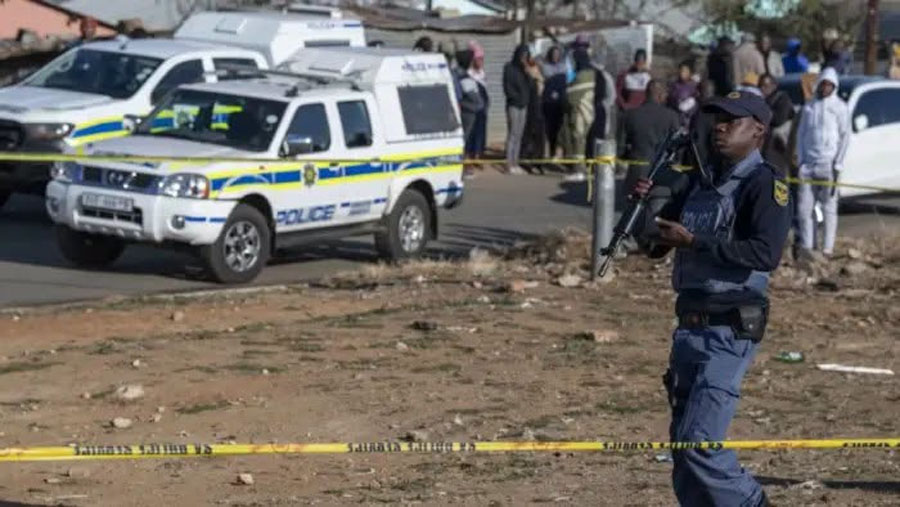
17 Dead as Gunmen Launch Two Fresh Mass Shootings in South Africa
At least 17 people have been killed in two separate mass shootings in South Africa, with gunmen attacking communities in two provinces in the latest outbreak of deadly gun violence in the country.
The attacks, which occurred on Sunday, November 15, 2026, claimed nine lives in an informal settlement near Pretoria and eight others in an area outside Pietermaritzburg, according to the South African Police Service.
In the first incident, six men and three women were found shot dead inside a four-room shack in Jeffsville, an informal settlement in Atteridgeville, west of Pretoria, the country’s administrative capital.
Police said they were alerted to the shooting at about 7:30 a.m. on Monday, November 16. Preliminary investigations indicated that the attack occurred between 10 p.m. and 11 p.m. on Sunday.
Gauteng Provincial Police Commissioner, Lieutenant General Tommy Mthombeni, said the killings might be connected to an earlier shooting in the nearby Saulsville informal settlement in 2025, which left 12 people dead and 13 others injured.
According to police, one of the victims in the latest attack was a person of interest in the earlier incident. Investigators have not ruled out the possibility that the latest killings were a retaliatory attack.
In the second incident, eight men were found dead inside a white seven-seater vehicle in Mabane Section, Sweetwaters, outside Pietermaritzburg in KwaZulu-Natal Province.
READ ALSO:
- Regulatory Violations: NSCDC Seals Seven Security Firms, Arrests 13 Guards in Delta
- Bahrain Under Attack as Iran Targets US Military Installation With Drones
- Chatham House Protest: UK-Based Lawyer Alleges Anti-Amupitan Demonstrators Were Paid Actors
Police discovered the bodies after responding to reports of gunfire in the semi-rural community. The victims, believed to be between 20 and 30 years old, reportedly sustained multiple gunshot wounds and were pronounced dead at the scene.
KwaZulu-Natal police spokesperson, Colonel Robert Netshiunda, said investigators were working to identify the victims and establish the circumstances surrounding the attack.
He cautioned against speculation about the motive, noting that investigations were still at an early stage.
National Police Commissioner, General Fannie Masemola, condemned the killings, describing the continued mass shootings across the country as unacceptable.
Masemola said a multidisciplinary investigation team, led by intelligence officers, was pursuing promising leads in the Atteridgeville attack. He also directed the provincial police commissioners in Gauteng and KwaZulu-Natal to ensure that both investigations received adequate attention and resources.
The police chief expressed condolences to the bereaved families and communities, promising that those responsible would be tracked down and brought before the courts.
The latest killings have renewed concerns about South Africa’s persistent problem of violent crime, illegal firearms and mass shootings.
The country has recorded several deadly shooting incidents in recent months, with criminal gangs, territorial disputes and other forms of organised violence frequently cited among the factors behind gun-related killings.
However, authorities have yet to establish whether the two latest attacks were connected or determine the motives behind them.
Police have appealed to residents to provide credible information that could assist investigators in identifying and arresting those responsible.
17 Dead as Gunmen Launch Two Fresh Mass Shootings in South Africa
Africa
DR Congo Sentences 66 Soldiers to Death for Cowardice, Mutiny
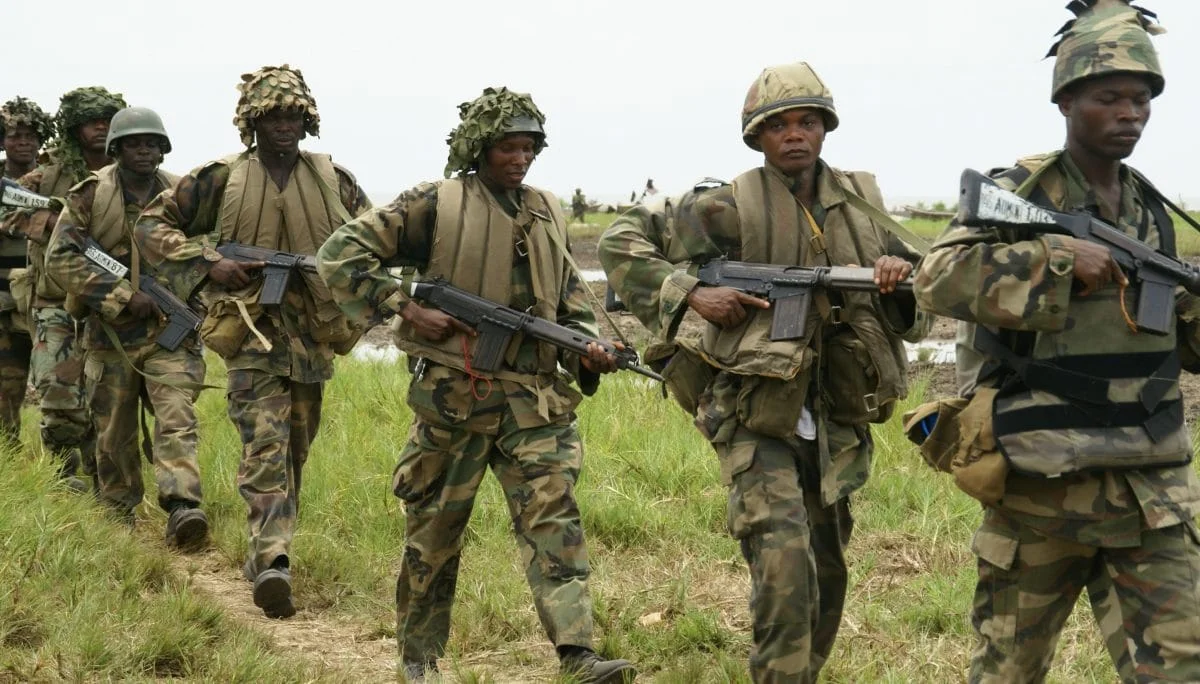
DR Congo Sentences 66 Soldiers to Death for Cowardice, Mutiny
A military court in the Democratic Republic of Congo (DR Congo) has sentenced 66 soldiers to death after finding them guilty of cowardice, mutiny and disobeying orders during military operations against rebel groups in the country’s conflict-ridden eastern region.
The soldiers were convicted by the Goma Garrison Military Court, which conducted the trial in Walikale territory, North Kivu Province, following accusations that they abandoned their positions and fled during clashes with rebel fighters.
The trial involved 71 members of the Congolese armed forces, including troops from the army’s 3415th Regiment, who were arrested on October 20 over alleged offences committed in the area.
According to reports by local media, the proceedings lasted approximately 12 days, with prosecutors seeking the death penalty for 70 defendants while requesting a 10-year prison sentence for an intelligence officer.
At the conclusion of the trial, the court sentenced 66 soldiers to death, acquitted four others and handed a 10-year prison sentence to another defendant.
The charges included mutiny, failure to obey orders and cowardice in the face of the enemy.
The military authorities said the trial was partly intended to strengthen discipline within the armed forces as government troops continue to battle armed groups in eastern DR Congo.
READ ALSO:
- Lookman’s Atletico Future Under Question After Simeone Leaves Him Out Against Barcelona
- UK Councillor Gets 150 Hours Community Service Over ‘Melt Nigerians’ Post
- Three Broken-Down Trucks Paralyse Abuja-Kaduna Highway, Travellers Spend Eight Hours in Gridlock
Major Dieudonne Kasereka, the army’s communications chief in the affected region, said the prosecution was necessary to reinforce discipline among soldiers operating in North Kivu and South Kivu.
Eastern DR Congo has experienced decades of armed conflict involving government forces and several rebel organisations, including the March 23 Movement (M23), which operates as part of the broader Alliance Fleuve Congo/Front for the Refoundation of the Nation (AFC/FRN) coalition.
The latest convictions come amid renewed fighting in the mineral-rich region, where government troops have struggled to contain rebel advances.
The military has faced persistent challenges, including desertions, poor organisation, inadequate equipment and complaints by soldiers over poor pay and working conditions.
The latest death sentences also follow a similar military court ruling in October, when 27 Congolese soldiers were sentenced to death for cowardice after allegedly withdrawing from frontline positions during clashes with AFC/M23 rebels.
DR Congo lifted a moratorium on executions in March 2024, ending a suspension that had lasted for more than two decades.
The government defended the decision as part of efforts to tackle treason and other serious offences within the armed forces, particularly amid the security crisis in the country’s east.
However, the resumption of death sentences has attracted criticism from international human rights organisations.
Amnesty International has repeatedly warned that military trials in the country raise serious concerns about fair-trial standards and the growing use of capital punishment.
The organisation has called on Congolese authorities to halt plans to resume executions and work towards abolishing the death penalty.
Although dozens of soldiers have received death sentences since the government lifted the moratorium, no executions have been officially reported since the decision.
The latest convictions therefore represent death sentences handed down by the military court, not confirmation that the soldiers have been executed.
DR Congo Sentences 66 Soldiers to Death for Cowardice, Mutiny
Africa
“This Is Not A Church”: Passengers Challenge Pastor Preaching Inside Moving Bus

“This Is Not A Church”: Passengers Challenge Pastor Preaching Inside Moving Bus
ACCRA, Ghana – A disagreement reportedly broke out inside a moving commercial bus after a pastor attempting to preach to passengers was confronted by commuters who demanded that he stop the sermon and return to his seat.
The incident, captured in a video circulating on social media, showed passengers expressing displeasure over the preacher’s decision to turn their journey into an impromptu religious gathering.
The pastor, who had reportedly stood up to address commuters while the vehicle was in motion, encountered resistance from passengers who insisted that they had not consented to participate in a religious service.
The disagreement reportedly escalated into a heated exchange, with some commuters making it clear that they wanted to enjoy their journey without being subjected to unsolicited preaching.
One of the arguments raised by passengers was the need to respect people’s personal space and freedom to decide when and where they wish to participate in religious activities.
The incident has since generated conversations about the growing practice of religious preaching inside commercial vehicles, particularly in Ghana, where pastors and other religious evangelists sometimes use public transport as an opportunity to reach commuters.
While some people consider such encounters an opportunity to spread the gospel, others believe passengers should not be compelled to listen to religious messages while travelling.
Critics of the practice argue that boarding a commercial vehicle does not automatically amount to consenting to a religious gathering. They also maintain that passengers deserve a peaceful journey without unwanted interruptions.
However, supporters of public evangelism insist that preaching outside conventional places of worship remains one way of reaching people who might otherwise never attend church services.
The latest confrontation has reignited debate over the limits of religious expression in shared public spaces and whether commuters should have the right to reject unsolicited preaching.
As reactions continue to trail the footage, the incident has raised a broader question: Should pastors be allowed to preach inside commercial vehicles without the consent of passengers?
“This Is Not A Church”: Passengers Challenge Pastor Preaching Inside Moving Bus
-

 metro1 day ago
Goodluck Jonathan’s Second Wife, Ayima, to Unveil Memoir ‘Gold Dust’ in Abuja at 50
-

 metro3 days ago
Tragedy: “I Suffered With This Man When He Had Nothing” — Woman Who Begged Alleged Rival To Leave Her Family Dies At 39
-

 Business2 days ago
Petrol Prices Crash as Dangote Refinery, NNPCL, MRS Adjust Rates Nationwide
-

 Politics2 days ago
Presidency Deletes AI-Generated Tinubu Rally Photo After Public Outcry
-

 Politics1 day ago
Sheikh Nuru Khalid Speaks on Tinubu, Atiku, Mosque Visits, Warns Against Mixing Politics With Religion
-
 News2 days ago
Tinubu Unveils 5-Year Plan to End Insecurity, Approves Recruitment of 78,000 Soldiers, Police Officers
-
 International23 hours ago
Canada: Eight Nigerians Among 12 Arrested in $4.5m Auto Theft Bust, 96 Vehicles Recovered
-
 International2 days ago
Eight Dead in New York Building Collapse as Nigerian Landlord’s Troubling Past Emerges