

Business
Fears over food scarcity as Niger farmers flee
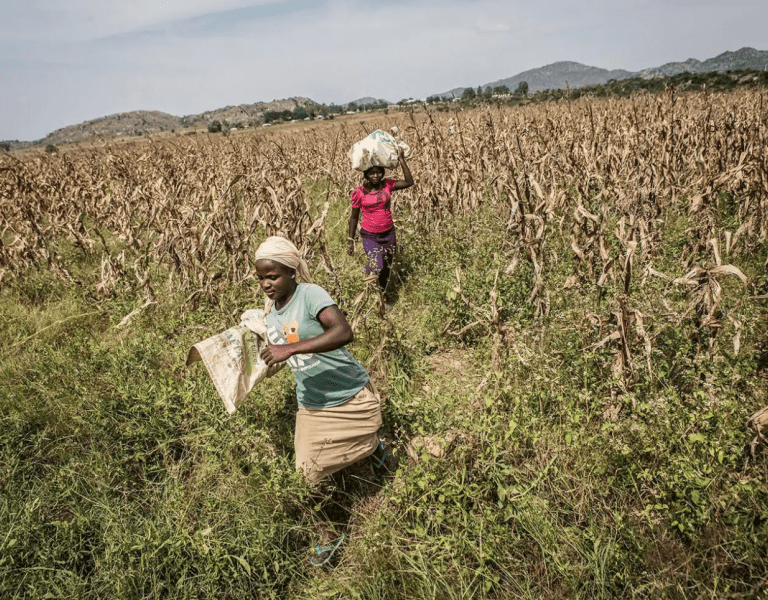
AS bandits continue to attack and get away with their atrocities without serious challenge from security operatives, many farmers in Niger State have fled their farms and have vowed never to return until security is beefed up around them.
To underscore their seriousness, many of them have already relocated from the farming communities to Minna, the state capital, to escape the brutality of criminals variously described as bandits, kidnappers, hoodlums, cattle rustlers and armed robbers.
Things got to the worst in recent times when the criminals not only attacked and dispossessed the farmers of their possessions, but began to set their houses ablaze as a conquered people, leaving them with nothing to manage their lives with.
The bandits have successfully taken their atrocities to no fewer than 18 of the 25 local government areas of the state and are unwilling to halt their infamy despite threats from security agencies.
They appear to be more daring after being challenged by the security organisations, thereby sending fears into residents of the remaining local government areas.
Farmers whose areas have not yet been visited by the hoodlums now live in fear of possible attack by the daring bandits.
As a result of the unrelenting onslaughts by bandits on farmers, many have since abandoned farming and harvesting of their mature crops, a development that is already forcing an increase in the prices of foodstuff. Many of the farmers interviewed by Arewa Voice said they would not risk their lives by going back to the farms except adequate security is assured.
A yam farmer, Adamu Useni Allawa, who also cultivates maize and millet, lamented that although he was eager to return to his farm, he would only do so when there is improved security in the farms.
He said, “I am eager to go back to my farm but my fear is this insecurity. It troubles my mind to go back because of insecurity. Any time it pricks my heart to go back to the farm, I often have another premonition that going back there might be a journey of no return. I am not in any way preparing now because I don’t have the confidence. I don’t do any other work than farming but I cannot risk my life for farming as it is.
“I have a bitter experience, which is still fresh in my memory. It is about my uncle and his friends who the bandits met in their farms and shot them to death instantly without any sympathy. Some of these bandits after attacking and killing our people even run away with their seedlings and we are left with virtually nothing to start fresh planting. We have relocated to Pandogari and have become refugees in a strange environment, doing nothing.”
Another farmer, Umaru Adamu Allawa, said his hope rested on government to provide more security to enable him and others go back to their various farms.
Allawa said, “If the banditry situation continues like this, there is no hope for us to go back to the farm. Our yearly turnover is massive and even if we cannot feed the state or the entire nation, we can feed our zone that comprises eight wards in Shiroro Local government effectively.”
Bala Usman, a public servant who also is also a farmer, said, “With the present insecurity in my area-comprising Lakpma, Munyan and Rafi local government areas, the farmers are no longer able to go to their farms. The implication is that it will surely affect the economy of the areas concerned, the state and the country in general. That is why we call on government at all levels to intervene immediately in order to enable farmers go back to their farms.
“Even if we are supplied the necessary farming inputs like fertilisers, seedlings, among others, it will be difficult to transport them to the affected areas because of these bandits. Also, we will find it difficult to start all over again because apart from killing our people, the bandits also steal and burn down our seedlings and we are now left with virtually nothing to take off again.”
Shuaibu Yusuf, who is from Manta, one of the ravaged areas by bandits, said from the look of things, it will be very difficult for farmers in the troubled communities to farm this year.
The Permanent Secretary in the state Ministry of Agriculture and Rural Development, Idris Usman Gbogan, however, assured the farmers that the Niger State government was aware of the security challenges and has taken steps to further protect lives and property of its people, especially those areas constantly raided by the bandits.
Gbogan told Arewa Voice in an interview that the state government has procured farming inputs in preparation for the coming planting season.
He said, “The step taken by the state government is to cushion the effect of transportation cost for the agro input companies as a way of reducing the cost of agricultural inputs.
By the first week of next month, the state Governor, Alhaji Abubakar Sani Bello, will launch the 2021 farming season and, thereafter, all these agricultural inputs will be ferried to all parts of the state under tight security.
“As at now, we have one extension worker to about 5000 farm families which is not acceptable because the ideal situation is to have one extension worker to between 800 and 1,000 farm families so in each of our stores presently across all the 25 local government areas, we are going to position extension workers so that as the farmers come to buy their inputs, we have the extension workers who will educate them and give them necessary extension knowledge on the inputs they are buying from the stores.
Gbogan said despite the insecurity and other challenges, there is still hope for bumper harvest in the state and this is why government is ensuring that they get the necessary inputs they need.
The state Chairman of All Farmers Association of Nigeria, AFAN, Niger State Chapter, Alhaji Shehu Galadima, told Arewa Voice that banditry was a bad omen for the state and its people and should be tackled with immediate effect.
He said, “Last year, it was not easy for farmers because many of them could not conclude their farming processes. Some of them who fled their ancestral homes because of the bandits cannot even go back to their homes to get their seedlings and other property in readiness for this planting season.
“Just about two days ago, in Kuchi Town in Sarkin Pawa Local Government Area of the state, the entire community was sacked and the people had to run for their lives.
“Other places having similar problems are Shiroro, Mariga, Munyan and parts of Paikoro, Rijau, Mashegu local government areas, just to mention a few. They are all overwhelmed with this type of problem.
“We are afraid that this year’s farming is being seriously threatened and it is not going to be easy for our farmers in the state because of the security issues. If the lives and properties of people are not secured, nobody will be able to do anything.”
-Vanguard












Business
Nigerians Pay N44 Extra Per Litre as Retailers Defy Falling Depot Prices – Full Report

Auto
Abuja Roars to Life as Jetour X50 Headlines Three-Day Motoring Experience

Abuja Roars to Life as Jetour X50 Headlines Three-Day Motoring Experience
Abuja is gearing up for a major motoring spectacle as Jetour Nigeria brings its fast-growing brand experience to the Federal Capital Territory, with the stylish Jetour X50 set to take centre stage in a three-day showcase of performance, technology and automotive innovation.
Scheduled for September 22 to 24, 2026, the Jetour Experience Abuja will move beyond the conventional vehicle exhibition, giving motorists and prospective buyers the opportunity to test-drive the X50, interact with automotive specialists and experience a range of entertainment and interactive activities.
The Abuja activation follows the strong reception recorded during Jetour Nigeria’s recent Lagos experience and forms part of the automaker’s strategy to deepen customer engagement while expanding its footprint across Nigeria.
Backed by an expanding authorised dealer network comprising Elizade Nigeria Limited, Mandilas Autos, Germaine Auto Centre, Kojo Motors, R.T. Briscoe, Tab Autos and New Era AutoVehicle Services, Jetour is also strengthening access to vehicle sales, after-sales support, genuine spare parts and certified technical services nationwide.
At the heart of the Abuja experience will be the Jetour X50, a compact SUV designed to combine contemporary styling, performance and a technology-rich driving environment.
Powered by a 1.5-litre turbocharged engine paired with a dual-clutch transmission, the X50 has positioned itself as a strong contender in Nigeria’s competitive compact SUV segment.
Jetour has equipped the model with a range of premium features, including a 360-degree camera, Blind Spot Detection, 10.5-inch infotainment system with Apple CarPlay and Android Auto, wireless charging and leather upholstery.
The combination of technology, comfort and performance is part of Jetour’s strategy of offering premium motoring features at competitive price points.
The Abuja event also highlights Jetour’s aggressive expansion strategy in Nigeria, following the brand’s recognition with industry accolades including Fastest Growing Auto Brand and Auto Brand of the Year.
With its expanding dealer network providing nationwide sales and after-sales support, Jetour is seeking to deepen customer engagement while making its vehicles and ownership services more accessible to motorists across the country.
As Abuja prepares to welcome the Jetour Experience, the three-day activation is expected to provide motorists with an opportunity to see, feel and drive the X50 while experiencing first-hand what is driving the brand’s growing appeal in Nigeria.
Business
Dangote Refinery Sets ₦525 Per Share for Landmark IPO

For ₦5,250, Nigerians could soon own a piece of the refinery that has reshaped the country’s fuel market.
-

 Auto3 days ago
Kaduna to Lead Govt Patronage of Local Vehicles as Sani Unveils Peugeot 5008
-

 metro2 days ago
El-Rufai Demands ₦10bn from Defence Minister Over Southern Kaduna Killings Allegation
-

 metro3 days ago
Socialite Igho ‘Tiny’ Ubiribo Dies After Penis Enlargement Surgery
-

 metro2 days ago
Catholic priest leaves priesthood, weds Kenyan woman after 12 years in Kenya
-

 News2 days ago
Lagos Moves to Slash Agency Fees, Curb Rent Hikes With New Tenancy Bill
-

 metro2 days ago
Oyoland Grand Chief Imam Celebrates Dr Sharafudeen Raji for Service to Islam
-

 Politics2 days ago
Why Did Peter Obi Attend Seyi Makinde’s Campaign Launch? Here’s What He Said
-

 metro2 days ago
No US Case Against Tinubu, Family Enjoy Unimpeded Transit for UNGA — Ambassador Ibrahim