

News
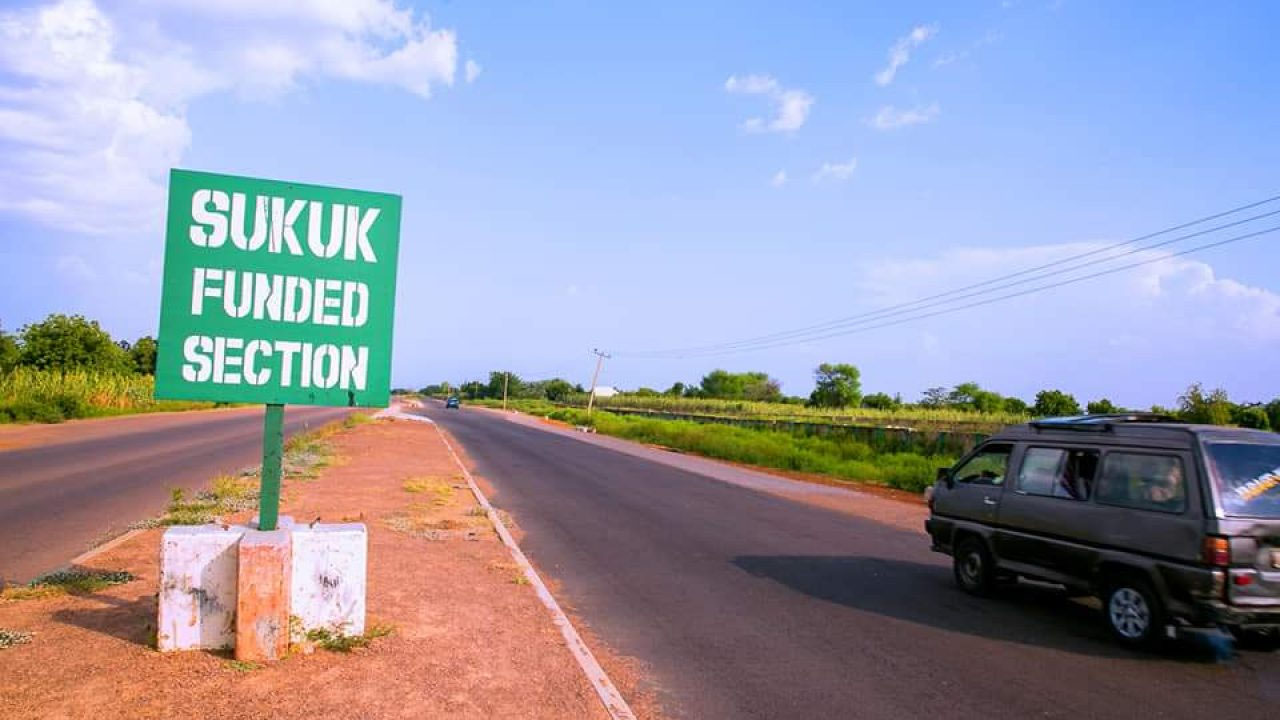
FG launches N300bn Sukuk for road projects
FG launches N300bn Sukuk for road projects
The federal government is seeking to raise some N300 billion through a new Sukuk issuance as part of efforts to diversify government’s funding sources and accelerate the pace of infrastructural development.
The N300 billion Sovereign Sukuk is a seven-year Sukuk due 2032; a non-interest, alternative instrument designed in a form of annual rental income. The annual rental income is 19.75 per cent. Sukuk is a non-interest, asset-backed instrument, based on the principles of Islamic finance.
The Debt Management Office (DMO), which oversees Nigeria’s government debt issuances and management, indicated yesterday that the offer would open today with a minimum subscription of N10,000. The offer closes on May 20, 2025.
The Sukuk serves the dual purposes of diversifying government’s funding for critical national infrastructural projects and also expanding the domestic investment market to meet the need of ethical investors.
The Sukuk is being offered at N1,000 per unit, subject to a minimum subscription of N10,000 and in multiples of N1,000 thereafter.
The rental payment will be made half-yearly while the bullet repayment will be done on the date of maturity.
As a sovereign issuance, the Sukuk is backed by the full faith and credit of the Federal Government and it qualifies as securities in which trustees can invest under the Trustee Investment Act. It also qualifies as government securities within the meaning of Company Income Tax Act and Personal Income Tax Act for tax exemption for pension funds among other investors. It is also classified as liquid asset by the Central Bank of Nigeria (CBN) and certified by the Financial Regulation Advisory Council of Experts of the CBN.
READ ALSO:
- NNPP attacks Ganduje over comment on one-party system
- I’m not desperate to return as Rivers gov – Fubara
- Arms worth trillions of naira in B/Haram’s hands – Rep
The N300 billion Sukuk will be listed on the Nigerian Exchange (NGX) and FMDQ Securities Exchange Limited upon completion.
Managing Director, Arthur Steven Asset Management, Mr. Olatunde Amolegbe, described the Sukuk as a high-yielding investment with predictable cashflows.
According to him, the Sukuk provides a good route for wealth accumulation and investment compounding.
“Aside from the fact that it is a gilt edge bond that is covered by the full faith and credit of the Federal Government, this particular instrument has good rate of return at nearly 20 per cent. It also provides an excellent investment outlet for ethical investors that do not what interest-based investment to put their investments in,” Amolegbe said.
Sources said the government could raise more than N300 billion, citing the historical issuance trend.
The federal government had in 2017 launched its sovereign Sukuk issuance as a strategic initiative to support the development of critical infrastructure, promote financial inclusion and deepen the domestic securities market.
Sukuk as an alternative instrument to conventional bonds and it is based on the tenets of Islam which prohibits usury or lending with interest payments. Sukuk does not indicate the existence of any debt obligation as the issuer uses the proceeds from the certificate to purchase an asset, of which the investor also receives partial ownership.
READ ALSO:
- Nigeria, others affected in UK clampdown on care workers’ visas
- 78 Nigerian girls rescued from Côte d’Ivoire traffickers return home
- West Ham bury Man United 2-0 as Amorim continues poor domestic form
Nigeria’s N150 billion third sovereign Sukuk issuance had recorded oversubscription of N519.12 billion, sustaining a trend of oversubscription that started with the maiden issuance 2017. The Federal Government had in June 2020 issued a N150 billion seven-year Ijarah Sukuk due June 2027 with approximate rental of 11.200 per cent per annum.
The Federal Government had in September 2017 floated its first sovereign Sukuk, a N100 billion seven-year issue with a rental rate of 16.47 per cent. It was oversubscribed by 5.8 per cent. Government followed in 2018 N100 billion seven-year tenored Sukuk Al Ijarah (Lease) with annual rental rate of 15.743 per cent. It was also oversubscribed.
Director General, Debt Management Office (DMO) Ms Patience Oniha, had said the government recognised the need to issue more Sukuk bonds given the increasing success and strong investor’s appetite for the alternative non-interest bonds.
According to her, the Sukuk initiative by DMO, which oversees national debt management, has been increasingly successful given the strong level of awareness that has been created.
She attributed the success of the Sukuk issuances to the increased confidence from market participants given that the Sukuk bonds are tied to specific projects that can be tracked.
“Looking ahead, we recognise the need to upscale issuances to include other standalone projects beyond road infrastructure, but more importantly, we are looking to support projects that are revenue generating to service the Sukuk,” Oniha said.
FG launches N300bn Sukuk for road projects







News
Tinubu Approves SUVs for FCT Traditional Rulers, Four Buses for Youths, says Wike

Tinubu Approves SUVs for FCT Traditional Rulers, Four Buses for Youths, says Wike
President Bola Tinubu has approved the purchase of brand-new Sport Utility Vehicles (SUVs) for traditional rulers in the Federal Capital Territory (FCT), following the recent upgrading of their traditional stools, Minister of the FCT, Nyesom Wike, has disclosed.
Wike also announced presidential approval for the provision of four buses to support youth mobilisation across the territory ahead of the 2027 general elections.
The minister made the disclosures on Saturday at the Rainbow Coalition Stakeholders Rally and unveiling of FCT National Assembly candidates, organised by the FCT Stakeholders Assembly at the Old Parade Ground, Abuja.
The development was contained in a statement issued by the Deputy Director, Press, Office of the FCT Minister, Rabi Musa Umar.
Wike said the provision of official vehicles was part of President Tinubu’s recognition of the traditional institution and its contributions to maintaining peace, preserving cultural heritage and promoting stability in the FCT.
He noted that the President’s approval of the upgrading of traditional stools in the territory, after 27 years of neglect, demonstrated his administration’s commitment to strengthening traditional institutions.
“Mr President has said that you cannot just answer royal fathers by mouth. You cannot just answer royal fathers by entering Keke Napep. You cannot answer royal fathers by entering Okada. All of you, by the grace of God, before December, you will go with your SUV cars,” Wike quoted the President as saying.
The minister added that traditional rulers in the FCT deserved adequate recognition and support, given their strategic roles in their respective communities.
READ ALSO:
- Two Europe-Bound Nigerians Excrete 200 Cocaine Wraps at Abuja Airport
- Three Dead, Five Rescued as Two-Storey Building Collapses in Osun
- Badenoch Rejects Slave Trade Apology, Says African Kingdoms Also Profited From Slavery
“If there is any traditional institution that needs to be treated well, that needs empowerment, it’s the traditional institution of the Federal Capital Territory,” he said.
The rally, which attracted traditional rulers, chairmen of the six area councils, indigenous community leaders, youth and women groups, as well as political leaders, also witnessed a joint endorsement of Tinubu for a second term in 2027.
The gathering equally endorsed Senator Philip Tanimu Aduda for the FCT Senate seat, Hon. John Gabaya for Abuja North Federal Constituency and Hon. Danladi Chiya for Abuja South Federal Constituency.
Leaders of both the All Progressives Congress (APC) and Peoples Democratic Party (PDP) in the FCT were among those present at the rally.
Wike, however, warned political supporters against taking electoral victory for granted, insisting that the endorsements must translate into votes at the grassroots.
He charged party leaders and supporters to ensure victory in their respective polling units, wards and area councils, declaring that individual contributions would be critical to the outcome of the January 16, 2027 election.
“Deliver your polling unit, deliver your ward, deliver your local government, deliver your state,” he told the gathering.
He cautioned against celebrating collective victories when individual political leaders failed to secure their polling units.
“I don’t want to hear: I lost my polling unit, but we won. If you lose your polling unit, don’t say we won because you never contributed to the victory. So, everybody go home, it’s an operation to deliver your polling unit,” he said.
The minister also expressed confidence that Senator Aduda would emerge victorious in the 2027 election, arguing that the former senator had maintained a closer relationship with his constituents.
“We shall never make the mistake we made in 2023. When you realise a mistake, you correct it. To God be the glory, come January 2027, Senator Philip Tanimu Aduda will be elected because he identifies with you and cares about you,” Wike declared.
He questioned the performance of the incumbent senator, asking whether he had convened meetings with constituents or sponsored legislation addressing the interests of the FCT.
In a further push to strengthen youth participation in the forthcoming elections, Wike disclosed that Tinubu had also approved four buses for young people in the territory.
He announced November 10 for an interactive engagement with youths from the six area councils, promising that the meeting would provide an opportunity to discuss their concerns and participation in governance.
The minister also pledged a separate engagement with persons with disabilities, stressing that physical challenges should not be a barrier to participation in public life.
“Disability does not mean you do not have capacity,” he said.
Tinubu Approves SUVs for FCT Traditional Rulers, Four Buses for Youths, says Wike
News
‘Dare to Call Tinubu Criminal in Ojota, Oshodi Parks’, Wike’s Aide Mocks Sowore After Ekiti Incident
‘Dare to Call Tinubu Criminal in Ojota, Oshodi Parks’, Wike’s Aide Mocks Sowore After Ekiti Incident
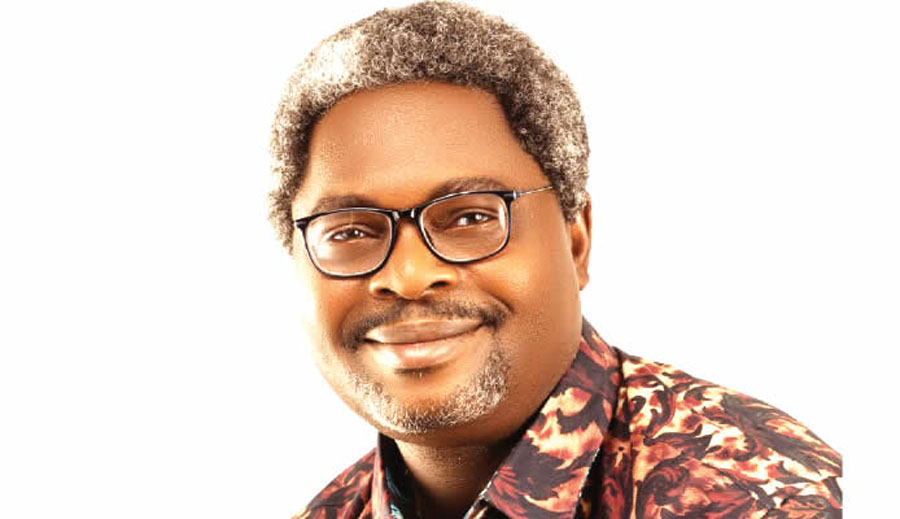
A media aide to the Minister of the Federal Capital Territory, Nyesom Wike, Lere Olayinka, has taken a swipe at African Action Congress (AAC) presidential candidate Omoyele Sowore following the reported attack on the activist and members of his team in Ado-Ekiti, Ekiti State.
Olayinka, Senior Special Assistant on Public Communications and Social Media to Wike, reportedly challenged Sowore to demonstrate his willingness to criticise President Bola Ahmed Tinubu in Lagos motor parks, particularly Ojota, Obalende and Oshodi, which he associated with the President’s political influence.
In a headline published by Daily Post on Sunday, November 1, Olayinka was quoted as daring the activist to call Tinubu a criminal in the three locations.
The reported remarks came amid controversy over the incident involving Sowore and his associates at Tawakalitu Restaurant in the Dalimore area of Ado-Ekiti on Friday, October 30.
Sowore had raised the alarm on social media, alleging that armed men attacked him and members of his team shortly after he participated in a radio interview in the state capital. He also accused operatives of the Department of State Services (DSS) of providing the attackers with information about his location and alleged that the assailants had links to the Ekiti State Government.
The activist initially reported that he had been kidnapped and that his whereabouts were unknown, prompting concerns among his supporters and members of the public.
However, the Ekiti State Police Command disputed the kidnapping claim, saying preliminary information indicated that Sowore and some individuals had been involved in an altercation at a restaurant. The command said its operatives responded to a distress call, rescued those involved and took Sowore to the Police Hospital in Ado-Ekiti for treatment after he sustained an injury.
READ ALSO:
- 2027: ‘Tinubu Must Stay’ Chants Rock Jigawa as NITDA DG Opens Campaign Office
- Trump Steps In as Ghana Demands Justice for 15-Year-Old Boy Shot Dead on Way to School in US
- Adeboye Fires Back at Journalists Over Viral Jonathan Protest Photo, Says It Was Prayer Walk
Sowore rejected the police description of the incident as an altercation, insisting that he and his associates were attacked by armed men. He also accused the police of downplaying the seriousness of the incident.
The controversy took another turn on Saturday when the police announced the arrest of 11 suspects in connection with the incident. According to the command, operatives of its Rapid Response Squad arrested the suspects at their hideout in the Atikankan area of Ado-Ekiti at about 10pm on Friday.
The police said items recovered during the operation included two walkie-talkies, 13 mobile phones, seven ATM cards, two vehicle keys, a flash drive, a mobile internet device and substances suspected to be illicit drugs.
The suspects were taken into custody as investigations continued to establish their individual roles, determine their possible connections with the incident and identify other persons who might have been involved.
The Ekiti State Government also denied allegations linking it to the incident. In a statement issued by the Governor’s Chief Press Secretary, Olayinka Oyebode, the government said it had no involvement and urged the police to conduct a thorough investigation and ensure that anyone found culpable was brought to justice.
Sowore has continued to demand accountability, arguing that the arrest of suspected participants would not be sufficient if those who allegedly planned, financed or coordinated the attack were not identified.
Against this background, Olayinka’s reported comments have added a political dimension to the controversy, drawing attention to the longstanding exchanges between supporters of the Tinubu administration and critics of the President.
Sowore has remained an outspoken critic of the Federal Government, frequently challenging its policies and demanding accountability from public officials. His criticism of the administration has also attracted sharp reactions from political figures and government supporters.
The reported reference to Ojota, Obalende and Oshodi is particularly significant because the locations are associated with prominent transport and commercial activities in Lagos. Olayinka’s reported challenge appeared to question whether Sowore would make similar remarks about Tinubu in those public spaces.
The development has renewed discussions about political tolerance, freedom of expression and the safety of opposition figures and activists who openly criticise government officials.
While political disagreements and sharp exchanges are part of democratic engagement, concerns remain over the use of intimidation, threats or violence against people expressing dissenting views.
The investigation into the Ado-Ekiti incident is ongoing, and the allegations against the arrested suspects have yet to be established in court.
‘Dare to Call Tinubu Criminal in Ojota, Oshodi Parks’, Wike’s Aide Mocks Sowore After Ekiti Incident
News
Tinubu Gets Court Relief as US Judge Rejects Fresh Move in FBI, DEA Case
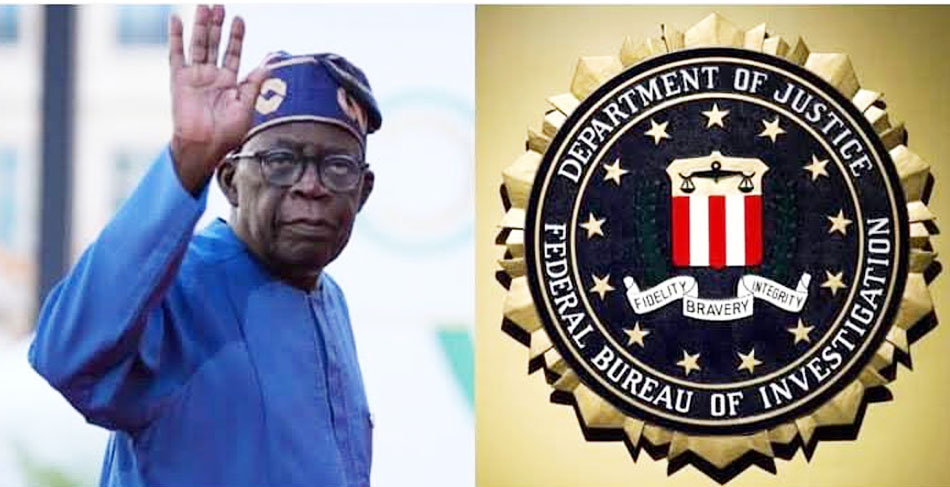
A United States federal court has rejected a fresh attempt by Aaron Greenspan to obtain additional information directly from President Bola Ahmed Tinubu and a Washington-based lobbying firm, DCI Group, in an ongoing legal battle over historical FBI and DEA records.
The ruling, delivered on Friday, October 30, 2026, by the United States District Court for the District of Columbia, dismissed Greenspan’s application to serve additional discovery requests on Tinubu and subpoena documents from DCI Group AZ LLC and/or its parent company.
However, the decision was not an outright victory for the Nigerian President or the American federal agencies, as the court also directed the Federal Bureau of Investigation (FBI) and the Drug Enforcement Administration (DEA) to provide further explanations for withholding certain historical records.
Judge Beryl Howell ruled that Greenspan’s proposed discovery requests were not sufficiently relevant to the central issues in the Freedom of Information Act (FOIA) lawsuit.
The judge emphasised that the application concerned the legal process for obtaining government records and did not establish that Tinubu committed any drug-related offence.
Greenspan, who is representing himself in the lawsuit, had asked the court for permission to serve six interrogatories, four requests for admission and one request for production on Tinubu.
He also sought permission to subpoena documents from DCI Group AZ LLC and/or its parent company.
The proposed discovery was connected to allegations of repeated, large-scale distributed denial-of-service (DDoS) attacks on Greenspan’s website, PlainSite.
Greenspan claimed the alleged cyberattacks disrupted his ability to publish materials relating to the litigation.
He argued that the attacks suggested that some individuals were closely monitoring the case and might have an interest in preventing public access to documents.
However, he did not accuse Tinubu of organising or carrying out the alleged cyberattacks.
In rejecting the application, Judge Howell held that investigating the source of the alleged attacks would not help determine whether the FBI and DEA had conducted adequate searches or lawfully withheld information.
The court consequently found that the proposed discovery failed to meet the relevance and proportionality requirements under American civil procedure rules.
The decision represents another development in the lengthy legal dispute over access to historical American investigative records concerning Tinubu.
The lawsuit, filed on June 12, 2023, followed a series of FOIA requests submitted by Greenspan between 2022 and 2023 to six American government agencies.
The agencies included the FBI, DEA, Central Intelligence Agency (CIA), Internal Revenue Service (IRS), Executive Office for US Attorneys and Department of State.
Greenspan sought investigative records relating to an alleged Chicago-based heroin trafficking and money-laundering operation investigated by American law enforcement agencies in the early 1990s.
Tinubu and another Nigerian, Abiodun Agbele, were among the individuals identified in the requests.
The case took a significant turn in April 2025 when Judge Howell ruled that the FBI and DEA could no longer rely on their earlier refusal to confirm or deny whether the requested records existed.
The judge noted that previous public court documents had already acknowledged aspects of the investigations involving the individuals named in the requests.
The agencies were subsequently required to search for the records and justify any information withheld under applicable FOIA exemptions.
According to the latest court proceedings, the FBI processed 399 pages, releasing 30 pages in full while withholding others entirely or partially. The agency also identified 59 duplicate pages.
The DEA processed 240 pages but did not release any of them in full.
Significantly, Judge Howell observed that none of the records released by either agency contained Tinubu’s name, despite his inclusion in the original requests.
Tinubu had earlier intervened in the proceedings to protect his privacy interests, particularly concerning personal information contained in the historical investigative records.
His legal team argued that sensitive personal information should not be disclosed, maintaining that the President’s privacy interests deserved protection.
However, Judge Howell questioned some of the agencies’ reliance on privacy exemptions, noting that Tinubu was already a public official during the period covered by the records, having been a candidate for and subsequently a member of the Nigerian Senate.
The court also recognised the public interest in understanding how American law enforcement agencies investigated the historical case and handled the records.
Beyond rejecting Greenspan’s discovery application, the judge delivered a mixed decision on the substantive FOIA dispute.
Judge Howell granted the FBI summary judgment concerning the adequacy of its search and its reliance on one statutory exemption but rejected the broader summary judgment applications by both sides on the remaining issues.
The judge particularly questioned some of the FBI and DEA’s explanations for withholding information under statutory exemptions relating to personal privacy, confidential sources and potential harm to individuals.
One issue concerned the FBI’s continued redaction of information from an affidavit by an IRS special agent, Kevin Moss, which had previously appeared in public court records.
The court questioned why some information already available in public documents remained withheld in the agencies’ disclosures.
Judge Howell also found that some of the agencies’ explanations did not adequately demonstrate the foreseeable harm that could result from releasing the disputed information.
Consequently, the FBI and DEA were directed to prepare supplementary declarations explaining their continued withholding of certain records.
The agencies were also ordered to confer with Greenspan and propose an expedited schedule for further proceedings.
The October 30 ruling did not order the immediate release of additional records. Any further disclosure will depend on whether the agencies can provide sufficient legal justification for their withholding decisions and satisfy the court’s requirements.
For Tinubu, the decision means Greenspan cannot use the proposed discovery process to obtain additional information directly from him or DCI Group in the manner requested.
However, the wider legal battle over access to the historical investigative records remains unresolved.
Importantly, the lawsuit is a Freedom of Information Act dispute, not a criminal trial against the Nigerian President. The latest ruling does not establish that Tinubu committed any drug-related offence, nor does it amount to a judicial determination of his guilt or innocence regarding the historical allegations.
The next stage of the proceedings will focus on the supplementary explanations from the FBI and DEA and whether the agencies can justify continuing to withhold the disputed records.
Tinubu Gets Court Relief as US Judge Rejects Fresh Move in FBI, DEA Case
-

 metro2 days ago
Ogun Murder: Suspect Reveals How He Strangled, Macheted Retired Civil Servant Over N3.45m
-
 Politics2 days ago
2027: G100 Coalition Moves to Unite Opposition as Leaders Meet Cardinal Onaiyekan
-
 metro3 days ago
‘You Must Treat Me With Respect’ – Oshiomhole Blasts Rufai Oseni During Heated Live TV Interview
-

 International2 days ago
Romance Scam: FBI Declares Nigerian Woman Wanted, Offers ₦6.7m Reward
-

 metro2 days ago
N100,000 Deposit: FG Opens Homeownership Window for Teachers, Nurses, Police Officers
-
 metro2 days ago
₦50,000 Monthly Relief: FG Begins Cash Payments to Vulnerable Nigerians
-

 Politics2 days ago
2027: INEC Rejects Adebutu, Gwarzo, Clears Pantami as Ogun, Kano Opposition Parties Face Setback
-
 metro2 days ago
Ghanaian Teen Chased, Shot Dead on Way to School in New York