
metro
FG set to commence compulsory drug test on 800,000 new university students

FG set to commence compulsory drug test on 800,000 new university students
The Federal Government, in collaboration with the National Drug Law Enforcement Agency (NDLEA), is preparing to roll out compulsory drug tests for students in tertiary institutions, starting with the new academic session in September.
A senior NDLEA official, speaking on condition of anonymity, confirmed that a technical working group comprising the agency and the Ministry of Education had been set up to finalise the framework for the tests.
While academic calendars vary across institutions, many universities, polytechnics, and colleges of education will resume new sessions in September.
Data from the Joint Admissions and Matriculation Board (JAMB) shows that at least 800,000 candidates have been admitted this year, a figure consistent with enrolment trends over the last four academic years.
Education Minister, Dr Tunji Alausa, recently threw his weight behind the policy during a meeting in Abuja with NDLEA Chairman Brig. Gen. Buba Marwa (retd.), where both men discussed strategies to curb substance abuse on campuses.
Marwa emphasised the threat posed by drug use, saying, “We are fighting for the souls of our children. Without drugs, many criminal activities would not be possible.”
The minister also stressed the long-term impact of drug use on students, adding, “Their ability to make informed decisions in the latter part of their life becomes significantly reduced. So, they become unemployable. And what happens? You now have that vicious cycle. They’re not functional.”
READ ALSO:
- Force PRO Olumuyiwa Adejobi promoted to Deputy Commissioner of Police
- North-West, South-West biggest beneficiaries under Buhari, Tinubu – Shehu Sani
- Nnamdi Kanu drags Reno Omokri to court, alleging defamation
Alausa confirmed that drug testing would cover both fresh and returning students. “You also said something very important about the drug test policy in tertiary institutions. We will do it. We have to do it. We do not have a choice. At least, we’ll start with tertiary institutions, for their fresh and returning students as well as random testing,” he stated.
The NDLEA official explained that while modalities are still being worked out, the tests could be integrated into existing medical screenings in schools. “Those already doing it, it’s already included in the medical fees in those schools… For us, for example, I think it’s just about N5,000. For people already implementing it, it’s part of their medical billing,” he said.
According to him, the tests are simple urine-based screenings that can be done in school clinics or NDLEA facilities. “The test kits have been designed in a way that even individuals — even parents — can use them at home… It’s something you can apply yourself. There’s no big deal,” he added.
Although NDLEA spokesman Femi Babafemi declined to confirm the commencement date, he urged students to see the policy as a health measure rather than a punishment. “It’s a medical process; it’s not punitive. Nobody will be punished for it. It’s a public health measure. The purpose is early detection… It also reinforces deterrence. When people know they will be tested, they are more likely to abstain,” he said.
Babafemi noted that similar drug testing policies are in place in the Police Service Commission, the military, and even the NDLEA itself. “This is just one more test. It’s in the interest of the people more than anyone else,” he said.
Opposition from ASUU, Vice Chancellors Not everyone is convinced about the new policy. Academic Staff Union of Universities (ASUU) National President Dr. Chris Piwuna, a psychiatrist, criticised the move as ineffective and unsustainable.
“This decision or the policy direction on mandatory drug tests for students is not supported by scientific evidence. It won’t change the prevalence of substance use. The students are not the enemy. Let’s reach out with science, not suspicion,” Piwuna said.
He warned that compulsory testing could push students to conceal substance use, making it harder to reach those who need help. “What they would just need to do is abstain for two or three days, and the substances clear out of the body. So, when they come for the test, nothing will be found; as such, we will miss those we could have helped.”
READ ALSO:
- Controversy as Lagos council releases fresh list of renamed streets
- Troops eliminated top terror commanders, rescue 134 victims in July — DHQ
- Scientists discover new way to prevent breast cancer
Piwuna urged the government to prioritise advocacy and counselling over enforcement. “They should redirect that money towards advocacy programmes. Encourage students to join substance abuse clubs; support students with counselling centres, not scare them away with tests,” he added.
Similarly, the Committee of Vice Chancellors’ Secretary, Prof. Andrew Haruna, questioned the practicality of implementing the tests in underfunded schools.
“We should not start a policy we cannot execute. The environment in which students live is not conducive. Some hostels meant for two students now house 10. That’s a ghetto,” Haruna said.
He noted that poor living conditions and financial hardship often drive drug use among students. “Some students use drugs not because they want to, but to forget the problems they face. Fix the environment first. Let us not politicise or oversimplify a serious public health issue. We need to think deeper and plan better.”
Haruna also raised concerns about staffing and sustainability. “Do we even have enough medical staff in our schools to carry out the tests, or handle follow-up care? Even now, nurses are on strike,” he said.
Calling for a research-based approach, he urged the government to address systemic issues. “Let them make public institutions places of pride again… Fix the causes, not just the symptoms,” he said.
FG set to commence compulsory drug test on 800,000 new university students
(PUNCH)











metro
Nigerians to Enjoy Four-Day Break as FG Declares Easter Holidays
Nigerians to Enjoy Four-Day Break as FG Declares Easter Holidays
The Federal Government has declared Friday, April 3, and Monday, April 6, 2026, as public holidays to mark this year’s Easter celebration, a development expected to bring relief and excitement to millions of Nigerians across the country.
The announcement, made ahead of the Holy Week, effectively creates a four-day holiday period from Good Friday through Easter Monday, offering workers, students, and families an extended break for religious observances and social engagements.
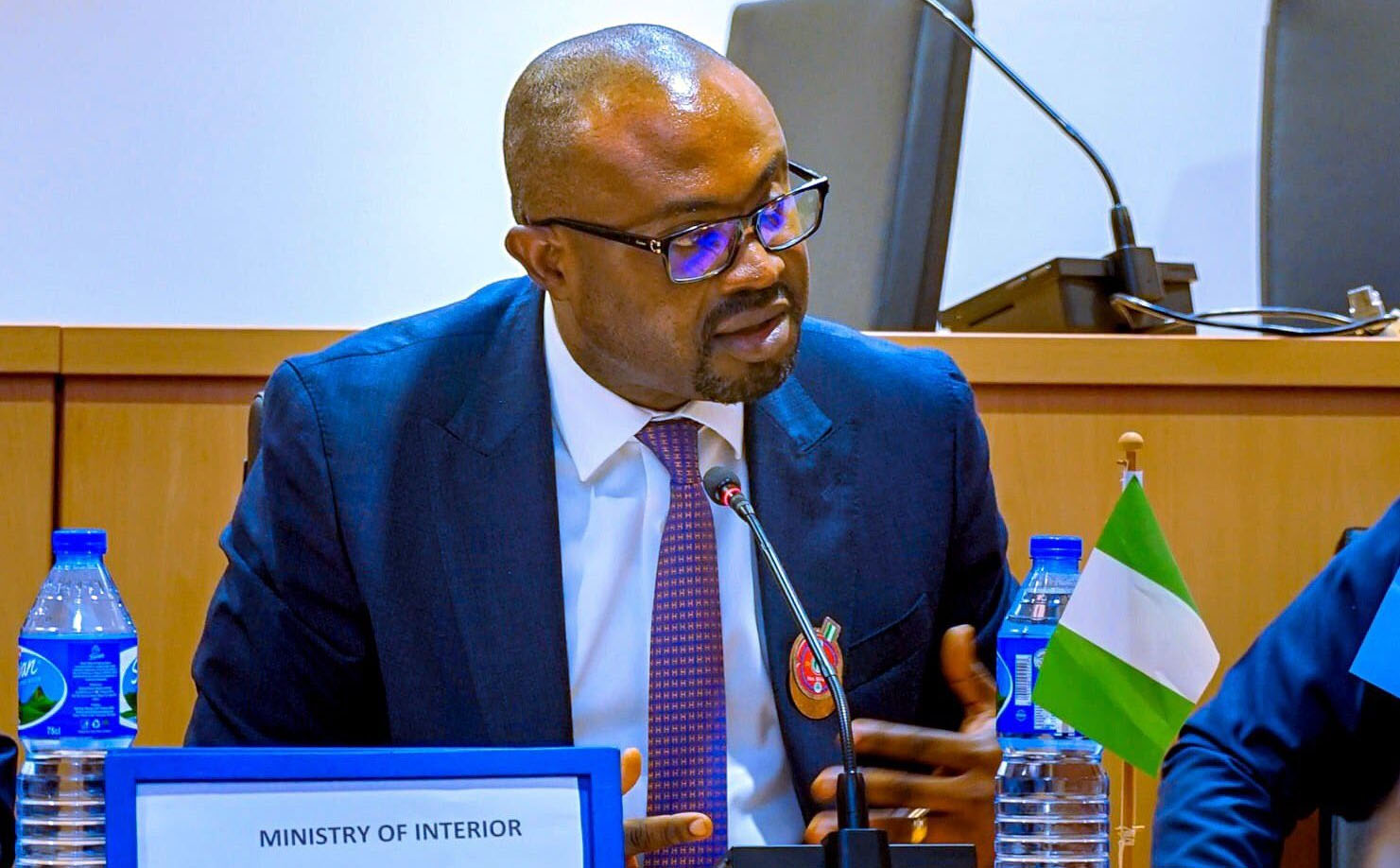
The Minister of Interior, Olubunmi Tunji-Ojo, acting on behalf of the Federal Government, is expected to formally communicate the directive through a circular to all Ministries, Departments, and Agencies (MDAs), while urging Nigerians to use the period to reflect on the virtues of sacrifice, love, and unity exemplified by the life of Jesus Christ.
Good Friday, observed on April 3, commemorates the crucifixion and death of Jesus Christ, while Easter Sunday, which falls on April 5, celebrates His resurrection—regarded as the cornerstone of the Christian faith. Easter Monday, April 6, traditionally serves as a continuation of the celebration, often marked by relaxation, family gatherings, and community events.
In line with the declaration, government offices, financial institutions, and many private establishments are expected to shut down operations on the designated days. However, essential service providers, including security agencies, healthcare workers, and emergency responders, have been directed to ensure uninterrupted services throughout the period.
The Easter holidays are widely regarded as one of the busiest travel periods in Nigeria, with increased movement across states as citizens visit loved ones or attend religious programmes. In anticipation of this, security agencies have reportedly heightened surveillance and operational readiness to safeguard lives and property, particularly along major highways and in urban centres.
The Federal Road Safety Corps (FRSC) and other relevant authorities are also expected to deploy personnel strategically to manage traffic flow and respond swiftly to emergencies during the festive period.
Across the country, the announcement has been met with enthusiasm, especially among families and religious groups planning church conventions, retreats, and outreach programmes. Many Nigerians have expressed delight at the opportunity to enjoy an extended holiday without drawing from their annual leave allowances.
Observers note that the declaration reflects the government’s continued recognition of Nigeria’s religious diversity and its commitment to allowing citizens observe key spiritual events in an atmosphere of peace and inclusiveness.
As Christians prepare to celebrate Easter, religious leaders have called on Nigerians to imbibe the values of love, tolerance, and selflessness, which the season represents, while also praying for national unity and progress.
Nigerians to Enjoy Four-Day Break as FG Declares Easter Holidays
metro
Akwa Ibom Barber Jailed 14 Years for Defiling 12-Year-Old Girl

Akwa Ibom Barber Jailed 14 Years for Defiling 12-Year-Old Girl
An Akwa Ibom State High Court sitting in Ikot Ekpene has sentenced 32-year-old barber, Ofonime Augustine Etim, to 14 years’ imprisonment without an option of fine for defiling a 12-year-old girl, reinforcing Nigeria’s commitment to child protection and sexual offence enforcement.
The convict, who hails from Abama village, Obot Akara Local Government Area, was found guilty of committing the offence on May 10, 2023, in Ikot Obong Otoro, Abak Local Government Area, Akwa Ibom State.
During the trial, the State Ministry of Justice prosecution team called three witnesses, including the Investigating Police Officer (IPO) and a consultant gynecologist, and tendered documentary evidence. The medical evidence was pivotal, with the gynecologist confirming a 2cm deep vaginal wall laceration and multiple bruises, consistent with forceful sexual penetration.
READ ALSO:
- Lagos Taskforce Launches Anti‑Crime Patrol Unit to Curb Rising Criminality
- APC Governors, Lawmakers Clash Over Automatic Tickets Ahead of 2027 Elections
- Iran Fires Missiles at Israel After Trump Threatens Weeks of ‘Extremely Hard’ Strikes
The IPO testified that the victim had been abducted and taken to the convict’s residence, while the victim’s elder sister recounted that the girl had been missing for several days before being rescued and taken to a hospital for treatment.
Justice Augustine D. Odokwo, who presided over the case, ruled that the prosecution had proven the case beyond reasonable doubt, dismissing the convict’s own testimony as unsubstantiated. The judge emphasized the gravity of the offence, stating, “The law is designed not only to punish but to deter others from such acts. Children must be protected.”
The court ordered that the time Etim has spent in custody since May 13, 2023, be deducted from his sentence. It also directed that the convict’s name be entered into the State Sex Offenders Register, while all exhibits tendered during the trial remain in court custody pending any appeal.
Child protection advocates hailed the verdict, noting that it sends a strong message that perpetrators of child defilement and sexual abuse will face strict penalties, reinforcing justice and safety for minors across the state.
Akwa Ibom Barber Jailed 14 Years for Defiling 12-Year-Old Girl
metro
Lagos Taskforce Launches Anti‑Crime Patrol Unit to Curb Rising Criminality

Lagos Taskforce Launches Anti‑Crime Patrol Unit to Curb Rising Criminality
The Lagos State Taskforce on Environmental Sanitation and Special Offences has officially launched a dedicated anti‑crime patrol unit to tackle escalating criminal activities, environmental offences, and street-level threats across the state. The launch took place on Wednesday at the task force’s headquarters in Bolade, Oshodi, and was led by the agency’s Chairman, CSP Adetayo Akerele.
The new patrol unit is designed to operate as a rapid-response team, patrolling crime hotspots 24/7 to proactively detect, deter, and neutralise criminal activities before they escalate into serious threats to public safety. According to Akerele, the unit’s mandate covers a wide spectrum of offences, including drug peddling, street urchinism, area boys activities (locally called “Omotaku”), one-chance robbery syndicates, attacks on government officials, quackery, and indiscriminate waste disposal.
“The unit will operate all out to stamp out criminal activities in the state this year. No stone will be left unturned to compel criminals to desist from their acts or relocate from Lagos State,” Akerele stated. He urged residents to support law enforcement efforts by providing timely and credible information that could aid operations.
READ ALSO:
- APC Governors, Lawmakers Clash Over Automatic Tickets Ahead of 2027 Elections
- Iran Fires Missiles at Israel After Trump Threatens Weeks of ‘Extremely Hard’ Strikes
- NNPC Boosts Crude Supply to Dangote Refinery to Address Rising Fuel Prices
The initiative also comes after the Lagos State Police Command withdrew the task force from traffic enforcement, allowing it to focus entirely on security operations and law enforcement against criminality. Akerele emphasized that while traffic duties have been reassigned, the task force’s core functions remain intact, and the anti-crime patrol unit will intensify surveillance and intelligence-driven operations in known flashpoints.
Law enforcement observers note that Lagos, being Nigeria’s commercial hub, faces persistent street crime, drug offences, and environmental violations, making the launch of this unit a strategic move to reinforce public safety and protect lives and property. The task force aims to enhance Lagos State’s security architecture by deploying personnel in high-risk areas and responding swiftly to incidents reported by residents.
The state government hopes that this enhanced patrol unit will serve as a deterrent against criminality, ensuring a safer environment for both residents and businesses as the city continues to grow and urbanize.
Lagos Taskforce Launches Anti‑Crime Patrol Unit to Curb Rising Criminality

-

 Entertainment3 days ago
Funke Akindele, Toyin Abraham Spark Reactions Over Alleged Snub at Iyabo Ojo’s Premiere
-

 Education2 days ago
WAEC Releases 2026 WASSCE Timetable for School Candidates
-

 Auto2 days ago
Lagos NURTW Chairman Sego Distributes Exotic Cars, Luxury Items to Cabinet Members (Video)
-

 metro2 days ago
Cars Torched as South Africans Protest Alleged Nigerian ‘Igbo King’ Coronation
-

 News3 days ago
UK Raises Visa Costs, Tightens Immigration Rules From April 8
-

 Railway1 day ago
Easter train: NRC increases Lagos-Ibadan trips, offers free Osun holiday transit
-

 Education2 days ago
JAMB Releases 2026 UTME Mock Results, Delists Over 20 CBT Centres
-

 Sports2 days ago
Osimhen Among Highest-Paid African Footballers in 2026 — See Full List