
News
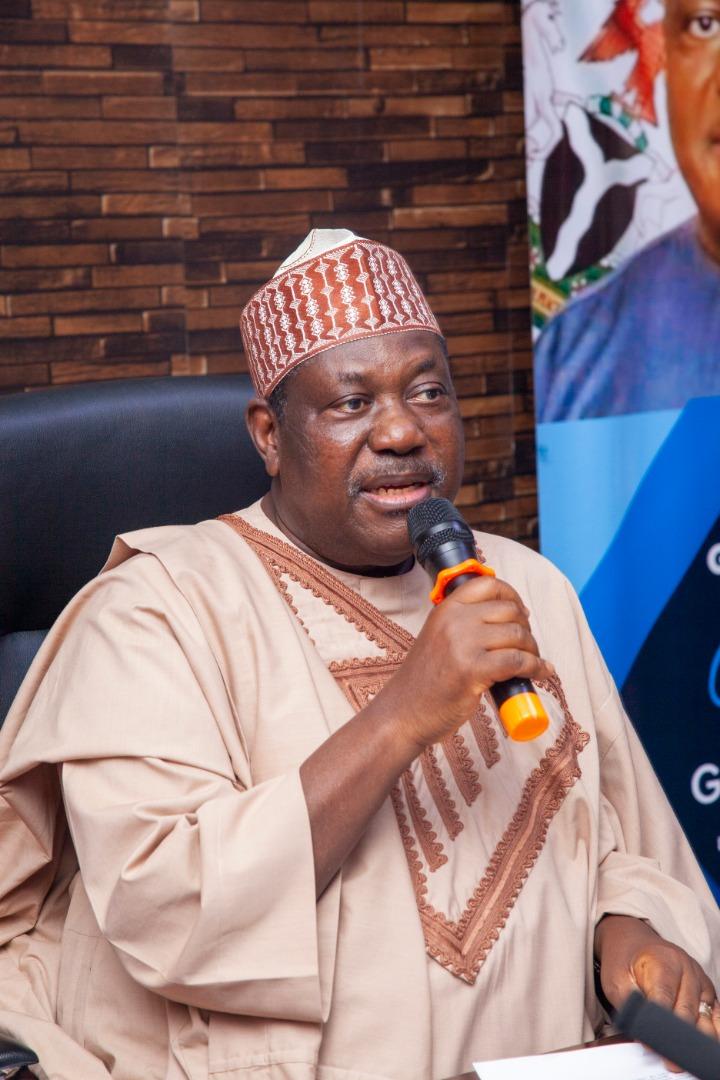
FG warns against mass protest over hardship, says Nigeria’s stability at stake
FG warns against mass protest over hardship, says Nigeria’s stability at stake
Nigeria’s stability may be seriously hampered should a nationwide protest being planned by some Nigerians from the beginning of next month over hardship be allowed to hold.
Secretary to the Government of the Federation (SGF), Senator George Akume, said this in Abuja on Wednesday.
The SGF spoke when he met with ministers in his office behind closed doors on measures to avert the protest.
He called attention to the Kenya’s recent experience, where many were killed, property destroyed peace had eluded them.
Minister of Information and National Orientation, Mohammad Idris, who revealed Akume’s concern, gave a similar warning against the protest when he received members of the Charismatic Bishops Conference, led by Archbishop (Professor) Leonard Kawas, who were on a courtesy visit to him, at his office in Abuja.
Idris said government was bothered about the protest against economic hardship, having seen the consequences of similar protests in other parts of the world, particularly in Kenya and Bangladesh.
The minister said arsonists and criminals might be waiting to hijack the protest and unleash violence on innocent Nigerians.
Idris said, “Why everybody is very cautious and very weary of this national protest is because we have seen what has happened around the world.
“We know that it’s almost impossible to hold this protest and then have peace at the end of the day.
“We cannot do that because some people are waiting to take the laws into their own hands.”
He said while the government of President Bola Tinubu acknowledged the right of every Nigerian to engage in protests, it was equally committed to ensuring that the activities did not disrupt public order or violate the rights of others.
The minister said, “You see, the government of President Bola Ahmed Tinubu believes in the freedom of everyone within the confirms of the law to do what he thinks is right for him.
“Therefore, the President is not an opponent of protest of any kind. But the President is an opponent of violence and anything that will hamper the wellbeing of Nigerians.
“He believes and he has always been saying that within the tenets of democracy, you have every right to do whatever you want to do provided that right does not infringe on another person’s right.”
Idris asserted that Tinubu was fully aware of the feelings of Nigerians across the country and he was actively working to implement effective policies aimed at alleviating the challenges faced by the citizenry and bringing relief to all Nigerians.
The minister said one of the policies being fine-tuned by government was to begin to pay stipends to all young university and polytechnics graduates after the National Youth Service Corps (NYSC) scheme, pending their formal employment.
He said, “But beyond that, there is also another new policy that the President has formulated, which will begin to be seen very soon, and that is that all young men and women who have finished universities and polytechnics and have certificates and have done their mandatory NYSC, and have not been able to get jobs, will have something from the government to keep them afloat until the time they get jobs.”
He described the introduction of the Compressed National Gas (CNG) policy by the President as a game changer in the country’s economy because of its ability to bring down the cost of transportation by about 60 per cent, thereby providing a viable alternative to petrol and diesel.








News
2027 General Elections: INEC Announces February 20 for Presidential Poll
2027 General Elections: INEC Announces February 20 for Presidential Poll
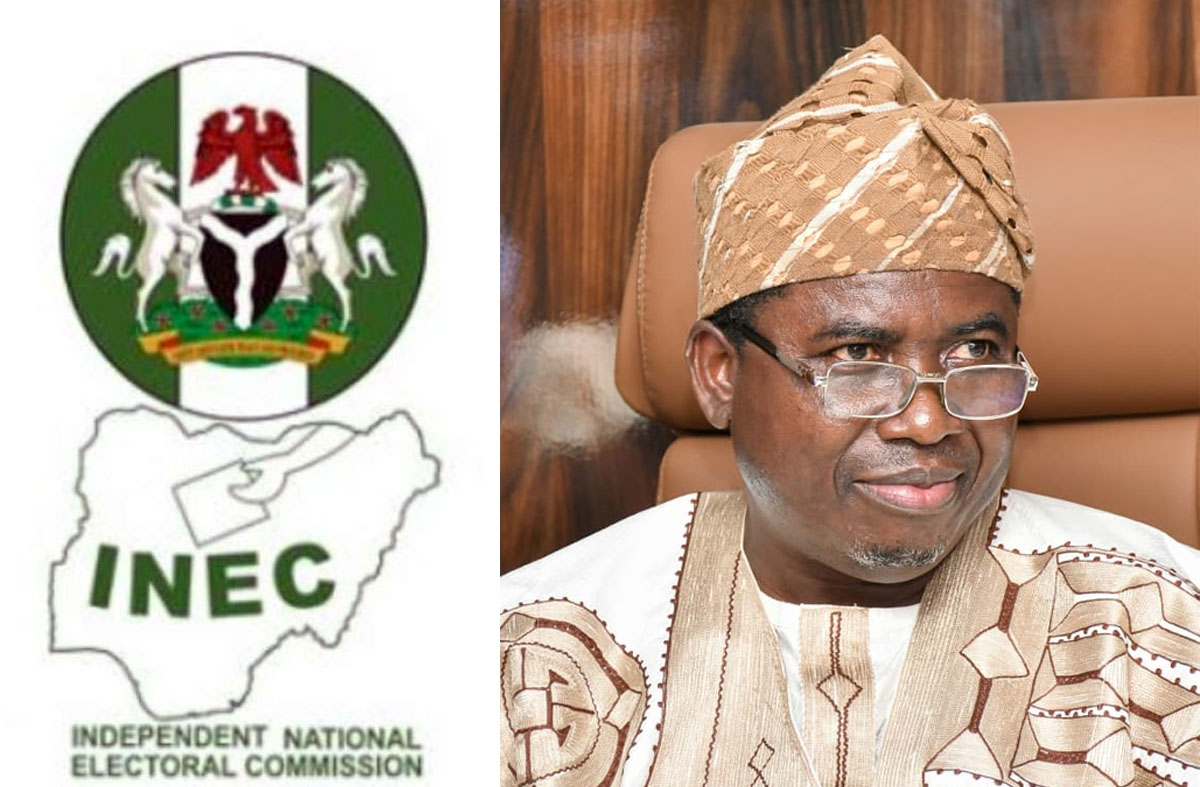
The Independent National Electoral Commission (INEC) has officially fixed February 20, 2027 for Nigeria’s presidential and National Assembly elections, while governorship and State Houses of Assembly elections will be held on March 6, 2027.
INEC Chairman, Joash Ojo Amupitan, announced the dates on Friday during a media parley at the Commission’s national headquarters in Abuja, describing the move as the formal commencement of the 2027 general elections process.
According to the INEC chairman, the release of the Notice of Election and the comprehensive timetable complies with provisions of the 1999 Constitution of Nigeria and the Electoral Act 2022, which require the Commission to publish election notices ahead of the polls.
“It is with a deep sense of constitutional responsibility and commitment to democratic consolidation that the Commission today formally releases the Notice of Election and the Timetable and Schedule of Activities for the 2027 General Elections,” he stated, adding that any earlier unofficial announcements of election dates were misleading and did not originate from INEC.
READ ALSO:
- EFCC Nabs Three in Borno Over Viral ₦500 Naira Mutilation Video
- Omokri Accuses El-Rufai of Rights Abuses During Kaduna Governorship
- Lagos Motor Fair, Autoparts Expo to begin March 17, targeting Investment, Industry Growth
Amupitan disclosed that the tenure of the President, Vice President, governors, and deputy governors — except in off-cycle states — will expire on May 28, 2027, while the National and State Assemblies will be dissolved on June 8, 2027. He noted that the timeline provides sufficient room for political parties to conduct primaries, submit nomination forms, and organise campaigns in line with electoral regulations. Campaigns, he added, must end 24 hours before election day, as stipulated by law.
The INEC boss warned political parties to strictly comply with the approved schedule, stressing that the Commission would enforce the law where necessary. “Political parties are strongly advised to strictly adhere to the timelines. The Commission will not hesitate to enforce compliance with the law,” he said.
He also reaffirmed INEC’s commitment to deploying technology to enhance transparency in the 2027 general elections, updating the national voters’ register, strengthening collaboration with security agencies, and expanding voter education nationwide.
Calling for peaceful conduct, Amupitan urged political parties to organise credible primaries, shun violence and inflammatory rhetoric, and uphold internal democracy. He also appealed to candidates, supporters, civil society groups, the media, and citizens to play constructive roles throughout the electoral cycle.
“As we commence this national exercise, I assure Nigerians that the Commission is fully prepared and determined to deliver elections that reflect the sovereign will of the people,” he added.
With the formal release of the INEC 2027 election timetable, stakeholders are now expected to begin full-scale preparations for Nigeria’s next general elections.
2027 General Elections: INEC Announces February 20 for Presidential Poll
News
INEC Seeks N1.04 Trillion for 2027 Elections, Operational Needs – Amupitan
INEC Seeks N1.04 Trillion for 2027 Elections, Operational Needs – Amupitan
The Independent National Electoral Commission (INEC) has requested a total of ₦1.04 trillion from the Federal Government of Nigeria to fund off-cycle elections this year, the 2027 general election, and its operational activities in 2026, subject to approval by the National Assembly of Nigeria.
The request was made by INEC Chairman Prof. Joash Amupitan while defending the commission’s spending proposal before the Joint Committee on Electoral Matters of the National Assembly. Amupitan urged lawmakers to grant timely approval and release of funds, warning that delays could hamper preparations for upcoming elections.
According to the INEC chairman, the commission is seeking ₦873.778 billion for the 2027 general election and ₦171 billion for its 2026 operational activities. The 2026 allocation covers Federal Capital Territory (FCT) area council elections, by-elections scheduled for next week, and the Ekiti and Osun governorship elections slated for June and September.
READ ALSO:
- Alake: Killers of Mining Marshal Will Face Full Wrath of the Law
- Lagos Police Launch Manhunt for Suspect in Brutal Ajah Murder
- Lookman Shines as Atlético Madrid Hammer Barcelona 4-0
Breakdown of the 2027 Election Budget
The N873.778 billion earmarked for the 2027 general election includes:
- ₦379.748 billion for operational costs
- ₦92.317 billion for administrative expenses
- ₦209.206 billion for technology
- ₦154.905 billion for election capital costs
- ₦42.608 billion for miscellaneous expenses
For the N171 billion proposed for 2026 operations, Amupitan said:
- ₦109 billion would cover personnel costs
- ₦18.7 billion for overheads
- ₦42.63 billion for election conduct
- ₦1.4 billion for capital expenditure
He noted that the budget was prepared in line with Section 3(3) of the Electoral Act 2022, which mandates submission of election budgets at least one year before a general election.
Calls for Timely Fund Release and Dedicated Network
Amupitan criticized the envelope system of budgeting, describing it as unsuitable for INEC’s operational needs that often require urgent interventions. He appealed for a bulk release of funds, highlighting the need for a dedicated communication network to enhance accountability and transparency during elections.
“If we have our own network, Nigerians can hold us responsible for any hitch,” he said.
Lawmakers Back INEC’s Proposal
Senator Adams Oshiomhole argued that no government agency should impose the envelope budgeting system on INEC, emphasizing that full release of funds is critical for smooth election preparations. Similarly, House member Billy Osawaru called for the budget to be placed on first-line charge, allowing the commission access to all funds immediately.
Following deliberations, the joint committee approved a one-time release of INEC’s annual budget and pledged to consider increasing allowances for National Youth Service Corps (NYSC) members deployed for election duties. The proposed increase would cost ₦32 billion, equating to ₦125,000 per corps member.
Senator Simon Lalong, chairman of the Senate Committee on Electoral Matters, assured INEC of lawmakers’ support, pledging close collaboration to ensure a successful 2027 election. House Committee chairman Bayo Balogun also promised legislative backing but cautioned INEC against overpromising, citing prior misrepresentations about real-time uploads to the INEC Result Viewing (IReV) portal, which was never provided for in the Electoral Act but only in INEC regulations.
The approval of the commission’s budget and operational requests is expected to enhance election preparedness, technological deployment, and transparency ahead of the 2027 general elections, while addressing logistical and operational challenges that have hampered past polls.
INEC Seeks N1.04 Trillion for 2027 Elections, Operational Needs – Amupitan
News
Aso Rock Goes Solar as Tinubu Orders National Grid Disconnection

Aso Rock Goes Solar as Tinubu Orders National Grid Disconnection
President Bola Tinubu will fully disconnect the Aso Rock Presidential Villa from the national grid by March 2026 following allegations of electricity overbilling for power not supplied, the State House has confirmed.
The State House Permanent Secretary, Temitope Fashedemi, made the disclosure while defending the 2026 State House budget before the Senate Committee on Special Duties. He revealed that the solar mini-grid project at the Presidential Villa was completed in December 2025 and is currently undergoing technical testing ahead of a full transition to solar power.
Fashedemi explained that during the testing phase of the new solar installation, officials discovered what he described as significant overbilling by the electricity distribution company. According to him, the State House observed instances where it was billed for electricity that was not supplied and has begun reconciliation discussions to address what he termed “legacy liability.”
READ ALSO:
- 2026 Electoral Bill: Senate Explains Limits of IReV in Real-Time Transmission
- El-Rufai to Appear Before EFCC After Alleged Airport Arrest Attempt
- Four Sentenced to Death for Murder of Ahoada DPO in Rivers
The Villa is serviced by the Abuja Electricity Distribution Company (AEDC), which in February 2024 publicly listed several government agencies as debtors. At the time, AEDC said the Presidential Villa owed N923.87 million in unpaid electricity bills. Other major debtors included the Federal Capital Territory Administration (FCTA) and some federal ministries.
The Tinubu administration had earlier allocated N10 billion in the 2025 budget for the solarisation of the Presidential Villa through a solar mini-grid system. An additional N7 billion has been earmarked for the same project in the 2026 Appropriation Bill, bringing total allocations to N17 billion over two years.
Fashedemi noted that a similar transition to solar power at the State House Medical Centre in May 2025 has already demonstrated cost savings and reliability. He said the facility has operated almost entirely on solar energy and battery storage since then, with minimal reliance on grid electricity and no generator use.
He expressed optimism that by March 2026, the Presidential Villa would complete its transition and fully exit the national grid, relying primarily on renewable energy for its electricity needs.
The development aligns with broader efforts to promote renewable energy adoption in Nigeria, reduce public sector energy costs, and address concerns over electricity billing transparency. If fully implemented, Aso Villa will operate largely on solar power supported by battery storage systems, significantly reducing dependence on grid supply and diesel generators.
Aso Rock Goes Solar as Tinubu Orders National Grid Disconnection

-

 metro24 hours ago
IKEDC Sets Feb 20 Deadline for Customers to Submit Valid IDs or Face Disconnection
-

 Education1 day ago
Supreme Court Affirms Muslim Students’ Right to Worship at Rivers State University
-

 metro3 days ago
Former NAHCON Chief Explains Why He Stepped Down, Denies Conflicts
-

 Business2 days ago
Dangote Refinery Slashes Petrol Price to ₦774, Ends PMS Bonus Window
-

 Business1 day ago
Naira Could Trade Below ₦1,000/$ With Dangote Refinery at Full Capacity — Otedola
-

 metro2 days ago
Kwara, Katsina Bloodshed: TMC Condemns Attacks, Dismisses ‘Jihadist Preacher’ Claims
-
 metro3 days ago
Governor Peter Mbah Orders Closure of Bet9ja Operations in Enugu
-

 News2 days ago
Trump Approves Deployment of 200 U.S. Soldiers to Support Nigeria’s Fight Against Terrorists