

News
FG warns against mass protest over hardship, says Nigeria’s stability at stake
FG warns against mass protest over hardship, says Nigeria’s stability at stake
Nigeria’s stability may be seriously hampered should a nationwide protest being planned by some Nigerians from the beginning of next month over hardship be allowed to hold.
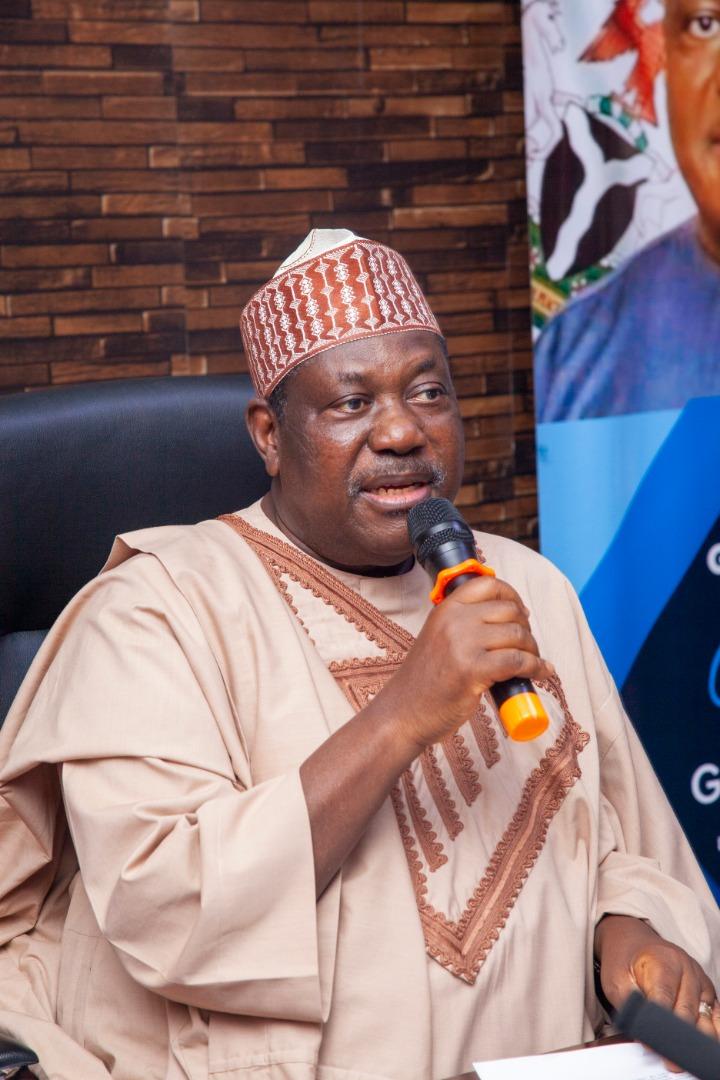
Secretary to the Government of the Federation (SGF), Senator George Akume, said this in Abuja on Wednesday.
The SGF spoke when he met with ministers in his office behind closed doors on measures to avert the protest.
He called attention to the Kenya’s recent experience, where many were killed, property destroyed peace had eluded them.
Minister of Information and National Orientation, Mohammad Idris, who revealed Akume’s concern, gave a similar warning against the protest when he received members of the Charismatic Bishops Conference, led by Archbishop (Professor) Leonard Kawas, who were on a courtesy visit to him, at his office in Abuja.
Idris said government was bothered about the protest against economic hardship, having seen the consequences of similar protests in other parts of the world, particularly in Kenya and Bangladesh.
The minister said arsonists and criminals might be waiting to hijack the protest and unleash violence on innocent Nigerians.
Idris said, “Why everybody is very cautious and very weary of this national protest is because we have seen what has happened around the world.
“We know that it’s almost impossible to hold this protest and then have peace at the end of the day.
“We cannot do that because some people are waiting to take the laws into their own hands.”
He said while the government of President Bola Tinubu acknowledged the right of every Nigerian to engage in protests, it was equally committed to ensuring that the activities did not disrupt public order or violate the rights of others.
The minister said, “You see, the government of President Bola Ahmed Tinubu believes in the freedom of everyone within the confirms of the law to do what he thinks is right for him.
“Therefore, the President is not an opponent of protest of any kind. But the President is an opponent of violence and anything that will hamper the wellbeing of Nigerians.
“He believes and he has always been saying that within the tenets of democracy, you have every right to do whatever you want to do provided that right does not infringe on another person’s right.”
Idris asserted that Tinubu was fully aware of the feelings of Nigerians across the country and he was actively working to implement effective policies aimed at alleviating the challenges faced by the citizenry and bringing relief to all Nigerians.
The minister said one of the policies being fine-tuned by government was to begin to pay stipends to all young university and polytechnics graduates after the National Youth Service Corps (NYSC) scheme, pending their formal employment.
He said, “But beyond that, there is also another new policy that the President has formulated, which will begin to be seen very soon, and that is that all young men and women who have finished universities and polytechnics and have certificates and have done their mandatory NYSC, and have not been able to get jobs, will have something from the government to keep them afloat until the time they get jobs.”
He described the introduction of the Compressed National Gas (CNG) policy by the President as a game changer in the country’s economy because of its ability to bring down the cost of transportation by about 60 per cent, thereby providing a viable alternative to petrol and diesel.







News
NiMet Predicts Thunderstorms, Rain Across Nigeria Till Wednesday

NiMet Predicts Thunderstorms, Rain Across Nigeria Till Wednesday
The Nigerian Meteorological Agency (NiMet) has predicted thunderstorms and rainfall across several parts of Nigeria from Monday to Wednesday.
The agency, in its weather outlook released on Sunday, also warned that strong winds could occur ahead of thunderstorms in some areas.
For Monday, NiMet expects thunderstorms and light rain over parts of Taraba and Kebbi during the morning. Later in the day, moderate rainfall is expected across several areas in the North-East, Kaduna, Taraba and Kebbi.
In the North-Central region, parts of Niger State could experience thunderstorms and light rain in the morning, while most parts of the region may record thunderstorms with moderate rainfall by afternoon or evening.
The southern states are also expected to experience wet conditions. NiMet forecasts cloudy skies in the morning, with isolated thunderstorms and light rain over parts of Bayelsa, Rivers, Akwa Ibom and Cross River. More thunderstorms and light rain are expected later in the day.
Tuesday and Wednesday Forecast
On Tuesday, the northern region is expected to have patches of cloud in the morning, with thunderstorms and light rain possible in parts of Taraba.
By afternoon or evening, most parts of the region could experience thunderstorms accompanied by moderate rain.
In the North-Central, parts of the Federal Capital Territory, Niger, Nasarawa and Plateau states are expected to receive thunderstorms and moderate rainfall later in the day.
Southern areas, including parts of Ebonyi, Enugu, Abia and the South-South, may also experience thunderstorms and light rain.
NiMet expects more widespread rainfall on Wednesday, particularly across northern and North-Central states. Borno, Bauchi, Gombe, Kaduna, Adamawa and Taraba are among the areas listed for morning thunderstorms and moderate rain.
The agency also forecasts thunderstorms and moderate rainfall across much of the South later on Wednesday.
NiMet advised residents to secure loose objects and take precautions against strong winds. Motorists were urged to avoid driving during heavy rainfall, while residents were advised to disconnect electrical appliances during thunderstorms and stay away from tall trees.
Airline operators were also advised to obtain airport-specific weather information when planning flights.
NiMet Predicts Thunderstorms, Rain Across Nigeria Till Wednesday
News
Working People United Celebrates Oluremi Tinubu at 66, Commends Her Humanitarian Efforts

Working People United Celebrates Oluremi Tinubu at 66, Commends Her Humanitarian Efforts
Civic organisation Working People United has congratulated Nigeria’s First Lady, Senator Oluremi Tinubu, on her 66th birthday, praising her contributions to humanitarian services, education, healthcare and the empowerment of vulnerable Nigerians.
Oluremi Tinubu celebrates her 66th birthday on Monday, September 21, 2026, with messages of goodwill coming from individuals and organisations across the country.
In a congratulatory message issued on Sunday, National Coordinator-General of Working People United, Prince Williams Akporeha, described the First Lady’s years of public service as an important part of her contribution to Nigerian society.
Akporeha said the organisation recognised Oluremi Tinubu’s continued involvement in programmes designed to improve the welfare of children, women, young people and underserved communities.
He particularly highlighted her advocacy and interventions in education, healthcare access, youth development and economic empowerment, saying such initiatives were directed at addressing challenges faced by ordinary Nigerians.
According to the group, the First Lady’s humanitarian activities have focused on providing practical support to communities and creating opportunities for people who might otherwise have limited access to social and economic resources.
Working People United also commended Oluremi Tinubu’s interest in family welfare and children’s development, describing those areas as important to the long-term development of the country.
The organisation said efforts to strengthen access to basic education and healthcare, particularly at the grassroots, remained critical to improving the quality of life of Nigerians.
It also praised initiatives aimed at providing young people with skills and economic opportunities, noting that youth empowerment could help reduce vulnerability and expand participation in the economy.
Akporeha urged the First Lady to sustain her advocacy for vulnerable Nigerians as she begins another year of her life.
READ ALSO:
- ‘Join the Hunt’ — Soludo Urges Igbos to Strategically Align Ahead of 2027
- 18 Suspects Transferred to US Over 2021 Killing of Haitian President Moïse
- My Heart Has Always Been Home With You — Tinubu’s Powerful Message to Oluremi at 66
He said the organisation was joining Nigerians across the country to celebrate Oluremi Tinubu and acknowledge what it described as her commitment to humanitarian service.
Working People United wished the First Lady good health, wisdom, strength and fulfilment as she continues her public responsibilities and supports initiatives focused on the welfare of Nigerians.
The group also expressed hope that her birthday would provide an opportunity to renew attention to issues affecting children, women, young people and low-income families, particularly in education, healthcare and economic empowerment.
Oluremi Tinubu, a former senator representing Lagos Central Senatorial District, has been involved in public service and humanitarian activities for several years.
As First Lady, she has continued her intervention programmes through the Renewed Hope Initiative (RHI), which has focused on areas including education, health, agriculture, social investment and economic empowerment.
Her recent programmes have included support for women, vulnerable households, students, farmers, young people and families affected by economic hardship.
The birthday messages therefore come as the First Lady continues her public engagements and humanitarian programmes across different parts of Nigeria.
Working People United Celebrates Oluremi Tinubu at 66, Commends Her Humanitarian Efforts
International
18 Suspects Transferred to US Over 2021 Killing of Haitian President Moïse
18 Suspects Transferred to US Over 2021 Killing of Haitian President Moïse
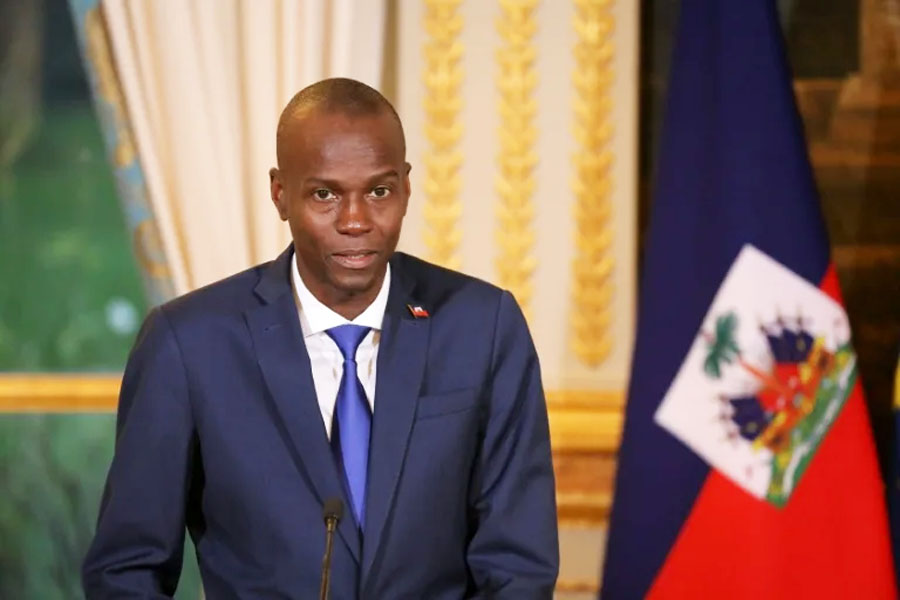
Eighteen suspects accused of involvement in the 2021 assassination of former Haitian President Jovenel Moise have been transferred from Haiti to the United States to face trial.
US officials said the suspects were transported to Florida on Sunday, as American authorities continue their prosecution of people allegedly connected to the plot.
Federal prosecutor Jason Reding Quinones said the suspects were flown from Haiti on a military aircraft to face proceedings in the Southern District of Florida.
He said US authorities had so far indicted 30 people in connection with the assassination and warned that the prosecutions were not over.
Among those transferred was Joseph Felix Badio, a former anti-corruption official with Haiti’s Ministry of Justice who has been identified as a major suspect in the investigation.
Haitian government and police sources said the other suspects included Colombian nationals who were allegedly part of the group involved in the operation.
READ ALSO:
- My Heart Has Always Been Home With You — Tinubu’s Powerful Message to Oluremi at 66
- Tinubu’s UNGA Absence Fuels Questions Over Planned Trump Meeting
- Messi Fires Stunning 75th Career Free-Kick to Reach 930 Goals in Inter Miami Draw
Colombian Nationals Among Suspects
Colombia’s Foreign Ministry confirmed that 17 of its citizens had been transferred from Haiti to the United States.
The ministry said the Colombian government was monitoring the development but had not participated in the decision or process that led to the transfer.
Moise was killed at his private residence in Port-au-Prince on July 7, 2021. Investigators said a group of about 20 Colombian military-trained mercenaries had been hired in connection with the operation.
The president’s security detail came under scrutiny after failing to prevent the attack.
In May, four men were convicted in a Miami federal court over charges connected to the plot, including conspiracy to kill or kidnap Moise and providing material support for the operation. They could face life imprisonment.
US prosecutors said the men were linked to CTU Security, a Florida-based private security company, and had allegedly been attracted by the prospect of lucrative contracts after Moise was removed from power.
The assassination plunged Haiti further into political and security turmoil. The country has since struggled with gang violence and remains without a president, while preparations continue for elections scheduled for December, subject to security conditions.
18 Suspects Transferred to US Over 2021 Killing of Haitian President Moïse
-

 Sports3 days ago
Falconets Thrash England 3-0, Face Colombia in U-20 World Cup Quarter-Finals
-

 Politics3 days ago
Yayi Ancestry Row: Stepmother Sets Record Straight as Legal Battle Looms
-

 International3 days ago
BREAKING: Bloodbath at Pakistan Mosque as Suicide Blast Kills 21, Injures 103
-

 metro2 days ago
Mambilla: ICC Raises Questions Over $500,000 Payment to Atiku’s Former Wife
-
 metro3 days ago
Tinubu Orders Full Probe Into 37 Miners’ Deaths in NSCDC Custody
-

 metro2 days ago
Niger Miners’ Deaths: Families Demand Compensation, Justice for Victims
-

 Entertainment2 days ago
“She Wanted to Stay Single”: Rema Opens Up About Rejection That Inspired Hit Song ‘Oh No’
-
 metro3 days ago
Xenophobia: FG Brings 33 More Nigerians Home From South Africa