

News
FG wrong, terrorists financing themselves through ransom, says Gumi
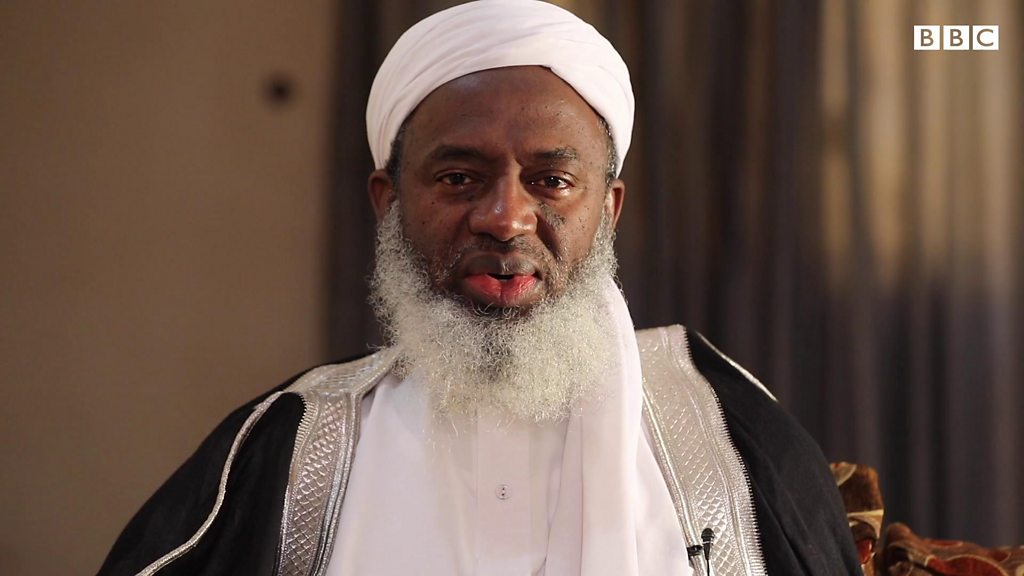
FG wrong, terrorists financing themselves through ransom, says Gumi
An Islamic cleric, Ahmad Gumi, has reacted to a list of 15 people and bureau de change firms reportedly released by the Federal Government as financiers of terrorism in Nigeria.
Gumi who had been a negotiator for the release of abducted students in the past said terrorism was not financed by Nigerians.
He said the terrorists are the same persons kidnapping people for ransom.
Gumi said this on Wednesday, during an X conversation hosted by Daily Trust.
Recently, the Federal Government, through the Nigerian Financial Intelligence Unit (NFIU) revealed the identity of 15 entities, including nine individuals and six Bureau De Change operators and firms, allegedly involved in terrorism financing.
A report by The PUNCH indicated that the Nigeria Sanctions Committee, during a meeting on Monday, recommended punitive measures for persons alleged to be involved in terrorism financing.
Tukur Mamu, publisher of Desert Harald, on the list, is currently standing trial over alleged involvement in aiding terrorists’ attack on the Abuja-Kaduna train in 2022.
“These terrorists don’t need any financing from outside, they are the ones collecting billions from people, so what are you talking about financing?” Gumi said.
“Now they are looking for N1bn for these children. What are you talking about financing? They are financing themselves by kidnapping.”
Gumi added that the government was only trying to frame up its enemies by tagging them as terrorism financiers.
He said, “To just frame your enemies or political opponents in the society as financing terrorism, I think that is rubbish to me.
“No Nigerian will put his money in terror; we are beyond that. These people are financing themselves by force; this is what they are doing, taking our children to get money.”
“Who declared somebody a financier? Is it the court of law or the security? The security has no right to declare anybody as a financier except the court of law.
“What I know of Mamu and the situation which led to his arrest is the misunderstanding between him and the committee that are supposed to deal with the release of some victims,” he added.




News
Court remands alleged ‘fake PFIPC DG’ Adeyemi in Kuje over forgery
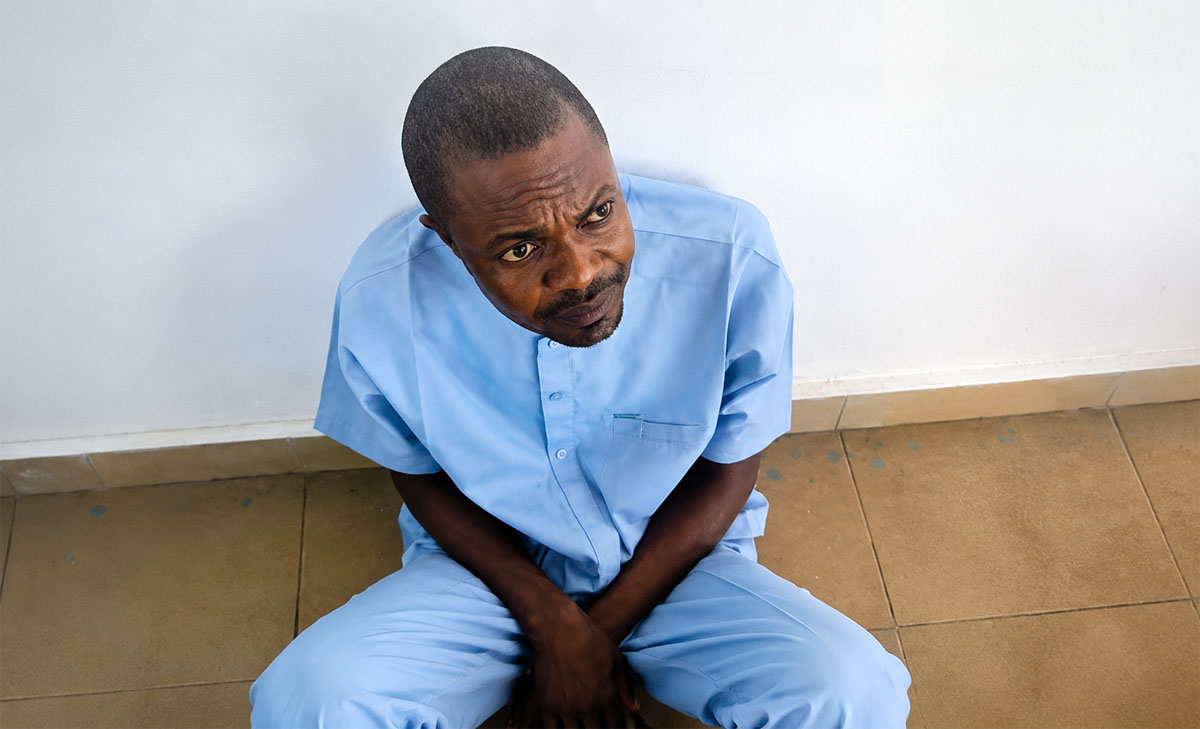
Court remands alleged ‘fake PFIPC DG’ Adeyemi in Kuje over forgery
A Federal High Court sitting in Abuja has ordered the remand of Adeniyi Adeyemi Matthew, who allegedly presented himself as the Director-General of the Presidential Foreign Intervention Promotion Council, PFIPC, at the Kuje Correctional Centre over alleged forgery.
Justice Muhammed Umar reportedly made the order on Wednesday after Adeyemi was arraigned on an eight-count charge bordering on alleged forgery.
Adeyemi pleaded not guilty to the charges.
The court also fixed October 12, 2026, for the hearing of his bail application and directed that the case be given accelerated hearing.
One of the allegations against Adeyemi relates to the alleged forgery of presidential letterhead paper on March 8, 2024.
He was also accused of allegedly forging a request for collaboration with the Ministry of the Area Councils, as well as documents requesting land allocation and office accommodation across the 36 states of the federation.
The documents were allegedly presented as having emanated from the State House in Abuja.
The case is connected to the controversy surrounding the purported Presidential Foreign Intervention Promotion Council, an organisation the Federal Government has said was never established as a government agency.
The Presidency had earlier disowned the organisation and warned members of the public and foreign missions against dealing with Adeyemi on the basis of his alleged claim to have been appointed by the Presidency.
The government subsequently said investigations had established that the purported agency was fictitious and alleged that Adeyemi used forged appointment letters and other government documents to present himself as a presidential appointee.
The authorities further alleged that documents associated with the purported organisation were used to seek official recognition and diplomatic assistance.
The controversy also attracted the attention of the House of Representatives, which investigated the activities of the organisation and the circumstances surrounding Adeyemi’s alleged appointment.
During the investigation, lawmakers were told that the appointment letter allegedly presented by Adeyemi had been confirmed to be fake by relevant government authorities.
The case has also raised questions over how the purported organisation was able to operate and obtain correspondence with some government institutions before the Presidency publicly disowned it.
Adeyemi, however, has denied the allegations against him and previously made counter-allegations concerning the circumstances surrounding his purported appointment. He has also questioned references to the PFIPC in government documents.
Those claims remain part of the wider controversy and have yet to be determined by the court.
With the latest order, Adeyemi will remain at the Kuje Correctional Centre pending further proceedings.
His bail application is expected to come up on October 12, 2026.
The allegations against him remain unproven until determined by the court.
Court remands alleged ‘fake PFIPC DG’ Adeyemi in Kuje over forgery
News
FG Opens Nationwide Youth Registration, Targets Nigerians Aged 15–35

FG Opens Nationwide Youth Registration, Targets Nigerians Aged 15–35
The Federal Government has commenced nationwide registration of Nigerians aged 15 to 35 under the National Youth Data Bank (NYDB), a new initiative designed to build a reliable database of young people and support access to jobs, skills training, internships, entrepreneurship and other opportunities.
Minister of Youth Development, Ayodele Olawande, announced the commencement of the exercise as the government launched the National Youth Data Bank, saying accurate youth data would help improve the planning, targeting and delivery of government programmes.
The NYDB is designed to capture information on young Nigerians, including their education, skills, employment, entrepreneurship and other demographic characteristics. The official platform says the database is intended to provide a centralised and continuously updated picture of Nigeria’s youth population.
The government said the initiative is not an electoral registration exercise but a youth development programme aimed at improving how government identifies young people and connects them with relevant opportunities.
The registration covers young Nigerians in different sectors and settings, including those in schools, the informal sector, agriculture, sports, creative industries and technology.
READ ALSO:
- Dangote Draws Battle Lines as Fuel Import Fight Heads Back to Court
- Tinubu Returns After 30 Days in Europe, Says ‘I’m Healthy and Ready to Work’
- NMDPRA Moves Against Fuel Pump Fraud, Threatens Licence Revocation
A key part of the exercise is the establishment of approved NYDB registration centres or cluster points. According to the official NYDB platform, young Nigerians can register at approved locations within their state, Local Government Area (LGA), school or other specially designated locations.
This means that not every school, LGA office or public facility is automatically a registration centre. Applicants are expected to use approved NYDB cluster points, where trained registration personnel will guide them through the process.
The exercise is being extended across Nigeria’s 36 states and the Federal Capital Territory, with the programme designed to reach young people in rural and underserved communities as well as those in urban areas.
The registration process begins with a visit to an approved NYDB cluster point, followed by an eligibility check and the creation of a youth profile. Participants are then required to confirm the information provided before completing the registration.
The 15 to 35 age bracket is the target population for the data-bank exercise. The database is expected to be updated continuously to maintain current information on eligible young Nigerians.
The Federal Ministry of Youth Development says the information gathered will help government understand where young people are located, what qualifications and skills they have, whether they are employed or seeking opportunities, and what forms of support may be required.
The NYDB platform identifies education, skills, employment, entrepreneurship, civic participation and health among the key areas of information being developed to strengthen youth-focused planning and interventions.
The initiative is also expected to improve the ability of government and authorised partners to identify young people who may be missing from existing datasets, particularly those in rural communities and underserved groups.
The Federal Ministry of Youth Development has separately announced plans for a National Youth Confab 2026, scheduled to begin in October, with participation expected from young Nigerians across the country’s 360 federal constituencies.
For Nigerians within the 15–35 age bracket, the government is therefore encouraging participation through the approved NYDB registration centres as the nationwide exercise expands.
FG Opens Nationwide Youth Registration, Targets Nigerians Aged 15–35
News
Tinubu Returns After 30 Days in Europe, Says ‘I’m Healthy and Ready to Work’
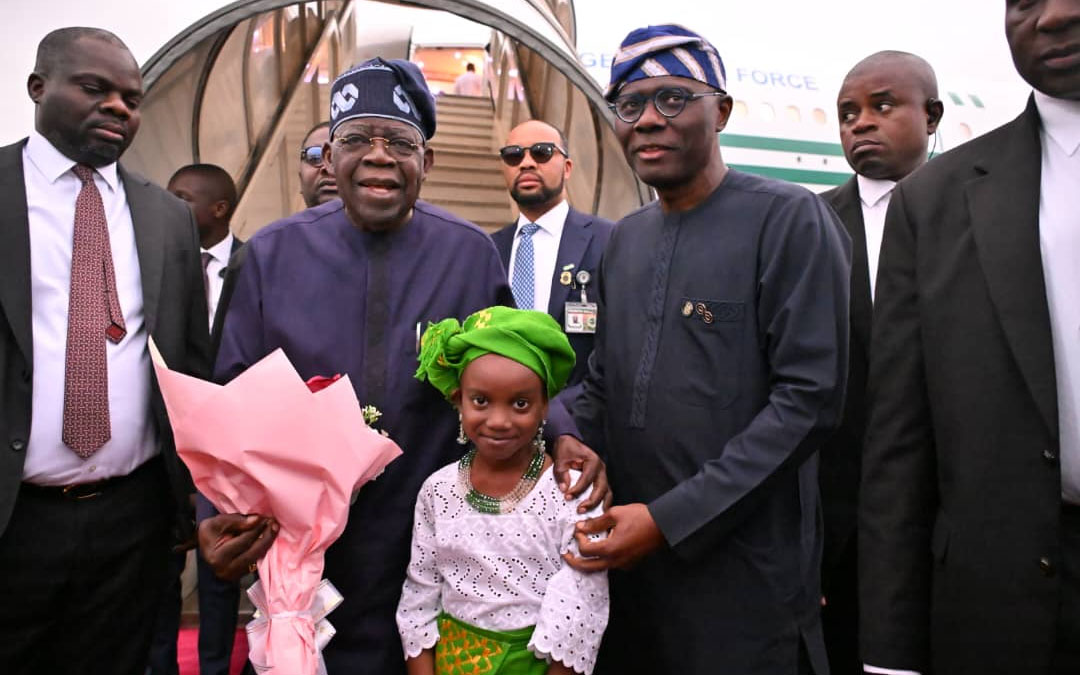
Tinubu Returns After 30 Days in Europe, Says ‘I’m Healthy and Ready to Work’
President Bola Ahmed Tinubu has returned to Nigeria after spending about 30 days in Europe, declaring that he is healthy, sound and ready to work after his extended working vacation.
Tinubu arrived at the Presidential Wing of the Murtala Muhammed International Airport, Lagos, at about 6:22pm on Tuesday after departing Paris, France, where he spent the final part of his trip.
Speaking briefly after his arrival, the President said he had enjoyed his time abroad and dismissed concerns about his health.
“I enjoyed myself,” Tinubu said when asked about his trip.
Asked whether he was ready to resume work, he replied: “Ready to kick. Ready to work. There’s nothing wrong.” He also described himself as “healthy, sound and ready to go.”
Tinubu left Nigeria on August 30 for what was initially announced as a three-week working vacation. He spent time in London before travelling to Paris, with the Presidency later announcing an extension of his stay.
During the European trip, Tinubu maintained contact with Nigerian officials and continued to receive updates on government affairs, according to the Presidency.
READ ALSO:
- NMDPRA Moves Against Fuel Pump Fraud, Threatens Licence Revocation
- $2.1m Land Suit: Court Orders Wike’s Son to Produce American Passport
- Two Nigerians Jailed 15 Years Over $2.4m US Cyber Fraud
While in Paris, he held a private dinner with French President Emmanuel Macron at the Élysée Palace and met French businessman Vincent Bolloré and executives of the Bolloré Group.
He also witnessed the signing of an agreement involving the Ogun State Government and DP World for the proposed development of the Gateway Deep Sea Port and Blue Marine Economic Zone. The Presidency has described the proposed project as a $7 billion investment.
Tinubu’s extended stay abroad attracted public debate, particularly after he did not personally attend the 81st United Nations General Assembly (UNGA) in New York.
Vice President Kashim Shettima represented Nigeria at the UNGA and delivered the country’s national statement.
The Presidency defended the arrangement, maintaining that Tinubu remained in charge of government and continued to direct affairs while abroad.
His return to Nigeria through Lagos also comes ahead of the country’s 66th Independence Day celebrations on October 1.
Tinubu is expected to attend the premiere of MKO, a documentary on the life of the late businessman and pro-democracy campaigner MKO Abiola, at the Wole Soyinka National Theatre in Iganmu, Lagos.
The film features archival material and interviews with prominent Nigerians, including former military leaders Ibrahim Babangida and Abdulsalami Abubakar, former President Olusegun Obasanjo, Nobel laureate Wole Soyinka and Tinubu.
Tinubu’s return brings his extended European working vacation to an end, with the President expected to resume his regular official engagements as the administration enters the final quarter of 2026.
Tinubu Returns After 30 Days in Europe, Says ‘I’m Healthy and Ready to Work’
-

 metro2 days ago
Osogbo Food Bonanza Turns Nightmare as Discount Vendor Vanishes With Customers’ Millions
-

 metro2 days ago
24 Hours in Darkness: Iju Ishaga Residents, Businesses Count Losses as Ikeja Electric Fails to Restore Power
-

 metro3 days ago
Passenger Dies After Jumping From Moving Bus In Lagos
-
 Politics3 days ago
APC Sweeps Enugu LG Election, Wins All 17 Chairmanship, 260 Councillorship Seats
-

 News2 days ago
Agbede Mourns Baba Alado, Says Mushin Has Lost Pillar of Peace
-
 Education1 day ago
FG Releases 2026–2028 Approved Textbooks, Introduces QR Codes for Tracking
-

 Sports1 day ago
Nigeria XI vs Guinea-Bissau: Awoniyi, Lookman, Adams Lead Super Eagles Attack
-
 News1 day ago
Breaking: Tinubu Ends Extended European Vacation, Departs Paris for Nigeria