
Business
Fidelity Bank supports education, renovates Nasarawa classrooms

Fidelity Bank supports education, renovates Nasarawa classrooms
Fidelity Bank Plc has donated a block of classrooms to Aso Pada Government Secondary School, Mararaba in the Karu Local Government Area of Nasarawa State.
The financial institution also donated some textbooks to the institution as part of its support to education in Nigeria.
The gesture was through the Fidelity Helping Hands Program (FHHP), an arm of its Corporate Social Responsibility initiative.
The FHHP is a scheme of Fidelity Bank that allows its employees identify community needs, raise funds, and receive matched support from the bank.
The donation in Nasarawa State was through the Elite Bankers class of inductees of Fidelity Bank, with the project funded with voluntary contributions from newly inducted staff.
At the handover ceremony, the Divisional Head of Brand and Communications at Fidelity Bank, Mr Meksley Nwagboh, said, “The school was selected due to its role in the development of Mararaba’s residents.”
He also said, “The school had not undergone renovation for the past 15 years, and with support from the bank and pooled resources from our Elite Bankers class of inductees, this renovation is now possible.”
“We encourage the beneficiaries to put the facility to good use and reaffirm Fidelity Bank’s devotion to continue supporting quality education delivery across the length and breadth of our country,” he added.
Responding to the gesture from the bank, the Vice Principal for Administration at Aso Pada Government Secondary School, Mr Abdullahi Idris, appreciated the bank’s kind gesture and lauded the government efforts towards providing a better learning environment for the students of the school.
“Your investment in our school is an investment in the future of our nation. We are inspired by your commitment and look forward to a lasting partnership that will continue to uplift and empower our students. Let us continue to work together to build a brighter future for our children and community,” the educator stated.




Business
Lagos LIRS Extends 2026 Individual Tax Return Deadline

Lagos LIRS Extends 2026 Individual Tax Return Deadline
The Lagos State Internal Revenue Service (LIRS) has extended the deadline for filing individual annual income tax returns to April 14, 2026, giving taxpayers in Lagos State extra time to comply with the 2026 year of assessment. The original filing deadline was March 31, but the extension aims to ensure residents can submit accurate tax returns without errors.
LIRS Executive Chairman, Dr. Ayodele Subair, emphasized that tax compliance is a civic duty, urging residents to submit their returns promptly even with the extended deadline. “The extension is meant to make filing easier and ensure accuracy, but taxpayers should not delay unnecessarily,” he said.
READ ALSO:
- Israeli Fire Kills Three UN Peacekeepers in Southern Lebanon
- Iyabo Ojo Quits Mediation Between Funke Akindele, Toyin Abraham
- 2027: Badagry elders rally Tinubu to back zone’s first Lagos governor
The authority reiterated that electronic filing via the LIRS eTax portal is now the only approved method, as manual submissions have been fully phased out. The platform is secure, user-friendly, and accessible 24/7, allowing taxpayers to file their returns conveniently from anywhere.
Taxpayers are also advised to enter their Tax Identification Number (TaxID) correctly during submission to avoid processing delays or errors. LIRS further encouraged individuals who require assistance to visit any of its offices or reach out through official communication channels, including their customer care hotline and social media platforms.
This extension follows LIRS’ ongoing efforts to strengthen digital tax compliance and make filing processes more efficient, reflecting broader reforms aimed at improving revenue collection while easing administrative burdens on taxpayers.
Authorities warned that missing the April 14 deadline could attract penalties and interest on late filings, reinforcing the importance of meeting the revised timeline.
Lagos LIRS Extends 2026 Individual Tax Return Deadline
Business
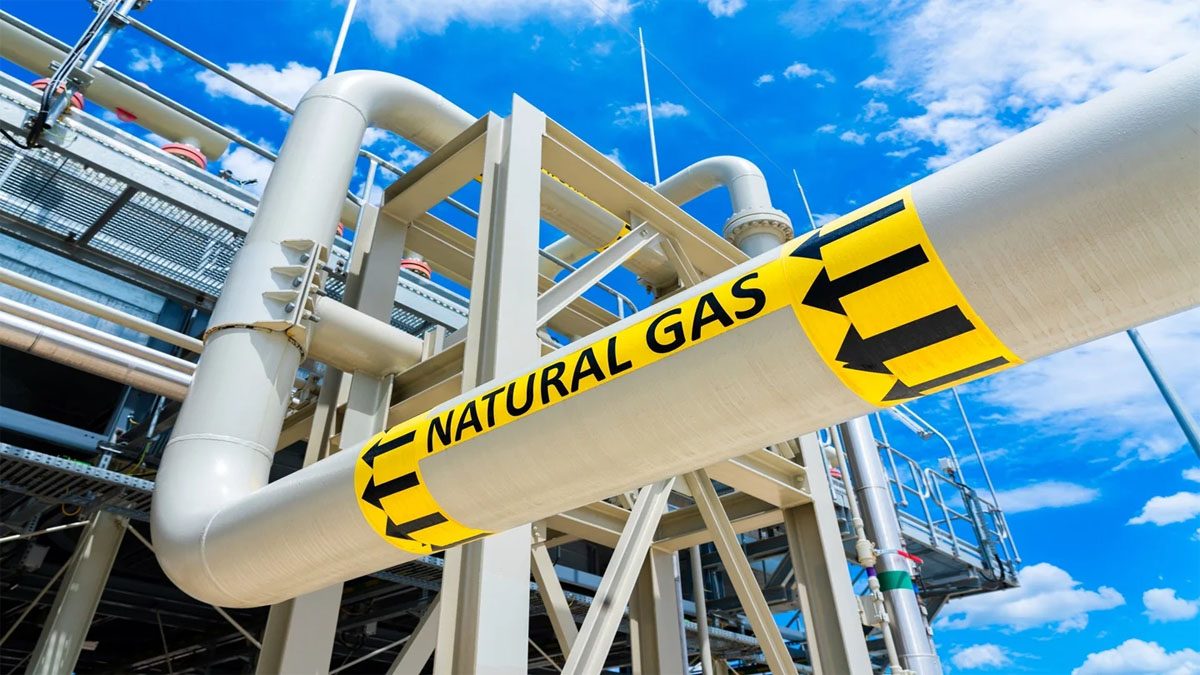
FG Raises Gas Price to $2.18/MMBtu, Signals Fresh Economic Pressure for Nigerians
FG Raises Gas Price to $2.18/MMBtu, Signals Fresh Economic Pressure for Nigerians
Nigerians may face renewed economic strain following a fresh increase in domestic gas prices, a move expected to impact electricity tariffs, manufacturing costs, and the overall cost of living.
The Nigerian Midstream and Downstream Petroleum Regulatory Authority (NMDPRA) on Tuesday announced that the Domestic Base Price of natural gas has been raised to $2.18 per MMBtu, effective April 1, 2026, up from $2.13/MMBtu in 2025.
Although the increase represents a modest rise of about 2.35 per cent, experts warn that even slight adjustments in gas pricing often trigger wider economic consequences across key sectors.
The regulator said the review aligns with provisions of the Petroleum Industry Act, existing gas pricing frameworks, and prevailing market realities, including rising production costs and the need to sustain investment in the gas sector.
Gas remains the backbone of Nigeria’s power generation, accounting for over 70 per cent of electricity supply. As a result, the price hike is expected to increase the cost of power generation, which may ultimately be passed on to consumers through higher electricity tariffs.
For households already grappling with rising utility bills, the development signals the likelihood of increased financial pressure in the months ahead.
READ ALSO:
- Court Orders Final Forfeiture of Jeremiah Useni’s UK Property to FG
- Senate approves Tinubu’s $6bn loan request
- US Warns Iran Against Closing Strait of Hormuz, Cites “Severe Consequences”
Beyond the power sector, industries heavily dependent on gas—including manufacturing, cement production, and food processing—are also expected to experience higher operating costs. Analysts say this could lead to further increases in the prices of goods and services, worsening inflationary trends.
In addition, the NMDPRA announced an upward review of gas prices for commercial users, now set at $2.68/MMBtu, up from $2.63/MMBtu in 2025. This adjustment is expected to directly impact businesses, many of which may transfer the added costs to consumers.
According to the regulator, the new pricing structure is necessary to ensure sustainable gas supply, attract investment, and support infrastructure development in Nigeria’s gas value chain.
However, stakeholders have raised concerns about the timing, noting that the increase comes amid persistent inflation, high energy costs, and declining purchasing power.
The Domestic Base Price serves as a benchmark for gas pricing across Nigeria’s domestic market, influencing contracts between gas producers, power generation companies, and industrial users.
The latest adjustment also reflects broader global energy trends, where gas prices have remained volatile due to supply constraints, geopolitical tensions, and fluctuating crude oil prices.
In recent months, Nigeria has implemented a series of economic reforms aimed at stabilising the economy and attracting foreign investment. These include adjustments in fuel pricing, electricity tariffs, and foreign exchange policies.
While the government maintains that such reforms are necessary for long-term economic stability, many Nigerians continue to feel the immediate impact through higher living costs and reduced purchasing power.
For households and small businesses, the gas price hike reinforces concerns that while reforms may yield future benefits, the short-term burden remains significant and widespread.
FG Raises Gas Price to $2.18/MMBtu, Signals Fresh Economic Pressure for Nigerians
Business
Bottles of Death: SWAN rallies media to combat ₦472bn illicit alcohol crisis

Bottles of Death: SWAN rallies media to combat ₦472bn illicit alcohol crisis
The fight against Nigeria’s surging illicit alcohol trade took centre stage recently as Mr. Tony Okwoju, Director-General of the Spirits and Wine Association of Nigeria (SWAN), called on the media to help dismantle a criminal industry that is quite literally killing its customers.
Speaking at a Brand Journalists Association of Nigeria (BJAN) roundtable, Okwoju highlighted a grim reality: counterfeiters are no longer just cutting corners on quality; they are substituting ethanol with methanol—a toxic industrial chemical that causes permanent blindness, organ failure, and death.
The economic toll is equally devastating. Citing data from a Deloitte report, Okwoju revealed that Nigeria hemorrhages an estimated ₦472 billion annually to illicit trade.
This underground economy now commands a staggering 40% of the total market share, effectively starving the government of tax revenue and threatening billions of naira in legitimate private sector investments.
The SWAN boss described this as a “tripartite threat” that undermines public health, national security, and economic stability all at once.
One of the most insidious tactics used by these criminal syndicates, according to him, involves scavenging high-end bars and dumpsters for empty, branded glass bottles.
These authentic containers are then refilled with cheap, poisonous mixtures and resealed to look like the real thing.
To combat this, Okwoju noted that major manufacturers have been forced to adopt expensive countermeasures, including deploying specialized teams to nightclubs to retrieve and crush their own empty bottles.
By destroying the packaging, the industry hopes to starve counterfeiters of the primary tools they need to deceive the public.
Looking ahead, SWAN is preparing for a high-stakes stakeholder workshop scheduled for April 22, 2026.
The forum is designed to bring enforcement agencies and government regulators under one roof to forge a unified front against the counterfeiters.
Okwoju emphasized that without more stringent enforcement and a massive boost in public awareness, these dangerous commercial hubs will continue to thrive at the expense of Nigerian lives.
Supporting the call for action, BJAN Chairman Daniel Obi emphasized the media’s commitment to promoting responsibility within the beverage industry.
He noted that through collaborative storytelling and accurate reporting, journalists can amplify the dangers of illicit consumption and help protect consumers.
As the April stakeholder forum approaches, the message from the industry is clear: the era of silence regarding counterfeit spirits is over, as the cost of the trade is now being measured in both lost billions and lost lives.

-

 Entertainment1 day ago
Funke Akindele, Toyin Abraham Spark Reactions Over Alleged Snub at Iyabo Ojo’s Premiere
-

 metro2 days ago
Jos Attack: Plateau Govt Declares 48-Hour Curfew After Deadly Assault
-

 Education12 hours ago
WAEC Releases 2026 WASSCE Timetable for School Candidates
-

 Auto8 hours ago
Lagos NURTW Chairman Sego Distributes Exotic Cars, Luxury Items to Cabinet Members (Video)
-

 News1 day ago
UK Raises Visa Costs, Tightens Immigration Rules From April 8
-

 International2 days ago
Iran Threatens US-Linked Universities in Middle East Amid Escalating Tensions
-

 metro2 days ago
From Royal Wedding to Courtroom War: Gana’s Son, Wife in Explosive Split
-

 Auto2 days ago
Motoring World marks 30 years, set to rally industry leaders in Lagos