

International
Fire-stricken California town has learned to live on edge

WEED, Calif. (AP) — The fire-stricken Northern California town of Weed has long been seen by passersby as a whimsical spot to stop along Interstate 5 and buy an ironic T-shirt, but residents say they’ve grown edgy in recent years due to a new danger: Dark skies, swirling ash and flames that race so quickly they leave little time for escape.
Their fears exploded to life again in recent days as California’s latest inferno burned homes and buildings and forced evacuations in the small community about 280 miles (451 kilometers) northeast of San Francisco.
Among the thousands of people displaced was Naomi Vogelsang. Her home destroyed, dog missing, and 10-year relationship with her boyfriend recently ended – all she could do on Saturday was sit outside a wildfire evacuation center with $20 in her pocket, waiting for a ride to the casino.
“It can’t be any worse,” she said.
The day before, flames raced from Roseburg Forest Products, which makes wood products, into Weed’s Lincoln Heights neighborhood where a significant number of homes burned and residents had to flee for their lives. The blaze known as the Mill Fire had spread to more than 6.6 square miles (17 square kilometers) by Saturday evening and was 25% contained.
After fleeing the fire, 63-year-old Judy Christenson remembered a similar escape 40 years ago when, as a young parent, she had to rush her children out of a burning home. Last summer, a wildfire forced her to evacuate and leave her pets behind. Now, Christenson says she leaves harnesses on her pets all the time so she can grab them at a moment’s notice and leave.
READ ALSO:
- Trump accuses FBI of ‘trying to destroy our country’ and ransacking Barron’s room at Pennsylvania rally
- It’s time for North to pay Tinubu back, says Shettima
- Nollywood actress left with fractured skull after alleged attack by EFCC operatives + Videos
“Whenever this happens, I get really bad,” Christenson said from the front seat of a car at an evacuation center in Yreka as Felix, her orange cat, napped in the backseat. “I can’t think straight.”
Nestled in the shadow of Mt. Shasta — a 14,000-foot (4,267-meter) volcano that is the second-highest peak in the Cascade Range — Weed is no stranger to wildfires.
Strong winds in the area that fan flames drew the town’s founder for a very different reason. Abner Weed, a Civil War soldier who is said to have witnessed the Confederate Gen. Robert E. Lee’s surrender before moving to California, chose to put a sawmill there because the wind would dry out the timber, according to Bob West, a lifelong resident who co-owns Ellie’s Espresso and Bakery, a coffee and sandwich shop that contains some historical items of the town’s past.
The winds make Weed and the surrounding area a perilous place for wildfires, whipping small flames into a frenzy. Weed has seen three major fires since 2014, a period of extreme drought that has prompted the largest and most destructive fires in California history.
That drought persists as California heads into what traditionally is the worst of the fire season. Scientists say climate change has made the West warmer and drier over the last three decades and will continue to make weather more extreme and wildfires more frequent and destructive.
Dominique Mathes, 37, said he’s had some close calls with wildfires since he has lived in Weed. But he’s not interested in leaving.
“It’s a beautiful place,” he said. “Everybody has risks everywhere, like Florida’s got hurricanes and floods, Louisiana has got tornadoes and all that stuff. So, it happens everywhere. Unfortunately here, it’s fires.”
Evacuation orders were quickly put in effect Friday for 7,500 people – including West, who is 53 and has lived in Weed since he was a 1-year-old. He had never had to evacuate for a fire, but now he’s had to do it twice.
“It’s way worse than it used to be,” he said. “It affects our community because people leave because they don’t want to rebuild.”
Cal Fire Siskiyou Unit Chief Phil Anzo said crews worked all day and night to protect structures in Weed and in a subdivision to the east known as Carrick Addition. He said about 100 structures were destroyed.
Two people were brought to Mercy Medical Center Mount Shasta. One was in stable condition and the other was transferred to UC Davis Medical Center, which has a burn unit.
“There’s a lot at stake on that Mill Fire,” Anzo said. “There’s a lot of communities, a lot of homes there.”
Evacuees and firefighters quickly filled up local hotels while others rushed to stay with family and friends outside of the evacuation zone.
Vogelsang was not as fortunate. She said she slept on a bench in Weed until she could get a ride to the evacuation center. She said she’s spent most of the time crying about Bella, her 10-year-old English bulldog who — despite her best efforts — would not follow her out of the fire and is lost.
“My dog was my everything,” she said. “I just feel like I lost everything that mattered.”
AP










Health
Fiji Declares National HIV Emergency as Diagnoses Surge Sixteenfold
Fiji Declares National HIV Emergency as Diagnoses Surge Sixteenfold
Authorities launch a multi-agency public health campaign to expand free testing, treatment, and harm-reduction services
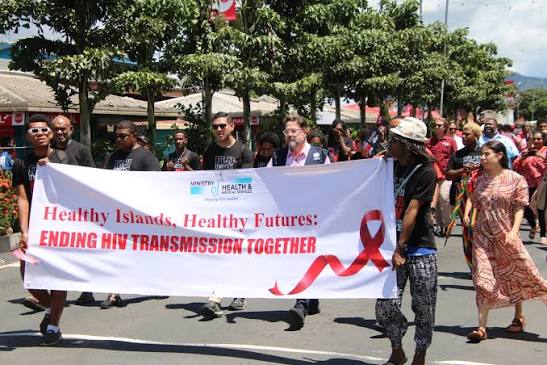
Fiji has announced a nationwide health response to address a significant rise in HIV cases and ensure that all residents can access essential medical care.
On Wednesday, Health Minister Dr. Atonio Lalabalavu shared the emergency declaration, explaining that national agencies are joining forces to provide rapid medical support, expand testing, and protect community well-being across the islands.
Official reports indicate that about one in every 60 adults in Fiji currently lives with HIV, following an increase in new infections over recent years. Health specialists explain that the virus spreads primarily through intimate sexual contact and shared needles among individuals using illicit substances.
Additionally, routine screenings revealed that two out of every 100 expecting mothers carry the virus, highlighting an urgent need for early maternal healthcare to protect newborns from infection.
To safeguard public health, authorities are delivering free daily treatments, distributing protective preventive medications, and setting up clean needle programs to stop infections before they start.
Furthermore, global partners, including Australia, New Zealand, India, and United Nations health bodies are providing financial resources and medical supplies to back the local effort.
By encouraging open community conversations and delivering accessible healthcare without judgment, health workers aim to ensure that everyone receives the care and dignity they deserve.
Fiji Declares National HIV Emergency as Diagnoses Surge Sixteenfold
International
Kim Yo-jong: Only ‘Idiots’ Think North Korea Will Give Up Nuclear Weapons

International
Gaza Building Collapse Kills 21, Including Eight Children
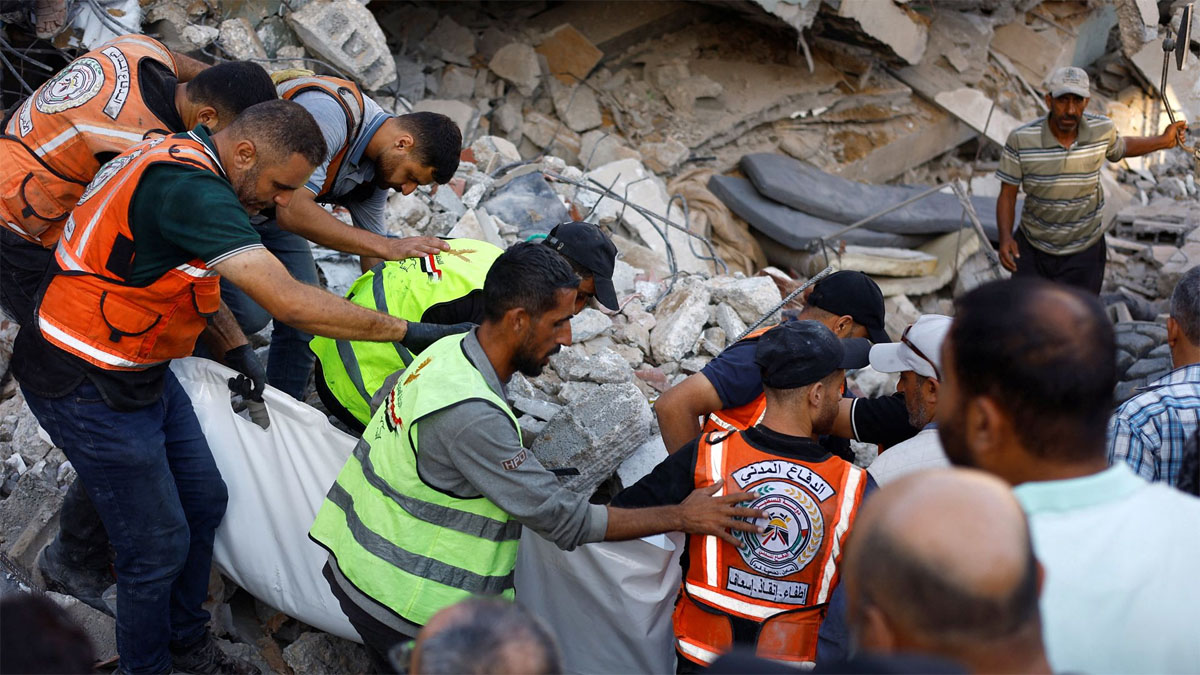
Gaza Building Collapse Kills 21, Including Eight Children
At least 21 people have been killed, including eight children, after a war-damaged building collapsed in Gaza City overnight, rescuers and medics say. The tragedy has renewed concerns about the collapse risk facing hundreds of bomb-damaged structures across the Gaza Strip as winter approaches.
The six-storey residential building in Gaza City’s Tal al-Hawa area collapsed in the early hours of Wednesday. According to the United Nations humanitarian coordinator for the occupied Palestinian territories, Ramiz Alakbarov, an estimated 100 people, including 50 children, were living in the building when it came down. The Gaza Civil Defence agency confirmed that rescuers extracted 21 bodies and rescued 20 unharmed individuals from the rubble on al-Sinaa Street in Tal al-Hawa. Dozens remain missing or injured underneath the debris.
Witnesses told the BBC that the building had been left tilting dangerously to one side after an Israeli strike more than a year ago. Displaced families had moved inside because they were desperate, with nowhere else to go. The building had been hit multiple times in 2024 and March 2025, leading to warnings for Gazans not to return, according to Civil Defence spokesman Mahmoud Basal. More than 10 families, totalling around 80 people, lived in the building, according to residents, with dozens of them being children. Sherif, whose sister was killed, said: “They couldn’t find a tent or somewhere to live. This was the last place they could turn to, despite the danger. They were aware that it would likely end in tragedy. A lack of resources drove them towards certain death.“
A woman living in a tent nearby, Umm Mohammed Bakrun, said she had been talking to her son when the building collapsed suddenly. “It felt like an earthquake. There was a loud sound and I couldn’t stand up. Stones rained down on us and when I looked outside I saw a lot of dust,” she told the BBC. “Within minutes, there were screams everywhere.” Another witness, Mansour Abu Mohammed, said the building collapsed “in a few seconds”. “Every day, a stone or a few stones would fall from it, but the people inside couldn’t find anywhere else to live. I used to live next door to it and you could see that it was tilting to one side.”
READ ALSO:
- Niger Mosque Abductions: Terrorists Execute 30 of 500 Captive Muslim Worshippers
- OAU Investigates Death of Final-Year Student as Police Begin Probe
- 57-Year-Old Man Arrested Over Sexual Abuse of Stepdaughter in Edo
UN and Egyptian teams joined the search for survivors, which was slow due to a lack of heavy machinery. Initially, rescuers from the Hamas-run Civil Defence agency had to use their bare hands. Egypt provided heavy machinery for the rescue operation, while the United Arab Emirates and Qatar were set to deliver relief items. The Palestinian Civil Defence said rescue teams had been working continuously since the collapse, but lacked even the most basic tools. “In the first moments after the collapse, we had to ask neighbours and displaced people nearby to bring hammers, shovels and other tools because of the severe shortage of equipment,” said Abdullah al-Majdalawi, director of public relations at Gaza’s Civil Defence. The head of the United Nations Development Programme (UNDP) Gaza office, Alessandro Mrakic, told reporters at the scene that “the situation… is tragic because we don’t have the equipment and machinery that is needed”.
Mrakic warned that approximately 400 other war-damaged buildings across Gaza were at imminent risk of collapse, particularly as winter approaches. The Civil Defence agency has identified around 2,000 buildings across the territory at risk of collapse. “We need support, most importantly with machinery, equipment, among others. Our colleagues here don’t have [engine] oil and spare parts to continue to work with all the equipment that is still in Gaza.” The UN’s humanitarian relief coordinator, Ramiz Alakbarov, said he was “devastated” by the reports. “No-one should have to risk their life simply to find a safe place to shelter,” he said. He also urged Israeli authorities to approve deliveries to Gaza of heavy machinery for rescue operations, as well as tents, tarpaulins and other non-food items for displaced people ahead of the winter rains. Israel says its restrictions are meant to keep equipment out of the hands of Palestinian armed groups that could also have military uses.
An estimated 80% of all structures in Gaza have been destroyed or damaged during the war between Israel and Hamas, according to the UN. More than 1.9 million people — about 90% of the territory’s population — have been displaced, many of them multiple times, and 1.2 million of them are currently living in tents or makeshift shelters. The UN has warned that the humanitarian situation in Gaza remains dire despite the ceasefire agreed last October, as Israeli air strikes and other attacks continue to hit populated areas, causing casualties and property damage and driving further displacement. According to Gaza’s health ministry, 1,369 Palestinians have been killed and 4,627 wounded since the fragile ceasefire took effect on 11 October 2025. The total death toll since the war began has reached 73,783, with 174,738 injured.
On Tuesday, Israeli air strikes killed at least five Palestinians, including two children and a Hamas commander, according to health officials and Hamas sources. The Israeli military said it killed a Hamas commander in southern Gaza and another fighter in the north. In both cases, a child was also reportedly killed. Separately, the British charity Medical Aid for Palestinians said that a patient was killed by an Israeli drone at a health centre it supports in Jabalia in northern Gaza. A spokesperson for the Israeli military told the BBC it was not aware of such an incident.
The Gaza war was triggered by the Hamas-led attack on southern Israel on 7 October 2023, when about 1,200 people were killed and 251 others were taken hostage. Since then, more than 73,790 people have been killed in Gaza, according to the territory’s Hamas-run health ministry, whose figures are considered reliable by the UN. In a statement, the Gaza government media office under Hamas said it held “the Israeli occupation and the international community fully and directly responsible for this catastrophe befalling our Palestinian people“.
Gaza Building Collapse Kills 21, Including Eight Children
-

 Sports3 days ago
‘I Was Never the Chosen One’ — Dembele Responds to Mbappe
-

 International2 days ago
Islamic Council Condemns Attempted Attack on Holy City of Mecca
-

 metro2 days ago
Lagos Power Outage: Ikeja Electric Blames TCN as Businesses, Homes Groan
-

 Education3 days ago
JAMB Moves 2027 UTME Time — Here’s What Candidates Need To Know
-

 News2 days ago
Keep Politics Out of My Office — Ogbomoso Grand Chief Imam Warns Politicians, Bloggers
-

 Politics2 days ago
2027: APC Governors Reject Wike’s Rainbow Coalition, Insist on Party Loyalty
-

 News3 days ago
I Wanted to Disgrace Tinubu — Omokri Reveals What He Discovered at Chicago Varsity
-

 metro2 days ago
A Son Wouldn’t Have Done Better — Dangote Speaks on Daughters, Succession