

News
Food insecurity may worsen in Nigeria, 17 others — UN

Food insecurity may worsen in Nigeria, 17 others — UN
Acute food insecurity is projected to significantly worsen in 18 hunger “hotspots,” including Nigeria, a recent United Nations report has said.
The report also highlights the urgent need for assistance to prevent famine in Gaza and Sudan and address escalating hunger crises in Haiti, Mali, and South Sudan.
The report stresses the ongoing effects of El Niño and the looming risk of La Niña, which could trigger extreme climate events that disrupt lives and livelihoods. It states, “Since the previous edition of the Hunger Hotspots report (October 2023), the Central African Republic, Lebanon, Mozambique, Myanmar, Nigeria, Sierra Leone, and Zambia have joined Burkina Faso, Ethiopia, Malawi, Somalia, and Zimbabwe on the list of hunger hotspots, where acute food insecurity is likely to deteriorate further during the outlook period.”
Many hotspots face worsening hunger crises due to the compounded effects of conflict, climate extremes, and economic shocks, pushing vulnerable households deeper into food crises.
READ ALSO:
- LASU’s best-graduating student gets Sanwo-Olu’s ₦10m reward
- BREAKING: Bandits kill seven policemen, 4 others in attack on Zamfara community
- Gunmen kill pastor, wife, three others in Plateau community
The report also warns that 2023 could be the first year since 2010 to see a decrease in humanitarian funding compared to the previous year, despite it being the second-highest funding ever for humanitarian assistance.
FAO Director-General QU Dongyu stated, “The daunting prospects highlighted in this report should serve as a wake-up call to all of us.
“We must spearhead the shift from responding to crises after they occur to more proactive anticipatory approaches, prevention, and resilience building to help vulnerable communities cope with upcoming shocks.
“Acting ahead of crises can save lives, reduce food shortages, and protect livelihoods at a much lower cost than a not timely humanitarian response.”
WFP Executive Director Cindy McCain added, “Once a famine is declared, it is too late; many people will have already starved.
“In Somalia in 2011, half of a quarter of a million people who died of hunger perished before famine was officially declared.
“The world failed to heed the warnings then, and the repercussions were catastrophic.
“We must learn the lesson and act now to stop these hotspots from igniting a firestorm of hunger.
“We have proven solutions to stop these crises, but we need the resources and the political will to implement them at scale before more lives are lost.”
The report further notes that the ongoing conflict in Palestine is likely to exacerbate the already severe levels of acute hunger, with starvation and death occurring alongside an unprecedented death toll, widespread destruction, and the displacement of nearly the entire population of the Gaza Strip.
Food insecurity may worsen in Nigeria, 17 others — UN











News
Mexico Clears Reno Omokri as Nigeria’s Ambassador After Eight-Month Wait

Mexico Clears Reno Omokri as Nigeria’s Ambassador After Eight-Month Wait
The Mexican government has granted diplomatic approval for Reno Omokri’s appointment as Nigeria’s ambassador to Mexico, ending an eight-month wait for the confirmation of his posting by the host country.
Omokri disclosed this in a post on his X account on Tuesday, saying José Manuel Briseño Flores, chargé d’affaires of the Embassy of Mexico in Abuja, had delivered the diplomatic approval, known as agrément, to Babagana Wakil, Director of Protocol at Nigeria’s Ministry of Foreign Affairs.
The approval covers Omokri’s appointment as Ambassador Extraordinary and Plenipotentiary to Mexico, with concurrent accreditation to Guatemala, Honduras and Nicaragua.
“ To God be the glory, the Chargé d’affaires of the Embassy of the United Mexican States in Abuja, Mr José Manuel Briseño Flores, today in Abuja delivered the agrément from the Government of the United Mexican States accepting me,” Omokri said.
The development clears a major hurdle in the process of deploying the former presidential aide and political commentator to his diplomatic assignment, following months of uncertainty over the status of his appointment.
President Bola Tinubu had in March approved the posting of 65 ambassador-designates and high commissioners to various countries as part of efforts to strengthen Nigeria’s diplomatic representation abroad.
Omokri was among those named for ambassadorial postings, with Mexico designated as his principal country of assignment.
However, his deployment could not be concluded immediately because Mexico had yet to formally accept his nomination, a necessary step in the diplomatic appointment process.
Under established diplomatic practice, a government seeking to appoint an ambassador must obtain the receiving country’s agrément before the nominee can be formally deployed. The procedure allows the host country to indicate its acceptance of the proposed envoy.
In August, the Ministry of Foreign Affairs disclosed that Mexico and Japan were among the countries that had yet to communicate formal acceptance of two outstanding ambassadorial appointments.
The ministry said it was engaging the relevant authorities in the affected countries and expressed confidence that the outstanding approvals would be secured in due course.
Mexico’s decision now resolves the uncertainty surrounding Omokri’s posting, although the completion of any remaining formalities and the commencement of his diplomatic duties may still depend on the applicable procedures.
Omokri, a former aide to ex-President Goodluck Jonathan, is known for his political commentary and frequent interventions in Nigeria’s public discourse. His appointment forms part of the Tinubu administration’s wider effort to fill key diplomatic positions and strengthen the country’s engagement with foreign governments.
With the approval secured, attention will now turn to the completion of the remaining diplomatic formalities and his eventual assumption of duty in Mexico.
News
Delta Mourns as Former Governor Uduaghan Dies After Brief Illness
Delta Mourns as Former Governor Uduaghan Dies After Brief Illness
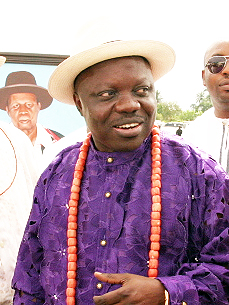
A former Governor of Delta State, Dr Emmanuel Eweta Uduaghan, has died at the age of 71 after a brief illness, his family announced on Monday.
Uduaghan, who governed Delta State for eight years between 2007 and 2015, died on the morning of October 19, 2026, according to a statement issued by the family and signed by Toju Andre Uduaghan.
The family described his death as a devastating loss, saying his life and years of public service touched many people across Delta State and Nigeria.
The statement, titled “Announcement of the Passing of His Excellency, Dr Chief Emmanuel Eweta Uduaghan,” read in part, “It is with hearts weighed down by immeasurable grief and profound sorrow that we announce the passing to glory of our beloved Father, Brother, Uncle, and Patriarch.”
The family said Uduaghan was a source of strength and a respected elder whose contributions to public service and family life would remain indelible.
“He served as Commissioner for Health from 1999 to 2003, Secretary to the Delta State Government from 2003 to 2007, and Governor of Delta State from 2007 to 2015,” the statement said.
It added that throughout his years in public service, the former governor demonstrated a commitment to the human and infrastructural development of the state.
The family described his death as a profound loss not only to his relatives but also to the people of Delta State and the country at large.
While expressing gratitude to God for his life and legacy, the family prayed for the repose of his soul and for divine comfort for those mourning his death.
“We pray that Almighty God, in His infinite mercy, will grant his soul eternal rest and comfort our family, friends, associates, former colleagues, and all who mourn this painful loss,” the statement added.
The family said Uduaghan’s memory would remain alive through the lives he touched and the legacy he left behind.
“Rest well, our beloved Father, Brother, and Uncle. Your memory will forever remain in our hearts, and your legacy will endure in the lives of those you touched,” it said.
The statement concluded with a prayer for the peaceful repose of his soul.
News
FG Challenges World Bank’s 124% Debt-to-Revenue Warning, Cites Rising Income
FG Challenges World Bank’s 124% Debt-to-Revenue Warning, Cites Rising Income
The Federal Government has disagreed with the World Bank’s assessment that its interest payments consumed 124 per cent of revenue in the first half of 2026, describing the calculation as misleading and arguing that it fails to capture the full picture of Nigeria’s public finances.
The dispute followed the World Bank’s October 2026 Nigeria Development Update, which reported that the Federal Government spent ₦7.7 trillion on interest payments between January and June 2026, compared with revenue of ₦6.2 trillion.
The figures imply an interest-to-revenue ratio of approximately 124 per cent, meaning the government’s interest bill exceeded its reported revenue by about ₦1.5 trillion during the six-month period.
However, the Federal Ministry of Finance, in a statement issued on Sunday, October 18, argued that the comparison combined debt obligations covering different tiers of government with a revenue figure that did not include all government earnings.
The ministry said the interest-payment figure included debts serviced by the Federal Government on behalf of other tiers of government, including external loans obtained by state governments.
It argued that comparing these obligations with federal revenue alone overstated the ratio because the figures did not cover the same level of government.
The ministry also said the revenue figure excluded independent income already earned by government agencies and enterprises but not yet remitted to the Treasury.
According to the ministry, the timing of tax collections also affects first-half revenue figures, as some statutory payments are concentrated in the second half of the year. It therefore maintained that a six-month comparison should not be treated as a definitive assessment of Nigeria’s debt sustainability.
READ ALSO:
- Mbappé Runs Riot as Real Madrid Crush Sevilla 4-1 Ahead of El Clásico
- Ogun House Fire Horror: Husband Arrested After Wife Dies Following Domestic Dispute
- NLC, Falana Mobilise Nigerians Against Petrol Price Hike, Mount Pressure on Tinubu Govt
To support its position, the government highlighted an improvement in revenue collection between the first halves of 2025 and 2026.
The ministry said Federal Government revenue increased by 72 per cent, rising from ₦3.6 trillion in the first half of 2025 to ₦6.2 trillion in the corresponding period of 2026.
Interest payments, meanwhile, rose by 38 per cent, from ₦5.6 trillion to ₦7.7 trillion over the same period.
The ministry said the difference between interest payments and revenue consequently narrowed from ₦2 trillion in the first half of 2025 to ₦1.5 trillion in the first half of 2026.
It added that the interest-to-revenue ratio fell from 156 per cent to 124 per cent, a decline of 32 percentage points.
The government attributed the improvement to its economic reforms, arguing that revenue was growing faster than interest costs and that the figures did not, on their own, establish that Nigeria was facing a debt crisis.
The ministry further argued that debt sustainability should be assessed using full-year figures, rather than a six-month snapshot that may not reflect the timing of revenue collection and debt payments.
It cited the World Bank’s projection that Nigeria’s full-year 2026 debt service, covering both interest and principal repayments, would amount to 46 per cent of revenue.
The ministry described the projected full-year ratio as a more appropriate benchmark for assessing the government’s debt obligations.
It also defended the Federal Government’s borrowing programme, insisting that borrowing remained within the limits approved by the National Assembly under the 2026 Appropriation Act and the approved borrowing plan.
According to the ministry, the government’s borrowing activities comply with the Fiscal Responsibility Act 2007 and the Debt Management Office (Establishment) Act 2003, with debt information published regularly by the Debt Management Office.
Despite the government’s objections, the reported figures highlight the pressure that rising interest costs can place on public finances. When interest payments absorb a large share of government revenue, fewer resources may be available for infrastructure, healthcare, education and other public services.
The central disagreement, therefore, concerns the appropriate basis for measuring Nigeria’s debt burden. While the World Bank’s reported figures point to interest payments exceeding federal revenue in the first half of 2026, the Finance Ministry insists that differences in government coverage and revenue timing make the ratio an incomplete measure of the country’s fiscal position.
FG Challenges World Bank’s 124% Debt-to-Revenue Warning, Cites Rising Income
-

 metro3 days ago
SERAP Sues INEC Over ₦126bn Electoral Funds, Demands Full Accountability
-
 News2 days ago
FG Challenges World Bank’s 124% Debt-to-Revenue Warning, Cites Rising Income
-

 metro2 days ago
NAFDAC Probes Corps Member’s Death at Enugu Camp as Fake Drug Claims Emerge
-

 Politics2 days ago
Buhari Feared Tinubu Presidency, Resisted Pressure to Back Him – Baba-Ahmed Claims
-

 metro15 hours ago
Army Major, Soldiers Killed in ISWAP Ambush in Yobe State
-

 Entertainment2 days ago
Nollywood Mourns as Actress, Beauty Queen Tenia Abraham Dies at 32
-
 metro3 days ago
Okonjo-Iweala: My Mother Was Kidnapped After I Uncovered $2.4bn Subsidy Fraud
-

 metro2 days ago
Ogun House Fire Horror: Husband Arrested After Wife Dies Following Domestic Dispute