

Politics
Fuel Subsidy: Atiku’s Third U-Turn in One Week Exposes Political Posturing, Presidency Says
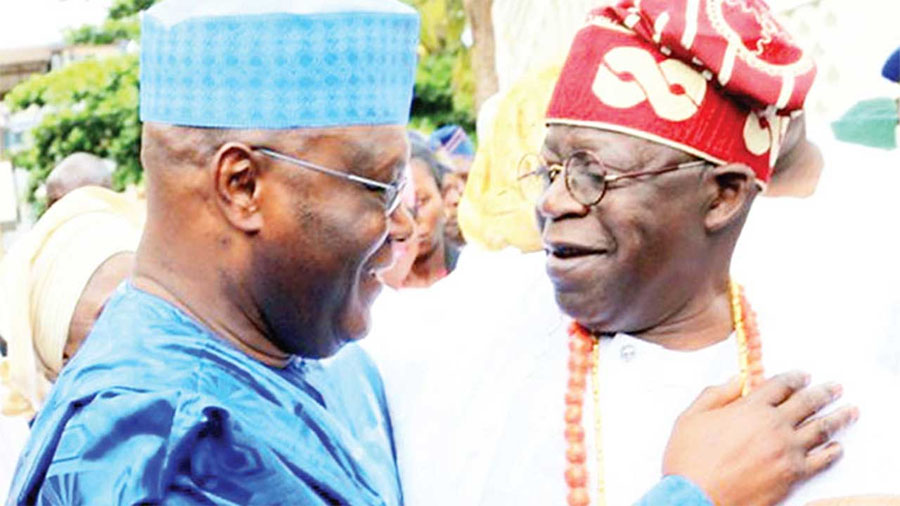
Fuel Subsidy: Atiku’s Third U-Turn in One Week Exposes Political Posturing, Presidency Says
The Presidency has again taken a swipe at former Vice President and African Democratic Congress (ADC) presidential candidate, Alhaji Atiku Abubakar, over what it describes as his third policy U-turn on petrol subsidy within one week, accusing him of political posturing and lacking understanding of petroleum economics. In a statement by the Special Adviser to the President on Information and Strategy, Bayo Onanuga, the Presidency questioned whether Atiku was seriously proposing an economic policy or simply playing politics with the temporary discomfort Nigerians face.
The Presidency detailed what it described as three conflicting positions emerging from the Atiku camp within days. The first position came from Atiku’s spokesperson, Paul Ibe, who stated that the former vice president would restore petrol subsidy if elected and later phase it out, describing it as a temporary intervention to give Nigerians and businesses room to recover. The second position emerged when another senior aide, Phrank Shaibu, dismissed Ibe’s statement as an “unauthorised and misleading characterisation” of Atiku’s position. According to Shaibu, Atiku would not set a predetermined date for ending the subsidy, which would remain until domestic refining expanded, supply stabilised, competition deepened, and the market could deliver affordable prices without government support. The third position came when Atiku himself intervened hours later, insisting his position “has not changed” and that he would restore what he called a “targeted subsidy” if elected. He stated, “I will restore targeted subsidy and put purchasing power back in the hands of Nigerians.”
The Presidency argued the differing explanations amounted to more than semantics, describing it as “a serious policy contradiction.” Onanuga asked that if Atiku’s position has not changed, why did one of his principal aides say the subsidy would be temporary and phased out, why did another senior aide have to publicly disown that explanation and introduce a completely different framework based on market conditions, and why did Atiku then step in to reaffirm the original position? He added that Nigerians deserve clarity, not policy by trial and error.
READ ALSO:
- Subsidy removal stabilising Nigeria’s economy despite hardship — Doro
- FG Unveils $1bn HOPE-SP Programme Targeting 7.6m Vulnerable Households
- ‘Give Me My Child Back’: Grief, Fury After Pakistan Hospital Fire Kills 14 Newborns
The Presidency challenged Atiku to explain precisely what he means by “targeted subsidy,” including how much it will cost, who will benefit, how beneficiaries will be identified, how it will be funded, and what objective economic conditions will determine its eventual termination. The statement said that Nigerians cannot afford another opaque and potentially costly subsidy regime dressed up in new language.
Atiku has sought to draw a distinction between his proposal and the previous import-subsidy regime. According to his Senior Special Assistant on Public Communication, Phrank Shaibu, the former vice president is proposing “a targeted, capped, transparently budgeted and independently audited intervention” to support domestic refining and production, with measurable performance-based exit conditions. Shaibu explained that you do not remove scaffolding because the calendar says so; you remove it when the building can stand securely on its own. Atiku himself stated on his X platform that he would not restore the import racket but would restore relief.
The Presidency also faulted Atiku’s argument that competition and subsidy would automatically reduce petrol prices, noting that several factors influence pump prices, including international crude oil prices, exchange rates, refining costs, transportation, and distribution. The statement said that competition can improve efficiency and margins, but it cannot magically insulate Nigeria from global crude oil prices or other input costs.
The Presidency also rejected what it described as an oversimplification of the relationship between petrol prices and food inflation. While acknowledging that energy and transportation costs affect food prices, it argued that petrol prices alone have never caused food inflation. Onanuga said that agricultural productivity, insecurity, exchange rates, logistics, storage, flooding, input costs, money supply and supply constraints also matter. He added that a serious economic programme must address these factors, as President Bola Ahmed Tinubu has been doing for the past three years, rather than reduce the entire cost-of-living crisis to petrol prices.
The Presidency further questioned Atiku’s suggestion that subsidy would “follow the barrel of crude,” pointing out that petrol accounts for only about 45 per cent of products from a refined barrel. According to the statement, diesel, which was deregulated in 2004 under the Obasanjo-Atiku administration, accounts for roughly 25 per cent of a barrel, while aviation fuel and kerosene make up about nine per cent. Onanuga asked whether Atiku would also subsidise these other products, since kerosene is used by the underprivileged to cook, and many homes and factories use diesel to power generators.
The subsidy debate has returned to the centre of the 2027 presidential contest, with Atiku seeking to position himself as the candidate who will make life more affordable for Nigerians. According to Shaibu, the choice is not removal of subsidy versus restoration of subsidy; it is Expensive Nigeria versus Affordable Nigeria. The Presidency, however, warned against what it called “policy somersaults, incoherence, destructive populism and election gimmicks,” saying the economy is too serious for such approaches.
Fuel Subsidy: Atiku’s Third U-Turn in One Week Exposes Political Posturing, Presidency Says





Politics
‘Useful Errand Boy’ — Imo APC Rejects Wike’s Bid To Lead Tinubu Campaign
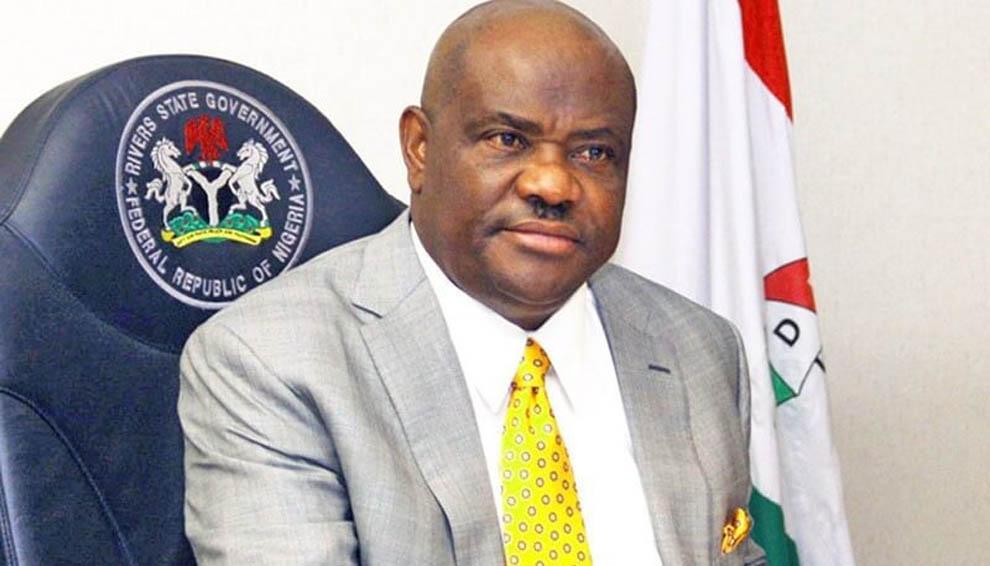
‘Useful Errand Boy’ — Imo APC Rejects Wike’s Bid To Lead Tinubu Campaign
The All Progressives Congress (APC) in Imo State has fired back at the Minister of the Federal Capital Territory (FCT), Nyesom Wike, describing him as a “useful errand boy, for now” after he offered to take charge of President Bola Tinubu’s re-election campaign in Imo and Kwara states ahead of the 2027 general elections.
The party rejected Wike’s suggestion that the APC was facing political challenges in Imo, insisting that its structures remained intact and its mobilisation efforts were progressing smoothly.
Wike had, on Wednesday, asked President Tinubu and the APC campaign leadership to assign him additional states to mobilise support for the President’s re-election, claiming he had completed his assignments in Rivers State and the FCT.
Speaking at a Rainbow Coalition town hall meeting in Gokana Local Government Area of Rivers State, the minister said adequate political machinery had been put in place to deliver Rivers and the FCT for Tinubu.
He subsequently expressed interest in taking responsibility for Imo and Kwara, citing reports of political difficulties in the two states.
However, the Imo APC, in a statement issued on Thursday by its State Publicity Secretary, Onwuasoanya Jones, dismissed Wike’s offer, saying there was no crisis within the party in the state requiring his intervention.
READ ALSO:
- Kenyan Pastor Serving 200 Years For Murder Convicted Of Terrorism-Related Charges
- Tinubu Offers Abuja Homes, N100m each to Families of Air Force Crash Victims
- 2027 Presidency: ‘Atiku Should Forget His Ambition, Wait Until 2031’ – Bode George
The party insisted that its campaigns for the APC and Tinubu had been progressing smoothly and expressed confidence in its chances ahead of the elections.
It described Wike’s comments as an affront to Tinubu and the party’s electoral integrity, arguing that his offer could portray the President as unpopular and dependent on a political figure from the opposition PDP to secure victory.
The Imo APC also criticised Wike for reportedly claiming to have secured Rivers State and the FCT for Tinubu more than 50 days before the elections, describing such declarations as disrespectful to democratic principles and voters’ power to determine electoral outcomes.
The party further accused the minister of attempting to use the APC’s goodwill to sustain his political relevance and urged him to concentrate on strengthening his own party, the Peoples Democratic Party (PDP).
It also alleged that Wike had sent emissaries and agents to Imo with financial inducements to create divisions within the party, warning that it would resist any attempt to influence its political structures.
Declaring that “Imo State is not for sale,” the APC said it would not tolerate political interference, godfatherism or attempts to undermine the will of the people.
The party concluded with a warning to Wike, saying, “Every mercenary outlives their usefulness,” while reaffirming its commitment to mobilising support for Tinubu and other APC candidates in the 2027 elections.
‘Useful Errand Boy’ — Imo APC Rejects Wike’s Bid To Lead Tinubu Campaign
Politics
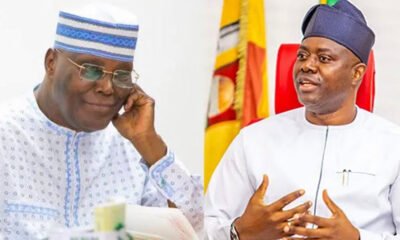
BREAKING: Makinde Reportedly Agrees to Back Atiku’s Presidential Bid
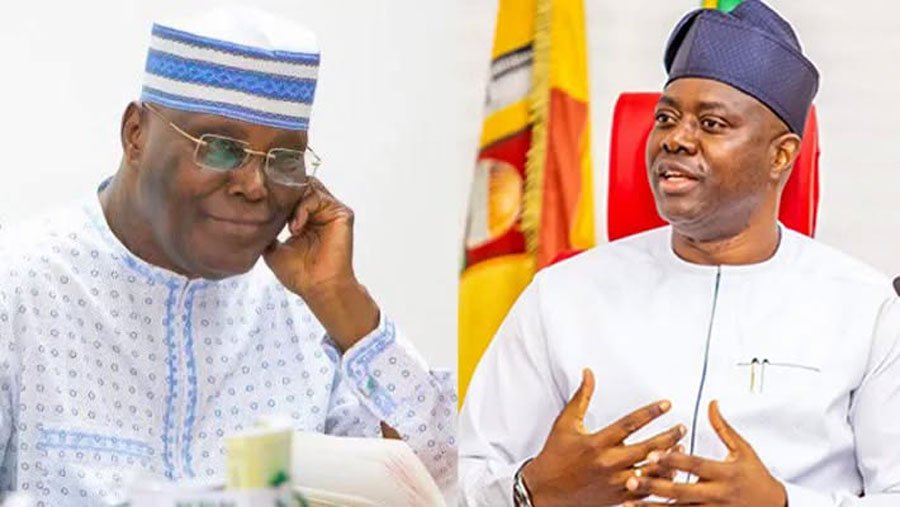
Oyo State Governor Seyi Makinde has reportedly agreed to support former Vice-President Atiku Abubakar’s presidential ambition ahead of the 2027 general election, amid ongoing efforts by opposition leaders to forge an alliance against President Bola Tinubu.
The reported agreement is said to have followed weeks of negotiations and consultations between representatives of the two politicians, as opposition figures explore a common strategy for the 2027 presidential contest.
An official announcement on the arrangement is reportedly expected before the end of November or in the early days of December, although neither Makinde nor Atiku has publicly confirmed that a deal has been concluded.
The development comes amid growing speculation over Makinde’s political future, particularly as the Oyo governor has maintained his presidential ambition while engaging other opposition leaders on possible collaboration.
Makinde had earlier confirmed that he was in discussions with Atiku and former Anambra State Governor Peter Obi over a possible political arrangement to challenge Tinubu in the 2027 election.
Speaking in an interview with media personality Chude Jideonwo, Makinde said the opposition figures were working towards an arrangement to prevent Tinubu from securing a second term, stressing that the plan would not necessarily involve a formal merger of political parties.
READ ALSO:
- BREAKING: Lagos-Badagry Expressway Inferno Kills Six, Leaves 12 Injured
- How Obasanjo Stopped Gaddafi From Bringing AK-47s Into Nigeria – Fani-Kayode
- Kaduna: Troops Rescue Five Kidnap Victims, Arrest Two Suspected Terrorists
The governor indicated that the proposed arrangement would be different from the coalition that brought opposition parties together to form the All Progressives Congress (APC) ahead of the 2015 general election.
His remarks have fuelled speculation that one of the opposition presidential hopefuls could eventually step down in favour of another candidate as part of efforts to strengthen the challenge against the ruling party.
Meanwhile, claims circulated by aides and political associates of Federal Capital Territory Minister Nyesom Wike have suggested that Makinde could withdraw from the presidential race in favour of Atiku, with alleged negotiations involving political concessions and arrangements in Oyo State.
However, the reported terms of the agreement, including claims of political appointments and an arrangement involving the governorship ticket in Oyo State, remain unverified.
Makinde’s Commissioner for Information, Dotun Oyelade, has reportedly acknowledged the governor’s consultations with opposition leaders but has not publicly confirmed a concluded agreement with Atiku.
Atiku’s camp has also indicated that the former vice-president is engaging political stakeholders as part of efforts to build a common front ahead of the 2027 election.
If confirmed, Makinde’s decision to back Atiku could significantly alter opposition calculations, potentially strengthening the former vice-president’s position while reshaping the race for the presidential ticket and alliances across the opposition parties.
For now, the reported agreement remains unconfirmed, with Nigerians awaiting an official statement from the two political camps on the outcome of their negotiations.
BREAKING: Makinde Reportedly Agrees to Back Atiku’s Presidential Bid
Politics
2027 Presidency: ‘Atiku Should Forget His Ambition, Wait Until 2031’ – Bode George

Former Deputy National Chairman of the Peoples Democratic Party (PDP), Chief Olabode George, has urged former Vice-President Atiku Abubakar to abandon his ambition to become Nigeria’s president in 2027, arguing that the South should complete its eight-year turn before power returns to the North in 2031.
George maintained that Atiku’s continued presidential ambition runs contrary to the principle of power rotation between northern and southern Nigeria, which he believes should guide the country’s political leadership and promote fairness, equity and national unity.
The PDP chieftain made his position known on Wednesday, November 25, 2026, during a news conference in Lagos to mark his 81st birthday.
He argued that the understanding among the political leaders who established Nigeria’s current democratic dispensation was that the presidency and other strategic national positions should be shared equitably among the country’s six geopolitical zones.
According to him, the arrangement was designed to ensure that neither the North nor the South monopolises presidential power, with the presidency alternating between the two regions after every eight years.
George recalled that he opposed Atiku’s presidential ambition in 2023 when the former Vice-President contested to succeed former President Muhammadu Buhari, who had completed two terms in office.
He argued that allowing another northerner to succeed Buhari would have undermined the political understanding that power should shift to the South after eight years of northern leadership.
The former PDP national officer insisted that the same principle should apply to the 2027 presidential election, maintaining that President Bola Ahmed Tinubu should be allowed to complete the South’s eight-year tenure before power returns to the North.
George said he had consistently opposed Atiku’s ambition because he believed the former Vice-President should have respected the power-sharing arrangement in 2023.
READ ALSO:
- Phone-Tapping Claim: I Lied to Unsettle Tinubu Government – El-Rufai
- IGP Suspends Wanted Declaration Against Obaigbena, Eight Others, Orders Fresh Probe
- ‘I Came to Nigeria for Love, Now I’m Stranded, Begging for Rent’ — American Woman Married to Enugu Man Cries Out
“This was why I kicked against his ambition. He went ahead and did everything possible but failed.
“And now, he is back, still seeking to be president when the South has not yet completed eight years. I am still against his presidential ambition,” George said.
Questioning Atiku’s determination to contest the presidency again, George asked whether the former Vice-President was the only northern politician interested in leading Nigeria.
“Is Atiku the only Northerner in Nigeria? Why is he contesting for this office every four years? Why is he inordinately ambitious? He is 80 years old already.
“I want to advise him to forget his presidential ambition next year. He should return in 2031 when the seat returns to the North. By then, he will be close to 85 years old, and Nigerians will decide if they want to vote for him or not,” he added.
Atiku, who has contested several presidential elections, is the African Democratic Congress (ADC) presidential candidate for the 2027 general election.
However, George’s position on presidential zoning represents a political argument rather than a constitutional requirement. Nigeria’s Constitution does not expressly mandate presidential power rotation between the North and South, although zoning and power-sharing arrangements have influenced political party decisions and electoral negotiations since the return to democratic rule in 1999.
Beyond Atiku’s presidential ambition, George expressed concern about what he described as selfish political interests, disregard for democratic principles and the manipulation of national institutions.
He particularly criticised inconsistencies in judicial decisions concerning political disputes ahead of the 2027 general election, warning that conflicting judgments from courts of coordinate jurisdiction could create uncertainty for political parties and aspirants.
The elder statesman urged judicial authorities to resolve outstanding political disputes promptly and uphold public confidence in the judiciary.
George also expressed concern about the continued detention of former Kaduna State Governor Nasir El-Rufai and called on the judiciary to review his bail conditions.
He argued that bail should be administered in accordance with constitutional principles, fairness and the presumption of innocence, rather than being influenced by political considerations.
“Bail is not a favour granted at the pleasure of authority; it is a constitutional right rooted in justice, fairness and the presumption of innocence,” he said.
George appealed to the judicial authorities to allow El-Rufai to return home while continuing to attend court proceedings.
On the political atmosphere ahead of the 2027 elections, the former governor of Lagos State expressed concern over reported attacks on opposition gatherings and political rallies in some parts of the country.
He called on President Tinubu to caution members and supporters of the ruling All Progressives Congress (APC), as well as politicians across other parties, against violence, intimidation and actions capable of undermining democratic participation.
George insisted that opposition parties must be allowed to organise, express their views and participate in elections without fear.
He also urged the National Peace Committee, led by former Head of State General Abdulsalami Abubakar, to intensify efforts towards preventing political violence before, during and after the 2027 general elections.
His comments come amid growing political realignments, disagreements over presidential zoning and disputes over party leadership as political parties prepare for the 2027 elections.
The debate over Atiku Abubakar’s 2027 presidential ambition is expected to remain a major issue in discussions about political succession, regional power-sharing and the future of Nigeria’s opposition politics.
2027 Presidency: ‘Atiku Should Forget His Ambition, Wait Until 2031’ – Bode George
-
 metro2 days ago
Oyoland Grand Chief Imam Moves to End Feud, Seeks Reconciliation Among Markaziyya, Adabiyyah, Mahdul ‘Arabi
-
 metro1 day ago
Phone-Tapping Claim: I Lied to Unsettle Tinubu Government – El-Rufai
-

 metro1 day ago
Nigerian Health Worker, 26, Found Dead in Canada After Returning From Work
-
 News3 days ago
Omokri Arrives in Mexico to Assume Duty as Nigerian Ambassador, Thanks Govt for Ministerial Reception
-

 metro1 day ago
‘I Came to Nigeria for Love, Now I’m Stranded, Begging for Rent’ — American Woman Married to Enugu Man Cries Out
-
 Politics24 hours ago
BREAKING: Makinde Reportedly Agrees to Back Atiku’s Presidential Bid
-

 Politics1 day ago
2027 Presidency: ‘Atiku Should Forget His Ambition, Wait Until 2031’ – Bode George
-

 International2 days ago
Iran Flogs Singer, Four Others 74 Times Over Hijab-Free Performance