

News
FG Unveils $1bn HOPE-SP Programme Targeting 7.6m Vulnerable Households
FG Unveils $1bn HOPE-SP Programme Targeting 7.6m Vulnerable Households
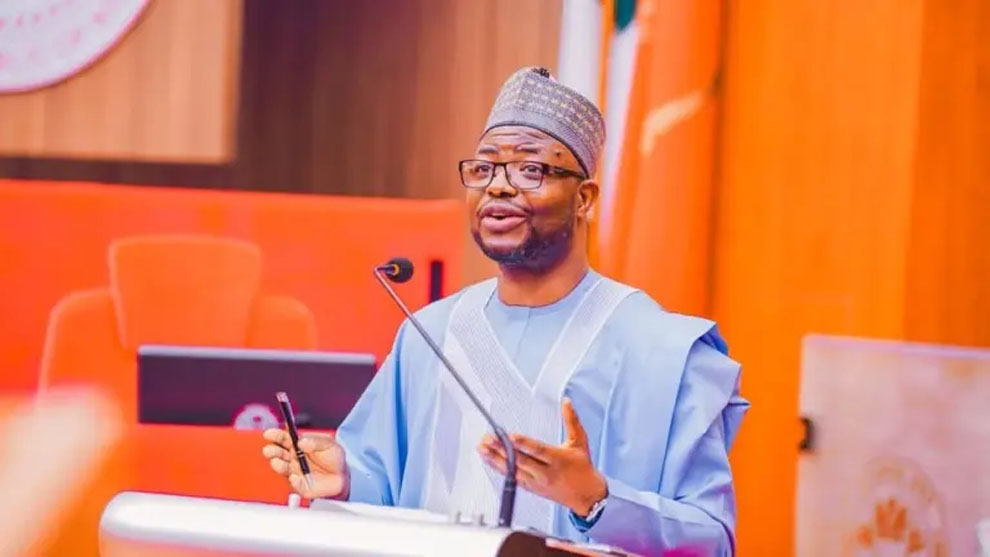
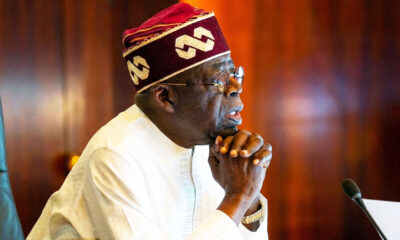
The Federal Government has launched a $1 billion social protection programme targeting about 7.6 million vulnerable households across Nigeria, marking a fundamental shift from temporary palliatives to sustainable pathways out of poverty. The initiative, known as the Renewed Hope Social Protection Programme, was unveiled on Wednesday, August 26, 2026, by First Lady Oluremi Tinubu at the State House Banquet Hall, Abuja. The event, themed “From Palliatives to Pathways,” underscored the administration’s commitment to ensuring that vulnerable Nigerians do not remain permanently dependent on government assistance but are instead empowered to achieve self-reliance and prosperity. The First Lady described the programme as an important step towards improving the lives of vulnerable individuals, families, and communities across the country, emphasising that the days of ad-hoc, uncoordinated interventions were giving way to a structured, data-driven approach to poverty reduction.
At the heart of the new architecture is the Household Prosperity and Empowerment Social Protection Project (HOPE-SP) . This $1 billion initiative is designed to move vulnerable households beyond temporary financial assistance towards sustainable economic empowerment. Under the new system, the household — rather than individual government programmes — becomes the centre of social protection policy. Vulnerable households will be identified, their needs assessed, and their progress monitored through what the government describes as a “poverty graduation pathway” . According to the Minister of Humanitarian Affairs and Poverty Reduction, Bernard Doro, the objective is to “move from programmes to households, and from counting beneficiaries to measuring impact” . He explained that the government was moving away from a fragmented system where ministries, departments, and agencies operated separate social intervention programmes and databases without sufficient coordination. “We have a system where we want to deliberately track poverty,” Doro said, emphasizing that the new approach would focus on monitoring households and measuring their progress rather than simply distributing assistance without assessing its impact.
READ ALSO:
- ‘Give Me My Child Back’: Grief, Fury After Pakistan Hospital Fire Kills 14 Newborns
- Nepal-Tibet flash floods kill at least 168, more than 1,300 missing
- North Korea Threatens ‘Serious, Immediate and Powerful’ Action Over US Arms Deal with South Korea
A key component of the new social protection framework is the Emergency Cash Transfer Programme, which aims to provide rapid financial support to households affected by economic shocks. Eligible households under the programme are expected to receive a one-off digital shock-response transfer of ₦40,000 . However, beneficiaries must be registered on the National Social Register and validated with their National Identification Numbers (NIN) . The government is working with the National Identity Management Commission (NIMC) to facilitate NIN registration and improve the verification process. This collaboration is expected to ensure that only eligible households receive assistance, reducing the risk of fraud and duplication. The minister disclosed that the Federal Government has already disbursed more than ₦600 billion in cash transfers to vulnerable Nigerians over the past three years, reaching slightly over 10 million households . The new initiative builds on this foundation while introducing a more structured and accountable system.
Alongside the HOPE-SP programme, the government unveiled the One-Humanitarian-One Poverty Response System (OHOPRS) . This platform provides a coordinated national mechanism for responding to humanitarian emergencies, delivering social protection, and tackling poverty. The system is expected to eliminate duplication among government interventions while maintaining unified national registries through which poor and vulnerable households can be identified, supported, and tracked as they progress towards prosperity. Explaining the rationale behind OHOPRS, Minister Doro said that Nigeria cannot continue with a system where one vulnerable household receives interventions from several institutions while another equally vulnerable household remains unseen. Under the new framework, beneficiaries would not simply receive assistance and disappear from government records. Instead, their progress would be tracked from identification and intervention through economic inclusion and eventual exit from poverty into what the government describes as a growth register . This unified approach is expected to end the practice of different agencies maintaining separate registers and data centres, ensuring that resources are deployed more efficiently and reach those who need them most.
READ ALSO:
- FAAN reinstates Bolt at airports, denies fixing taxi fares
- Probe Me Over $16bn Power Spending If You Have Evidence – Atiku Dares FG
- 20-Year-Old Arrested for Allegedly Macheting Father to Death in Anambra
To strengthen evidence-based decision-making, the minister announced plans to establish a National Poverty Intelligence Lab to provide data and analysis for government interventions . The lab will support the government’s ability to determine not only who is receiving assistance, but whether interventions are producing measurable improvements in the economic circumstances of beneficiaries. Doro explained that existing databases would be integrated into a unified platform anchored on the National Social Register, which currently contains about 20 million households . The success of social protection programmes would no longer be judged by the quantity of food, cash, or other materials distributed, but by the number of households protected against economic shocks, economically included, and ultimately lifted out of poverty. The minister stressed that the ultimate objective is not merely to increase the number of interventions but to ensure that assistance produces measurable improvement in people’s lives: “The question must go beyond how many people received assistance. We must know whether the household recovered, whether it became more resilient and whether it is progressing towards self-reliance and prosperity.”
Minister of Budget and Economic Planning, Atiku Bagudu, emphasised that the success of the programme would require a whole-of-government approach involving federal, state, and local governments, development partners, and other stakeholders . He noted that the Tinubu administration’s ambition to build a $1 trillion economy by 2030 must be accompanied by deliberate efforts to ensure inclusive growth. The government has stressed that the new social protection architecture is particularly significant against the backdrop of the far-reaching economic reforms being implemented by President Bola Tinubu’s administration, including the removal of fuel subsidy and unification of the foreign exchange market . While these reforms have improved investor confidence and strengthened government revenues, attention must also be directed at protecting Nigerians from economic shocks and providing sustainable routes out of poverty. Bagudu noted that economic growth alone would not automatically translate into poverty reduction unless deliberate measures were put in place to ensure that vulnerable populations were not left behind. The new social protection framework, he said, was designed to complement the administration’s broader economic reforms by providing a safety net for those most affected by the transition.
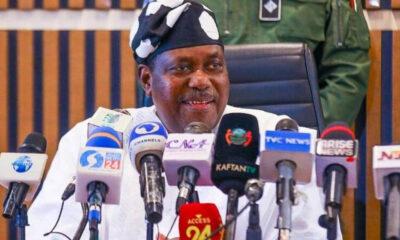
Borno State Governor Babagana Zulum, speaking at the launch, said the programme could contribute to addressing some of the underlying causes of insecurity in the country . Zulum noted that poverty, illiteracy, and social inequality were among the factors contributing to insurgency and crises, stressing that military action alone could not permanently resolve such challenges. “The kinetic measures alone will never end the insurgency. Addressing the social, economic, and political dimension of the crisis is synchronous to addressing insecurity challenges in Nigeria.” Governor Zulum’s remarks underscored the broader significance of the programme beyond poverty reduction. By addressing the root causes of social unrest and instability, the initiative could contribute to long-term peace and security in conflict-affected regions.
For the 7.6 million households targeted by the programme, the launch represents a potential lifeline. The key features for beneficiaries include a one-off ₦40,000 digital cash transfer for eligible households registered on the National Social Register and validated with NIN; needs-based assessment to determine appropriate interventions tailored to each household’s specific circumstances; tracking and monitoring through the poverty graduation pathway to measure progress over time; and integration into broader economic inclusion programmes where necessary, including skills training, livelihood support, and access to finance. The government has made it clear that the new approach is not about creating permanent dependence on government assistance. Instead, it aims to provide immediate stabilisation assistance while placing households on a pathway to recovery, empowerment, and self-reliance.
While the government has not yet disclosed the full timeline for disbursement under the new emergency cash transfer programme, the launch of the framework marks a significant step towards a more coordinated, responsive, and results-oriented social protection system . The Federal Government has emphasised that the new architecture will be supported by unified data systems integrating existing databases into a single platform; digital delivery infrastructure for efficient and transparent cash transfers; new financing arrangements to sustain the programme; and real-time poverty intelligence through the National Poverty Intelligence Lab. The minister expressed confidence that the new framework would enable the government to respond more effectively to economic shocks, natural disasters, and other emergencies while building the resilience of vulnerable households.
FG Unveils $1bn HOPE-SP Programme Targeting 7.6m Vulnerable Households








News
Tinubu Offers Abuja Homes, N100m each to Families of Air Force Crash Victims
Tinubu Offers Abuja Homes, N100m each to Families of Air Force Crash Victims
President Bola Tinubu has approved three-bedroom flats in Abuja and N100m compensation for the bereaved families of Nigerian Air Force personnel who died in the October 5 aircraft crash in Igbokoda, Ondo State.
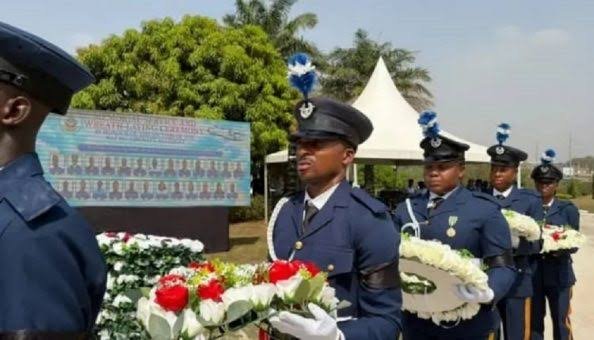
The President announced the package on Thursday at a memorial service and wreath-laying ceremony held at the Military Cemetery in Abuja in honour of the 25 victims of the tragedy.
The houses, located in the Federal Government’s Renewed Hope Housing Project in Abuja, will be allocated to the immediate families of the deceased military personnel and civilians who were aboard the ill-fated aircraft.
Tinubu described the intervention as a demonstration of the nation’s gratitude to those who lost their lives in service to the country, assuring their families that the government would not abandon them.
“As a tangible expression of the nation’s gratitude, I approve the allocation of three-bedroom flats in the Renewed Hope Housing Project in Abuja to the family of each of the military personnel who lost their lives in this accident.
“No home can ever replace the one you have lost, but they gave their lives for Nigeria, and Nigeria will give their family a home,” he said.
In addition to the housing allocation, the President announced an approval of N100m for each of the 19 deceased military personnel’s families.
He, however, extended the housing gesture to the immediate families of the civilians who also died in the crash.
Tinubu said the government’s responsibility to the bereaved families would go beyond the memorial ceremony, stressing that sustained support would be necessary to honour the sacrifices of the deceased.
“Long after the wreaths have faded, our commitment to these families must remain evergreen,” he said.
The President also promised a thorough investigation into the October 5 crash, assuring Nigerians that the findings would guide measures to strengthen aviation safety and prevent a recurrence.
“I assure the grieving nation that this accident will be thoroughly investigated. We will seek answers. We will learn the lessons. We will strengthen our military and civilian aviation safety standards.
“Our operational procedures and our institutional accountability will be strengthened. We owe them the truth, and we will honour that debt,” he stated.
The Nigerian Air Force aircraft, marked NAF ATR 42, crashed in a marshy area of Igbokoda, Ondo State, on October 5, 2026, killing 25 people, comprising military personnel and civilians.
Tinubu also reaffirmed his administration’s commitment to improving the welfare, safety and operational capacity of the Armed Forces through modernisation, improved training and the provision of better equipment.
“A nation that asks its sons and daughters to fly into danger must give them the best wings it can build,” he added.
He urged the bereaved families to take solace in the contributions of their loved ones to national service, assuring them that the country would continue to remember their sacrifices.
News
Senate Meeting Turns Bloody As Rivers Senator’s Aide Allegedly Beaten, Struck With Gun Butt
Senate Meeting Turns Bloody As Rivers Senator’s Aide Allegedly Beaten, Struck With Gun Butt
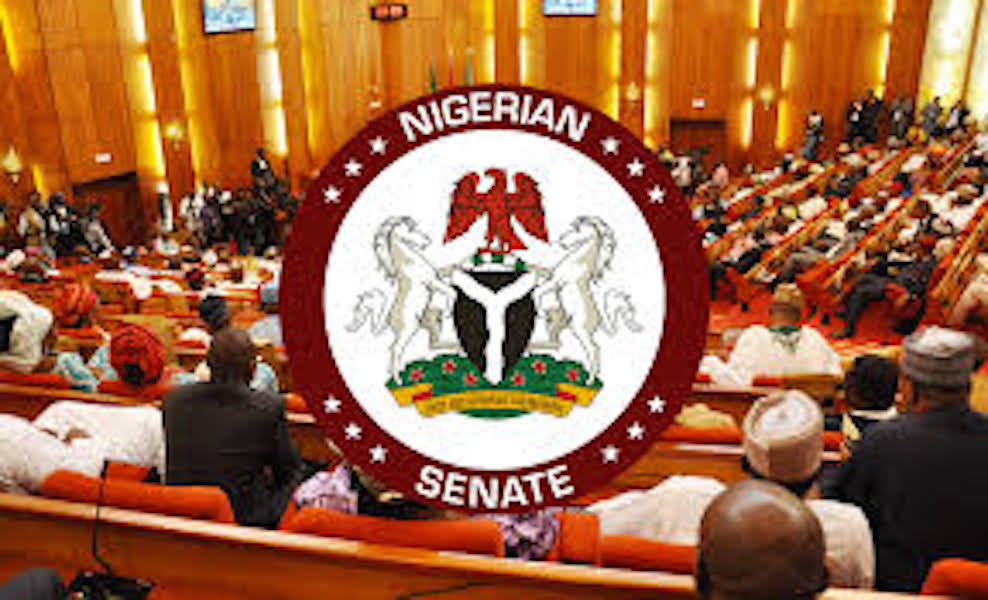
A meeting of the Senate Committee on Appropriations at the National Assembly complex in Abuja descended into violence on Wednesday after security operatives allegedly assaulted two aides to Senator Allwell Onyesoh, representing Rivers East Senatorial District, leaving one of them with serious head injuries.
The injured aide, identified as Barrister Kingsley Wali, was reportedly pushed down a staircase and repeatedly struck on the head with the butt of a gun during the confrontation with security personnel stationed at the entrance of the committee room.
Wali was subsequently rushed to the National Assembly Clinic for medical attention after he was found bleeding and lying in a pool of blood.
The incident occurred during a closed-door meeting of the Senate Committee on Appropriations, chaired by Senator Olamilekan Adeola, popularly known as Yayi, who represents Ogun West Senatorial District.
According to accounts provided by Wali, he and another aide, identified as Dr Kingsley, had accompanied Senator Onyesoh to the committee meeting.
He alleged that after their principal entered the committee room, he attempted to follow but was prevented from doing so by security operatives who were trying to shut the entrance.
Wali reportedly explained that the senator had already gained access to the meeting and that he was not attempting to force his way into the room.
However, he alleged that the situation escalated when the security personnel grabbed his colleague by the neck and began assaulting him.
Wali said he intervened and pleaded with the operatives to stop beating his colleague, explaining that the individual was the senator’s personal assistant.
He further alleged that the security personnel subsequently turned on him because of his intervention.
According to his account, one of the operatives grabbed him and pushed him down a staircase. He claimed that after falling, three security personnel cornered him and repeatedly hit his head with the butt of a gun until he slumped.
Wali said the operatives left him after he collapsed.
His colleague reportedly took photographs of his condition and forwarded them to Senator Onyesoh through WhatsApp while the lawmaker was still attending the committee meeting.
On receiving the photographs, Onyesoh reportedly stepped out and discovered his aide lying in a pool of blood.
The senator subsequently took Wali into the committee room, where other lawmakers reportedly expressed shock at the extent of his injuries and directed that he receive immediate medical attention.
He was later taken to the National Assembly Clinic, where he received treatment and was discharged.
However, the chairman’s media adviser, Chief Kayode Odunaro, presented a different account of how the confrontation started.
In a statement, Odunaro described the incident as a misunderstanding between legislative aides attempting to gain access to a closed-door committee meeting and security personnel stationed at the entrance.
He maintained that the confrontation occurred without the knowledge of Senator Adeola, who was already presiding over the meeting when the incident happened.
According to him, the committee chairman only became aware of the development after Senator Onyesoh briefly stepped out and discovered that his aide had sustained injuries.
Odunaro also confirmed that the injured aide was taken to the National Assembly Clinic, where he received treatment before being discharged.
He disclosed that the management of the National Assembly had commenced an investigation to establish the circumstances surrounding the incident and determine what led to the confrontation.
The development has raised concerns about the conduct of security personnel within the National Assembly, particularly regarding the treatment of legislative aides and other officials accompanying elected representatives.
It also raises questions about the security arrangements governing access to committee meetings and the appropriate handling of disagreements involving lawmakers’ aides and security operatives.
As of the time of filing this report, the National Assembly management had yet to release the findings of its investigation, while the allegations made by the injured aide had not been independently established.
The outcome of the investigation is expected to clarify the circumstances that led to the violence and establish whether the security personnel involved acted within the limits of their responsibilities.
Senate Meeting Turns Bloody As Rivers Senator’s Aide Allegedly Beaten, Struck With Gun Butt
News
Petrol Prices Crash as Five Lagos Depots Slash Rates

Petrol Prices Crash as Five Lagos Depots Slash Rates
The latest price adjustments reflect intensifying competition among depot operators, independent marketers and major refiners, following a recent reduction in the gantry price of petrol by the Dangote Petroleum Refinery.
The five Lagos depots selling petrol at ₦1,055 per litre on Tuesday, November 24, emerged as the lowest-priced terminals among those surveyed, while other major suppliers adjusted their rates within a narrow range.
Aiteo quoted petrol at ₦1,058 per litre, while Pinnacle and Dangote Petroleum Refinery offered the product at ₦1,059. Total also listed its price at ₦1,060 per litre.
The price competition has extended beyond Lagos, with several depot operators in other parts of the country lowering their rates in response to market conditions.
Sigmund recorded one of the most significant reductions, cutting its price by ₦234 to ₦1,114 per litre. Matrix in Port Harcourt reduced its rate by ₦23 to ₦1,105, while A.Y.M. Shafa lowered its price by ₦21 to ₦1,084 per litre.
Parker, Nepal and Matrix in Warri also reduced their rates by ₦20 each to ₦1,085, while Rainoil Delta cut its price by ₦20 to ₦1,125.
Liquid Bulk reduced its price by ₦15 to ₦1,105 per litre, while Mainland also adjusted downward by ₦15 to ₦1,115.
READ ALSO:
- Daura Controversy: Agunbiade Urges Probe Into Palace Security Lapses
- ‘Nothing Must Happen to Peter Obi in Benin’ – Rufai Oseni Raises Alarm
- ADC Asks Tinubu to Resign or Face Impeachment Over Kano Court Allegation
The average wholesale price across the surveyed depots stood at approximately ₦1,082 per litre, reflecting the downward movement in the domestic petrol market.
The reduction in depot prices is beginning to translate into lower pump prices in some cities, although the extent of the relief varies among fuel retailers and locations.
In Abuja, MRS filling stations reduced their pump price by ₦70, from ₦1,365 to ₦1,295 per litre, representing a reduction of about 5.13 per cent.
The latest adjustment brings MRS’s cumulative price reduction in recent days to ₦104 per litre. Motorists purchasing 50 litres of petrol at the new rate will save ₦3,500 compared with the previous price of ₦1,365, and ₦5,200 against the earlier price of ₦1,399 per litre.
The Nigerian National Petroleum Company Limited (NNPC) also recently reduced its pump price by ₦25 to ₦1,300 per litre, leaving petrol prices at filling stations across Abuja and its environs generally between ₦1,295 and ₦1,380 per litre.
However, prices remain mixed along the Lagos-Ibadan Expressway and parts of Ogun State, where some retailers are still selling petrol from inventories purchased at higher wholesale rates.
Mobil stations in Atan reportedly sold petrol at ₦1,170 per litre, while AP Filling Station offered it at ₦1,199. Julanky Filling Station sold at ₦1,270, while YAAB Petroleum in Iyana Iyesi, Ota, dispensed petrol at ₦1,290 per litre.
The disparity in pump prices reflects differences in supply costs, existing inventories, transportation expenses and operational charges, which can delay the transmission of wholesale price reductions to consumers.
With depot prices continuing to fall amid competition between the Dangote refinery, NNPC and independent suppliers, motorists are hoping for further reductions at filling stations as retailers replenish their stocks at lower costs.
A sustained decline in petrol prices could also ease transportation expenses and reduce pressure on the cost of goods and services, although the extent of the impact will depend on how quickly lower wholesale rates are reflected across the retail market.
Petrol Prices Crash as Five Lagos Depots Slash Rates
-
 metro1 day ago
Oyoland Grand Chief Imam Moves to End Feud, Seeks Reconciliation Among Markaziyya, Adabiyyah, Mahdul ‘Arabi
-

 News2 days ago
Omokri Arrives in Mexico to Assume Duty as Nigerian Ambassador, Thanks Govt for Ministerial Reception
-

 metro10 hours ago
Nigerian Health Worker, 26, Found Dead in Canada After Returning From Work
-
 Politics2 days ago
Uduere Killings: Ughelli Chairman Accuses Omo-Agege’s Camp of Triggering Deadly Clash, Demands IGP Probe
-

 metro12 hours ago
‘I Came to Nigeria for Love, Now I’m Stranded, Begging for Rent’ — American Woman Married to Enugu Man Cries Out
-
 metro2 days ago
Tinubu Gives Igboho Fresh Security Mandate Across South-West
-

 metro3 days ago
‘Shame on You’: Fayose Blasts Nigerian Youths Over Poor Protest Turnout
-
 metro10 hours ago
Phone-Tapping Claim: I Lied to Unsettle Tinubu Government – El-Rufai