

International
North Korea Threatens ‘Serious, Immediate and Powerful’ Action Over US Arms Deal with South Korea
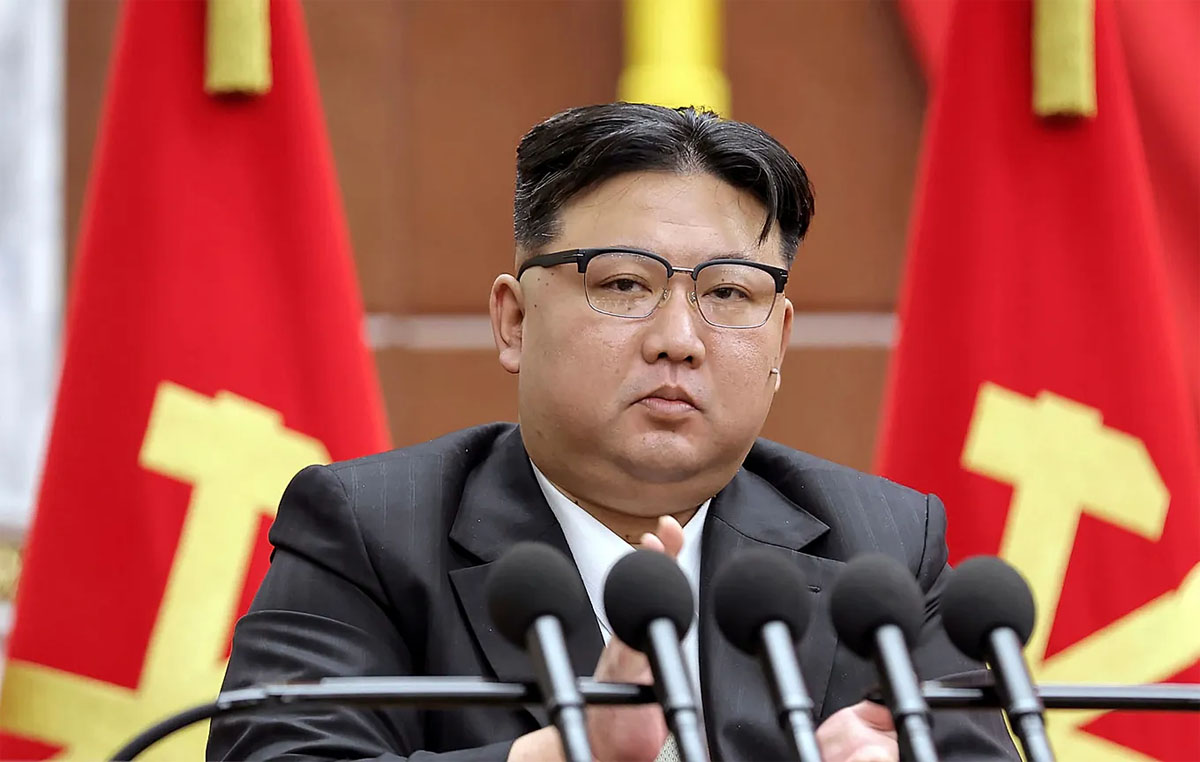
North Korea Threatens ‘Serious, Immediate and Powerful’ Action Over US Arms Deal with South Korea
Pyongyang has condemned Washington’s approval of a $125 million tactical missile sale to Seoul and its decision to fund human rights monitoring inside the North, describing both moves as hostile acts that threaten regional stability. North Korea’s Foreign Ministry issued a blistering statement on Thursday, vowing a “serious, immediate and powerful response” to what it called the “persistence and sequence” of US hostile policies. The condemnation came in response to two separate US initiatives: the approved sale of advanced air-to-air missiles to South Korea, and a new State Department funding programme aimed at documenting human rights abuses inside the isolated state.
The US Department of State announced on Friday that it had cleared the possible sale of AIM-9X Sidewinder Block II missiles and associated equipment to South Korea, with an estimated total value of $125 million. The package includes 103 AIM-9X Sidewinder tactical missiles and ten tactical guidance units, along with supporting technical and logistical services. The principal contractor for the deal is RTX Corporation, and US officials have stated that the sale is intended to enhance South Korea’s air defence capabilities and improve interoperability with US Forces Korea. US officials emphasised that the transaction would not fundamentally alter the military balance in the region, describing it as a routine measure to support a key ally. However, this marks the second major US arms approval for Seoul this year. In June 2026, Washington had already greenlit the sale of 70 AIM-120C-8 AMRAAM medium-range air-to-air missiles to South Korea.
Pyongyang’s anger was not limited to the missile deal. The North Korean Foreign Ministry also strongly criticised a separate US initiative: a State Department funding programme aimed at supporting human rights documentation and information flow into the country. The Bureau of Democracy, Human Rights, and Labor at the State Department announced in August 2026 an open competition for organisations to document rights abuses inside North Korea. The stated goal is to “challenge the DPRK’s information monopoly” — a direct reference to Pyongyang’s tight control over media and communication. Total available funding for the programme is approximately $2.96 million, with the State Department anticipating awarding two to three cooperative agreements. Applicants must demonstrate capacity to securely collect, document, and verify real-time human rights information, and proposals must include significant consultation with North Korean defector and escapee communities. Selected organisations will also conduct international campaigns to counter DPRK propaganda and empower defectors to share documented realities on digital platforms. For Pyongyang, this programme represents more than just a diplomatic irritant — it is viewed as a direct attempt to undermine the social system of the state and destabilise internal cohesion.
READ ALSO:
- FAAN reinstates Bolt at airports, denies fixing taxi fares
- Probe Me Over $16bn Power Spending If You Have Evidence – Atiku Dares FG
- 20-Year-Old Arrested for Allegedly Macheting Father to Death in Anambra
In a statement carried by the Korean Central News Agency (KCNA) , a Foreign Ministry spokesperson said that the North “cannot overlook the adverse effect of the US sale of its weapons to the ROK on the regional security environment”. The spokesperson went on to denounce “the persistence and sequence of the US hostile moves” , calling the latest measures security threats that seek to “create instability in the social system of our state” . The statement concluded with a firm warning that the Democratic People’s Republic of Korea “will make a serious, immediate and powerful response to the hostile acts”.
The latest developments come at a particularly delicate moment on the Korean Peninsula. On one hand, US President Donald Trump has recently made a series of overtures to Pyongyang. He ordered the shortening of the joint US-South Korea military exercise Ulchi Freedom Shield from 11 days to just 5 — a move that was seen as a goodwill gesture. Trump also expressed interest in holding another summit with North Korean leader Kim Jong Un, and on 17 August stated that Kim had responded to his outreach, describing their interaction as “very positive” . On the other hand, Pyongyang has shown little official willingness to resume dialogue. Kim Yo Jong , the leader’s influential sister and senior ruling party official, dismissed the scaled-back military drills as insufficient, arguing that their continuation remained aggressive and that US policy towards North Korea was still fundamentally hostile. She also denied that Trump and Kim had had any direct contact, despite praising their “excellent personal relationship” . Adding to the tension, North Korea launched approximately 10 ballistic missiles off its east coast earlier this month — an act widely interpreted by analysts as a protest against the ongoing US-South Korea exercises.
It is important to remember that the two Koreas remain technically at war. The 1950-53 Korean War, which was triggered by a North Korean invasion of the South, ended with an armistice rather than a peace treaty. This means that while active large-scale combat has ceased, no formal peace has ever been declared. Against this backdrop, any military build-up — however routine it may appear to Washington and Seoul — is viewed with deep suspicion and alarm in Pyongyang. The combination of advanced US weaponry for South Korea and active efforts to promote human rights and information access inside the North appears to have crossed a red line for the regime.
While North Korea has not specified the form its “powerful response” will take, past patterns suggest several possibilities. These include missile or artillery tests, including possible launches over or near South Korean waters; cyberattacks against South Korean or US government and corporate networks; rhetorical escalation, including threats to cancel any potential future dialogue; and military posturing, such as troop movements or displays of new weaponry. The international community, particularly South Korea, Japan, and the United States, will be watching closely for any signs of imminent provocation. For now, Washington appears to be balancing deterrence with diplomacy — supplying its ally with defensive capabilities while keeping the door open for engagement. Whether Pyongyang will respond to the stick, the carrot, or both, remains to be seen.
North Korea Threatens ‘Serious, Immediate and Powerful’ Action Over US Arms Deal with South Korea











International
Fresh Oil Discovery Sparks Tension in Delta Community as Family Rejects Land Lease Deal
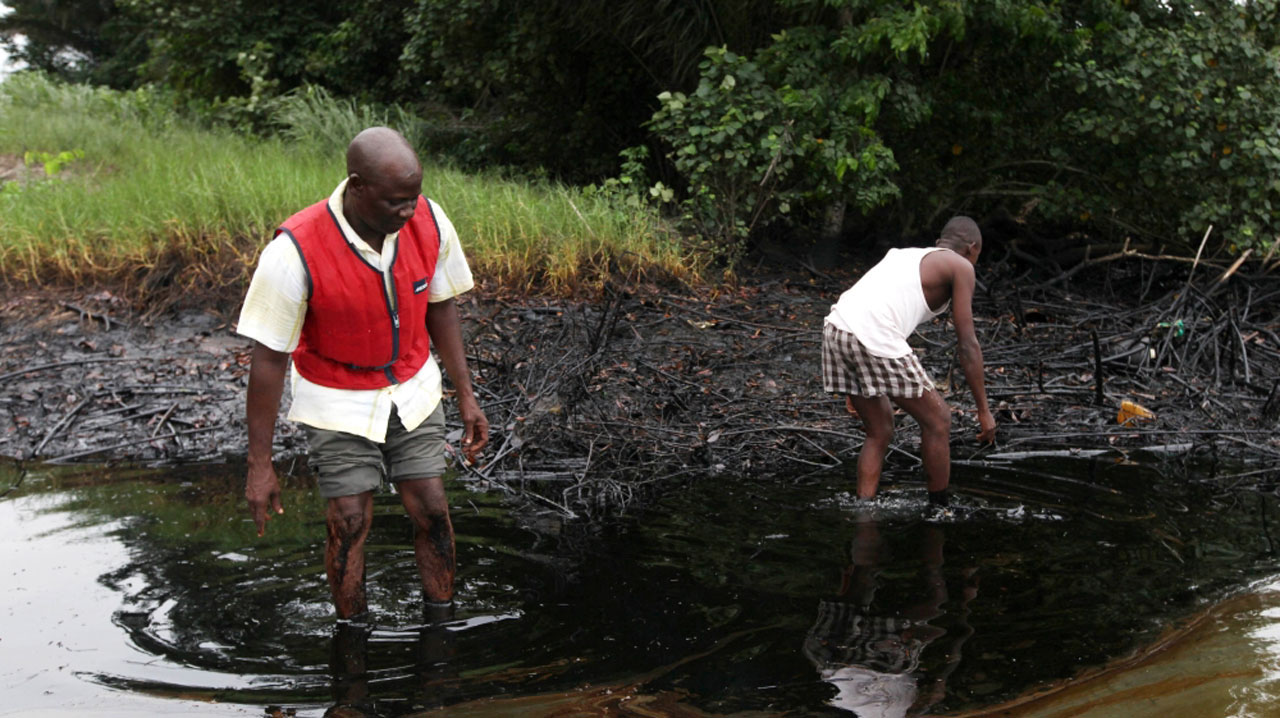
Tension has erupted in Okpe-Isoko community, Delta State, following a reported crude oil discovery on land claimed by the Adhakpor family, which has rejected a purported lease agreement allegedly entered into with Sterling Global Limited without its authorisation.
The dispute centres on who has the authority to negotiate the use of the oil-bearing land and whether any agreement reached with the company can bind the family.
In a statement, the Adhakpor family said it had neither authorised nor mandated any individual or group to negotiate, sign or execute a lease agreement, memorandum of understanding (MoU) or related document with Sterling Global Limited concerning its land.
The family described the purported transaction as unauthorised and unacceptable, insisting that no person could validly commit its interests without an express mandate.
It said its duly constituted executives and recognised representatives had been empowered to handle negotiations and documentation relating to the land following a resolution reached at its general meeting on October 4, 2026.
The family consequently directed that all negotiations and transactions involving the property should be conducted exclusively through its authorised representatives.
It also warned prospective investors and other stakeholders against dealing with individuals who lacked its approval, arguing that agreements entered into without proper authorisation should not be treated as binding on the family.
The controversy has exposed a deeper disagreement over land ownership and the distribution of benefits arising from the crude oil discovery in Delta State.
READ ALSO:
- Riyadh Airport Attack: 12 Killed, 309 Injured as Saudi Arabia Faces Escalating Strikes
- NDC Blames Computer Glitch as INEC Omits Kano Governorship Candidate From Final List
- Oshiomhole Accuses Umahi of Bias in Road Projects, Demands Repairs Before New Construction
Chief Ide Abade, head of the Adhakpor family, told Sunday Vanguard that he had been arrested by the community leadership over his opposition to the purported lease agreement.
Abade said the family was preparing to seek judicial intervention, maintaining that people who were not authorised members or representatives of the family had no right to negotiate or enter into agreements concerning its land.
The family also alleged that a community leader, working with some residents, had introduced people who were not members of the family into the negotiation committee. It objected to their participation, insisting that only recognised family members should be involved in decisions affecting its interests.
However, the President-General of Okpe-Isoko community, Chief Fred Efeh, offered a different account of the negotiations.
Efeh maintained that the Adhakpor family was represented on the committee established to negotiate the proposed lease and said the disagreement stemmed from a dispute between two branches of the family over ownership of the land where the oil was discovered.
According to him, one branch claims that an ancestor divided the land among his descendants and that the portion containing the oil belongs exclusively to it.
The other branch, he explained, argues that proceeds from the property, including benefits from palm trees and other natural resources, should be shared among the wider Adhakpor family.
Efeh said the company involved in the exploration approached the community leadership and the traditional institution before negotiations began.
He explained that representatives of both branches were included in a negotiation committee after consultations, but some representatives subsequently withdrew, triggering the current disagreement.
His account contradicts the position of the Adhakpor family, which insists that those involved in the purported agreement lacked the authority to represent it.
The dispute therefore involves two related but distinct questions: who owns or controls the oil-bearing land, and who has the authority to negotiate a lease or other arrangement on behalf of the people claiming ownership.
The involvement of an oil company has heightened the stakes because any eventual development could have significant financial implications for the landowners and the wider community. However, the commercial terms of the purported agreement and the precise arrangements for sharing any proceeds have not been established publicly.
Efforts to obtain the reaction of Rotimi Bakari, Community Relations Manager of Sterling Oil Exploration and Energy Production Company (SEEPCO), were unsuccessful. Bakari reportedly declined to respond to questions over the telephone and requested that the correspondent visit his office in Warri for further discussions.
Attempts to reach the traditional ruler of Okpe-Isoko, the Ovie of the community, also proved unsuccessful as calls and messages were not answered by the time of reporting.
The family has threatened legal action, while the community leadership maintains that the negotiation process followed established procedures.
The dispute now places the focus on land ownership, community representation and transparency in oil exploration agreements in the Niger Delta, where access to petroleum resources can generate competing claims over land rights and economic benefits.
A resolution will require the parties to establish the ownership arrangements, verify the authority of those who participated in negotiations and clarify whether any agreement was validly executed.
Until the disagreement is resolved, the controversy surrounding the purported lease threatens to prolong tensions within the community and complicate efforts to reach an acceptable arrangement over the oil-bearing property.
Fresh Oil Discovery Sparks Tension in Delta Community as Family Rejects Land Lease Deal
International
Riyadh Airport Attack: 12 Killed, 309 Injured as Saudi Arabia Faces Escalating Strikes
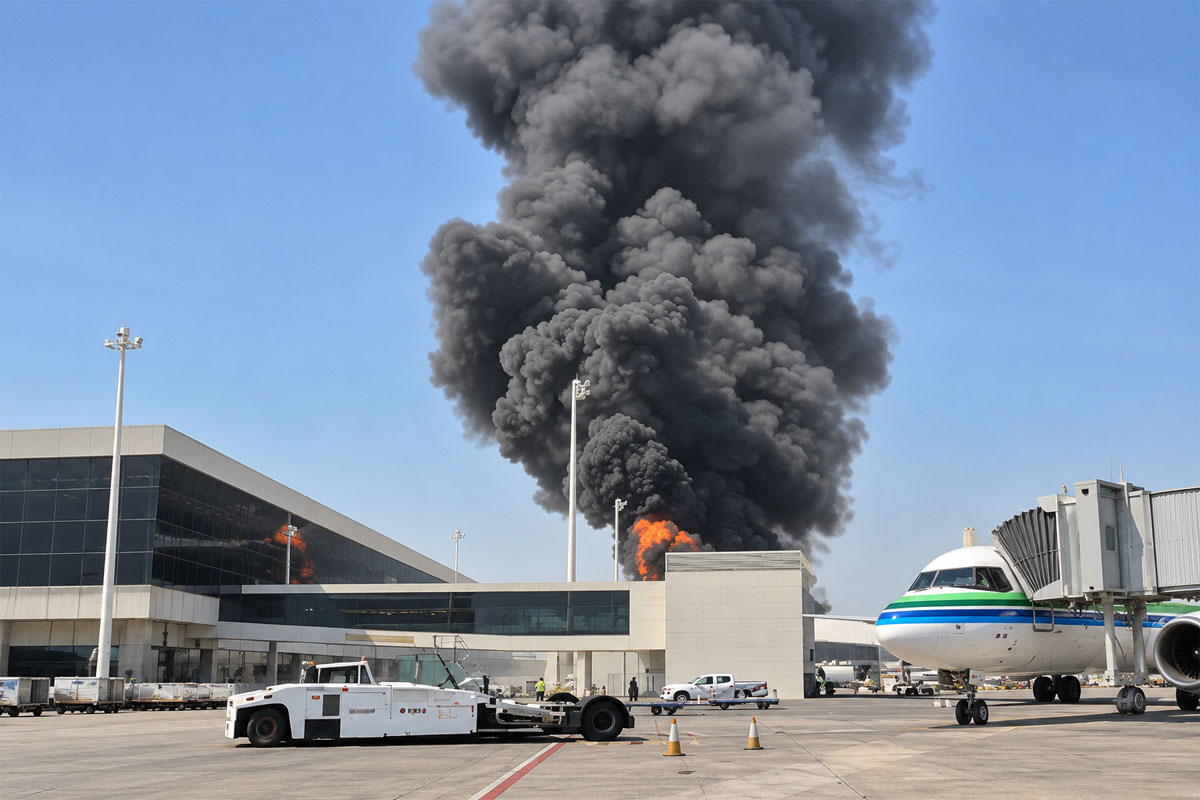
At least 12 people have been killed and 309 others injured in a missile attack on King Khalid International Airport in Riyadh, Saudi Arabia, prompting the suspension of airport operations and raising fears of further escalation in the Middle East conflict.
The attack occurred on Saturday, October 10, 2026, targeting a complex at the airport serving domestic flights, according to reports citing Saudi civil aviation authorities.
The General Authority of Civil Aviation (GACA) said the casualties included four Saudi citizens and eight foreign nationals: two Bangladeshis and one citizen each from the United States, Egypt, Jordan, Syria, Palestine and Sudan.
Some of the injured were reported to be in critical condition and were receiving treatment at several hospitals. Authorities also confirmed property damage, although the full extent was still being assessed.
The strike is among the deadliest attacks on a civilian facility in the Gulf region since the escalation of the wider Middle East conflict.
The Saudi-led coalition fighting Yemen’s Houthi movement blamed the group for the attack, describing the strike on the airport as a serious violation of international humanitarian law and warning that a response would follow.
READ ALSO:
- NDC Blames Computer Glitch as INEC Omits Kano Governorship Candidate From Final List
- Oshiomhole Accuses Umahi of Bias in Road Projects, Demands Repairs Before New Construction
- 2027: Pantami Breaks Silence as INEC Excludes Him From Final Gombe Governorship List
The Houthis had not initially claimed responsibility for the deadly strike, although the group had previously issued warnings to airlines and travellers against using Saudi airports and airspace.
The attack was the third reported strike targeting Riyadh’s airport during the week, according to international media reports. Earlier incidents had also caused casualties and disruption to aviation operations.
Following Saturday’s attack, airport authorities suspended operations as emergency responders attended to victims and officials assessed the damage.
Passengers were advised to contact their airlines and confirm flight arrangements before travelling to the airport. Foreign diplomatic missions, including those of the United States, Britain, Ireland and Canada, also issued security advisories urging their citizens to avoid the facility and surrounding areas.
The disruption affected international and domestic travel, with airlines cancelling or suspending services amid security concerns.
The attack has intensified pressure on Saudi Arabia to strengthen its air defences as hostilities involving the Houthis continue to spread beyond Yemen.
The Houthis, an Iran-aligned armed movement that has fought Saudi-backed forces in Yemen, have stepped up attacks on Saudi targets amid renewed fighting in the region. The wider conflict has increased concerns about the security of airports, energy infrastructure and important shipping routes.
US President Donald Trump said Washington was considering whether to join Saudi military strikes against the Houthis following the latest attack.
Trump told reporters that the United States would assess the situation before deciding on possible military involvement. He also indicated that he planned to speak with Saudi Crown Prince Mohammed bin Salman.
US Secretary of State Marco Rubio condemned the attacks on Saudi Arabia, describing them as a threat to civilian safety.
The latest violence also prompted diplomatic concern across the Gulf region, with countries expressing solidarity with Saudi Arabia and condemning attacks on civilian infrastructure.
The incident comes as Saudi Arabia continues preparations for major international business and investment events in Riyadh. The airport disruption has raised concerns about travel security and the potential economic consequences of prolonged hostilities.
The escalating confrontation has also renewed fears that the conflict could draw additional regional and international actors into direct military involvement.
For now, Saudi authorities are assessing the damage and managing the aftermath of the attack, while diplomatic and security officials monitor the risk of further strikes.
The immediate priorities remain the treatment of the injured, the restoration of safe airport operations and efforts to prevent further attacks on civilian infrastructure.
Riyadh Airport Attack: 12 Killed, 309 Injured as Saudi Arabia Faces Escalating Strikes
International
Panama Earthquake: 27 Injured as Powerful 7.7-Magnitude Tremor Damages Hundreds of Buildings
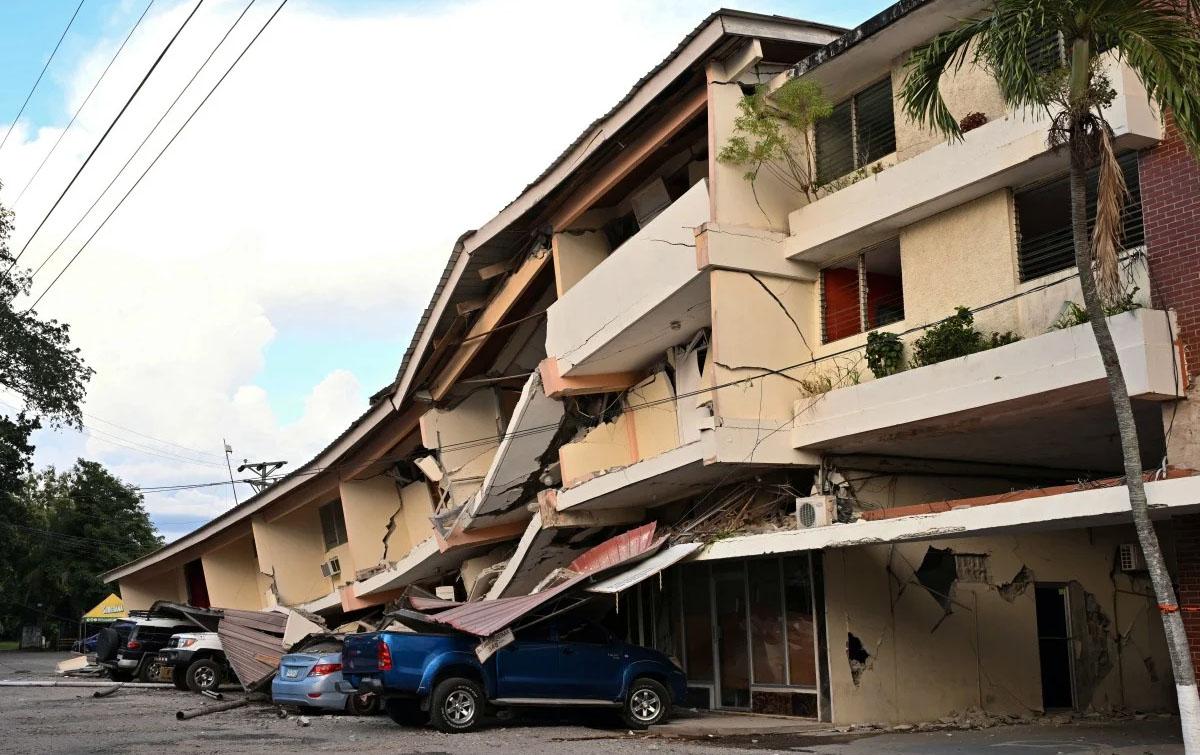
A powerful 7.7-magnitude earthquake has struck Panama, injuring at least 27 people, damaging hundreds of buildings and infrastructure, and forcing evacuations in several parts of the Central American country.
The earthquake, which struck on Friday, October 9, 2026, was centred near Pitaloza Arriba in Herrera Province, according to the United States Geological Survey (USGS). The agency initially estimated the magnitude at 8.0 before revising it to 7.7.
Panama’s National Civil Protection System reported that at least 27 people sustained minor injuries. Authorities had not reported any deaths or missing persons in the latest updates available on Saturday.
The disaster damaged more than 400 buildings and other structures, including residential properties, schools, healthcare facilities, churches, government buildings, hotels, bridges and roads, according to reports citing Panamanian authorities.
The provinces of Coclé, Herrera and Los Santos were among the hardest-hit areas, with emergency teams assessing the damage and working to reach communities affected by damaged roads, bridges and landslides.
In Penonomé, parts of buildings reportedly collapsed, including a tower of the San Juan Bautista Cathedral and sections of the provincial government building. A hotel was also reported to have collapsed, while falling debris damaged vehicles.
READ ALSO:
- EFCC Wins ₦132m Money Laundering Case as Court Orders Forfeiture of Lagos Properties
- Hardship: ACF Gives Tinubu Three Months to Deliver Relief, Demands Clear Timelines
- Adamawa Mourns as Fufore Loses Second Council Chairman in 18 Months
Authorities reported damage to 142 homes and 188 schools, alongside other public and private infrastructure. The full extent of the damage was still being assessed, meaning the figures could change as more inspections were completed.
The coastal town of Tonosí, in Los Santos Province, was among the communities experiencing access difficulties. Health Minister Fernando Boyd said officials were exploring ways to reach affected areas by air where damaged roads made land access difficult.
The earthquake was also strongly felt in Panama City, approximately 200 kilometres from the epicentre. Residents and office workers rushed out of high-rise buildings as the tremor shook the capital, while hospitals and other facilities carried out precautionary evacuations.
Operations at Tocumen International Airport were temporarily disrupted, with some flights reportedly diverted as a precaution. Airport operations later resumed, while the Panama Canal continued operating without reported disruption to shipping.
A tsunami warning was issued for parts of the eastern Pacific following the earthquake but was subsequently lifted. Authorities continued monitoring the situation for aftershocks, with Panama’s geosciences institute reporting more than 80 tremors, including one exceeding magnitude 6.0.
President José Raúl Mulino travelled to Penonomé to coordinate the government’s response and urged residents to remain calm while emergency teams assessed the affected areas.
The country’s Education Ministry also announced the suspension of classes nationwide as a precautionary measure.
The United States offered assistance, with Secretary of State Marco Rubio saying Washington was monitoring the situation and mobilising resources and personnel at the request of the Panamanian government. Leaders in Colombia, Ecuador and Guatemala also expressed solidarity and offered support.
Despite the extensive damage and widespread evacuations, no fatalities had been confirmed in the latest official updates available on Saturday. Emergency workers continued inspecting buildings, assessing infrastructure and determining the needs of affected communities.
Authorities were expected to provide further updates as damage assessments progressed and more information became available about the earthquake’s impact.
Panama Earthquake: 27 Injured as Powerful 7.7-Magnitude Tremor Damages Hundreds of Buildings
-

 Africa3 days ago
FBI Raids Ghana Scam Centre, Detains Over 130 in $10m Fraud Probe
-

 metro3 days ago
EFCC Re-Arraigns Two Over Alleged £110,000 Money Laundering, ₦500m Fraud
-

 metro2 days ago
How Parents Raised Millions to Free 20 Abducted NYSC Members
-

 News3 days ago
World Bank Raises Nigeria Growth Forecast, Demands More Jobs, Poverty Reduction
-

 metro2 days ago
[UPDATED] Lagos Train Crash: 55-Year-Old Motorist Survives as Honda Car Is Wrecked at PWD Crossing
-

 metro3 days ago
Flood Submerges Enugu Road, Strands School Children, Passengers
-

 metro2 hours ago
Tension in Kano as Phone Traders Confront Chinese Sellers Over Cheaper Phones
-

 metro3 days ago
BREAKING: FG Unveils 10 Measures to Cushion Fuel Price, Inflation Pressures