
International
Georgia rocked by clashes over ‘foreign agent’ bill

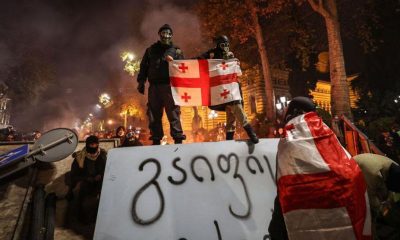
Riot police in Georgia have fired tear gas and water cannon to disperse crowds protesting against a bill seen by the opposition as targeting media freedoms.
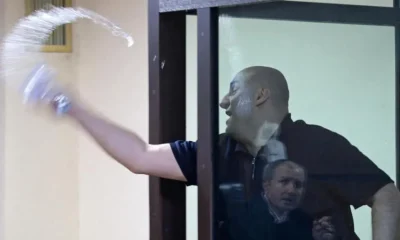
Demonstrators threw eggs and bottles at the police outside the parliament in the capital, Tbilisi.
The crowds retreated, but clashes continued on the main Rustaveli Avenue late on Tuesday. A number of people were reportedly injured and detained.
On 17 April, MPs gave their initial backing to the “foreign agent” bill.
Under the bill proposed by the ruling Georgian Dream party, non-governmental organisations (NGOs) and independent media that receive more than 20% of their funding from foreign donors would have to register as organisations “bearing the interests of a foreign power”.
They would also be monitored by Georgia’s justice ministry and could be forced to share sensitive information – or face hefty fines of up to 25,000 Georgian lari ($9,400; £7,500).
The passing of the bill in its first reading triggered a series of street protests.
On Tuesday, several protesters were injured during the clashes in Tbilisi, media reports say.
Georgia’s IPN news agency says that Levan Khabeishvili, chairman of the main opposition party United National Movement, was severely beaten and taken to hospital.
Reuters news agency says that eyewitnesses saw some police officers physically attack protesters.
READ ALSO:
- Naira gains 28.15 against dollar, trades N1,390/$
- FG to give full operating licence to Dangote
- Rampaging cultists gun down SUG official, one other in Edo
A number of protesters were reportedly detained.
The Georgian authorities have not publicly commented on the injury claims.
Opponents of the bill demand that the government scrap it, arguing that it is inspired by authoritarian legislation that neighbouring Russia uses to crush dissent.
They are also concerned that the bill could be used to crush critical voices ahead of the parliamentary elections later this year.
Parallels have been drawn with an authoritarian bill which came into force in Russia in 2012, and which the Russian government has since used to marginalise voices challenging the Kremlin – including prominent cultural figures, media organisations and civil society groups, reports the BBC’s South Caucasus correspondent, Rayhan Demytrie.
She says many are also worried that such a law will derail Georgia from its path towards the much-coveted status of EU membership which – according to a poll by the US National Democratic Institute – is supported by nearly 80% of Georgians.
Georgia was granted EU candidate status in December 2023, but now both Brussels and Washington have said the adoption of the foreign agents law would be detrimental to Georgia’s European ambitions.
A number of European leaders have warned the proposed bill is “incompatible” with European norms and values.
But the government of Georgian Prime Minister Irakli Kobakhidze is standing firm.
Mr Kobakhidze has accused NGOs of attempting to stage revolutions in Georgia twice, of promoting “gay propaganda” and of attacking the Georgian Orthodox Church.
The government insists the bill is about ensuring transparency and rejects the notion that it is against European values – or that Russia is behind the legislation.
On Monday, Georgian Dream organised its own rally in response to the protests. Bidzina Ivanishvili, the party’s billionaire founder, addressed the crowds, strongly criticising the West.
Georgia rocked by clashes over ‘foreign agent’ bill
BBC








International
Israel Questions Pakistan’s Credibility as Mediator in US‑Iran Ceasefire Talks

Israel Questions Pakistan’s Credibility as Mediator in US‑Iran Ceasefire Talks
Israel has publicly doubted Pakistan’s role as a mediator in the ongoing United States–Iran ceasefire negotiations, describing Islamabad as “not a credible player” in the diplomatic process. The comments from Israel’s ambassador to India, Reuven Azar, come ahead of scheduled direct talks between U.S. and Iranian officials in Islamabad on April 11, reportedly to be attended by U.S. Vice President JD Vance.
Azar acknowledged that the United States may have strategic reasons for using Pakistan’s facilitation, but he emphasized that Israel’s primary concern remains the removal of Hezbollah’s terrorist infrastructure in southern Lebanon. He highlighted recent Israeli air operations that reportedly eliminated over 250 Hezbollah operatives and reiterated that disarming the group south of the Litani River is essential to protect Israeli communities.
READ ALSO:
- Making Up for Lost Sleep Might Be Healthier Than Experts Once Believed — What Science Says
- Sleeping Positions: How They Affect Your Health and Which Ones to Avoid
- Thousands Rally Across Iran to Honour Late Supreme Leader Khamenei
Drawing parallels with past U.S. diplomatic efforts, Azar compared Pakistan’s mediation to previous roles played by Qatar and Turkey in negotiating truces in Gaza, suggesting such mediators were sometimes selected for convenience rather than effectiveness. He stressed that Israel’s objective is to remain closely aligned with the United States on the substance and outcome of any regional agreement.
Regarding the U.S.–Iran ceasefire, Azar expressed support for the two-week truce while noting that Israel considers Lebanon outside its scope. He warned that continued Iranian and Israeli military actions in Lebanon could jeopardize the fragile agreement, potentially destabilizing the Strait of Hormuz and broader Middle East security.
The ceasefire talks themselves remain delicate. While Pakistan has positioned itself as a facilitator, Tehran has acknowledged Islamabad’s role but continues to insist on substantive agreements over nuclear development, missile programs, and regional security obligations. Meanwhile, Israel maintains a firm stance that its operations in southern Lebanon are necessary to neutralize threats from Hezbollah.
The diplomatic dispute over Pakistan’s credibility highlights deep divisions among key stakeholders in the region, underscoring the challenges in maintaining a fragile truce while addressing the security concerns of multiple actors. Observers will closely monitor whether the upcoming Islamabad talks can reconcile these differences and produce a sustainable agreement.
Israel Questions Pakistan’s Credibility as Mediator in US‑Iran Ceasefire Talks
International
Thousands Rally Across Iran to Honour Late Supreme Leader Khamenei
Thousands Rally Across Iran to Honour Late Supreme Leader Khamenei
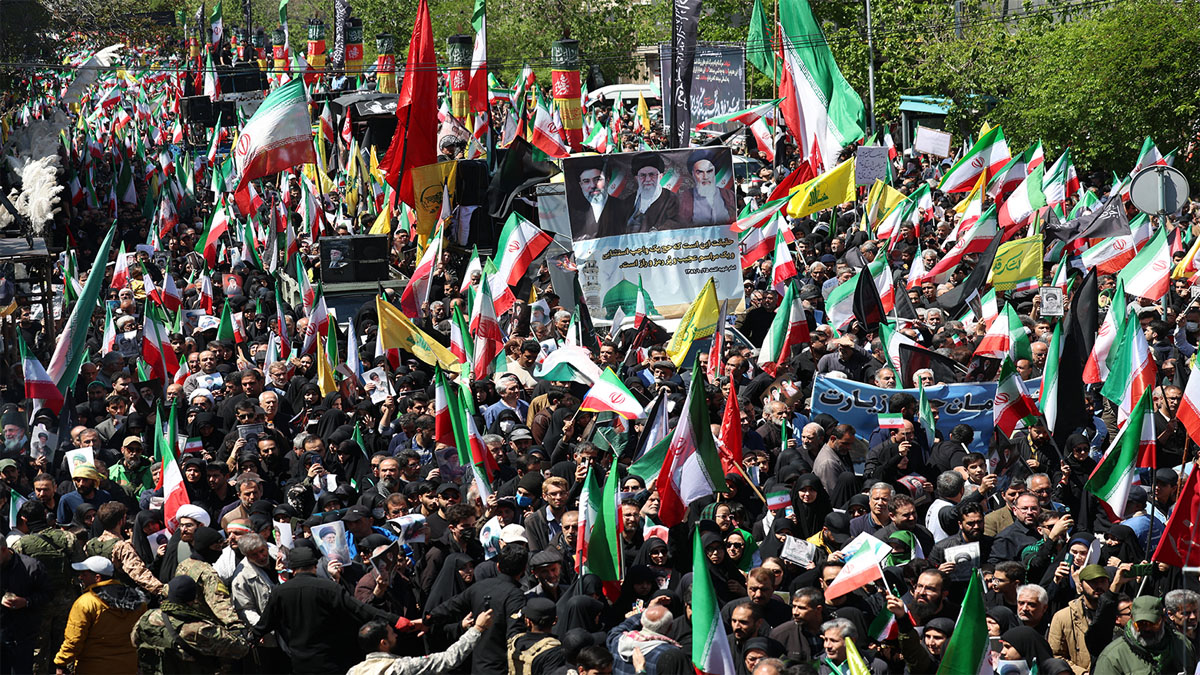
Thousands of Iranians took to the streets across major cities, including Tehran, Urmia, and Gorgan, on Thursday to honour the late Supreme Leader Ayatollah Ali Khamenei. His death has become a pivotal moment in the ongoing Middle East conflict, and the rallies combined mourning, political messaging, and public solidarity.
The nationwide tribute began precisely at 9:40 a.m. local time, the exact moment Khamenei was killed on February 28 at his Tehran residence in what Iranian authorities described as U.S.–Israeli airstrikes. The attack also claimed the lives of several senior Iranian figures and triggered a series of retaliatory actions, escalating tensions across the Gulf and involving multiple regional actors.
Crowds carried portraits of the long-serving leader, who presided over Iran’s political and ideological direction for nearly four decades. Analysts note that the rallies were not only acts of public mourning but also demonstrations of internal cohesion and state continuity during a period of geopolitical strain. The displays served to reinforce loyalty and resilience in the eyes of both domestic audiences and external observers.
READ ALSO:
- UN Chief Condemns Israeli Airstrikes in Lebanon
- Iran Warns of Sea Mines in Strait of Hormuz, Offers Alternative Routes for Ships
- ADC Leadership Crisis Deepens as Rival Faction Protests at INEC Headquarters
Despite these public displays, there is uncertainty surrounding Iran’s leadership visibility. His successor, Ayatollah Mojtaba Khamenei, has yet to make a public appearance since before the conflict escalated. This absence has raised questions within diplomatic and political circles about the consolidation of authority in Tehran and the future direction of the country’s leadership.
The absence of a formal state funeral further underscores the disruption caused by the war. Security conditions and ongoing military tensions have prevented Iran from organising a centralised burial ceremony, highlighting the impact of the conflict on domestic affairs and governance.
The rallies thus served a dual purpose: beyond mourning the late leader, they acted as a strategic show of unity, signalling resilience to external adversaries while reinforcing internal political continuity. Public mobilisations like these remain a critical indicator of Tehran’s ability to maintain cohesion during times of crisis.
As the conflict continues, Iran’s internal dynamics, leadership visibility, and public mobilisation will be closely watched by analysts as key measures of stability and state authority. The commemorations demonstrate that, even amid uncertainty and regional tension, the government can still orchestrate nationwide expressions of solidarity.
Thousands Rally Across Iran to Honour Late Supreme Leader Khamenei
International
UN Chief Condemns Israeli Airstrikes in Lebanon
UN Chief Condemns Israeli Airstrikes in Lebanon
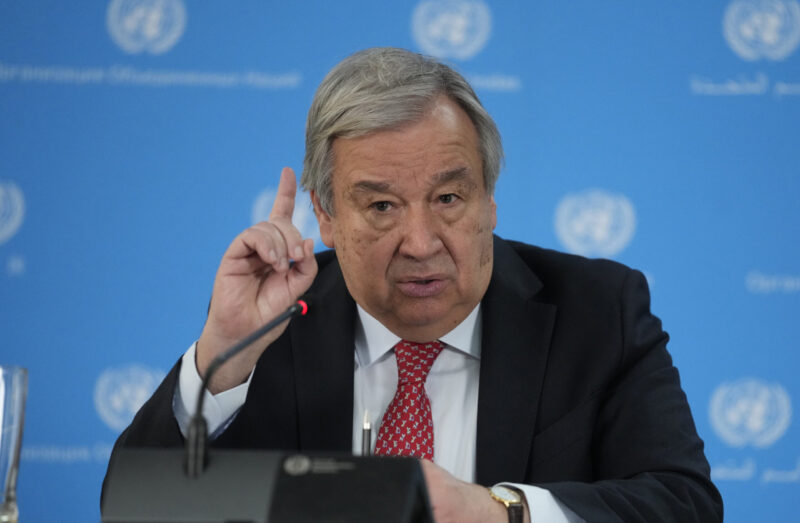
The United Nations has strongly condemned a wave of Israeli airstrikes in Lebanon that killed and injured hundreds, including civilians, amid a fragile ceasefire in the Middle East. UN Secretary‑General António Guterres expressed deep concern over the mounting civilian toll and warned that ongoing military activity threatens efforts to maintain peace and stability in the region.
In a statement released Wednesday, Guterres offered condolences to the people of Lebanon and wished a swift recovery to the injured. He emphasized that international humanitarian law must be respected, urging all parties to halt hostilities and pursue diplomatic solutions. “There is no military solution to the conflict,” he said, stressing the importance of protecting civilians and infrastructure.
The airstrikes on April 8, 2026, marked some of the heaviest bombardments in Lebanon since tensions escalated between Israel and Hezbollah in recent weeks. Lebanese authorities reported hundreds of casualties in Beirut’s southern suburbs, the Bekaa Valley, and southern towns, with significant civilian losses.
READ ALSO:
- Iran Warns of Sea Mines in Strait of Hormuz, Offers Alternative Routes for Ships
- ADC Leadership Crisis Deepens as Rival Faction Protests at INEC Headquarters
- 12-Year-Old Dies After Alleged Bullying at FGC, Ikot Ekpene
The UN High Commissioner for Human Rights, Volker Türk, described the attacks as “nothing short of horrific” and called for independent investigations into potential violations of international law, highlighting the devastating impact on civilians and infrastructure.
The strikes occurred shortly after a US‑Iran ceasefire took effect, which did not formally include the Lebanon theater, raising fears that hostilities could escalate further. International reactions have been swift, with countries such as Spain condemning Israel’s actions and urging adherence to international law.
The UN has called for immediate restraint and stressed that protecting civilian lives and upholding humanitarian standards must remain a priority as tensions continue to simmer in the region.
UN Chief Condemns Israeli Airstrikes in Lebanon

-

 metro2 days ago
FG Deports US Missionary Alex Barbir Over Alleged Role in Nigeria Insecurity
-

 Entertainment2 days ago
Veteran Nollywood Actor Davis Ofor ‘Clarus’ of New Masquerade Dies at 85
-

 metro1 day ago
2026 NYSC Batch A Stream II: Registration, Swearing-In Dates Announced
-
 metro2 days ago
Lagos Announces Partial Road Closures for Project Commissioning
-
 Africa8 hours ago
ECOWAS Recruitment 2026: Over 30 Job Vacancies Open for Nigerians (How to Apply)
-

 Entertainment1 day ago
Saheed Osupa Defends Juju Use Amid Backlash From Islamic Clerics
-

 Politics13 hours ago
Court Stops ADC Congress, Orders Status Quo in Leadership Row
-
 News2 days ago
Iran Lists Tough Conditions for Peace Talks with US