
Education
Half Salary: Fresh Strike Looms As ASUU NEC Meets Monday

Members of the National Executive Council of the Academic Staff Union of Universities will on Monday hold a crucial meeting to decide on whether to go on a fresh strike or not, Daily Trust can confirm.
The decision to convene the emergency NEC meeting, which is to be held at the ASUU National Secretariat on the University of Abuja campus, is coming on the heels of October salary cut received by members of the union.
A NEC member, who does not want his name in print, told our correspondent that members of the union across all the branches were disappointed about the action of Minister of Labour and Employment, Chris Ngige.
The official said their members had it on good authority that it was the minister who wrote to the necessary quarters, directing them not to fully pay October salary to lecturers.
“I can confirm that, ASUU NEC will meet on Monday, November 7, to take a decision on strike action or not. This is an aftermath of half-salary paid by the Nigerian govt.
“Branches say they are disappointed in the FG. The union should have a decision on the same day,” he told Daily Trust on the phone.
READ ALSO:
- Hackers steal $11m from Nigeria, others
- Troops Kill 3 B/Haram Fighters, Recover Weapons In Borno
- Post-UTME: Unilorin announces date for commencement of registration
- NDLEA Made No Request To Buy Sniffer Dogs In 2023 Budget
President of the union, Prof. Emmanuel Osodeke could not be reached for comments as at when filing this report.
ASUU had called off an eight-month strike on October 14, following court rulings and the intervention of the Speaker of the House of Representatives, Hon Femi Gbajabiamila.
Another NEC member said the most “worrisome” part of the whole thing was the payment of salary backlogs to medical lecturers in the universities while other teachers in other discipline were neglected.
In reaction via a statement issued on Saturday, Ngige dismissed ASUU members’ allegations on selective treatment.
He described the allegation as grossly “inaccurate, misleading and barefaced distortion of facts”, pointing out that members of ASUU were paid their October salary pro-rata, and not half salary.
He said the pro-rata was done because they cannot be paid for work not done.
The minister maintained that he never directed the Accountant-General of the Federation to pay the university lecturers half salary.
“Following the ruling of the Court of Appeal, which upheld the order of the National Industrial Court of Nigeria (NICN), asking ASUU to go back to work, the leadership of the union wrote to the Minister, informing him that they have suspended the strike.
“The Federal Ministry of Education wrote to him in a similar vein and our labour inspectors in various states also confirmed that they have resumed work.
“So, the minister wrote to the Federal Ministry of Finance, Budget and Planning, directing that their salaries should be restored.
“They were paid in pro-rata to the number of days that they worked in October, counting from the day that they suspended their industrial action. Pro-rata was done because you cannot pay them for work not done. Everybody’s hands are tied,” he said.
The minister equally faulted a statement by the Chairperson of ASUU, Usman Danfodiyo University Sokoto (UDUS) branch, Muhammad N. Al-Mustapha, accusing him of biased payment of salaries to selected professional members of the union.
He added, “Those obviously being referred to by the UDUS ASUU chairperson were members of the Medical and Dental Consultants Association (MDCAN) who abstained from the eight-month strike of ASUU because they abhorred the incessant strikes by the union and its grave effects on medical education in Nigeria and production of more medical doctors.
“Accusing the Honourable Minister of Labour and Employment, Sen. Chris Ngige, of biased payment of salaries to selected professional members of ASUU is a barefaced distortion of facts. Mustapha said he received information that a segment of the staff in the College of Health Sciences (CHS) has been paid seven months of their withheld salaries from March to September, due to a letter written to the Minister of Finance, instructing the exemption of the under-listed staff on the application of ‘No Work, No Pay’ rule
“To set the records straight, the medical lecturers who are being referred to by the Chairperson of ASUU UDUS branch, abstained from the eight-month strike of ASUU. This has been corroborated in a press statement by the Chairman, MDCAN UdUS, Dr B. Jubrin and Secretary, Dr I. G Ango, on Friday, November 4, 2022.”
Daily Trust










Education
OAU Students Begin 72-Hour Lecture Boycott Over Transport Crisis

OAU Students Begin 72-Hour Lecture Boycott Over Transport Crisis
Students of Obafemi Awolowo University have commenced a 72-hour lecture boycott over what they describe as an “inadequate and poorly implemented campus transportation system,” disrupting academic activities across the institution.
The protest, scheduled from April 14 to April 16, 2026, was declared by the Students’ Union Government (SUG) following a congress held on April 9 and subsequent leadership deliberations, amid mounting frustration over mobility challenges on campus.
In a statement jointly signed by SUG President, Adelani David, and Secretary-General, Habeeb Oke, the union directed all students to suspend academic activities during the period.
“The union shall embark on a total 72-hour lecture boycott… All academic activities are to be boycotted throughout this period,” the statement read.
The students said the decision followed weeks of persistent transport difficulties, which they claim have significantly disrupted lectures, examinations, and general movement within campus.
At the centre of the controversy is the university’s new transport policy tied to vehicles donated by Nigeria’s First Lady, Oluremi Tinubu. The intervention involved the provision of about 80 compressed natural gas (CNG) buses and tricycles aimed at improving mobility for students and staff.
READ ALSO:
- Ghanaian Footballer Dominic Frimpong Shot Dead in Berekum Chelsea Bus Attack
- Man Allegedly Kills Two Sisters, Five-Year-Old Daughter in Ondo
- Fake Image of Governor Alia Bowing to Sultan Sparks Controversy, Palace Reacts
However, the SUG argued that the rollout has instead worsened commuting conditions. Students cited insufficient vehicles, overcrowding, long queues, extended waiting times, and poor route coverage as major challenges under the new system.
The union also criticised the university’s decision to restrict intra-campus transport to the newly introduced vehicles, noting that the removal of previously available commercial transport operators has further limited options.
According to the students, the situation is particularly difficult for those living off-campus, who now face fewer and more expensive alternatives outside the university’s transport network.
Despite several engagements with the university management, the SUG said there has been no immediate relief. Authorities reportedly described the challenges as part of a transitional “teething phase,” while promising that more buses would be deployed in the coming months to improve efficiency.
The students, however, insist that the current conditions are unsustainable for a campus population estimated at over 35,000, prompting the boycott as a form of pressure.
Among their demands are the deployment of additional buses, temporary reinstatement of the previous transport system, and the inclusion of student representatives in transport policy decisions.
They also called for a more flexible, hybrid transport model that accommodates both university-operated vehicles and private operators to ensure seamless mobility within and around campus.
The union warned that failure by the university management to address these concerns within the 72-hour window could trigger a larger protest.
“The leadership shall review the situation at the end of the boycott. Further actions such as a possible mass protest or march will be considered if our demands are not met,” the statement added.
The development highlights growing concerns about campus transportation in Nigerian universities, with stakeholders stressing that efficient mobility is essential for academic productivity and student welfare.
OAU Students Begin 72-Hour Lecture Boycott Over Transport Crisis
Education
Germany Opens Fully Funded Scholarships for Nigerians, Africans

Germany Opens Fully Funded Scholarships for Nigerians, Africans
The government of Germany has announced the commencement of applications for the DAAD scholarship 2026 for Nigerians and Sub-Saharan Africans, offering fully funded opportunities for postgraduate study and research.
The programme, administered by the German Academic Exchange Service, is open to qualified graduates and postgraduates seeking to further their education in Germany’s top universities.
In an official announcement, authorities confirmed that the application deadline is April 29, 2026, urging interested candidates to submit their entries early due to the competitive nature of the scheme.
Opportunities for Nigerians and Africans
The Germany DAAD scholarship covers a wide range of disciplines, including engineering, public health, environmental sciences, economics, governance, and social sciences.
Germany remains a top destination for international students due to its tuition-free or low-cost education system, strong research infrastructure, and globally recognised academic standards.
READ ALSO:
- Kwara Governor Mourns 5 Forest Guards Killed in Nuku Bandit Attack
- Amnesty International Condemns Killing of 24 in Kebbi Bandit Attack
- Trump Slams Iran Over Strait of Hormuz as Middle East Ceasefire Talks Stall
Scholarship Benefits
Successful applicants will receive a comprehensive funding package, including:
- Monthly stipends (approximately €900–€1,200 depending on level)
- Travel allowance
- Health insurance
- Accommodation support
- Pre-study German language training (where applicable)
The funding typically lasts 12–24 months for Master’s programmes and up to three years or more for PhD studies.
Eligibility Criteria
To qualify for the DAAD scholarship for Nigerians, applicants must:
- Possess a relevant Bachelor’s or Master’s degree
- Demonstrate strong academic performance
- Provide proof of English or German language proficiency (IELTS, TOEFL, or equivalent)
- Have relevant professional experience (for many courses)
Candidates must also submit a compelling motivation letter explaining how their studies will contribute to development in their home countries.
Application Process and Deadline
Prospective applicants are advised to carefully review the official DAAD guidelines and ensure that all required documents—including academic transcripts, CV, and recommendation letters—are submitted correctly.
Authorities stressed that late applications will not be accepted, urging candidates to apply well ahead of the April 29, 2026 deadline.
Rising Demand for German Scholarships
The DAAD scholarship 2026 is highly competitive, attracting thousands of applicants across Sub-Saharan Africa each year.
The initiative forms part of Germany’s broader commitment to strengthening global academic partnerships, supporting education, and developing future leaders across Africa.
With applications now open, qualified Nigerians are encouraged to take advantage of the opportunity to study in Germany and enhance their academic and professional careers.
Germany Opens Fully Funded Scholarships for Nigerians, Africans
Education
JAMB Urges Candidates, Parents to Protest Admission Bias as CAPS Ensures Transparency
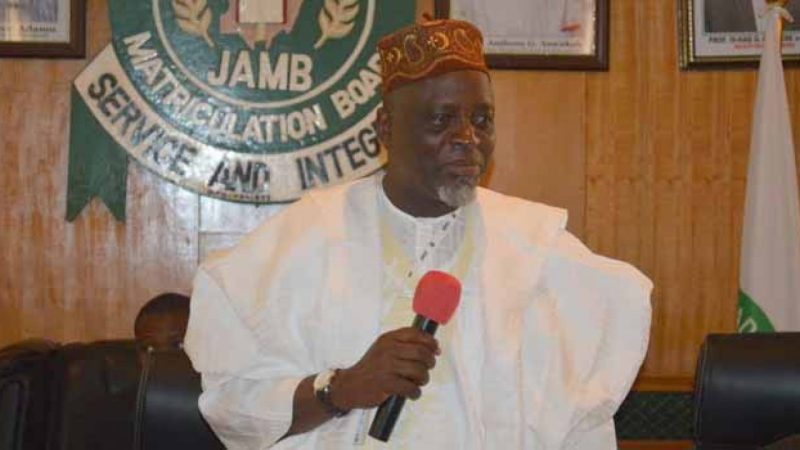
JAMB Urges Candidates, Parents to Protest Admission Bias as CAPS Ensures Transparency
The Joint Admissions and Matriculation Board (JAMB) has urged candidates and parents to speak up against admission bias if they are confident in their UTME scores but are denied admission into their preferred institutions.
JAMB Registrar, Ishaq Oloyede, made this known during an interview on Good Morning Nigeria, a programme aired by the Nigerian Television Authority (NTA).
He stressed that the current admission system, powered by the Central Admission Processing System (CAPS), is designed to ensure transparency, fairness, and accountability across Nigeria’s tertiary institutions.
According to Oloyede, many parents still resort to illegal means because they believe admission cannot be secured without influence. He described this mindset as having “climbed the ladder to illegality,” warning that such actions are no longer necessary under the present system.
He explained that candidates who meet the required cut-off marks and admission criteria but are unfairly denied admission should formally protest through JAMB, as CAPS allows full visibility into the admission process.
READ ALSO:
- EFCC Arrests Maiduguri Woman for Cleaning Nose With N500 Note
- Court Stops ADC Congress, Orders Status Quo in Leadership Row
- US Evacuates Embassy Staff in Nigeria, Lists 23 States as ‘Do Not Travel’
The registrar highlighted that CAPS enables candidates to track their admission status in real time, accept or reject offers, and ensures institutions follow approved guidelines. He added that the platform prevents schools from secretly manipulating admission lists or replacing qualified candidates.
Oloyede further revealed that since the introduction of CAPS in 2017, cases of admission irregularities have significantly declined, with no major systemic failure recorded.
Addressing concerns about Direct Entry admissions, he noted that JAMB has strengthened its verification process to curb fraud. This includes stricter checks on qualifications such as JUPEB and IJMB certificates, making it increasingly difficult to forge results.
He disclosed that the board now verifies academic credentials directly with awarding institutions, including foreign universities. According to him, recent checks uncovered several fake degrees, with some foreign institutions confirming that such certificates were not issued by them.
The registrar added that JAMB has intensified collaboration with universities and other regulatory bodies to ensure proper screening of A-level results and early detection of fraudulent applications.
He emphasized that with improved digital tracking and verification systems, any attempt to bypass the admission process will be detected, urging candidates to rely on merit rather than shortcuts.
Ultimately, JAMB reiterated that qualified candidates must defend their rights through official channels, as the system now supports fairness and equal opportunity for all.
JAMB Urges Candidates, Parents to Protest Admission Bias as CAPS Ensures Transparency

-

 metro2 days ago
JUST IN: FG Publishes List of 48 Individuals, Groups Linked to Terrorism Financing in Nigeria
-

 metro24 hours ago
BREAKING: Troops Arrest 15-Year-Old Linked to Killing of Gen Braimah in Borno
-

 metro2 days ago
42-Year-Old Married Woman Declared Missing Found in Hotel with Man
-
 Politics3 days ago
Did Faleke Just Reveal Lagos’ Next Governor? Party Moves Begin
-

 Politics2 days ago
2027: Oyo APC Governorship Aspirant Saheed Oladele Resigns From Party
-
 metro2 days ago
ADC Threatens Civil Disobedience To Force INEC Chairman To Resign
-

 metro1 day ago
Fayose Warns Makinde May Query Olubadan Over Absence at Ibadan Coronation Event
-

 Entertainment3 days ago
EFCC, Police Investigate Blessing CEO Over Alleged ₦300m Cancer Scam