

News
How Boko Haram’s several days factional battle led to Shekau death
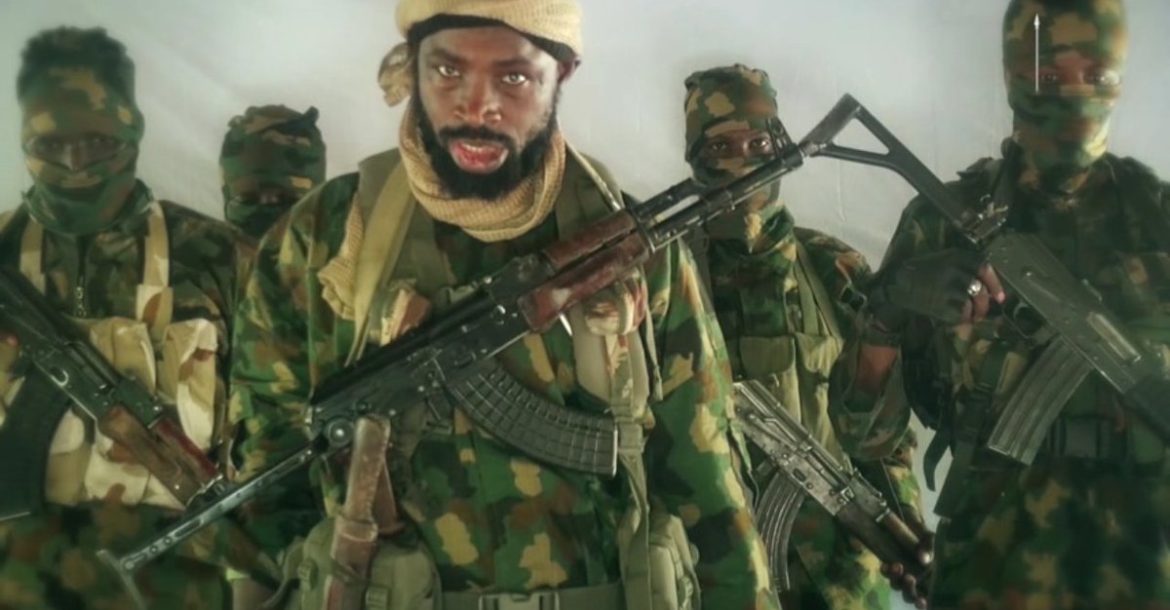
A fierce battle between the two factions of Boko Haram that lasted several days led to the final fall of its notorious leader, Abubakar Shekau, on Wednesday.
The encounter, which involved Shekau-led group and the Islamic State West Africa Province (ISWAP) also claimed the lives of scores of foot soldiers and top commanders from both sides, with multiple sources saying Shekau killed himself.
Many media platforms had reported that ISWAP fighters armed with sophisticated weapons had penetrated the Sambisa Forest from different fronts and surrounded the place Shekau used as a safe sanctuary for years.
They reportedly killed many of his fighters and forced him to surrender.
Daily Trust reported security sources as indicating that when Shekau discovered that it was the end of the road for him, and ISWAP fighters had directed him to relinquish his position as the grand Amir (overall leader) and successor to the founder of the group Mohammed Yusuf but he reportedly opted for suicide by detonating the explosives he strapped to his body.
But the AFP reported that when Shekau reached the point of no return as he was surrounded by ISWAP fighters, he shot himself in the chest, fell on the ground while bleeding profusely but was whisked away to an unknown destination by some of his surviving loyal fighters.
Shekau took over Boko Haram, formally known as the Jama’tu Ahlis Sunna Lidda’awati wal-Jihad, after its founder Muhammad Yusuf was killed by police in 2009.
He was instrumental to the killings of thousands of people and displacement of over three million in Borno, Yobe and Adamawa states over the years.
Most of the fighters that fought for the defeat of Shekau on Wednesday were said to be between the ages of 12 and 30.
Daily Trust quoted a source as saying, “They are actually children of some ISWAP members killed over time.
“Others are youths sourced during raids on multiple islands around the Lake Chad. The ISWAP carefully selected the youth. It was therefore much easier for recruitment as some of the youths willingly joined the group and others were forcefully conscripted.
“Some of them were born during the wartime and others were very young when their parents joined the group around 2002. After their parents died because of illness or confrontation with Nigerian troops, the children naturally took over and when the group split into two in 2016, those that moved on their own or forcefully taken to the shores of Lake Chad under the umbrella of ISWAP had an upper hand in terms of training because they were taken to Libya for training in guerrilla warfare and other purposes.
“Others were sent to Syria and Somalia. They were taken to many countries abroad for training. However, those that came back especially between March and April this year took active part in confronting Shekau in the last few days. They launched a serious offensive alongside other top commanders and fighters already on the ground and they succeeded in taking over.”
Another source said some of the 300 youths were trained as “medical doctors, paramedics, engineers, IT specialists, bomb specialists and mechanics.”
He added that among them were women “who serve as nurses or cooks while others have gun-handling skills, meaning they can partake in combat operations.”
He said after their return from abroad, they were camped at a village called Shuwaram in Kukawa Local Government Area of Borno State.
Another source said ahead of the invasion of Sambisa by the factional group, one of the top commanders of the Islamic State of Iraq and the Levant and his lieutenants had visited the shores of the Lake Chad in company of ISWAP leader Goni Mustafa.
“The entourage were seen on two boats with ISIS flag. Some of those in the entourage were light-skinned people possibly from Libya or Syria. It was only Mustafa that was black. They first visited Marte before they proceeded to Sabon Tumbu.
“They also visited Kirta, Kusuma and Kwallaram where they held meetings with commanders and other fighters,” the source said.
The source said after the strategy meeting, the visiting terrorists left and since then, the ISWAP fighters started mobilising ahead of launching attacks on Sambisa Forest.
An offensive since 2015 by Nigerian troops backed by soldiers from Cameroon, Chad and Niger drove Shekau and his fighters from most of the areas that they had once controlled.
Some fighters including the late Mamman Nur broke away in 2016 and formed the ISWAP. They anointed Abu Musab Albarnawy, the son of late Yusuf as their leader.
“Some of them gathered at Kurnuwa, Kayuwa and Tumbin Jaki before they launched the offensive. They had RPGs, GPMGs and AA guns on some vehicles,” he said.
He added that the attackers also moved their “vulnerable women and children” from the Marte area to some locations around Kukawa.
Another source said before they aimed at Sambisa Forest, the ISWAP fighters were responsible for the recent attacks in Damasak, Marte, Mainok, Dikwa and Maiduguri towns in Borno as well as in Geidam in Yobe State.
A source said the group allegedly resolved to dislodge Shekau with the intent of relocating to Sambisa and the mountainous areas to evade air attacks by the military jets.
A security situation report trending on social media said Shekau must have been killed during the struggle.
The reports stated that: “On 19th May 2021, about 1829hours, ISWAP top fighter Baana Duguri-on this selector – geolocated around Sambisa Forest, Pulka, Gwoza LGA, BRS, informed ISWAP logistics commander Modu-Sulum- geolocated opposite General Hospital Konduga LGA Borno State that they killed Abubakar Shekau, overall BH leader in Sambisa Forest.
“Duguri disclosed that the ISWAP fighters’ team surrounded the BH leader with his team and shooting ensued between the 2 factions. Duguri further added that Shekau detonated a bomb and killed himself when he observed that the ISWAP fighters wanted to capture him alive.
“Furthermore, Duguri informed Sulum that the two sides also lost some fighters during the shooting…”
Meanwhile, Nigerian military had reportedly placed all Borno State commands of the Nigerian Army and Air Force on alert.
The Nigerian military said on Thursday that it was yet to get any information about the reported death of Shekau.
The Director, Defence Media Operations, Brig.-Gen. Bernard Onyeuko, told Daily Trust via a text message that he did not have information on Shekau.
“Sorry, I don’t have information on that,” he said.





News
NBS: Nigeria’s Inflation Slips to 15.39% in August

NBS: Nigeria’s Inflation Slips to 15.39% in August
Nigeria’s inflation rate eased to 15.39 per cent in August 2026 as the pace of price increases slowed across the economy, the National Bureau of Statistics has reported.
The latest Consumer Price Index report shows a modest fall from the 15.43 per cent recorded in July.
A sharper improvement was recorded in monthly inflation. The rate dropped from 1.57 per cent in July to 0.71 per cent in August, meaning prices continued to rise but at a much slower pace.
Food inflation also slowed significantly.
The NBS put year-on-year food inflation at 19.57 per cent in August. This was below the 25.30 per cent recorded a year earlier. Monthly food inflation also fell sharply, moving from 5.56 per cent in July to 1.02 per cent in August.
The statistics agency attributed the monthly decline to lower average prices for a range of food products, including palm oil, pepper, onions, cassava flour, beef, yam flour, egusi, ginger, fresh fish, Irish potatoes, chicken and turkey.
The improvement, however, was not shared equally across the country.
Adamawa had the highest annual food inflation rate at 38.85 per cent. Zamfara followed with 37.96 per cent, while Bayelsa recorded 36.20 per cent.
At the other end, Borno recorded negative annual food inflation of -4.04 per cent. Jigawa recorded -0.23 per cent, while Kebbi stood at 3.47 per cent.
For monthly food inflation, Katsina recorded the highest rate at 9.48 per cent, followed by Rivers at 8.86 per cent and Osun at 8.32 per cent.
The latest figures suggest a broad slowdown in price growth, although the wide differences between states show that many households are still facing very different food price pressures depending on where they live.
NBS: Nigeria’s Inflation Slips to 15.39% in August
metro
Fatal NURTW Leadership Clash in Osun Leaves Two Dead; State Orders Park Shut Down
Fatal NURTW Leadership Clash in Osun Leaves Two Dead; State Orders Park Shut Down
As Olalekan Oyeyemi is buried in Osogbo, authorities transfer murder probe to the State Criminal Investigation Department.
News
Peter Obi Rejects Anambra Debt Claims, Challenges Soludo Govt to Produce Evidence
Peter Obi Rejects Anambra Debt Claims, Challenges Soludo Government to Produce Evidence
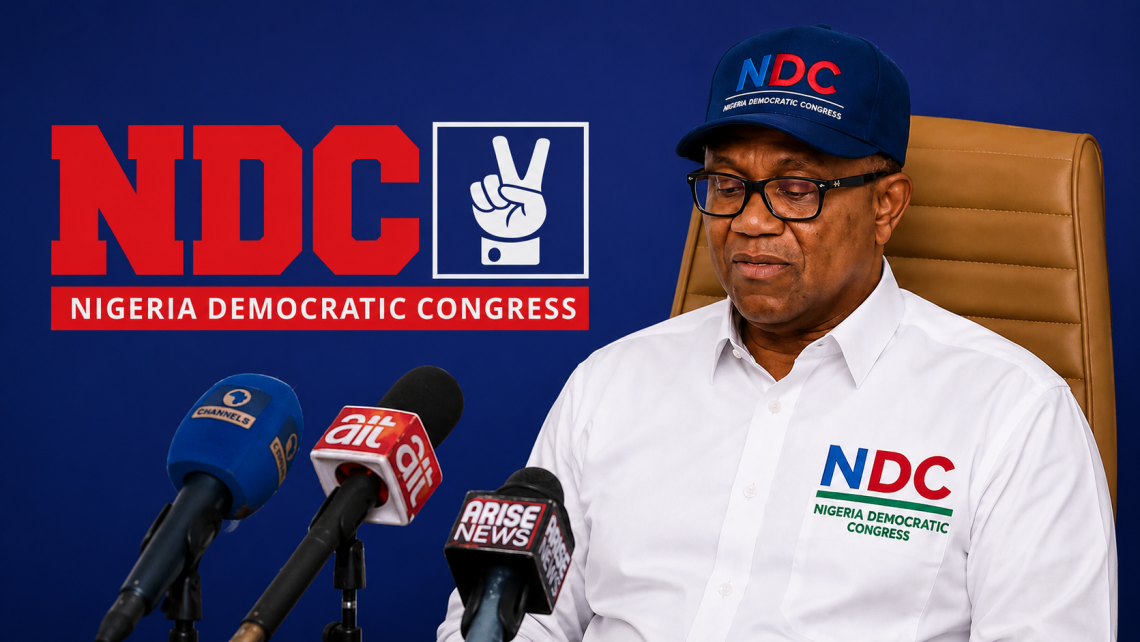
Former Anambra State Governor and 2027 presidential candidate Peter Obi has rejected claims that he left the state with unpaid financial obligations when he handed over power in 2014, challenging the Anambra State Government to identify any contractor, supplier, worker or pensioner who was owed money by his administration at the time.
Obi made the statement in response to renewed claims by the administration of Governor Chukwuma Soludo that the state is still servicing loans and other financial obligations inherited from previous administrations.
The dispute has opened a fresh political debate over Anambra’s debt profile, the financial obligations inherited by successive governments and the management of the state’s resources before and after Obi left office.
Obi, who governed Anambra between 2006 and 2013 before handing over to his successor in 2014, said he paid what was due during his tenure and left the state in a financially stable position.
He challenged the Soludo administration to provide evidence of any unpaid obligation incurred by his government that remained outstanding when he left office.
According to Obi, if the state government can identify any contractor, supplier, employee, pensioner or other beneficiary who was owed money by his administration at the time of the handover, he would be prepared to address the matter.
The former governor also said his administration left funds in government accounts, including an alleged ₦2.14 billion ecological fund balance, when he handed over power.
However, the claim regarding the ecological fund is from Obi’s camp and would require confirmation from the relevant official financial records.
READ ALSO:
- Peter Obi: Release My UNN Academic Records, I Have Nothing to Hide
- A Son Wouldn’t Have Done Better — Dangote Speaks on Daughters, Succession
- 2027: APC Governors Reject Wike’s Rainbow Coalition, Insist on Party Loyalty
The response followed comments by the Anambra Commissioner for Finance, Izuchukwu Okafor, who said the state was still repaying loans inherited from previous administrations.
Okafor said the Soludo administration had not obtained any commercial bank loan since it came into office in 2022, arguing that the government’s focus had been on reducing the state’s inherited financial obligations.
He said the state’s debt burden had been substantially reduced under Soludo and that the administration had also cleared inherited liabilities relating to contracts, gratuities and pensions.
The commissioner said some loans taken by previous administrations remain subject to repayment and deductions from the state’s federal allocations.
This distinction is at the centre of the current disagreement.
The Soludo administration is not necessarily claiming that Obi personally left unpaid bills to contractors or workers. Rather, the government is pointing to loans and other financial commitments inherited from successive administrations, some of which continue to be serviced.
Obi, on the other hand, is arguing that his administration settled the obligations that were due and payable when he left office and should not be held responsible for liabilities incurred by subsequent governments.
The issue has therefore raised questions about the difference between a state’s overall outstanding debt and debts that were specifically incurred by an individual administration.
Available public debt records have shown that Anambra had outstanding formal obligations around the period Obi left office. However, the political dispute centres on when particular obligations were incurred, which administration contracted them, when repayment became due and whether they should be described as unpaid debts inherited from Obi’s administration.
The Soludo administration has maintained that it inherited financial commitments from previous governments and has been working to reduce them.
The finance commissioner reportedly said the state’s domestic debt was now close to zero and that the government had reduced its overall debt burden significantly.
He also said the Soludo administration had not resorted to commercial bank borrowing since assuming office, presenting the reduction in liabilities as evidence of improved fiscal management.
The government has simultaneously highlighted investments in infrastructure and other projects while maintaining that debt reduction remains an important part of its financial strategy.
READ ALSO:
- Sanwo-Olu Joins Dangote as Historic N2.15tn Refinery IPO Opens on Nigerian Exchange
- Shehu Buba Submits Himself To DSS Over Banditry Allegations
- No Lives Lost as Responders Contain Dual Fire Outbreaks Across Lagos
Obi’s camp, however, has questioned the basis for attributing current financial obligations to his administration.
The former governor has repeatedly presented his tenure as one characterised by fiscal discipline, savings and investment in infrastructure, education, healthcare and other sectors.
His supporters have pointed to the savings and financial reserves accumulated during his tenure as evidence that the state was handed over in relatively strong financial condition.
Critics of the former governor, however, argue that the financial position of a state cannot be assessed solely by looking at cash balances or the absence of unpaid bills because governments can inherit long-term obligations whose repayment extends beyond the tenure of the administration that contracted them.
That distinction is particularly relevant in Anambra, where governments have succeeded one another while continuing to service financial commitments made over several administrations.
The latest exchange has consequently shifted the political conversation from whether Anambra has debt to the more specific question of which administration incurred particular liabilities and whether those obligations were outstanding at the time of each handover.
The dispute also comes at a politically sensitive period, with Obi preparing for the 2027 presidential election under the Nigerian Democratic Congress (NDC).
Questions about his record as Anambra governor are likely to remain part of the political debate as the election approaches, particularly because his administration’s economic management has been a central part of his political narrative.
For Soludo, who is serving as Anambra governor, the emphasis has been on the state’s current fiscal position and the steps his administration says it has taken to reduce inherited liabilities while funding development projects.
For Obi, the priority is to establish that he did not leave unpaid obligations to contractors, workers, pensioners or other beneficiaries when he left office.
The former governor has therefore challenged the state government to publish specific records showing any outstanding obligation attributable to his administration at the point of handover.
The competing claims have yet to be resolved by an independent audit or judicial determination.
What remains clear is that Anambra’s debt debate involves more than a simple disagreement over whether the state owes money. It encompasses loans contracted by successive administrations, repayment schedules, inherited liabilities, outstanding contracts and the question of how political leaders should be held accountable for financial commitments made during their tenure.
As the exchange continues, official debt records, audited financial statements and handover documents could provide the clearest basis for determining the extent of liabilities inherited by each administration.
Until such records are independently reviewed, claims that Obi either left the state completely debt-free or was solely responsible for all of its inherited obligations should be treated with caution.
The latest dispute therefore leaves two competing narratives: Obi’s insistence that he paid what was due before leaving office, and the Soludo administration’s position that Anambra continues to service financial obligations inherited from previous governments, including loans dating back to earlier administrations.
With the 2027 election approaching, the controversy is likely to remain part of the wider political contest over Obi’s record in Anambra and his claims of fiscal discipline in government.
Peter Obi Rejects Anambra Debt Claims, Challenges Soludo Government to Produce Evidence
-
 News2 days ago
SERAP Threatens Legal Action Over ₦126bn INEC Electoral Funds
-
 Politics3 days ago
Five Islamic Clerics Abducted After Tinubu Re-Election Prayer At Yari’s Zamfara Residence
-
 Opinion3 days ago
‘Tinubu Will Win Again in 2027’ — Charismatic Bishops’ Secretary
-
 Politics1 day ago
2027: Northern Lecturers Back Tinubu, ASUU Disowns Endorsement
-

 metro2 days ago
Mother ‘sold daughter’s abuse videos for $300’: Nigeria child pornography case shocks nation
-

 Sports3 days ago
‘Unacceptable’ — Arteta Furious Over Sunderland Penalty in Arsenal Win
-

 News2 days ago
Petrol Subsidy: Presidency Rejects Atiku’s Plan, Says No Going Back
-
 News2 days ago
Nwifuru Dismisses Cubana Chief Priest as ‘Attention-Seeker’