
Auto
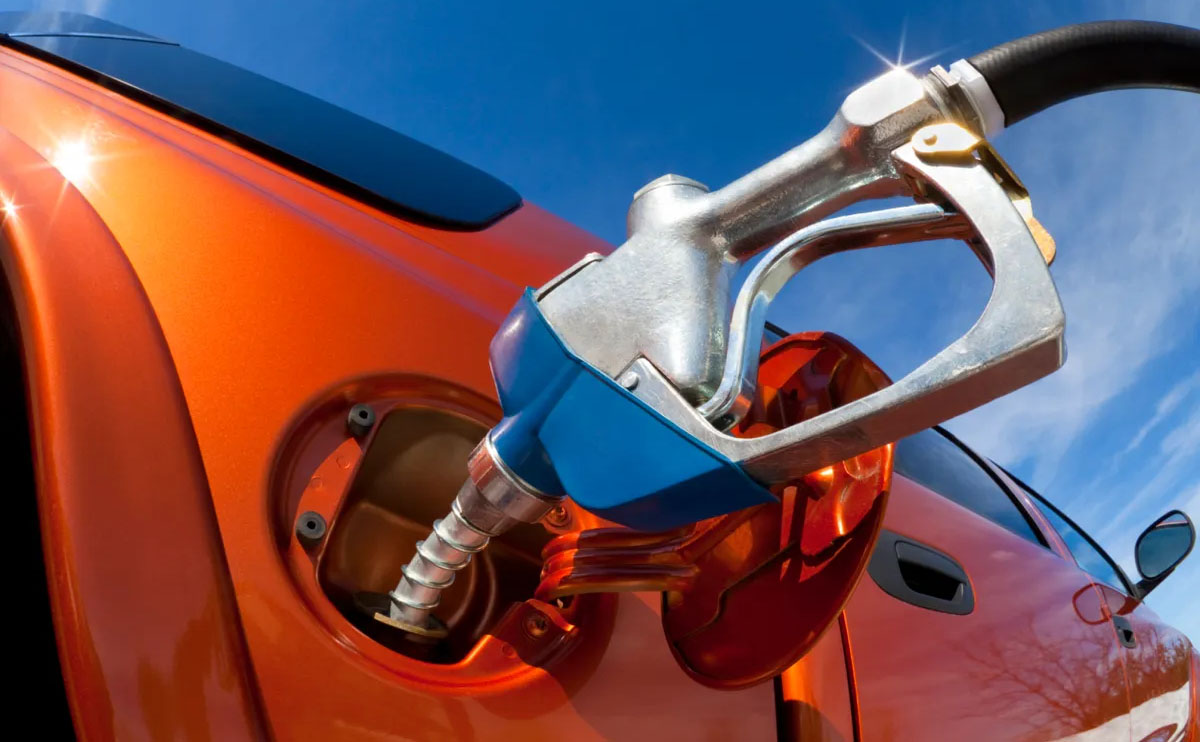
How to lower fuel consumption of your car
How to lower fuel consumption of your car
When President Bola Tinubu announced an end to fuel subsidy at the inception of his regime in 2023, many motorists were jolted by the expected impact it would have on the cost of keeping their vehicles on the road.
Many Nigerians were also concerned about the impact it would have on the cost of living, especially the prices of goods, services and transportation.
And their fears were genuine; prices of goods went up astronomically and there were complaints of hardship all over the country.
This led to a swift drop on the sales of big cars, especially Sport Utility Vehicles. Many Nigerians quickly parked these cars in their homes and some immediately put up theirs for sale while others quickly bought smaller cars that they presumed would consume less fuel. They forgot that the rainy season would not be fair to the roads and their new small sedans, especially the bumpers and underneath the cars.
Those living in flood-prone areas like Lekki and some seasonally flooded areas in Rivers, Delta and Bayelsa states can attest to the advantages of SUVs over sedans from their expenses. With some of these expected challenges, it didn’t take long for the average Nigerian motorist to adjust and live with the negative impacts of the fuel subsidy removal.
Though the challenge persists, coupled with the poor state of the roads across the country, it has been almost impossible for Nigerians to totally do away with their big cars and SUVs which are renowned for higher fuel consumption. It is the classical case of choosing between the devil and the deep blue sea.
READ ALSO:
- South African ambassador ‘no longer welcome’ in US, Rubio says
- Nasir El-Rufai’s scorched-earth one-man opposition, By Farooq Kperogi
- Osimhen scores hat-trick as Galatasaray demolish Antalyaspor
Today, Vanguard offers you some tips on how to ensure maximum fuel economy in your vehicles at a time like this. It is clear that by improving your car’s fuel economy, you’re helping to reduce the drain on your wallet. With some simple driving tips and habits, your fuel can take you further. A combination of good driving habits, and proper vehicle maintenance of your car is essential.
The Tips
*When driving, accelerate and brake gently, quick starts and stops waste fuel, but smooth driving boosts your kilometres per litre. Driving at slower speeds leads to better fuel efficiency.
Reducing speed by 10-20 kph can help. Keep a steady speed, you may use your cruise control on motorways because when you drive at a consistent speed, you save fuel.
•Watch the traffic ahead, it will help you predict what other drivers will do or intend to do. This helps you to avoid braking and speeding up.
•Also avoid idling your engine for long periods even when it is stationary as it wastes fuel. Switch off the engine if you need to stop for more than a minute.
•Also limit short journeys, and be aware that cold starts use more fuel.
•As a motorist, ensure that your tyres are appropriately gauged. Soft tyres cause drag and waste fuel. Check pressures often and inflate correctly.
Many drivers don’t know that proper inflation of their car tyres contributes significantly to the fuel economy. Under inflated tyres have a higher rolling resistance on the road. This means that your tyres generate more friction and rolling resistance and will increase fuel consumption.
READ ALSO:
- My wife is a pastor, can’t be Bigot, Tinubu tells Catholic bishops
- Electricity: TCN blocks access to data from DisCos
- Customs seize 1,149 jerry cans of petrol in Taraba
If your four tyres are underinflated by 10 psi, this could increase your fuel consumption by 10 per cent. Car manufactures always have the recommended tyre gauge inscribed on the drivers door frame. Gauge your tyre accordingly and reduce your fuel consumption.
•Correct wheel alignment is vital. It reduces tyre wear and drag. This also saves fuel.
•Many motorists carry all sorts of things in their boots which they hardly need and this adds to the weight of the car, this should be avoided. Note that every extra 50kg of load in your car increases fuel consumption by about two to three percent.
Some used cars from abroad come with a heavy bar attached to the rear for pulling boats and other heavy objects from where they have been imported which is hardly needed in this part of the world. It is advised that you remove them to avoid unnecessary weight.
Some people however believe that this serves as protection when another vehicle hits them from behind, unknown to them that they are paying more to fuel their cars. Lighten your load and remove extra weight from the car. Less weight means better fuel economy.
•Also, reduce drag by removing roof racks as they increase wind resistance which wastes fuel.
•Use your air-conditioning system. Driving with an air-conditioner has an advantage to fuel economy but most drivers think otherwise.
Apart from keeping the interior of your car clear of dust and ensuring the safety of the driver from attacks, it also saves fuel. Driving with windows down at a speed faster than 80km/h causes a lot of wind resistance and more fuel consumption. It is more fuel efficient to drive with your air-conditioner on.
•Maintain the right speed. Avoid over speeding and going slowly too.
While both have safety consequences, they also have an impact on your fuel consumption. It has been established that on highways, your engine works hard to overcome wind resistance.
This means that you will burn up to 15 per cent more fuel at 100km/h and 25 per cent more at 110km/h. On the other way round, if you drive at a speed slower than 50km/h your engine would drop to a lower gear thus using up more fuel. It is advised that driving between 50km/h and 90km/h gives optimal fuel efficiency.
•Many people accelerate their cars as if they are running at Formula 1 Race thereby wasting their fuel unknowingly. Avoid revving your accelerator to a high revolution per minute (RPM). Your engine uses less fuel when it is revolving slower at a lower RPM.
•It is also important to note that aggressive braking is not only a disadvantage to the brake pad but increases fuel consumption.
Slamming on the brakes increases fuel consumption as the car needs to accelerate again. Give a reasonable distance between you and the vehicle in front of you. If you have been driven by a pilot before, you would understand what it means to drive with caution.
READ ALSO:
- 10 ex-Buhari’s ministers to dump APC for SDP
- FG refutes US Congress claim of terrorists targeting Nigeria’s Christians
- Jimoh Ibrahim speaks on Senator Natasha’s petition to IPU
They are very cautious of the vehicles in front of them and avoid them from afar. I am sure that if we take count of professionals who hardly get involved in traffic accidents, the pilot would take the number spot.
•Avoid hard acceleration when moving your car from complete stop or climbing hills as it increases fuel consumption. Most people who drive vehicles with automatic transmission hardly know the advantage of one special feature in the car called cruise control.
If you are driving an automatic car, you can make use of cruise control to keep your speed constant. But if you are driving a manual car, maintain a higher gear when appropriate. This ensures that your engine goes through less revolutions per minute, RPM and ensures less fuel consumption.
•Driving in traffic causes higher fuel consumption. Stop-start traffic puts a lot of pressure on your engine and burns more fuel. Avoid peak traffic if possible. Turn off your engine when it is parked. As long as your engine is on, the fuel is burning. The choice is yours to keep the engine steaming when that car is not moving. It is your fuel that is burning which you can use to cover some kilometers.
•Regular servicing with quality engine oil is key to the longevity of your engine. If your engine is poorly maintained, it will lead to sludge and corrosion build-up which will prevent the engine from working smoothly. Regular maintenance is key.
•Follow your vehicle’s schedule, a healthy engine works better. A clean air filter lets the engine breathe freely. Good airflow improves fuel use. Use the right oil type to reduce friction and boost engine performance. When buying a new car, think about fuel efficiency. Pick a model that fits your needs. If your car has a fuel-saving mode, then use it.
How to lower fuel consumption of your car
Vanguard







Auto
Motoring World marks 30 years, set to rally industry leaders in Lagos
Motoring World marks 30 years, set to rally industry leaders in Lagos
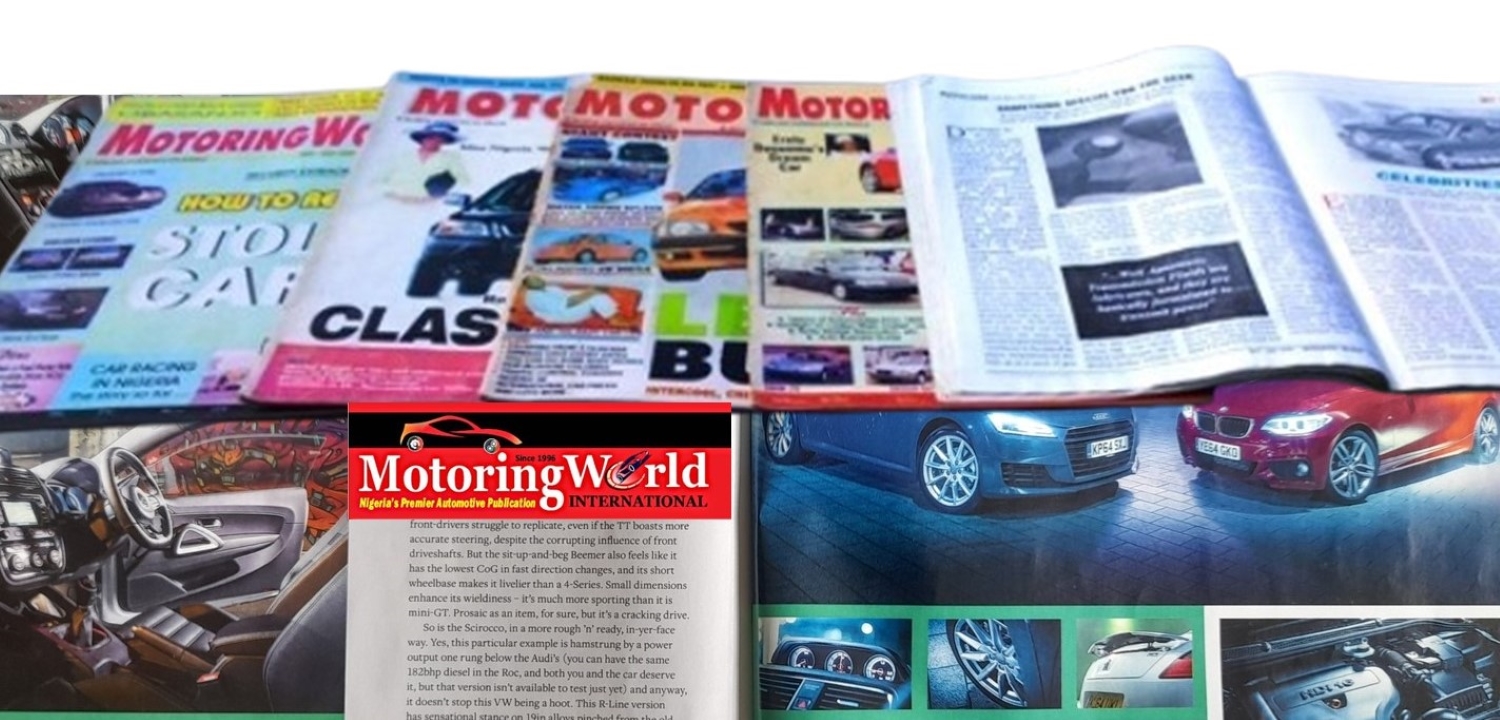
Motoring World, one of Nigeria’s foremost automotive publications, will celebrate its 30th anniversary on June 4, 2026, with a high-profile event at the MUSON Centre.
The milestone gathering is expected to draw policymakers, industry leaders, diplomats and innovators to commemorate three decades of impactful journalism, advocacy and contribution to the growth of Nigeria’s automotive sector.
Founded on June 12, 1996, as a syndicated radio magazine programme, Motoring World pioneered automotive broadcasting in Nigeria before expanding into print in 1998. It has since evolved into a multi-platform brand at the forefront of promoting industry development, modernization and policy reform.
Over the years, the publication has gone beyond news reporting to play an active role in shaping regulatory frameworks, encouraging local content development and promoting industry standards.
Publisher and Chief Executive Officer, Femi Owoeye, said the organisation was driven by a clear vision from inception.
READ ALSO:
- Nigeria Police Reform: 222,000 Officers May Move to State Commands
- Iran Threatens US-Linked Universities in Middle East Amid Escalating Tensions
- Iranian Strike on Saudi Base Damages US Spy Plane, Injures 12 Troops
“Motoring World started with a simple vision: to give voice and structure to Nigeria’s automotive industry. Over the years, we have gone beyond reporting to actively advocate policies that support industry growth, local production and a more structured ecosystem,” he said.
Activities lined up for the anniversary include the unveiling of a special 30th anniversary edition of Motoring World magazine, chronicling the evolution, milestones and future of the industry. Distinguished stakeholders with three decades of contributions to the sector will also be honoured.
A keynote lecture titled, “Reporting the Road Ahead: Automotive Journalism as a Catalyst for Nigeria’s Auto Industry Development,” will underscore the critical role of the media in shaping the nation’s automotive landscape.
Dignitaries expected at the event include the Minister of Industry, Trade and Investment, Jumoke Oduwole; the Director-General of the National Automotive Design and Development Council, Oluwemimo Joseph Osanipin; state governors, transport commissioners and members of the diplomatic corps.
Owoeye noted that the anniversary represents more than a celebration.
“This is a tribute to resilience, strong partnerships and the collective drive that has sustained the industry. As we honour key players and reflect on our journey, we are also setting the tone for the next phase of mobility in Nigeria,” he added.
The event promises a blend of reflection, recognition and renewed commitment to advancing Nigeria’s automotive industry.
Motoring World marks 30 years, set to rally industry leaders in Lagos
Auto
Hyundai unveils flagship SUV Palisade, rolls out strong line-up in Lagos showcase
Hyundai unveils flagship SUV Palisade, rolls out strong line-up in Lagos showcase
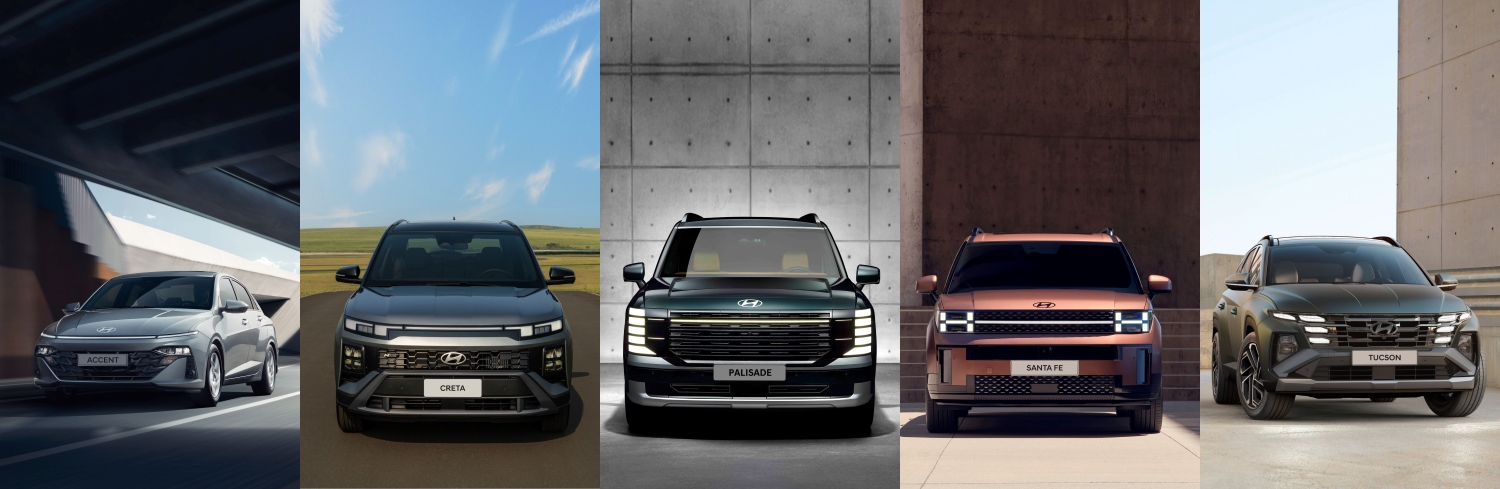
Hyundai Nigeria has unveiled the all-new Hyundai Palisade in Lagos, headlining a media showcase that also featured the Hyundai Accent, Hyundai Creta, Hyundai Tucson and Hyundai Santa Fe, as the automaker intensifies its push across key segments of the Nigerian market.
The event, held at the company’s Victoria Island showroom, offered journalists a first-hand view of Hyundai’s expanding portfolio, ranging from entry-level sedans to premium three-row SUVs.
Taking centre stage was the debut of the Palisade, Hyundai’s flagship SUV, positioned to strengthen the brand’s foothold in the premium segment.
With its bold exterior styling, spacious three-row layout, upscale interior and advanced safety and convenience features, the model is targeted at families and executive buyers seeking comfort, space and strong road presence.
Across the line-up, Hyundai showcased a broad spectrum of offerings. The Santa Fe reinforces its appeal as a refined, family-oriented SUV with generous cabin space and premium detailing, while the Tucson stands out for its blend of modern design, practicality and everyday versatility.
In the compact SUV category, the Creta was highlighted for its mix of style, efficiency and urban functionality, while the Accent sedan retains its positioning as a practical and cost-effective option for young professionals, fleet operators and first-time buyers.
Speaking at the event, Brand Head, Hyundai Nigeria, Gaurav Vashisht, said the launch underscores the company’s commitment to deepening its footprint in Nigeria with globally competitive products adapted to local needs.
“This introduction of the all-new Palisade strengthens our premium SUV offering while complementing a well-rounded line-up that delivers on design, safety, innovation and everyday usability,” he said.
The showcase also provided an avenue for media interaction with Hyundai executives and product specialists, alongside detailed vehicle walkarounds covering design, technology and safety features.
Hyundai Nigeria reaffirmed its focus on delivering globally benchmarked vehicles with strong local relevance, even as competition intensifies in Nigeria’s evolving passenger vehicle market.
The event also marked the launch of Hyundai’s Easter campaign, offering customers value-added benefits such as complimentary delivery, accessories, registration and service packages.
Auto
Jetour T2 Plug-in Hybrid EV: Rugged Adventure Meets Smart Electric Power
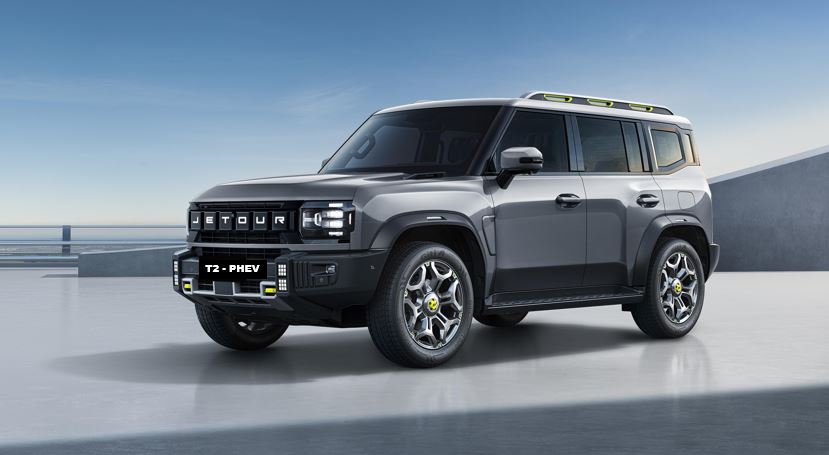
Jetour T2 Plug-in Hybrid EV: Rugged Adventure Meets Smart Electric Power
Jetour is pushing the boundaries of Nigeria’s Sports Utility Vehicl (SUV) market with the T2 Plug-in Hybrid Electric Vehicle (PHEV), a model that blends rugged off-road capability with the intelligence of modern electrification.
Built for motorists who demand strength without compromising comfort or efficiency, the T2 PHEV cuts an imposing figure with its bold stance—measuring 4,785mm in length, 2,006mm in width and 1,875mm in height—making it both commanding and practical.
According to Jetour Nigeria, the SUV is engineered to strike a balance between performance and efficiency, delivering a smooth, refined driving experience while offering premium comfort for both city commutes and long-distance travel.
Its accredited dealers across Nigeria – Elizade Nigeria Limited, New Era Autovehicle Services Limited, Kojo Motors, Germaine Auto Centre, Tab Autos Limited, R.T. Briscoe Motors and Mandilas Autos, are ensuring accessibility and support for customers nationwide, as one of the SUV’s standout qualities is its dual driving nature.
The T2 Hybrid delivers impressive fuel economy on petrol but can switch seamlessly to pure electric mode when required.
This flexibility reduces fuel costs and supports the Federal Government’s drive towards cleaner and greener energy solutions.
Jetour has also addressed common concerns around electrified vehicles.
The T2 Hybrid supports fast charging, slow charging, engine charging and brake energy recovery. In real terms, the system ensures the battery is constantly being replenished while driving, eliminating range anxiety and making ownership easier.
When the battery gets low, the 1.5 litre turbocharged engine takes over, but not to drive the wheels. It acts as a portable generator, charging the battery while you keep driving.
Energy is stored in a 26.73kWh battery, giving the T2 Hybrid the confidence to handle highways, urban traffic and rough terrain with ease.
The arrival of the T2 PHEV builds on Jetour’s growing reputation in Nigeria.
In 2024, the brand was named Fastest Growing Brand at the Nigeria Auto Journalists Association (NAJA) Awards, while the Jetour Dashing clinched Nigeria’s Car of the Year in 2025.
Safety is a major strength. The T2 PHEV comes with multiple airbags, Advanced Emergency Braking, Electronic Parking Brake with Auto Hold, anti-rollover control and a 360-degree camera with 2D and 3D views.
Additional systems include lane departure warning, blind-spot detection, collision alerts, wading sensing system, bend braking control and automatic door locking.
Inside, technology and comfort take centre stage. A 15.6-inch touchscreen supports Apple CarPlay, Android Auto, Bluetooth, voice commands and wireless charging.
Features such as adaptive cruise control, panoramic roof, ventilated power seats, Sony 12-speaker audio and LED Matrix headlamps further enhance the experience.
Performance is sharpened by the advanced 3-speed Super E-Hybrid DHT system, delivering strong climbs, quick overtakes and efficient energy use.
It can run quietly on electric power for daily commutes or unleash turbo strength for long journeys.
Backing it all is strong aftersales support, including a five-year or 150,000-kilometre warranty, underlining Jetour’s confidence in its technology and commitment to Nigerian motorists.
With the T2 PHEV, adventure is not just about getting there, it’s about travelling smarter, cleaner and in unmistakable style.

-

 metro2 days ago
Tragedy in Aramoko: Trailer Rams Residential Building, Kills 300‑Level Student
-

 News2 days ago
Final Notice: FG Orders Civil Servants to Complete PASGA Verification by March 31
-
 metro12 hours ago
Jos Attack: Plateau Govt Declares 48-Hour Curfew After Deadly Assault
-

 Entertainment2 days ago
Nollywood Actress Declares Love for Ibrahim Chatta, Offers to Pay Her Own Dowry
-

 Entertainment2 days ago
Streamer Peller Escorted Out of Alake of Egbaland’s Palace in Abeokuta
-

 International2 days ago
Iranian Missiles, Drones Strike US Air Base in Saudi Arabia
-
 News3 days ago
Kano Deputy Governor, Aminu Abdussalam Gwarzo, Resigns
-

 Sports3 days ago
Super Eagles Edge Iran 2–1 in Antalya Friendly