

Politics
I inherited over N100bn debt, N400m cash from Obiano –Soludo
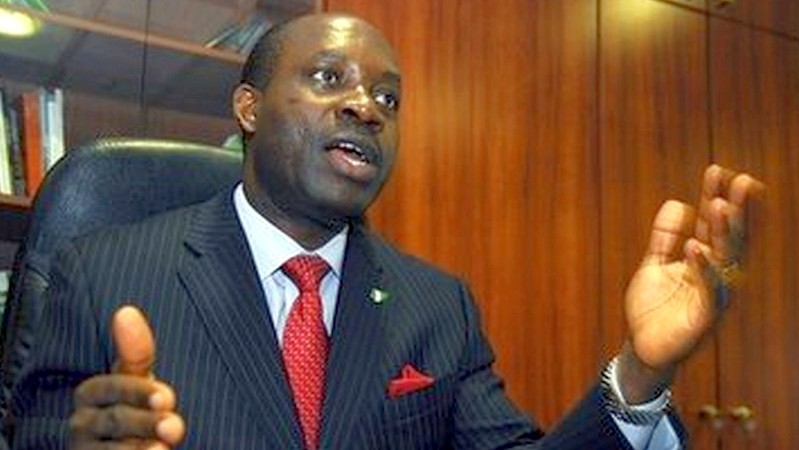
Governor of Anambra State, Prof. Chukwuma Soludo, yesterday, said he inherited a debt of over N100 billion and cash of about N300 or N400 million from his predecessor, Chief Willie Obiano.
The revelation came after Obiano was arrested for alleged corruption by the Economic and Financial Crimes (EFCC) at the Murtala Muhammed International Airport, Lagos, on his way to Houston, Texas, US, last Thursday after handing over.
Soludo, who spoke on Arise Television programme, said he inherited a state whose financial position was “not quite robust” but promised to run a transparent accounting system.
“In fact, let’s not talk about it. Our treasury is funny. I hope we shall make money henceforth to help us fulfil our promises for infrastructure and development of the state… But in terms of what I met in our coffers, my brother, it’s pathetic. Please let us not go there. God will help us…
“First, in terms of finances, there is an audited account of Anambra as at December 31, 2021 which is a public document which anyone can access. Between the audited accounts as at the end of the year 2021, everyone knows that the state finances are not quite robust. In terms of debt, it is in the range of over N100 billion and then cash at which the state has is N300 or N400 million, but we are still going to have all the reconciliations and all the accounts from January to the date we had the handover.
“Anambra State intends to have a transparent public finance management where we are going to publish our accounts so that everyone will have a knowledge of what is there and what is missing and what funds have been used for.”
READ ALSO:
- Court Orders AGF to Remove NDDC from Niger Delta Ministry
- Grid Collapse: Lawmakers Lambast Power Minister, Demand Improved Electricity Supply
- Ifuennada threatens to share photos of men sending their ‘privates’
On insecurity, the former Central Bank of Nigeria (CBN) governor said there were ongoing discussions with the Indigenous People of Biafra (IPOB) and other stakeholders on how to tackle the menace and also end the sit-at-home order on Mondays.
“After the swearing in, I went into the office straight away and a few minutes after that I started the security council meeting of the state which lasted more than three hours. The conversations about that are still ongoing and I believe that we will get to crack it and the sit at home thing will definitely end.
“We are in discussions with the stakeholders, IPOB and everyone else and it is the people’s power that will prevail at the end of the day. The poor innocent artisans like keke driver, traders are suffering, but for the elite, they can afford to watch TV and so the state is losing out as its people are impoverishing. We are determined to restore law and order.”
Soludo in his inaugural speech last week Thursday in Awka had lamented the economic losses incurred by the South East states each day a sit-at-home is observed.
“Every day, there is a sit at home these poor masses lose an estimated N19.6 billion in Anambra alone. Due to the protracted breakdown of law and order, businesses are relocating outside Igboland, with growing unemployment, and traders who used to come to shop in Onitsha, Aba etc are going elsewhere. Who is losing? By forcing our children—the future of Igboland—to stay at home instead of being in school, while even the critically sick people (including pregnant women) cannot go to hospital, we harm our future,” he said.





Politics
2027: Lagos APC Steps Up Grassroots Mobilisation Ahead of Atiku, Obi Challenge
2027: Lagos APC Steps Up Grassroots Mobilisation Ahead of Atiku, Obi Challenge
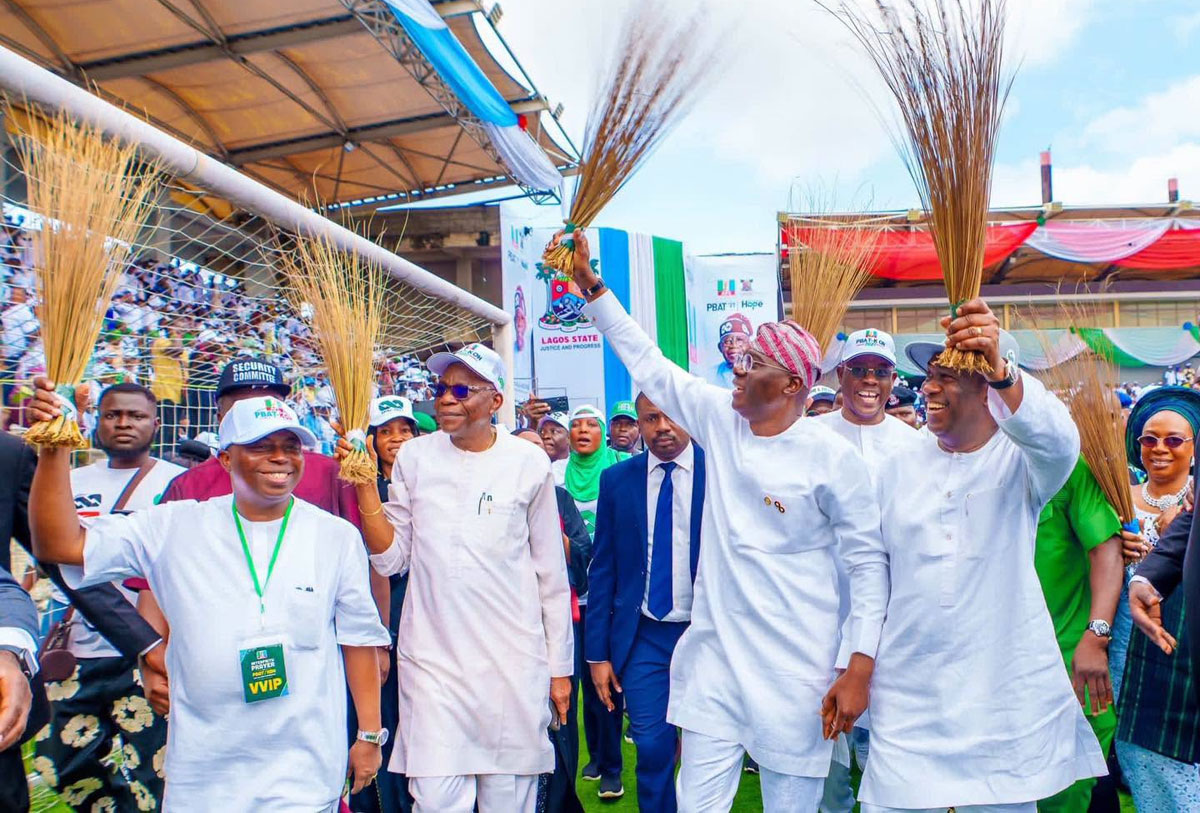
The Lagos State chapter of the All Progressives Congress (APC) has intensified preparations for the 2027 general elections, with the party strengthening its grassroots mobilisation across senatorial districts, local government areas, wards and polling units.
The move comes as political parties continue to build their campaign structures ahead of the elections, with Atiku Abubakar and Peter Obi among the presidential candidates listed for the 2027 contest.
For the 2027 presidential election, Atiku Abubakar is the presidential candidate of the African Democratic Congress (ADC), while Peter Obi is the presidential candidate of the Nigeria Democratic Congress (NDC). Obi’s running mate is Rabiu Musa Kwankwaso, who is also contesting on the NDC ticket.
The Lagos APC leadership says its immediate priority is to strengthen the party’s organisation at the grassroots and maintain regular engagement with voters across the state.
APC Lagos Chairman Cornelius Ojelabi said the party would decentralise its mobilisation efforts, placing particular emphasis on activities at the polling-unit level.
He described the strategy as “Operation Man Your Polling Booth”, under which party members would take responsibility for mobilisation and coordination around their respective polling areas.
READ ALSO:
- Deputy Director’s Death: NLC Shuts Delta Secretariat, Begins Indefinite Strike
- 2027: NDC State Chairmen Reject Obi-Kwankwaso Movement’s Parallel Structures
- South Africa: 27 Killed, 26 Injured in Separate Mass Shootings
Ojelabi also said the party was targeting five million votes in Lagos from a projected electorate of about seven million. The five-million figure is an APC campaign target and should not be interpreted as an independently verified forecast of the party’s eventual votes.
The mobilisation drive follows the inauguration of a 1,235-member Lagos APC campaign council for the 2027 elections.
Governor Babajide Sanwo-Olu was named chairman of the campaign council, while Deputy Governor Obafemi Hamzat serves as deputy chairman and former Senator Musiliu Obanikoro as Director-General.
The wider campaign arrangement also includes prominent Lagos APC figures, including former governors Babatunde Fashola and Akinwunmi Ambode, who have been assigned roles within the party’s advisory and mobilisation structures.
The broader APC campaign structure also places emphasis on grassroots engagement and mobilisation, youth mobilisation, women mobilisation, community support and other areas.
Hamzat has urged party campaigners to rely on facts, data and verifiable records when engaging voters, saying campaign messages should focus on policies, projects and measurable achievements.
The Lagos APC has also directed its 2027 candidates to suspend overseas travel until after the election, with the party saying candidates should remain available for campaign and grassroots mobilisation activities.
Ojelabi has similarly called on party members to conduct their campaigns peacefully and avoid violence, hatred and other conduct that could undermine the electoral process.
The renewed Lagos APC grassroots mobilisation comes against the background of the 2023 presidential election in the state, when Peter Obi, then the Labour Party candidate, secured 582,454 votes, while Bola Tinubu of the APC polled 572,606 votes.
The political landscape has since changed significantly.
For the 2027 presidential election, Atiku is contesting under the ADC, while Obi is contesting under the NDC, with Kwankwaso as his running mate.
The new party alignments have also produced different campaign structures from those that existed during the 2023 election.
Within the NDC, the party has given Obi and Kwankwaso a role in nominating key officials of the presidential campaign council, while the separate Obi-Kwankwaso Movement has also developed its own support structure.
The relationship between the NDC’s formal structures and the Obi-Kwankwaso support movement has generated differing positions among party officials in some states, although other state chapters have said they are working harmoniously with the support groups.
Against this backdrop, the Lagos APC is focusing on consolidating its own grassroots political structure, with particular attention to senatorial districts, local government areas, wards and polling units.
Lagos remains a significant focus of national politics because of its large electorate and its importance in presidential and state-level elections.
As preparations continue, the APC and opposition parties are building their campaign machinery, mobilising supporters and seeking to strengthen their presence among voters across the state ahead of the 2027 elections.
2027: Lagos APC Steps Up Grassroots Mobilisation Ahead of Atiku, Obi Challenge
Politics
2027: NDC State Chairmen Reject Obi-Kwankwaso Movement’s Parallel Structures
2027: NDC State Chairmen Reject Obi-Kwankwaso Movement’s Parallel Structures
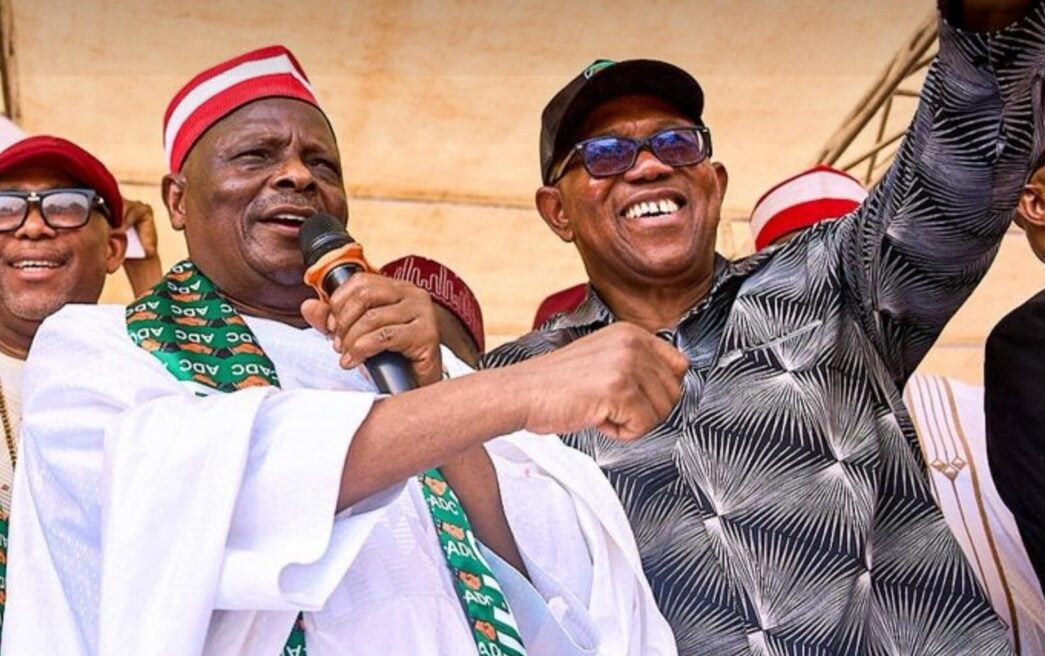
State chairmen of the Nigeria Democratic Congress (NDC) have rejected the creation of parallel political structures by the Obi-Kwankwaso Movement (OK Movement) ahead of the 2027 general elections, insisting that support groups should not take over functions reserved for the political party.
The position comes amid an ongoing disagreement between the NDC and the OK Movement over the organisation of the campaign for the party’s presidential candidate, Peter Obi, and his running mate, Rabiu Musa Kwankwaso.
The dispute began after the OK Movement unveiled a 59-member Presidential Campaign Council on September 17. The structure included zonal and state coordinators as well as directors responsible for mobilisation, women’s affairs, strategy, security, legal affairs and other areas.
The movement named John Ughulu as Director-General of the campaign council and Saadatu Sani as secretary.
The NDC subsequently dissociated itself from the council, saying it was not authorised or constituted by the party. National Chairman Moses Cleopas said the public should disregard the structure and stressed that only the party’s appropriate organs could constitute or announce an official NDC campaign council.
READ ALSO:
- Abuja Police Arrest Woman, Two Hotel Workers Over Man’s Body Dumped Under Bridge
- Bauchi Police Arrest 26-Year-Old Man Over Rape Of 50-Year-Old Woman
- 2027: Lawal Challenges Wike To Clarify Allegiance Over Rainbow Coalition
The disagreement deepened after the OK Movement insisted that it was an independent political organisation with its own leadership, structures and internal processes.
The movement also said it would not collapse or surrender its national, state, local government and ward structures to the NDC.
However, NDC leaders have maintained that support groups can mobilise for the party’s candidates but should not establish structures that perform the functions of the political party or its official campaign organisation.
NDC National Leader Seriake Dickson has said support groups should complement the party rather than compete with it or operate as parallel structures.
The position has also received a response from Obi himself.
Obi, speaking on Arise TV’s Prime Time, said the NDC was the political party to which he and his supporters belonged, while the OK Movement, Obidient groups and Kwankwasiyya should operate as support groups.
He also said the creation of a presidential campaign council by a support group was not appropriate and disclosed that he had not been consulted before the OK Movement announced its 59-member council.
Despite the disagreement, the NDC has taken steps towards establishing its own official campaign machinery.
The party previously gave Obi and Kwankwaso authority to nominate key officials of the NDC Presidential Campaign Council, including the Director-General, Deputy Director-General for the North, campaign spokesman, deputy spokesman, Head of New Media and finance officials, in consultation with the party leadership.
The latest disagreement therefore centres on the distinction between the official NDC campaign structure and independent support organisations backing the Obi-Kwankwaso ticket.
While NDC state chairmen have insisted on the authority of the party’s structures, the OK Movement continues to maintain that it has the right to retain its own organisational framework.
The parties and support groups have not indicated that the dispute has affected the candidacy of Obi and Kwankwaso, but the disagreement has become a prominent issue in the organisation of the 2027 opposition campaign.
2027: NDC State Chairmen Reject Obi-Kwankwaso Movement’s Parallel Structures
Politics
2027: Lawal Challenges Wike To Clarify Allegiance Over Rainbow Coalition
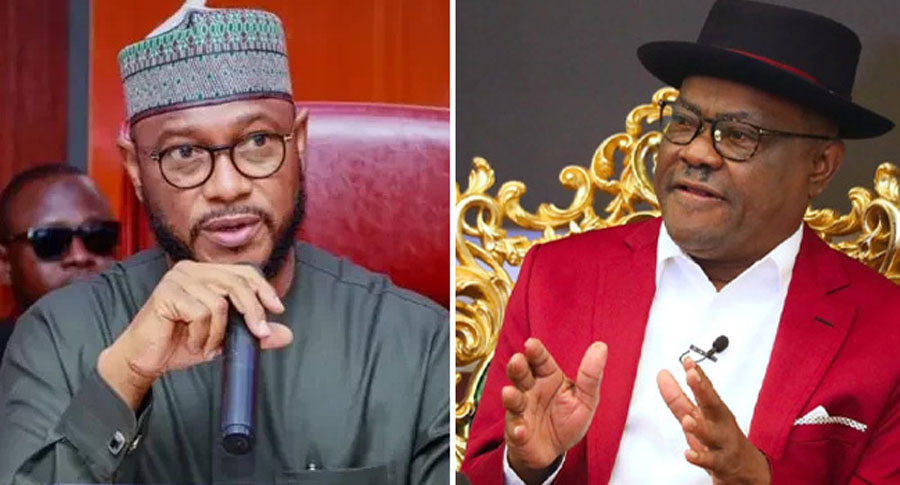
2027: Lawal Challenges Wike To Clarify Allegiance Over Rainbow Coalition
Zamfara State Governor Dauda Lawal has challenged Nyesom Wike, Minister of the Federal Capital Territory (FCT), to clarify his political allegiance ahead of the 2027 elections, amid a disagreement between the minister and governors elected on the platform of the All Progressives Congress (APC).
Lawal said Wike could not support President Bola Tinubu’s 2027 re-election bid while also backing candidates of other political parties in governorship and legislative elections.
The Zamfara governor made the comments in an interview with Channels Television’s Inside Sources on the sidelines of the 81st United Nations General Assembly (UNGA) in New York.
“Our message is very, very clear: be on one side, you can’t be on two sides,” Lawal said, arguing that Wike should either fully align with the APC or make his position outside the party clear.
Lawal confirmed that APC governors were effectively asking Wike to join the party if he intended to continue supporting Tinubu’s 2027 presidential campaign.
Asked whether the governors wanted Wike to join the APC, Lawal responded: “Exactly.”
He also said he would discuss Wike’s political position with President Bola Tinubu when the President returns from his working vacation abroad.
READ ALSO:
- Unexplained Wealth: Obasanjo, Osinbajo, Others for Shittu’s Book Launch
- MURIC Blasts Nigeria Over UNGA Stance on Palestine, Netanyahu
- Why I Accept My Daughters’ Same-Sex Relationships — Charly Boy
At the centre of the dispute is the Rainbow Coalition, a cross-party platform backing Tinubu’s presidential bid while allowing its members to retain their political affiliations and support candidates in other contests.
Wike, who remains a member of the Peoples Democratic Party (PDP), has maintained that his support for Tinubu does not require him to support APC candidates in governorship, National Assembly or state House of Assembly elections. Through his Senior Special Assistant on Public Communications and Social Media, Lere Olayinka, Wike has described the coalition as a multi-party arrangement rather than an APC platform.
The position has put Wike at odds with the Progressive Governors Forum (PGF), the umbrella body of APC governors. The forum has said its members would not support political arrangements capable of undermining Tinubu’s re-election bid, weakening the APC or adversely affecting its candidates in the 2027 elections.
Lawal said he supported the forum’s position and that the APC governors would not change their stance.
He also responded to Wike’s criticism of some APC governors as “lazy”, saying the FCT minister knew those he was referring to and that the performance of individual governors should be assessed based on their records in office.
The exchange between Lawal and Wike adds another dimension to the political realignment ahead of the 2027 general elections, with party affiliation, cross-party alliances and support for candidates at different electoral levels emerging as points of contention.
2027: Lawal Challenges Wike To Clarify Allegiance Over Rainbow Coalition
-

 News2 days ago
Anambra Releases ₦473m Salary Arrears Document as Obi’s Debt Claim Sparks Fresh Dispute
-
 News2 days ago
Keyamo: ₦70,000 Minimum Wage No Longer Enough as Cost of Living Soars
-
 metro2 days ago
EFCC Chairman Raises Alarm Over Alleged Theft of Nigeria’s Public Funds
-
 Sports1 day ago
AFCON 2027 Qualifier: Nigeria Fight Back to Beat Madagascar 2-1 in Uyo
-
 Politics2 days ago
2027: Otti Explains Why He Supports Tinubu Despite Remaining in Labour Party
-
 metro2 days ago
Umahi Announces First Niger Bridge Reopening Next Week, Orders Tinubu Pictures
-
 metro1 day ago
Viral Anti-Obi Video: Lagos Police Move Against Inspector Osumah Frank
-

 metro2 days ago
Abia Police Arrest 20-Year-Old, Recover Gun, Suspected Cannabis, Three Motorcycles